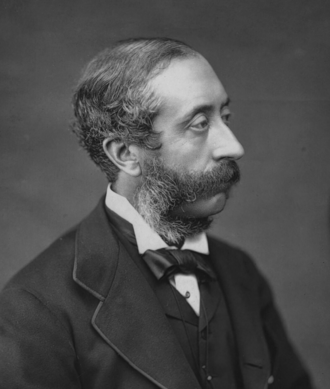
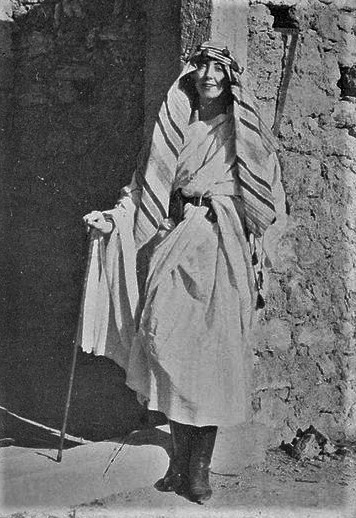
A portrait of Rosita Forbes, from her 1921 book ‘The Secret of the Sahara: Kufara’; BHL25263784 (Wikipedia).
It’s always a pleasure on these pages to present a great lady traveller and writer from the era of Mabel Bent… so, here we introduce Rosita Forbes, F.R.G.S. (16 January 1890 – 30 June 1967), a wonderful character, controversial at times – easily springing from between the covers of Virginia Woolf, Ernest Hemingway, even Agatha Christie – and, by huge coincidence, for a time she was also a close neighbour of Mrs Theodore Bent,
Riseholm Hall, near Lincoln, UK, birthplace of Rosita Forbes in January 1890 (Wikipedia).
What interests us are Rosita’s links to the Bents. On the day of her birth, Thursday, 16 January 1890, at swanky Riseholme Hall, near Lincoln, the Bents were sitting on their packed trunks to get them closed before embarking that Saturday for the western shores of Turkey and their imminent discovery of Olba. Here is Mabel’s diary at the time: “We left England on Saturday night, January 18th [1890], the waves dashing over the steamer from the other side of Dover pier, and neither stopped not stayed, till we stopped for the night at Lucerne at the Hôtel St. Gothard, close to the station and very comfortable…” (The Travel Chronicles of Mrs. J. Theodore Bent, vol 1, Oxford, 2006, p.269).
After driving ambulances (Hemingway again) in the Great War the rural lanes of Lincolnshire were too solitary for Rosita and she began an extensive sequence of travels in Asia and Africa culminating in her first book Unconducted Wanderers (1919).
We don’t know, but in her reading and preparation for her travels it is very likely that she hit upon the Bents (although Theodore was dead by the time she was eight). Her great 1925 book From Red Sea to Blue Nile – Abyssinian Adventure opens in Aden, a base the Bents used frequently for their expeditions in the area. (Both pioneers, Mabel was the first European woman to venture voluntarily into the Wadi Hadramaut, and Rosita the first to the Kufra Oasis in Libya.) It is hard to believe that the latter did not pack Mabel’s Southern Arabia in her saddlebags to read in Aden – the scene, of course, of Theodore’s final adventure.
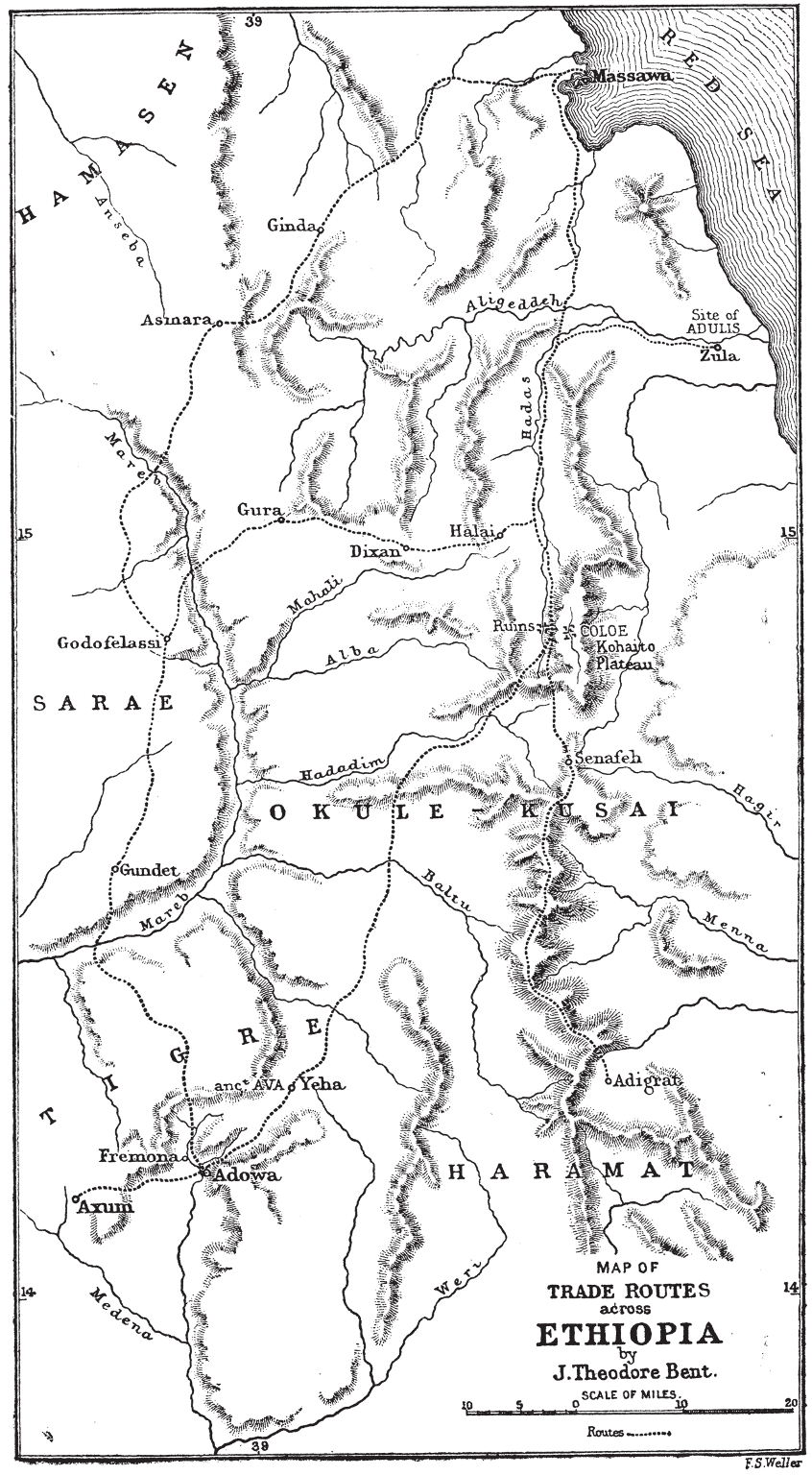
Theodore’s map of Ethiopia (photo: The Bent Archive)
And more directly, in From Red Sea to Blue Nile (opening with its wonderful dedication, ‘To Abyssinia And Her Heir-Apparent, H.I.H., Ras Tafari’, we get specific references to the Bents’ trek to fabled Aksum in Ethiopia in 1893, writing, page 348, that Theodore ‘commemorated his journey in a most interesting book, The Sacred City of the Ethiopians‘. Again, it seems most unlikely that she would not have had a copy with her as she sailed across the Red Sea to Somalia to begin her ride north, and write, this from her Foreword, ‘the record of three months on muleback, the story of what happened… during an eleven hundred mile trek through mountains and forests, rivers and deserts in search of photographic material. It is a tale of adventures, serious and frivolous, of what we saw and heard and did between the Red Sea and the Blue Nile, but it is only an impression of Abyssinia as she appeared from tent and saddle.’ And during her time in Ethiopia she was never far from the routes followed by the Bents.
In any event was born at Riseholme Hall, near Lincoln, England, th . Even if not before 1925, we know the adventuress consulted Bent in the course of her trip to Ethiopia in … and there a several references to Theodore’s classic… in her own account….1923/4
Dedicated “i”
And then there is the serendipitous role of Great Cumberland Place – the thoroughfare in London linking Marble Arch to
she would know south arabia for her Aden etc stuff
other famous residents nelli melba
Dedicated “To Abyssinia And Her Heir-Apparent, H.I.H., Ras Tafari”
She was married again in 1921, to Col. Arthur Thomas McGrath.
Starting from aden
map?
Mabel’s museum
Rosita and her husband moved in to ?? in late ???? and immediately began a renovation project…
Meanwhile, down (or up) the road at No. 13, the by then long-widowed Mabel Bent had been renting her London townhouse (her country residence was Sutton Hall, outside Macclesfield, Cheshire) since ????, prior to that the couple rented No. ?? No. 13 very soon became a cross between a depository and a museum, acting as the point of arrival for most of the Bents’ acquisitions – wonderful things from Aksum to Zimbabwe.
But did Rosita and Mabel ever meet? The two travellers only overlapped as it were in Great Cumberland Place for half a year or so, the latter months of 192? and the Spring and Summer of 1929, and by then Mabel was elderly and perhaps not receiving callers – she died on ???, with her nieces in attendance (in 1926 they had already begun the process of clearing out and selling off the more precious things – the British Museum being the major benefactor).
Rosita, well aware of the Bents and their twenty years of incredible travel, must have known that Mabel was living a few metres from her. Firm evidence of a meeting might one day surface, but for now we can image the two formidable explorers, taking no nonsense from men, sharing tea (or a whiskey) in one of Mabel’s drawing-room and discussing the contents of it, perhaps the Ethiopian chair Mabel returned with in 1893, the style of which Rosita was familiar with from her own ???? adventure.
One topic Mabel might not have raised, or not without a good few Irish curses, was Rosita’s Fellowship of London’s Royal Geographical Society. Mabel was on the list for the second tranche of women Fellows in the early 1890s, until the Admirals who ran the show scuppered the rights of women to join. The process was not reopened for them until ???, with Rosita getting her Fellowship in ???
Some …. would make a diverting and curious documentary … h both women travelled many thousands of miles, but that mere 100 metres or so that separated them may well have been steps too far… down Great Cumberland Place, W1.
No list of indomitable women travellers would be complete without a reference to the incredible Ida Laura Pfeiffer, in whose footprints Mabel occasionally followed. Although the latter never refers directly to the Austrian globetrotter in her diaries, Mabel would certainly have known of her, and probably read Ida’s travel accounts, several of which were already translated into English in her time. Ida died when Mabel Hall-Dare was just a girl of ten or so in the south of Ireland.
One among many of the locations they both were to visit was the island of Rhodes (then a Turkish province for both Ida and Mabel). Here is Pfeiffer on Rhodes’ famous main harbour in late May 1842 (trans from the German by H.W. Dulcken):
Cover to the English edition ot Ida Pfeiffer’s “A Visit to the Holy Land” (archive.org).
“This morning, shortly after five o’clock, we ran into the superb harbour of Rhodes. Here, for the first time, I obtained a correct notion of a harbour. That of Rhodes is shut in on all sides by walls and masses of rock, leaving only a gap of a hundred and fifty to two hundred paces in width for the ships to enter. Here every vessel can lie in perfect safety, be the sea outside the bar as stormy as it may; the only drawback is, that the entering of this harbour, a task of some difficulty in calm weather, becomes totally impracticable during a storm. A round tower stands as a protection on either side of the entrance to the harbour.” (Visit to the Holy Land, Egypt, and Italy, London, 1853, p.86)
And here is Mabel Bent (she married Theodore in 1877) putting up with some tricky February weather in the same harbour region some thirty years later, in 1885, endorsing Ida’s observation about bad weather:
A view of Rhodes’ great harbour from C.T. Newton’s “Travels & Discoveries in the Levant” (London, 1865). The folly that is ‘Naillac’s Tower’ (left) would have been enjoyed by Ida, but was toppled by the time Mabel was in the offing in 1885 (archive.org).
“The day seems quite over, it is half past six, and a most anxious day we have passed with the yellow flag waving us. We got to Rhodes about 3 but did not settle till 5 and the health officers did not come till 7. The Captain asked leave to go to a bay to shelter if storm came on, or the open sea, but they said no, if we wanted pratigue he must remain there. But the Captain told us that sooner than lose or damage the ship he would go off with us and the two guardians to Smyrna. Great therefore was our horror at 3.30 p.m. to hear all the noises of a start, after having observed that it was getting rougher, but we only went round the corner of the island to shelter on the eastern side and hope to be returned to the capital tomorrow morning. In the mean time no one has been able to communicate in any way with the shore. It has been pouring most of the day.” (The Travel Chronicles of Mrs J Theodore Bent, vol 1, Oxford, 2006, p.68)
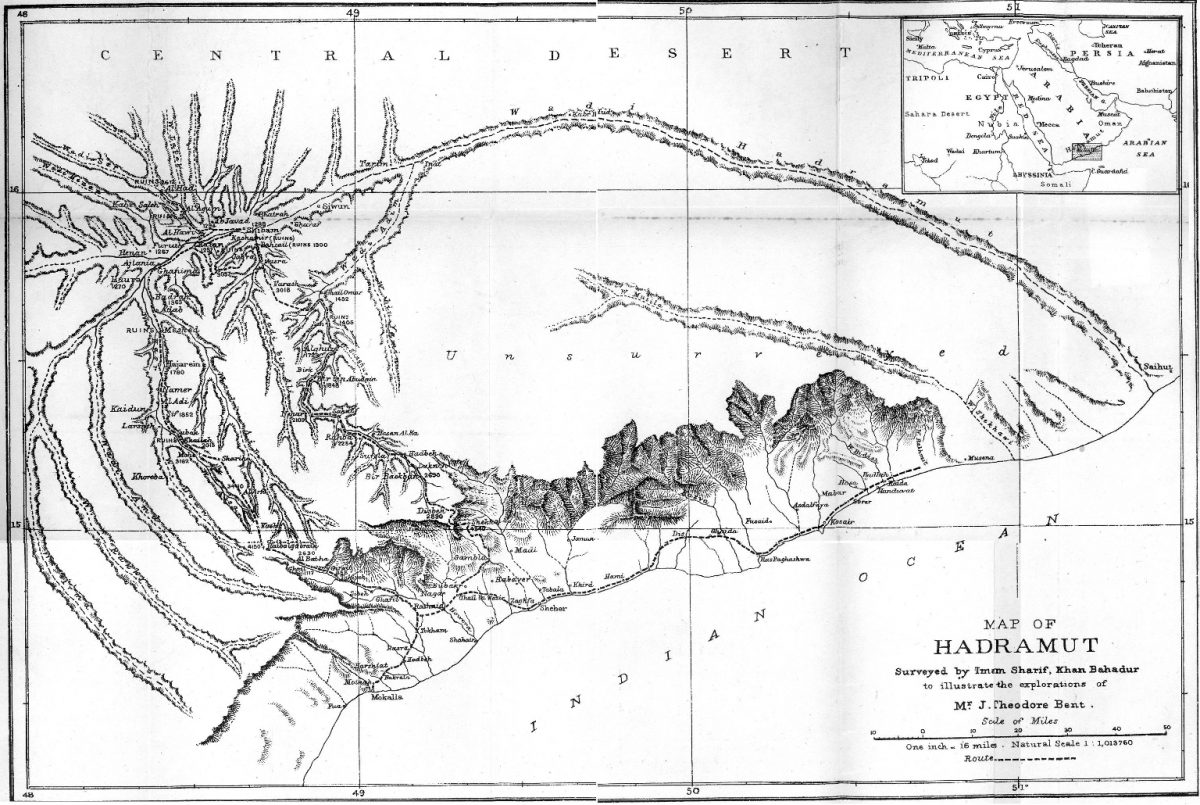
The region of the ‘Wadi Hadramut’, Yemen, the setting for three explorations by the Bents in the 1890s (archive.org).
The Bents’ third significant field of studies was the Middle East, beginning with an expedition to the ‘Mounds of Ali’, Bahrain (1889), followed weeks later by an historic horseback journey, south-north, through Persia. Bent’s interest in the ‘Phoenicians’ piqued, the celebrity explorers embarked on three adventures between 1894-7, to the Yemen (specifically the inhospitable ‘Wadi Hadramut‘, including stays in Muscat, Oman, and Sokotra). These tours generated an extensive corpus of popular and more ‘academic’ articles (historical, ‘archaeological’ and ‘ethnographic’ in content). Along the way they acquired artefacts, ancient and modern, that they would seek to sell or retain for their private London collection. The British Museum, for example, has a large collection of their material. The rigours of travel finally took their toll on Theodore Bent; he died, aged just 45, shortly after returning from Aden (5 May 1897). Had he lived, he would certainly have written a book or two encompassing these adventures, as it transpired, it was left to his widow, Mabel, to assemble the comprehensive monograph that remains the great tribute to their work in Southern Arabia (1900).
Bent’s writings on the Middle East by year of publication:
The Bents’ second significant field of studies (after the Turkish littoral and the Aegean) was the African continent, beginning with a ‘tourist’ visit in early 1885 to Egypt, taking in such sine qua nons as the Pyramids. The great breakthrough for the celebrity explorers was a commission from Cecil Rhodes to investigate in 1891 the ruins of Great Zimbabwe (in today’s Zimbabwe), followed by adventures in Ethiopia (Aksum, 1893), and the Sudan (1896), generating an extensive corpus of popular and more ‘academic’ articles (historical, ‘archaeological’ and ‘ethnographic’ in content). Along the way they acquired artefacts, ancient and modern, that they would seek to sell or retain for their private London collection. The British Museum, for example, has a large collection of their material. Two best-selling monographs resulted from these expeditions to Africa: The Ruined Cities of Mashonaland (1892) and The Sacred City of the Ethiopians (1893).
Bent’s writings on Africa (today’s boundaries) by year of publication:
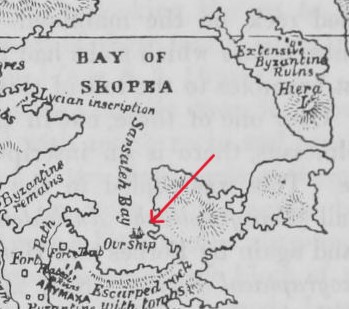
“Our ship” The Bents anchor their sloop, “Evangelistria”, off the Turkish coast in 1888, not far from modern Fethiye. Bent has drawn in their ship on an Admiralty chart of the time.
The Bents’ first significant field of studies was the Turkish littoral and Aegean, beginning with a ‘tourist’ visit in early 1883, taking in such sites as Delphi and Mycenae. This trip inspired a decade-long passion for these celebrity explorers (with a tour more or less every year), generating an extensive corpus of popular and more ‘academic’ articles (historical, ‘archaeological’ and ‘ethnographic’ in content). Along the way they acquired artefacts, ancient and modern, that they would seek to sell or retain for their private London collection. The British Museum, for example, has a large collection of their material.
Bent’s writings on Turkey and Asia Minor (today’s boundaries) by year of publication:
‘Explorations in North-eastern Cilicia’. This was a paper presented to the RGS on Monday, 8 September 1890 and the Proceedings of the Royal Geographical Society, Vol.12, 1890, p. 671 notes that “This paper will be published in a subsequent number of the ‘Proceedings’”, but it appears it never was. The RGS archive has Bent’s manuscript for the paper, titled ‘Exploration in the North East of the Cilician Plain’, and he did publish sections of it in other journals (cited above), e.g. inter alia: ‘The Site of Hieropolis-Castabala’. Athenæum, Issue 3273 (1890, Jul), 104-6; ‘Recent Discoveries in Eastern Cilicia’. The Journal of Hellenic Studies, 1890, Vol. 11, 231-5; and ‘The Two Capitals of Armenia: I – The Patriarch of Sis’. The Eastern and Western Review, Vol. 1(4), May, pp. 137-40. We hope to publish a transcript in due course.
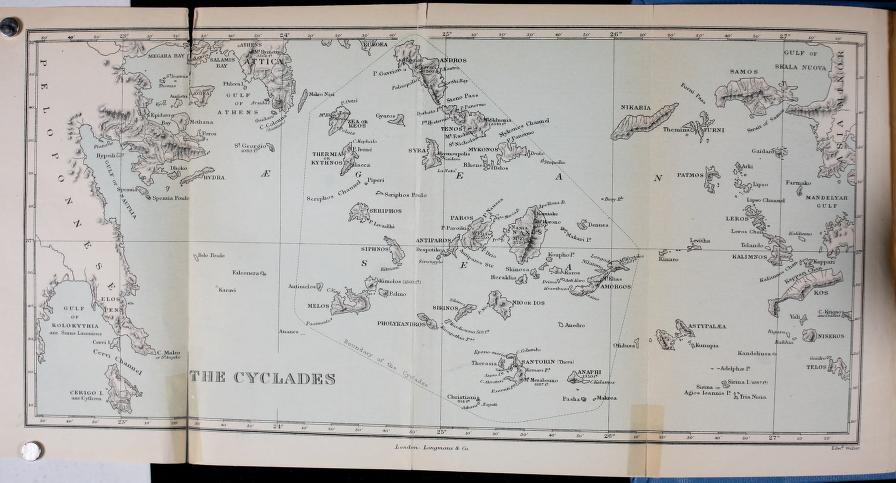
Bent’s map from the first edition of his 1885 book, “The Cyclades, or Life Among the Insular Greeks” (archive.org)
The Bents’ first significant field of studies was the Aegean, beginning with a ‘tourist’ visit in early 1883, taking in such sites as Delphi and Mycenae. This trip inspired a decade-long passion for these celebrity explorers (with a tour more or less every year), generating Bent’s classic guide to the Cyclades (perhaps he is partly to blame for the islands’ current over-tourism in the summer months today), and a substantial corpus of popular and more ‘academic’ articles (historical, ‘archaeological’ and ‘ethnographic’ in content). Along the way they acquired artefacts, ancient and modern, that they would seek to sell or retain for their private London collection. The British Museum, for example, has a large collection of their material.
Bent’s writings on Greece (today’s boundaries) by year of publication:
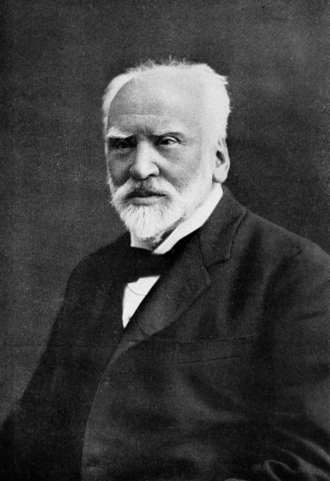
Henry Howard Molyneux Herbert, 4th Earl of Carnarvon, KP, PC, DL, FRS, FSA (1831-1890) (Wikipedia).
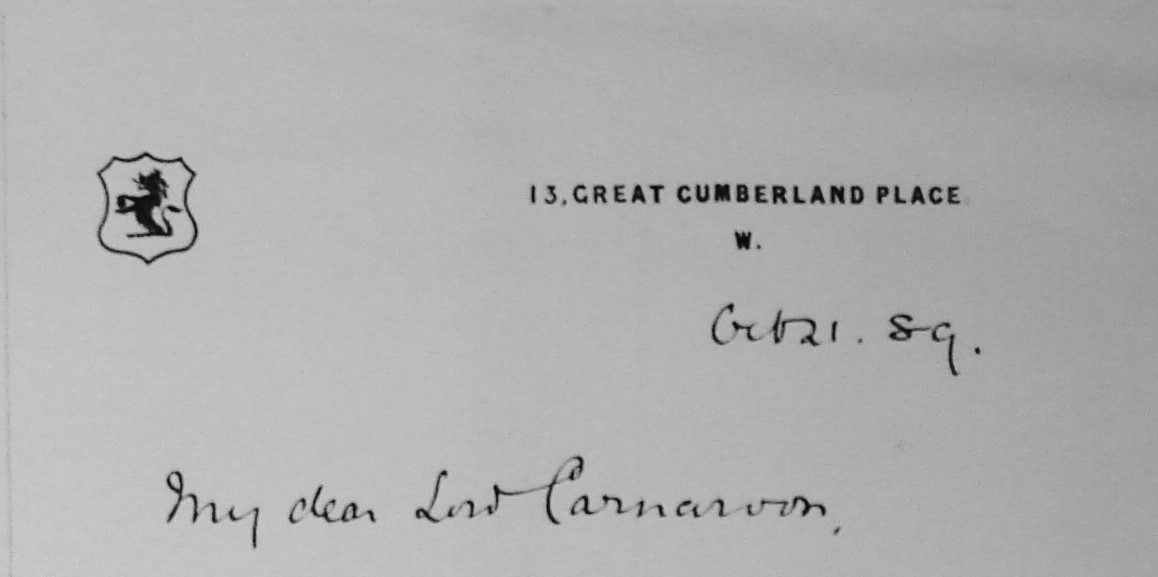
Two letters, October 1889, from Theodore Bent to Henry Howard Molyneux Herbert, 4th Earl of Carnarvon, KP, PC, DL, FRS, FSA (24 June 1831 – 29 June 1890), Highclere Castle, Hampshire, UK. The original letters are now in the Hampshire County Archives (75m91/R13/40-41). Carnarvon’s original letters to Bent have not surfaced; the latter would have had a fascinating correspondence archive but it is presumed lost. The reply to Bent’s first letter must have been exceedingly positive, as can be deduced by the speed in which the meeting was arranged and the much less formal style of Bent’s second communication.
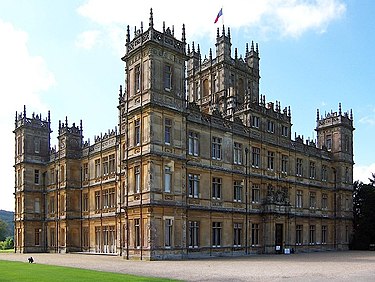
Highclere Castle (Hampshire, UK), seat of the Earls of Carnarvon (Wikipedia).
Background: The Bents spent early 1889 in the Middle East, with a few weeks excavating at the ‘Mounds of Ali‘, Bahrain, and then riding south-north the length of Persia before returning to London via Kiev. The couple’s explorations for the following season (1890) were clearly unfixed (and time was pressing) when Bent sought to make contact with Henry Herbert, 4th Earl of Carnarvon at Highclere, hopefully to smooth (and perhaps co-finance) his passage to the Bulgarian region of Burgas on the Black Sea.
The opening of Bent’s second letter to Earl Carnarvon. The original letters are in the Hampshire County Archives (75m91/R13/40-41).
Why especially Bent had his sights set on this area is still to be researched and answers might be found in extant communications between Bent and Cecil Smith (see Letter 1). One factor would have been that the sites (and any discoveries there) were unlikely to have the levels of official scrutiny he was exposed to in Greece and Turkey – but some of the material culture from there would, of course, reflect the lives of ancient Greek colonies. In the end, for whatever reason, the Bents opted in 1890 for the Turkish littoral, settling for squeezes of early inscriptions and determined to find ancient Olba (which they did). Sadly, Bent’s affable correspondent was to die relatively young in that same year (1890), being succeeded by the 5th Earl, ‘Tutankhamen’ Carnarvon.
Letter 1 – Bent to Carnarvon
13, Great Cumberland Place, W. [London]
Oct. 16 [1889].
My Lord,
Mr Cecil Smith tells me you have kindly promised to help me with regard to certain excavations I hope to undertake near Bourgas at the beginning of the year [1890].
My object is to get a personal introduction to Mr. [Stefan] Stambolov but if I might speak to you on this matter at any hour you like to name I think I could explain matters more definitely.
I am your Lordship’s obedient servant,
J. Theodore Bent
Notes:
Bent’s friend Cecil Harcourt Smith, 1859-1944, of the British Museum and later the V & A.
Stefan Stambolov, 1854-1895, Bulgarian politician, journalist, revolutionary, and poet who served as Prime Minister and regent. He was assassinated in Sofia in 1895.
Letter 2 – Bent to Carnarvon
13, Great Cumberland Place, W. [London]
Oct. 21 [1889].
My dear Lord Carnarvon,
It will give me great pleasure to accept your kind invitation to visit you at Highclere, and I will come down to Newbury on Saturday next [26th] by the train you name.
Theodore Bent had a good friend in Sir Edwin Pears (1835-1919), a British barrister, author and historian, whom the Bents met in Constantinople (although here our interest is on the Cycladic island of Amorgos).
Neither in his book The Cyclades, nor in his Easter article, does Bent make it clear whether his wife Mabel was with him on Amorgos in the Spring of 1883 or not. Indeed, in his 1884 article he ends: “Next day the relentless steamer called and carried me [our italics] off to other scenes.” It is rather a mystery.
We do know, however, that Bent did travel on his own for his second visit to the island in early 1884, Mabel deciding to stay on Paros/Antiparos, feeling below par (see The Travel Chronicles of Mabel Bent, Vol. 1, 2006, p. 46, and our earlier article on Amorgos at Easter 1893).
Now, interestingly, a section in Edwin Pears’ (1835-1919) book on Turkey (1911) seems to suggest that Mabel was with Theodore on Amorgos in 1883 (their first visit to the Cyclades). Pears, a good friend of the Bents, recalls a folkloric episode from the island told him by the explorer, which, it seems, was never published; it is therefore a noteworthy addition to Bent’s adventures on Amorgos and should be included with Bent’s publications on that Cycladic place (and, of course, within his collected writings on customs and traditions generally).
Here is what Bent’s Amorgos amigo has to say:
“I conclude this notice of surviving paganism by telling a story for which my authority is the late Theodore Bent. In his interesting book on the Cyclades, his last chapter, full of good matter, is about the island of Amorgos at the south-east end of the group he has been describing. The following story is not in it, but was told me by him shortly after the incident occurred; and Mrs Bent, who nearly always accompanied her husband, has kindly informed me recently that it was on Amorgos where the incident happened. Mr Bent had so often found that the customs mentioned by Herodotus were continued to the present time, that he incautiously asked the priest of St Nicholas, the successor of Poseidon as the protector of sailors, whether the old practice of divination by tossing up knucklebones and learning by the way in which they fell on the altar what the direction of the wind would be, still continued. The answer was in the negative. When the priest turned away, an old woman who had overheard the conversation said to Mr Bent, ‘All the same, Chilibé [sic], no ship goes to sea without the crew coming here to learn how the wind will blow.’ Mr Bent said nothing, but having learned that two or three days later a vessel had arranged to leave, watched her crew, and having seen them start on their way to the church, followed them at a distance, taking care to keep out of sight. They entered the church, and five minutes later were followed by Mr Bent, who arrived just in time to see, through the holy gate, candles lighted upon the altar, the priest with his hat off, and his long hair down, and in the very act of tossing the knucklebones.”
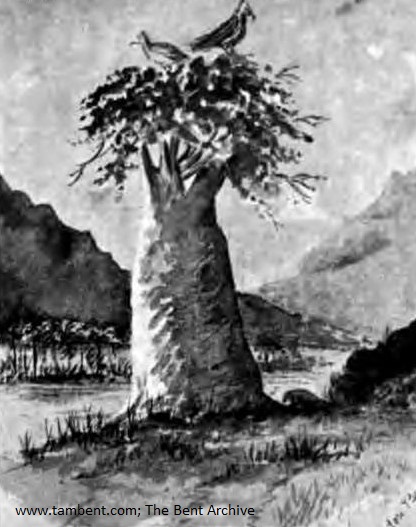
‘Kalenzia, Isle of Socotra, 1897’. Watercolour (detail; private collection, reproduced with permission).
“Mr. Theodore Bent, the famous archaeologist is going to explore the island of Sokotra, on the West Coast [sic] of Africa, this winter. Sokotra is said to contain some important ruins, and if Mr. Bent can discover anything as interesting as the buried cities of Mashonaland he will have again achieved fame.” (‘The Morning Leader’ – Tuesday 08 December 1896)
Poor Theodore Bent spent his 45th, and last, birthday (30 March 1897) in hospital in Aden, malaria stricken. Just a few weeks beforehand, however, he and his wife Mabel were happily wandering on camels through the plains and mountains of Socotra – a speck a centimetre west of the Horn of Africa on most maps – looking for archaeological remains and enjoying the fantastical scenery; Mabel took photographs while Theodore sketched in watercolour in his naïve way. How far back did he work at this style? As a Yorkshire Baildon boy? Or at Repton and Wadham? In any event he obviously took pleasure in the art and his illustrations later assisted his studies in the field (reminiscences, maps, plans, inscriptions, etc.); he felt assured enough to have his views published in all his books and, editors permitting, in many of his articles that had to do with the couple’s adventures in the Eastern Mediterranean, Ethiopia, Great Zimbabwe, Southern Arabia, Persia…
Heading from Mabel Bent’s Socotran diary 1896/7.
Mabel’s diaries often refer to her husband’s drawing materials and sketches, calling the latter ‘pretty’. Theodore was sketching on his last trip, in 1897, to Socotra and Aden, as his wife records: “[Thursday] February 4th [1897]. The mountains of the Haghier range [Socotra] are most beautifully peaked and needled, and here look red, not being smothered by the smooth, grey lichen. We were, though sorry to quit the mountains, glad to reach the plain, cross a river on stones and mount our camels and reach Suk… We encamped by a lagoon and had a pleasant afternoon and evening walking by the sea, and also choosing places for photography on the morrow and Theodore sketching. We had to keep the tent open at night it was so warm and still.’ [‘Travel Chronicles of Mabel Bent’, Vol. 3, Southern Arabia, 2010, page 303]
Socotra Cucumber Tree (Dendrosicyos socotrana), watercolour by Theodore Bent (1897). [See Derdriu Marriner’s article (March 2024) on this rare tree, which the author has kindly dedicated to the Bents: “with appreciation for their pioneer research via a 15-year expedition to eastern Mediterranean, Africa and Arabia and for the artistry of Theodore’s sketches and Mabel’s photographs.”]Several of Bent’s watercolours of Socotra are illustrated in the couple’s great work ‘Southern Arabia’. His sketch book (17.5 x 25 cm) obviously survived the rigours and maladies of the hard journey and return home from Aden at the end of April 1887. Although Theodore and Mabel were still terribly ill, once out of hospital, and barely fit for travel, they embarked immediately for Marseilles. There Theodore had a relapse and although rushed back to their London home, he died a few days later in early May (1897). His sketch book remained unopened until Mabel felt strong enough psychologically to have the watercolours photographed and prepared as plates for ‘Southern Arabia’, the anthology of their years spent in the region.
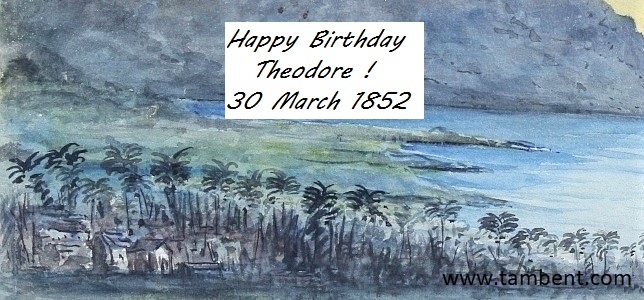
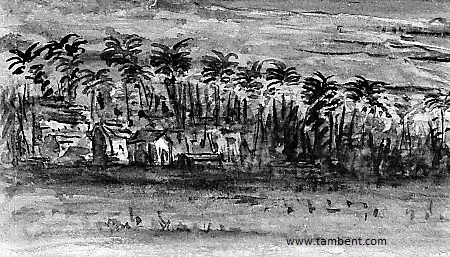
‘Kalenzia, Isle of Socotra, 1897’. Watercolour (detail), by Theodore Bent (private collection, reproduced with permission; see colour version at top of this post).
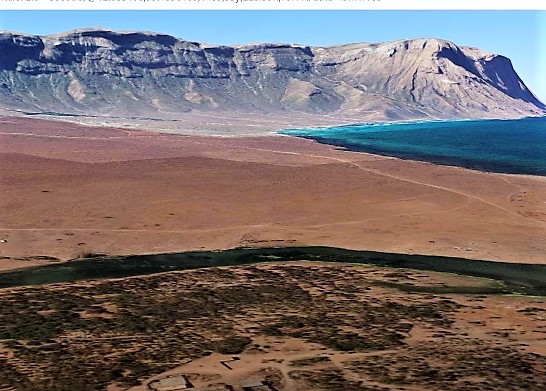
As for the original watercolours now, who knows? But by a miracle, one has survived in a private collection – it probably never travelled back to Marble Arch with the invalid couple in the spring of 1897: it is a scene of ‘Kalenzia’ (Qalansiyah), a coastal village at the extreme east of Socotra (a Google image of the area is also shown here below); we are looking west, it is sunset, the mountains above the village sombre; in the foreground, among palm trees, are a few simple huts and what looks like a mosque with its minaret. Theodore has signed his name bottom right, with the inscription ‘Kalenzia, I[sle] of Socotra, 1897’.
The DNB of 1901 adds to Bent’s entry that “[his] notebooks and numerous drawings and sketches remain in the possession of Mrs. Bent.” A few of his notebooks are in the Joint Library of the Hellenic and Roman Societies, London, but where are his “numerous drawings and sketches”? Do please let us know if you have any information on Theodore’s unpublished ones!
Let’s be clear, although Theodore made hundreds of them, surviving original watercolours by him are as rare as evidence of the elusive Queen of Sheba he spent his last years looking for. A portfolio of watercolours of Great Zimbabwe and its surroundings is thought to be in Harare… and that’s it, apart from the aforementioned scene of ‘Kalenzia’, a detail of which is appropriately used for Theodore’s last birthday card (heading this post). This mesmeric scene is not reproduced in the Bents’ ‘Southern Arabia’, but it would surely have if Mabel had been in possession of it as she worked assembling her book in London in 1900. As mentioned previously, the chances are the picture never reached Marble Arch with the rest of their travel gear in the early summer of 1897. Did Theodore give or sell it in Aden, or on the long journey home by steamer, through Suez, to Marseilles. Did someone say, ‘That’s nice’, and Theodore present it with a bow – perhaps to Henry Watts Russell de Coëtlogon (1839–1908), with whom the Bents dined in Aden on their last, sad, journey? It surely could not just have been lost (or stolen) before the Bents reached England? The happy coda is that, whatever happened to it since it materialised in Qalansiyah some 120 years ago, it appeared at auction in Germany in 2013, and is now being privately and luckily enjoyed. Happy birthday Theodore.
Modern-day Qalansiyah, Socotra (Google).
This article is dedicated to the UNESCO-Friends of Socotra campaign entitled Connect 2 Socotra (#connect2socotra), promoting scientific research and awareness of the unique natural and cultural heritage of the Socotra UNESCO Natural World Heritage Site and the importance of protecting Socotra Archipelago’s unique species and ecosystems for the future.
Socotra is of universal importance with a biodiversity of rich and distinct flora and fauna, much of which does not occur anywhere else in the world. It also has globally significant populations of land and sea birds, including a number of threatened species and an extremely diverse marine life
In order to raise awareness of the rich and distinct heritage of Socotra, UNESCO is collaborating with the Friends of Socotra in organising a campaign of awareness events and publicity around the world. Using the hashtag #connect2socotra, the purpose of the Connect 2 Socotra Campaign is to connect the world to Socotra, and connect Socotra to the world. Search Google for campaign news and events.
December 2022 – a new discovery: A further unpublished watercolour sketch by Bent made on Sokotra in early 1897, showing two camels and distant mountains, appears in Alice Norton: ‘Mabel Virginia Anna Bent – Explorer’, appearing in Carloviana 2023, the Journal of the Carlow Historical and Archaeological Society (Dec. 2022, pp.117-123).
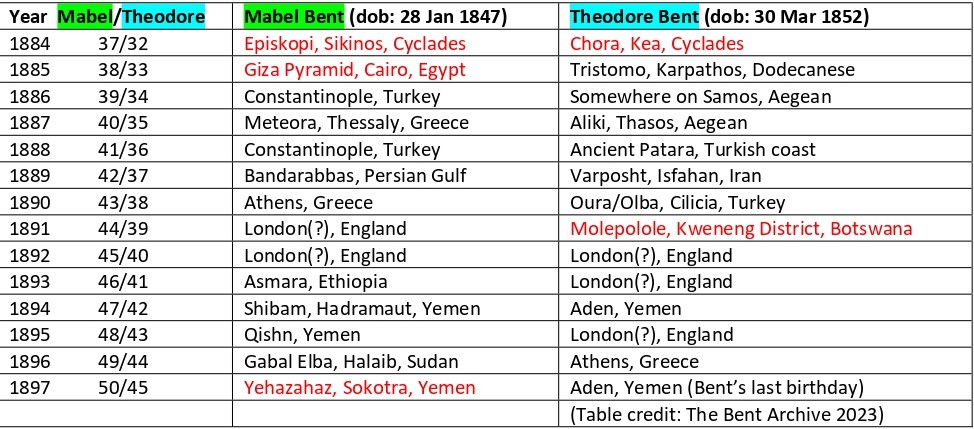
A review of Bent birthdays based on Mabel Bent’s Chronicles, 1884-1897
The accompanying interactive map below plots these birthdays: Mabel in green, Theodore in blue. (NB: London [13 Great Cumberland Place] stands in for unknown locations in Great Britain; the couple could have been away visiting family and friends in Ireland or England, including at their property ‘Sutton Hall’, outside of Macclesfield.)
There were 28 Bent birthday events (2 x 14) between 1884–1897 (the years covered by Mabel Bent’s diaries). Of these 28, only 5 (18%) were not spent in the field, and only 7 times (25%) does Mabel refer to a birthday in her notebooks directly. In the above Table, column 1 gives the year and ages of the Bents on their birthdays; columns 2 and 3 give their birthday locations. Events in red are when Mabel refers directly to their birthdays. ‘London’ is standing in for unknown locations in Great Britain. If not at their main residence (13 Great Cumberland Place), the couple could have been visiting family and friends in Ireland and England, including at their property Sutton Hall, outside of Macclesfield.
An announcement in the Colorado Catholic, Saturday, 6 February 1897, well illustrating the celebrity status of the Bents by this time at home and abroad: “Explorations in the East. Mr. Theodore Bent will this winter undertake another of his archaeological explorations in the East. Last year he made the eastern Sudan the scene of his investigations, and he has just left England for Aden, whence he will proceed either inland through Arabia, working our unexplored ground, or visit the island of Sokotra, off the coast of Africa. This island is believed to contain the ruins of great antiquarian interest, and has never been explored by an archaeologist.”
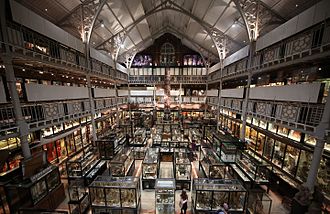
Interior of the Pitt Rivers Museum, Oxford (wikipedia).
The Pitt Rivers Museum in Oxford has over 50 artefacts acquired by Theodore and Mabel Bent on their 20 years of exploration, including 12 musical instruments (pipes [askomandoura] and flutes [floghera] in particular attracted them).
Some items from the Bent collection are regularly on display in the museum, including their musical instruments. In the early 1890s, the Journal of the Anthropological Institute of Great Britain and Ireland (Vol. 20, 1890-1891, 153 ff) included a paper by Henry Balfour on “The Old British ‘Pibcorn’ or ‘Hornpipe’ and its affinities”, which was part inspired by two ‘Greek’ instruments acquired at different times by the Pitt Rivers from the Bents, and “which seem to throw great light upon the true origin of the pibcorn” (see also A. Baines, Bagpipes, Oxford 1979, p.45).
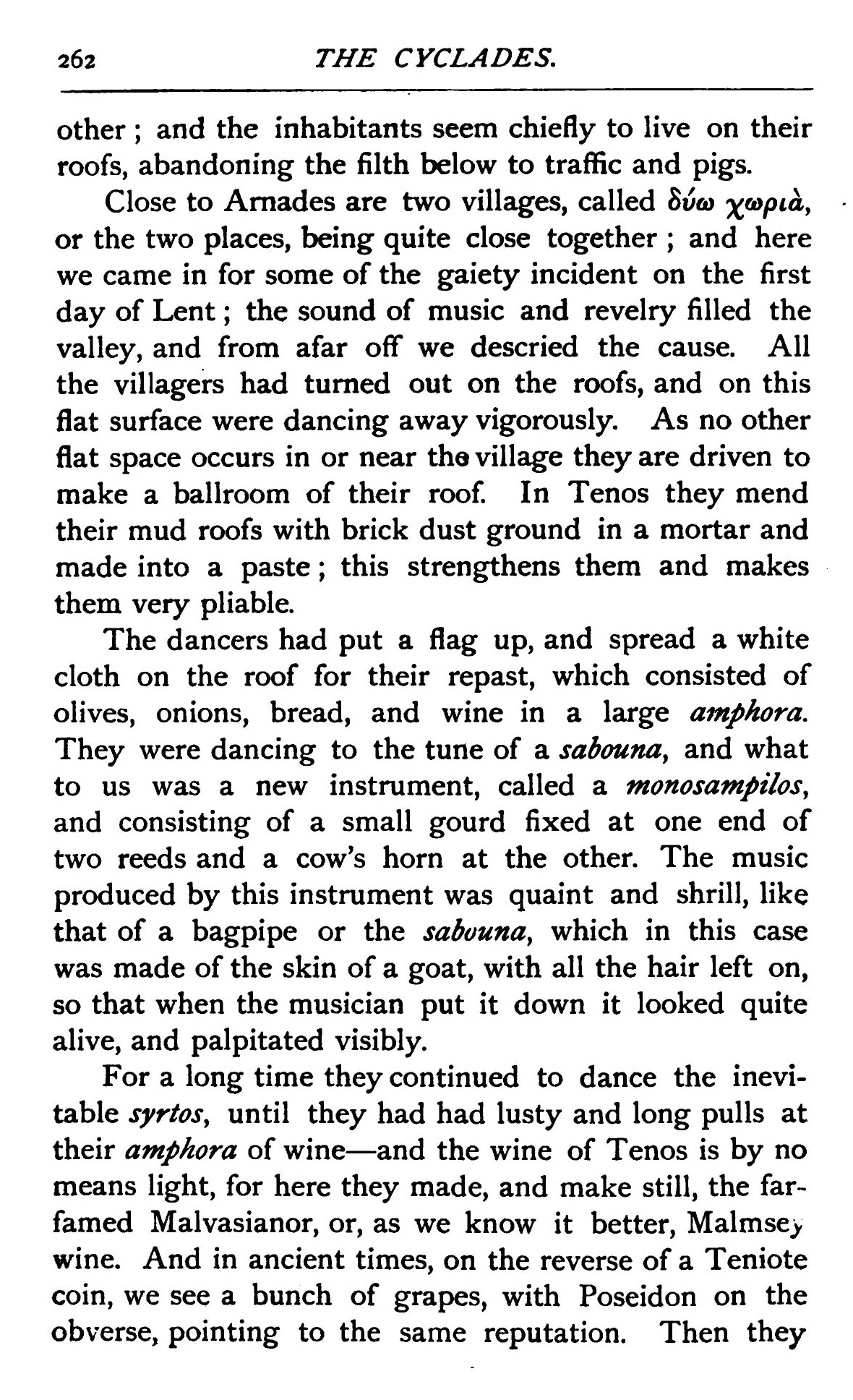
Bent describes a musical episode on Tinos in 1884 (‘The Cyclades, or Life among the Insular Greeks’, 1885 – archive.org).
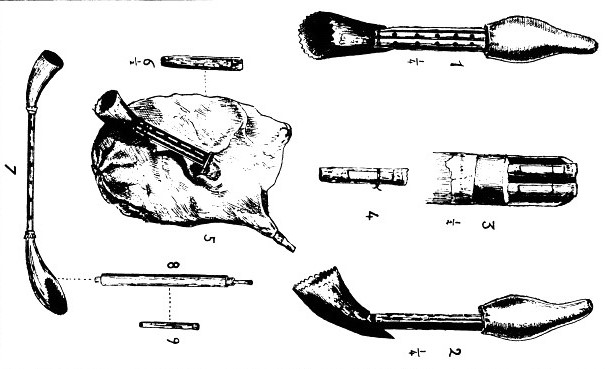
One instrument is a curious double-pipe (1903.130.21) from a small cluster of villages on Tinos (Tenos) in the Cyclades. Theodore Bent bought this pipe (on the couple’s second visit to the island in early March 1884), which he calls monosampilos, in the area of ‘Dio Choria’ (Δύο Χωριά), misread by Balfour or his editor as ‘Dio Maria’). The visit was a short one – just a few days (their first tour being in the spring of 1883). In her diary, Mabel recalls that the villagers “were dancing on the roofs and we went up to see them and bought a musical instrument” (The Travel Chronicles of Mabel Bent, Vol. 1, Oxford, 2006, p. 47); Theodore also describes the event – page 262 of his classic monograph on the Cyclades.
The sambouna and double-pipe from the Bent collection of musical instruments in the Pitt Rivers Museum, Oxford (detail from a line-drawing in Henry Balfour’s paper on “The Old British ‘Pibcorn’ or ‘Hornpipe’ and its affinities”, in ‘The Journal of the Anthropological Institute of Great Britain and Ireland’, Vol. 20 (1890-1891, 153 ff; archive.org).
The second instrument that attracts Balfour’s interest is the famous bagpipe/sambouna (1903.130.23) that the Bents brought back from Karpathos (now in the Greek Dodecanese, then a Turkish possession) in 1885.
Both instruments appear in a rare line-drawing that accompanies Balfour’s paper.
The other instruments collected by the Bents and in the Pitt Rivers:
1888.37.5: End blown trumpet. From Karpathos, Dodecanese (1885). In his 1886 article,’ On a far-off island‘ for Blackwood’s Magazine (Vol. 139, Feb 1886, 240), Bent describes, perhaps, this very instrument, although his name for it is eccentric, perhaps dialect, a variant of the sourali (σουραύλι): “Amusements in Karpathos certainly are not numerous, and may be summed up as consisting of music and dancing in a variety of forms… sometimes… a man will come and play the lyre, — just one of those lyres which their ancestors played, a pretty little instrument about half a yard long, with silver beads which jangle attached to the bow. Besides this they have the syravlion, a sort of pan-pipe made of two reeds hollowed out, with blow-holes and straws up the middle, and placed side by side in a larger reed.”
1903.130.18: End-flute made from a crane’s wing bone. The flute has been etched with various details, including the Anglicised word ‘syravlion’ (which the PR reads as ‘Syralion’, see above, perhaps dialect, a variant of the sourali (σουραύλι)). From Samos island (1886).
1903.130.16: End-flute of reed. Labelled by the PR as ‘pinavlion’ (dialect perhaps, today pinavli/πιναύλι). From Paros island, Cyclades (1883/4). Bent does not seem to have referred to this flute type in connection with Paros in his Cyclades (p. 379), but he does name again the ‘syravlion’ (see above): “Once, says a legend, a young man challenged the Lady of the Hundred Gates to a playing contest on the syravlion, and went accordingly to the church to play; but the Madonna took no notice of his challenge. Just as he was getting up to go he accidentally knocked over the candlestick, and broke his flute; in this way did the Madonna prove her superiority and humbled the man…”
Bent’s map of the Cyclades from the first edition of his classic 1885 book (archive.org).
Bent’s classic book The Cyclades, or Life Among the Insular Greeks, has several references to the lyre and sambouna, examples of which he donated to the Pitt Rivers. Of interest too are the many mentions of the flute he calls ‘syravlion’, a word unexplained and not found elsewhere perhaps a local variant of the romantic sourali (σουραύλι) or syrinx (Σύριγξ). Bent writes from Naxos: “We came to a halt at a dirty house, where we had to sit for hours… They constantly plied us with coffee, raki, and sweets as we waited… they played persistently for our benefit on the syravlion, or panpipe, and the drum. When shepherds play the panpipe on the hillside it is romantic enough: the instrument is a simple one, just two reeds hollowed out and placed side by side…” (p. 347). There are also recollections of the instrument from the Bents’ time on the islands of Ios (p. 162) and Santorini (p. 134).
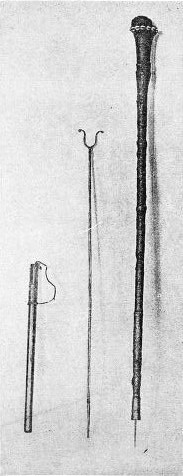
The major repository for artefacts brought back to England by the Bents between c. 1880 and 1900 is the British Museum, London. The collection is huge, but includes only a small number of musical instruments, not often on display; we list them below for reference. Some of the artefacts entered the Museum in 1926, just a few years before Mabel Bent’s death, indicating her fondness for them; perhaps the rooms of her London home would occasionally echo with sad notes from far away…
From Ethiopia(1893) (click (YouTube) for some of these instruments playing):
Flute (left) and trumpet (right) (archive.org).
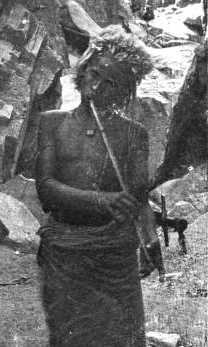
(1) Two trumpets (Af1926,0410.63 & Af1893,0715.27). The inventory number for the former indicates that this object remained in Mabel Bent’s personal collection until 1926 – when she was putting her affairs in order in her final years; she died in 1929. We may assume that the object was of sentimental value, giving her happy memories of the couple’s (perilous) journey to Ethiopia in 1893. We should note however that the findspot was not mentioned by Mabel and Bent only refers to one trumpet in his monograph of this trip: “As Digsa was one of the last Abyssinian villages of importance which we should visit, we took care here to annex an Abyssinian umbrella and a malakat [elsewhere malaket] or trumpet…” (J.T. Bent, The Sacred City of the Ethiopians, London, 1893, p. 212).
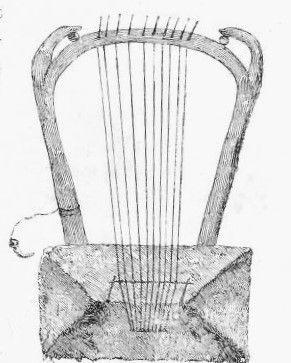
Ethiopian lyre (archive.org).
(2) Lyre (Af1893,0715.25). In his Sacred City of the Ethiopians (1896 edn, p. 25), Bent writes in Asmara: “Here for the first time we saw the Abyssinian lyre or harp, a specimen of which I coveted for six long weeks afterwards, until I was able to acquire one at Aksum…”.
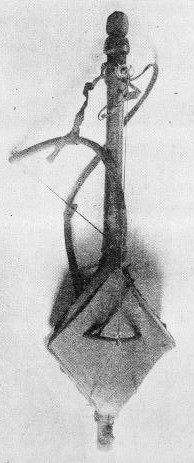
Ethiopian ‘fiddle’ (archive.org).
(3) Fiddle (Af1893,0715.24). In Bent’s Sacred City of the Ethiopians (1896 edn, p. 26), he writes “… another favourite Abyssinian instrument [is] called the chera masanko. This I also got. It is a sort of violin with a square sounding board, tightly made of skin, and played with a little bow. The asmari or wandering minstrels, also play it, and it is heard at every feast, whether religious or secular.”
4) Flute (Af1893,0715.26), made of cane and leather. In Bent’s Sacred City of the Ethiopians (1896 edn, pp. 28-9), we read: “As the trumpet has only one note, so has the Abyssinian flute, the imbilta. To make an Abyssinian band suitable to escort a great man or perform at a religious festival, you require four trumpets and three flutes, each player sounding a note in turn. The imbilta is nearly a yard long, and is as great a mark of personal distinction as the umbrella.” We may assume that Bent acquired one in Aksum, however, he says they are nearly 90 cm in length and the BM item is 58 cm.
For a contemporary angle on Ethiopian music and instruments, refer to Gabriella Ghermandi (b. 1965), Italo-Ethiopian writer and performer, focusing ‘on the intersection of African (specifically Ethiopian) and Italian identity’.
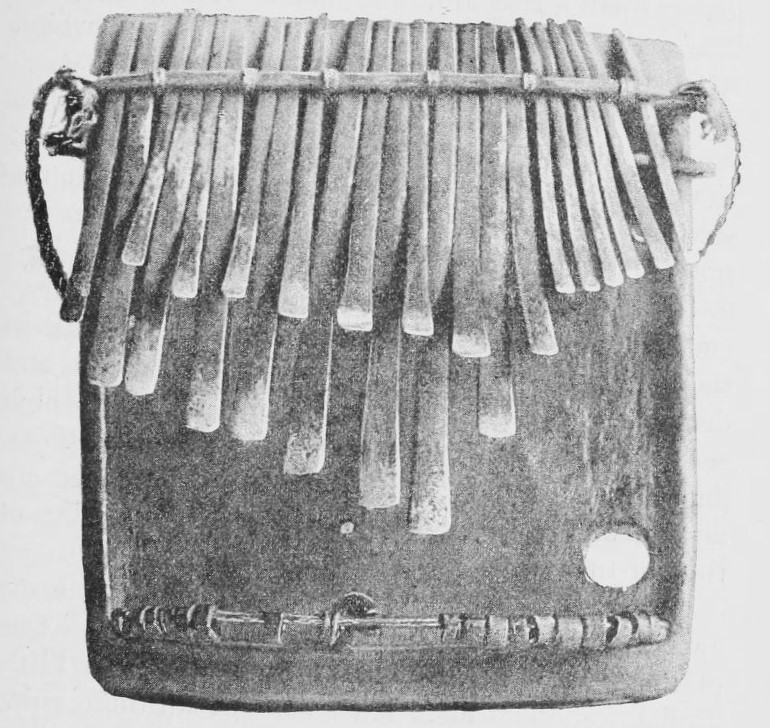
The ‘sansa’ from Zimbabwe (J.T. Bent, The Ruined Cities of Mashonaland, 1892: 81-82; archive,org).
(1) A sansa/’Makalanga piano’ (Af1892A0714/Af1979,01.4538). Described by Bent as “… very interesting specimens of primitive musical art; they have thirty or more iron keys, arranged to scale, fixed on to a piece of wood about half a foot square, which is decorated with carving behind.
This instrument they generally put into a gourd, with pieces of bone round the edge to increase the sound, which is decidedly melodious and recalls a spinet.” (J.T. Bent, The Ruined Cities of Mashonaland, London, 1892, pp. 81-82).
[Also known as the mbira or ‘thumb-piano’, click (YouTube) to hear it play]
(2) A rattle (Af1892,0714.24). Such a rattle may be referred to in this extract from Bent’s Ruined Cities of Mashonaland(1892, p. 330): “Evidence of festivities was also present in the shape of drums and long chains of grass cases for beads, which they hang round their calves to rattle at the dances…”
(3) Musical bow (Af1892,0714.146). On page 20 of Bent’s Ruined Cities of Mashonaland (1892), such a bow is referenced: “A man stood near, playing on an instrument like a bow with one string, with a gourd attached to bring out the sound. He played it with a bit of wood, and the strains were plaintive, if not sweet…”
1) and 2) Two flutes (As1926,0410.56 and As1926,0410.55) from Bahrain (1889), when the Bents spent some time excavating at the so-called ‘Mounds of Ali’.
3) Flute (As1926,0410.61). Acquired on the Bents’ remarkable journey on horseback, south-north, through Persia in 1889 on their way home from Bahrain. “We saw a wedding at Savandi… The women in red, with gold ornaments and uncovered faces, looked highly picturesque, and each carried in her hand a red handkerchief, which she flourished as she went round to the music of the flute and drum.” (From J.T. Bent, ‘In the Mountains of Medea’, Littell’s Living Age, Vol. 189 (1891), p.51).
How does it sound? Click to hear the Persian ney (YouTube).
4) Flute (As1926,0410.48) from the Wadi Hadramaut (Yemen). Collected by the Bents on one of their trips into the Yemeni interior between 1894-1897. “The Bedouin are rather clever at impromptu verses, and when we were in Wadi Ser they made night hideous by dancing in our camp… Bedouin women also take part in these dances… it was very weird by the light of the moon and the camp-fire, but wearisome when we wanted to sleep, particularly as they kept it up till after we were all astir in the morning, yelling, bawling, singing, and screeching… The ground was shaken as if horses were galloping about. A Bedou was playing a flute made of two leg-bones of a crane bound together with iron.” (Mabel and Theodore Bent, Southern Arabia (1900), p.128-9)
How does it sound? Click to hear the mizmar, or Yemeni flute (YouTube).
From London to Oxford?
Flute players in the Wadi Koukout, Sudan (1896), heard by the Bents (‘Southern Arabia’, p.337).
It would make such sense for the Bents’ above-mentioned musical instruments, in store in the British Museum, to be loaned for display, on a long-term basis, to the Pitt Rivers in Oxford, Bent’s alma mater: after all, he read history at Wadham College (in the early 1870s), just a few hundred metres from the Pitt Rivers today, and how pleasant to think of the great traveller’s legacy freely visible to all there, a great collection from only 20 years or so of exploration, and always with his tireless wife – in the Levant, Africa, and Arabia.
[All websites accessed 02/02/2024]
Spring 2024. Here is a recent article (Καθαρά Δευτέρα του 1884 στα Δυο Χωριά με Τσαμπούνες) by Theodoros Chiou on the Bents’ visit to Cycladic Tinos in 1884, focusing on their fascination for traditional music and musical instruments. (The automatic English translation is of variable quality – αλλά δεν πειράζει !)




 Leave a comment or contact us about this article