
Celebrity explorer Theodore Bent’s expedition to Great Zimbabwe in 1891 removed eight soapstone birds (six large and two small) from its enigmatic ruins (Bent 1892: 180). They came to London it seems with the rest of his acquisitions and were exhibited in the Bents’ townhouse, near Marble Arch, before Cecil Rhodes (the couple’s great sponsor) had them returned to Cape Town – he had previously bought a specimen from the ranger Willi Posselt and put it on display at his Groote Schuur estate. This item from Rhodes’s mansion (and the others, over the last decades) has recently (April 2026) been rightfully handed back to Zimbabwe with much celebration (including Bent on the BBC!).
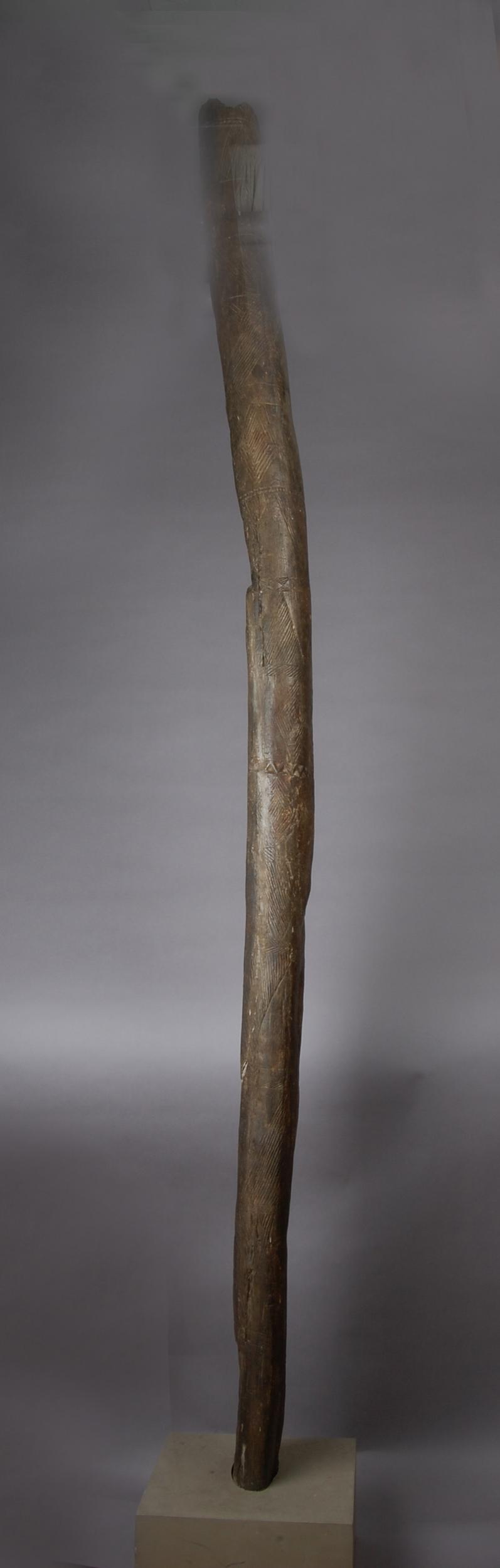
What is often overlooked, however, is that these large birds were originally carved on long, soapstone beams (pillars/pedestals/plinths) that decorated a construction Bent referred to as an acropolis/sacred enclosure. Happily, his wife, Mabel Bent, kept one of these for her own collection long after Theodore’s death in 1897, only donating it to the British Museum (Af1926,0410.1), before she, too, died in 1929. This beam has survived, although it is not on display – a perch without a bird.
As it happens, Mabel’s beam (over 2m high) appears in an article coming from an interview she gave to May Crommelin (1901), ‘Lesser Lares’ (From the Collection of Mrs. Theodore Bent). The Connoisseur: an illustrated magazine for collectors. pp. 161-4.
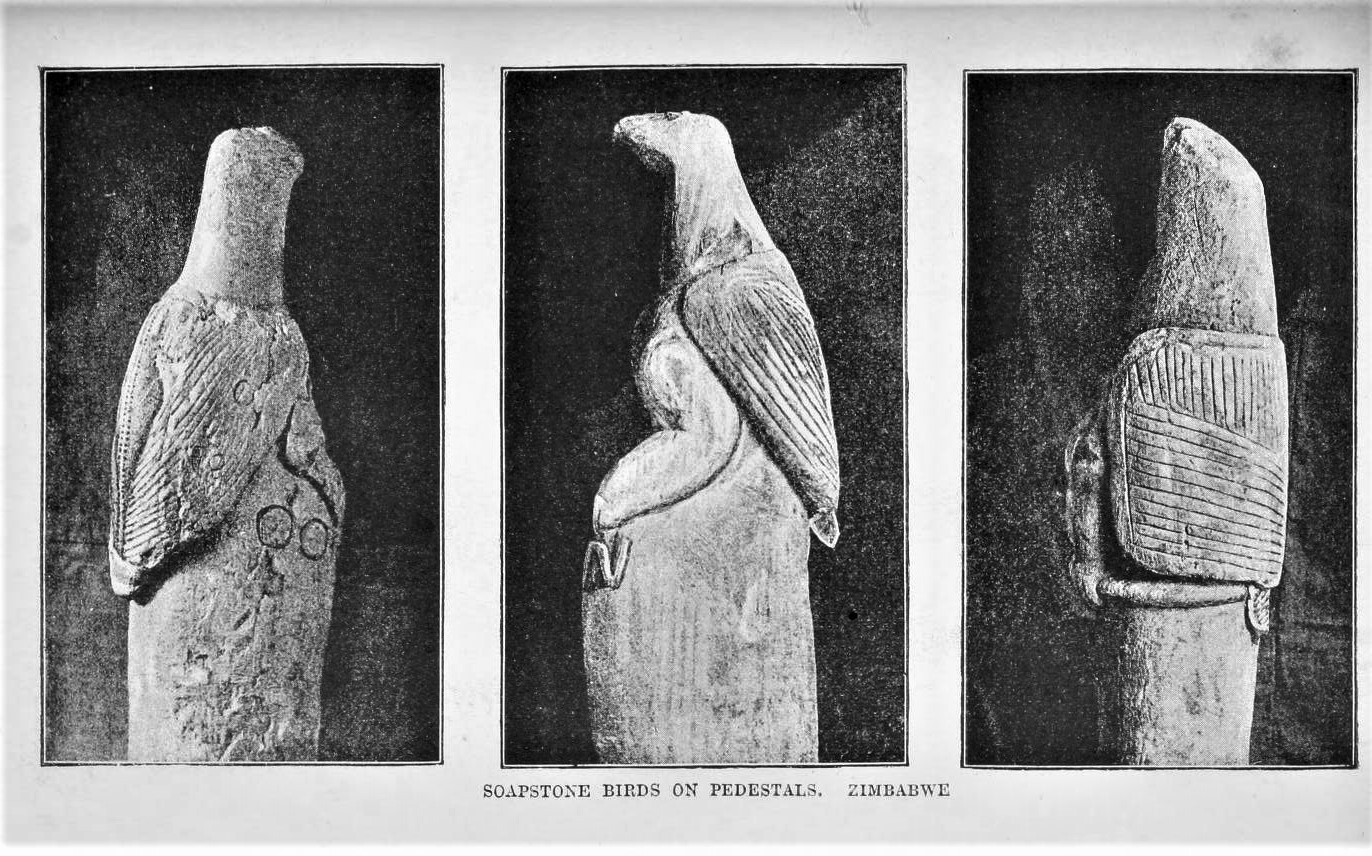
Theodore Bent (1892: 158-161) records that this ‘…tall decorated soapstone pillar 11 feet 6 inches in height, which stood on the platform already alluded to… acted as a centre to a group of monoliths; the base of this pillar we found, the rest had been broken off… It was worked with bands of geometric patterns around it, each different from the other and divided into compartments by circular patterns, one of which is the chevron pattern found on the circular ruin below; it only runs round a portion of the pillar; and may possibly have been used to orient it towards the setting sun.’ (It appears that the remaining portion of the ‘pillar’ found its way to the Cape Town museum.)
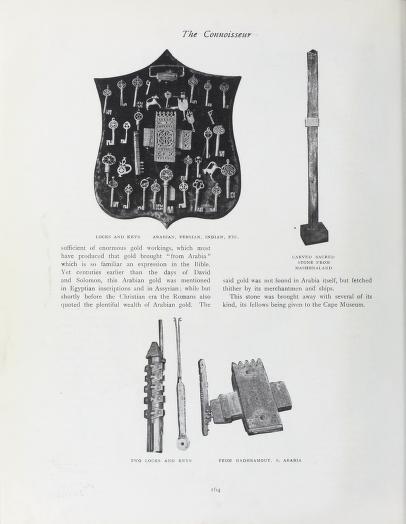
In 1930, Mabel’s beam – which had broken in two parts and was taped up (see the illustration from The Connoisseur) – was exhibited at the British Museum as part of the ‘Loan Exhibition of Antiquities from Zimbabwe and other Ancient Sites in Rhodesia’, organised for the British Association for the Advancement of Science and relevant African institutions (The South African Museum, Cape Town; The Rhodesian Museum, Bulawayo; and the Queen Victoria Memorial, Salisbury). A cast was subsequently made and sent to South Africa, Mabel Bent’s original remaining in London. After the event, it seems that the beam was separated into two parts – the base part going to Cape Town, and the top part remaining in the British Museum (No. Af1926,0410.1, see illustration). The base part, we believe, is now (April 2026) also in the process of being repatriated to Zimbabwe from the South Africa Museum (Iziko) Museums. Should not the two parts be rejoined?
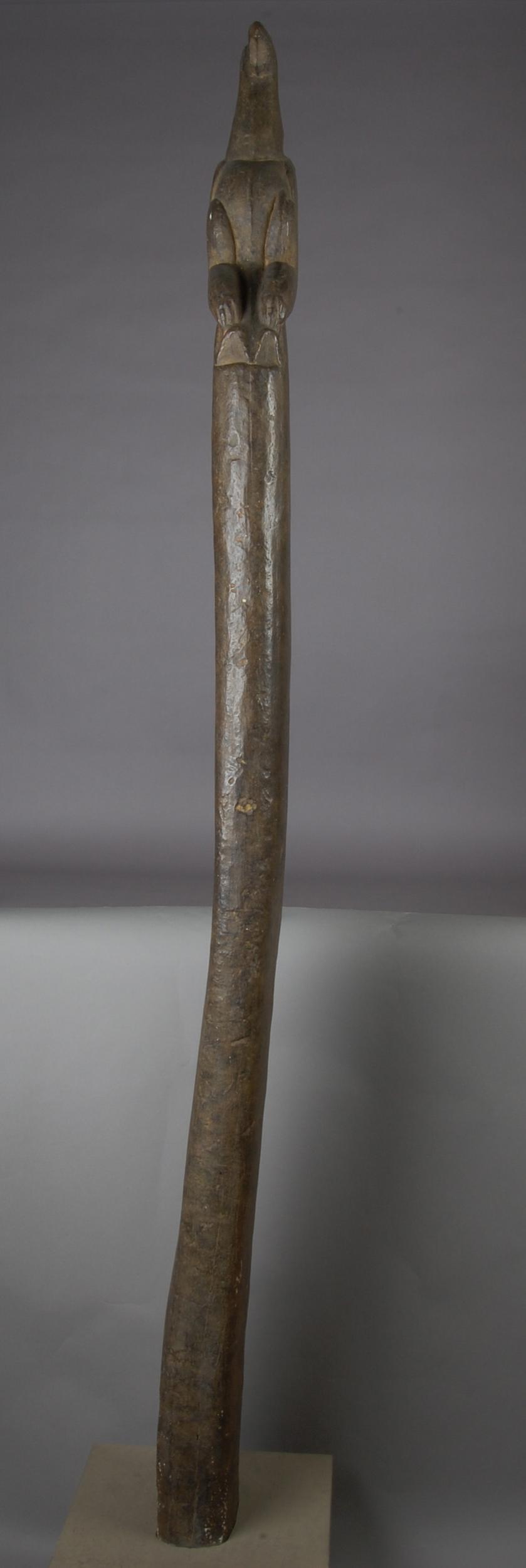
The British Museum also commissioned a replica cast of a beam (c. 175 cm high) with bird attached, giving an idea of what a complete object would have looked like; it is described as: ‘Cast; sculpture, made of plaster. In form of a bird sitting on top of a pedestal. Set into square base. Painted grey throughout to match original soapstone object. Distinguished by short panel of chevrons at front of chest. Plumage indicated by parallel oblique lines.’
Bent’s African watercolours
The collection of Bent’s contemporary watercolours in the Zimbabwe National Archives (Harare) is still under lock and key and virtually impossible it seems to access, despite several enquiries and approaches by eminent local academics. Although we do not know what condition they are in after so long, hopefully one day this unique and highly important resource can be made available to international researchers.

Bibliography
Theodore Bent, The Ruined Cities of Mashonaland. London, 1892.
Mabel Bent, The Travel Chronicles of Mabel Bent, Vol. 2, Africa. Oxford, 2012.
 Leave a comment or contact us about this article