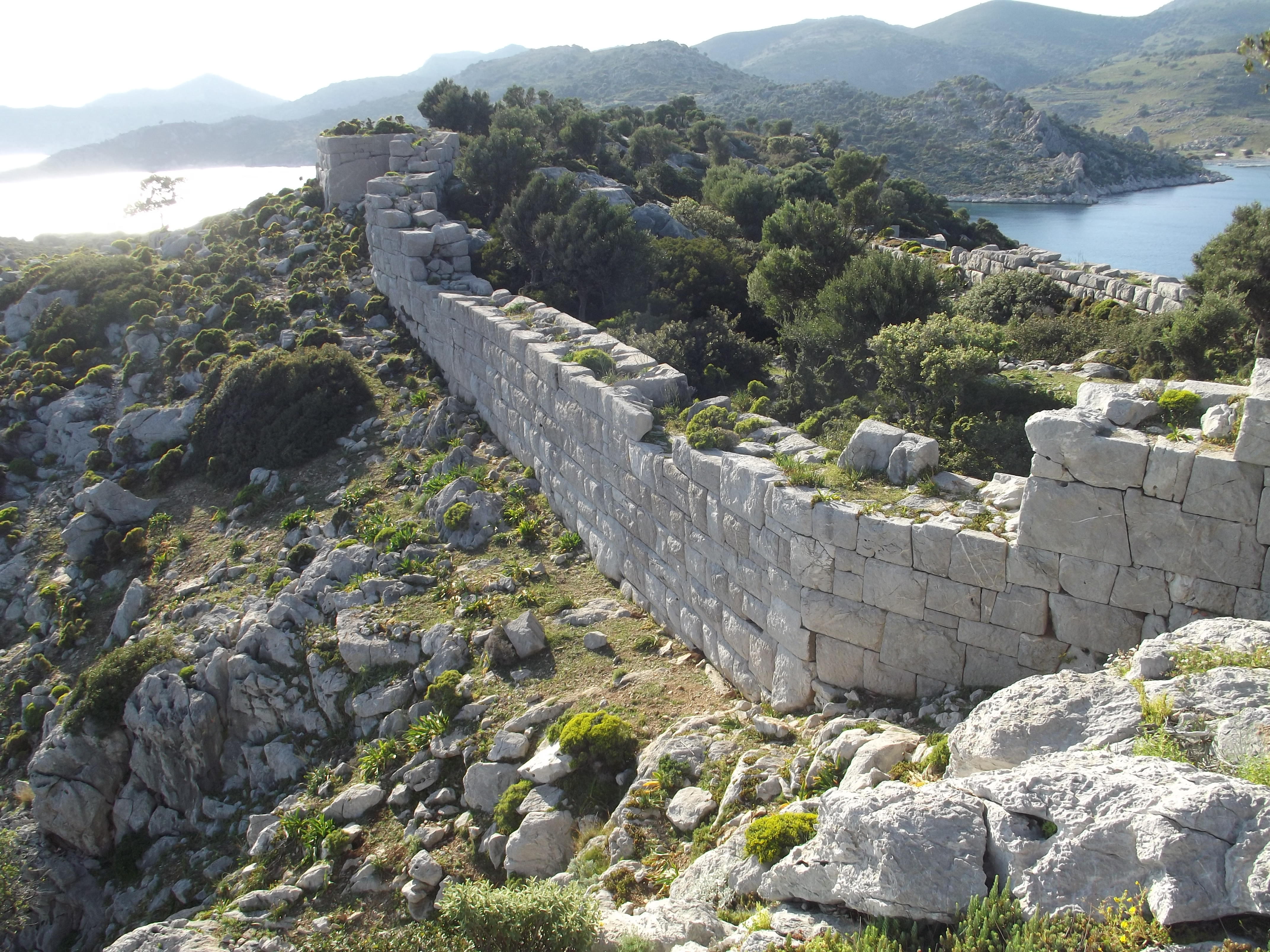
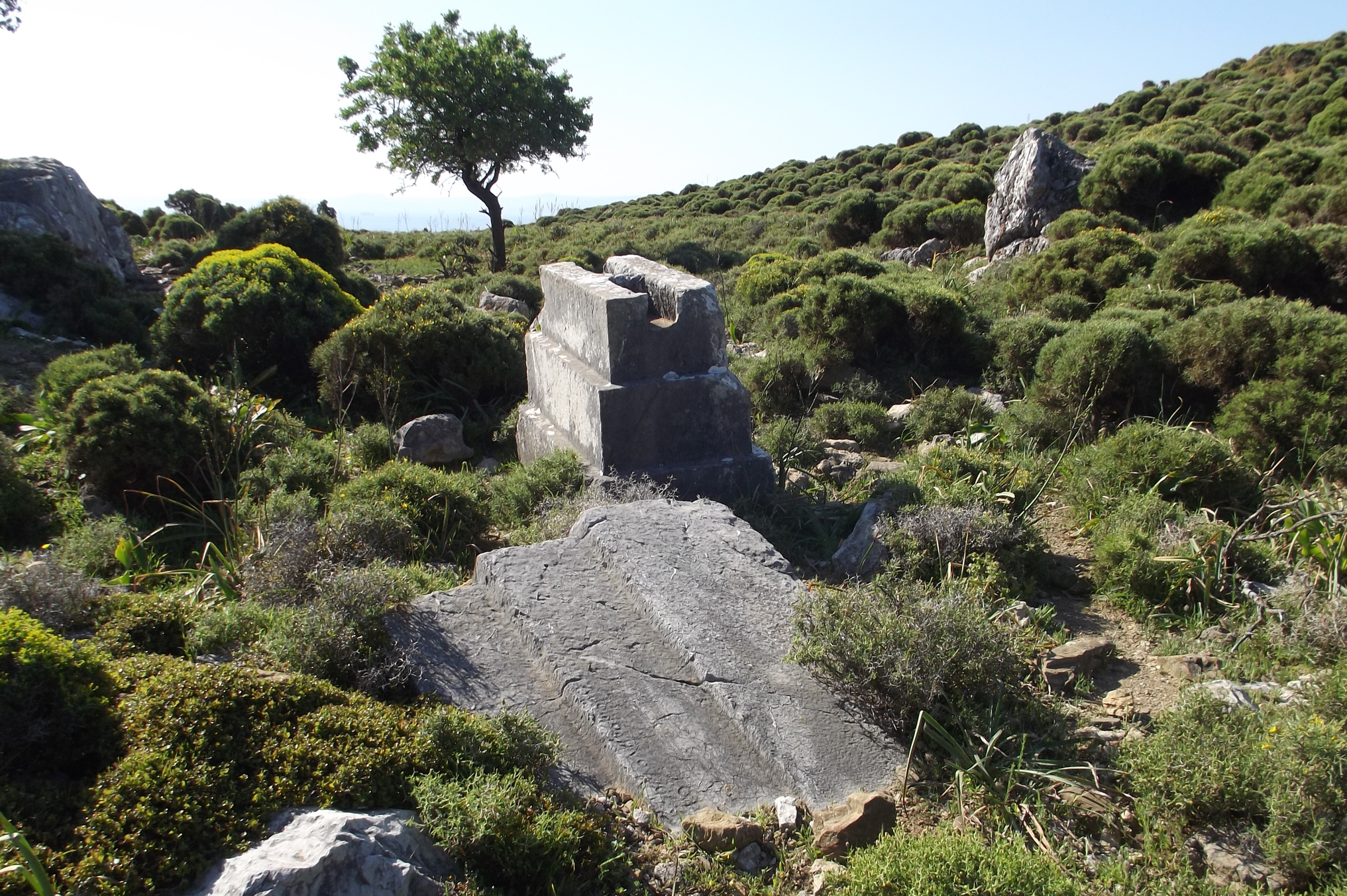
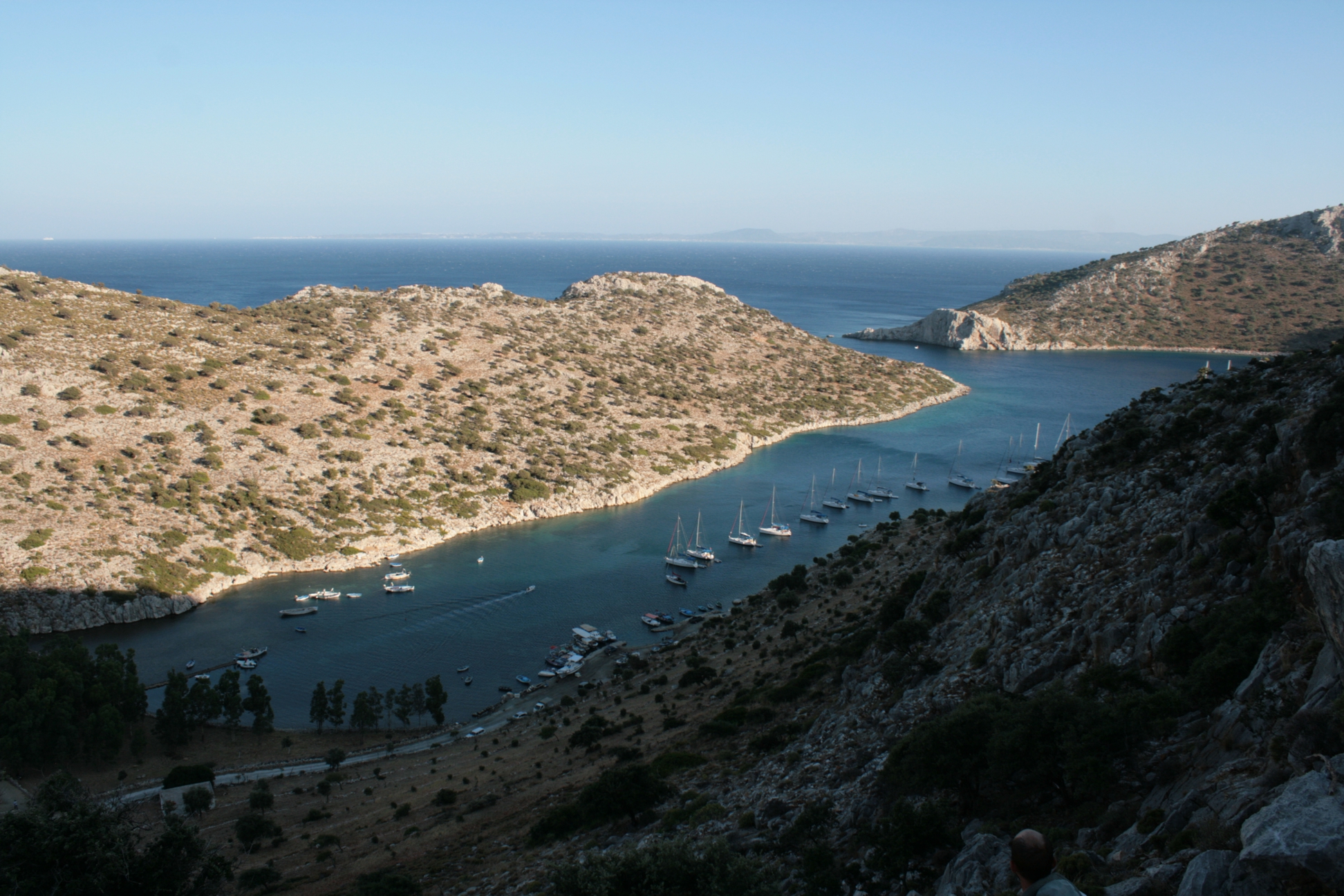
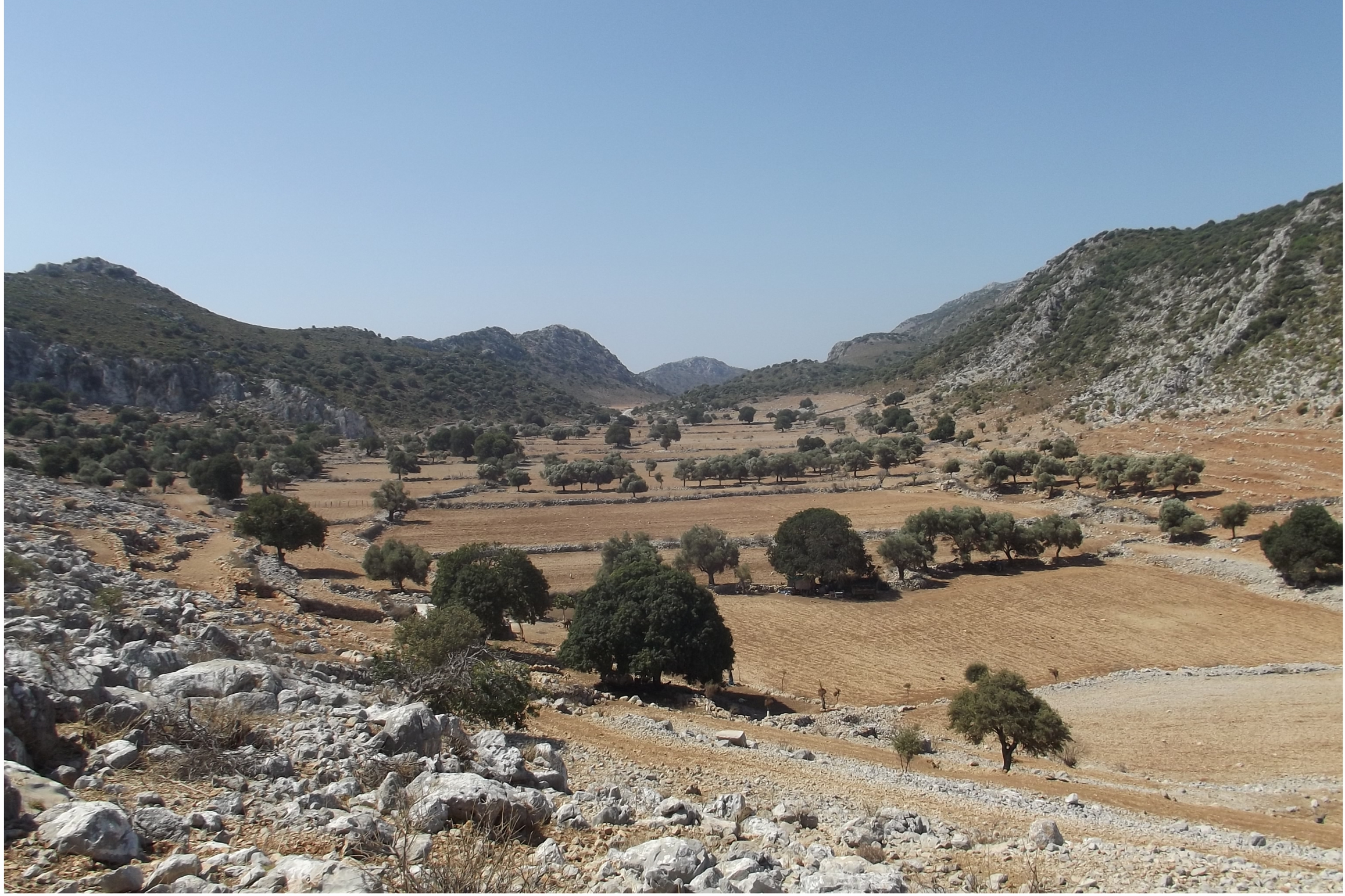
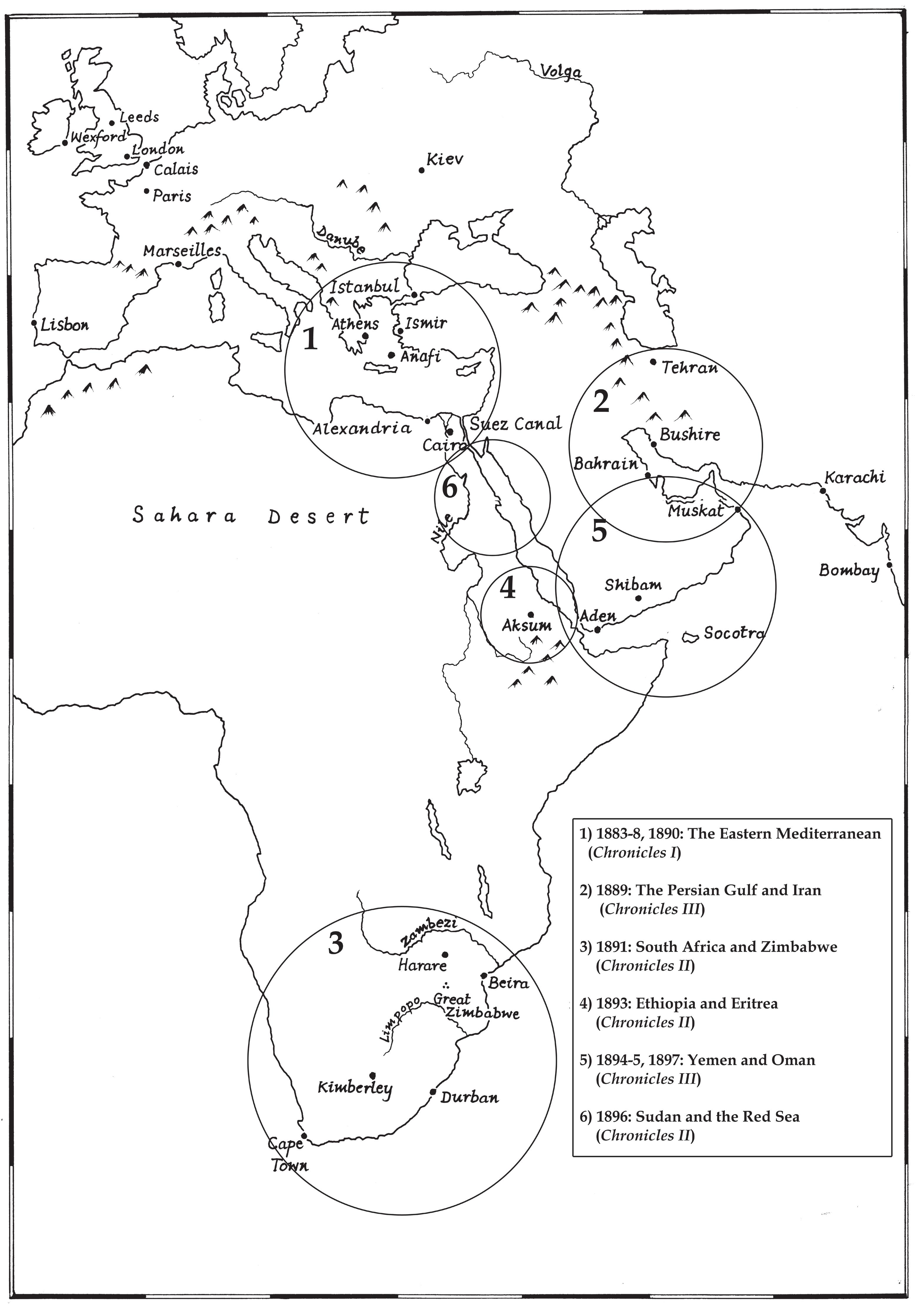
A recent photo sent in by Alan King as he steamed by Syrna (Σύρνα, anciently Syrnos) in the Dodecanese – minuscule and inaccessible, thus happily tucked away from Cycladic summer silliness just to the west – steered us to the Bents’ writings on an islet they were determined to see in early Spring 1888.
Theodore, after a cursory inspection of the terrain around the landing place on April 9th, wrote a note for The Classical Review (1888, Vol. II (10), p.329). If he did remove some of the obsidian blades he refers to, then they are not it seems recorded elsewhere:
Syrna (Σύρνα, anciently Syrnos) in the Dodecanese – minuscule and inaccessible (click to expand; Google maps).
“The small island rock, anciently known as Sirina, now as Agios Joannis, occupies a somewhat important position in the Aegean Sea, as one of the stepping-stones by which the earlier inhabitants of Karia must have travelled westwards; it has two good harbours, one to the north, and one to the south, and is placed midway in a long stretch of sea between Karpathos and Astypalaea, in both of which islands traces of this prehistoric race have been found. Having carefully examined Anaphi, an island lying to the west of this line of route, and having found there no traces whatsoever of this early population, and knowing that Astypalaea, Amorgos, Naxos and Paros are full of their tombs, I was considerably interested in discovering in the ruins of a square fortress on Sirina quantities of obsidian knives, which at once identified this rock with the race in question, and proved to us that they made use of it as a halting-place on their way to and from the marble quarries of Paros; in fact Parian marble, objects of which are so frequently found in their tombs, would seem to have been their chief quest in these westward migrations.”
Theodore Bent’s short piece on ‘Sirina’ for ‘The Classical Review’ (1888, Vol. II (10), p.329) (archive.org).
Theodore makes no mention of the hassle getting to this tricky rock. They had hired a fine schooner from Syros a month or so before in early 1888 to cruise up and down the Turkish coast opposite Rhodes, and the skipper, Captain Nikolas, had no intention of breaking her up for insignificant Sirina. But the Bents, as often as not, get their way. Mabel tells the tale in her diary – first a skirmish from her and then a broadside from her husband:
“Sunday [April 8th, 1888]. Well, this morning we set sail, but not before dawn, for Sirina, as we thought, and with the scirocco we should have sailed south of Tilos, which lay directly in our way. We were busy in the cabin, but I peeped up and saw we were steering straight for Nisiros, north of Tilos. So I told Theodore and he proposed to go up and row with the captain, but I said I would make less formal enquiries. I said to [first mate] Grigoris, ‘We are going north of Tilos it seems?’ ‘Yes,’ he said. ‘But very far north! We are going to Nisiros.’ ‘Well! I suppose we shall tack soon, for we shall no doubt pass Tilos as close as we did Rhodes.’ The wind was quite fair for Tilos. He shrugged his shoulders as if to say he could not help it, and I said, ‘How soon shall we tack for the south?’ ‘We are going inside Nisiros.’ ‘But why?’ ‘To go to Kos!’
“So Theodore went up and there was a frightful, awful row. Now Grigoris said he did not wish to go to Sirina at all, and would not go there, and there was no water or harbours and many rocks and no lighthouse and he was always considered a most noble man, and honourable, and so on. ‘Very well’, said Theodore, ‘Go straight to Syra and we will go to the judge and the consul,’ etc.
“Later, with [our dragoman Manthaios] as a go-between we said if we could not go south, we did not mind going to a small island called Levitha on the way to Syra. This was agreed upon and we did not care a bit. It rained. I looked out again and saw that now we were going south of Nisiros and close to Tilos, past Kavos Kryos and Kos, where we had agreed to anchor for the night far to the dim north. ‘Where are we going now, Andreas?’ ‘To that place,’ [the crewman replied] very sulkily. ‘What place?’ ‘To Sirina!’ Of course we have lost hours by going so far north and are now fearing a calm.
“Next morning [9th April ] about 10 we reached Sirina and landed after luncheon. We walked across the island to the sea at the other side, where there is a deep bay. Here was a sort of farm, a very irregular enclosure of loose piled stones and very thick walls. The only thing with mortar was the oven. An old woman came out of the dark hut where she was shut in and brought us out little square blocks of wood to sit on, and she directed Theodore to where there were some old stones and so I returned to the ship with one man and the rest went off, but finding the earth all gone and only foundations on rocks they returned, and we set off again in the afternoon.” (Travel Chronicles of Mrs J Theodore Bent, Vol.1, Oxford, 2006, p.252-3).
Syrna (Alan King, Summer 2021).
All rather a storm in a seacup, and the frivolous couple’s scamper contrasts unbelievably with the reality of an incident on the island many years later, 7 December 1946, when a medical team,* including Lawrence Durrell as it happens, was sent from Rhodes on a Greek warship to assist the sick and wounded of the vessel Athina Rafiah (originally the SS Athena), carrying Jewish immigrants to Israel, which was wrecked there, with around 800 survivors coming ashore. Sadly eight of the refugees, among them children, perished in the aftermath of the wreck and are buried on the island. There is a lonely monument there to them all.
* ‘With Durrell on Rhodes, 1945-47’, by Raymond Mills, in Twentieth Century Literature, Vol. 33, No. 3, Lawrence Durrell Issue, Part 1 (Autumn, 1987), pp. 312-316.
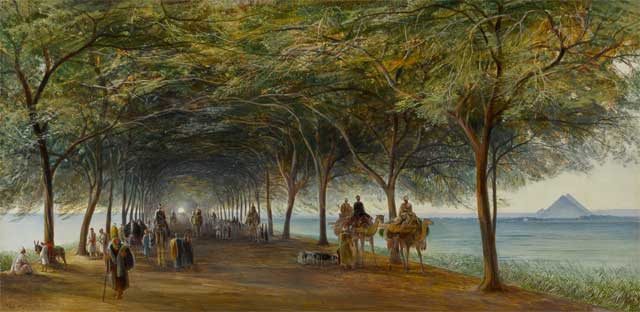
Edward Lear, The Pyramids Road, Gizeh. Signed with monogram and dated EL.1873 lower left. Oil on canvas. Unframed: 53 by 104cm., 21 by 41 in (reproduced from the Edward Lear blog site – A Blog of Bosh).
Yesterday (30 March 2021) a distant view of the Giza Pyramids by Edward Lear sold at Sotheby’s (Lot 25) for £801,500, the second-highest price, we think, ever reached for a painting by this quite extraordinary man and artist.
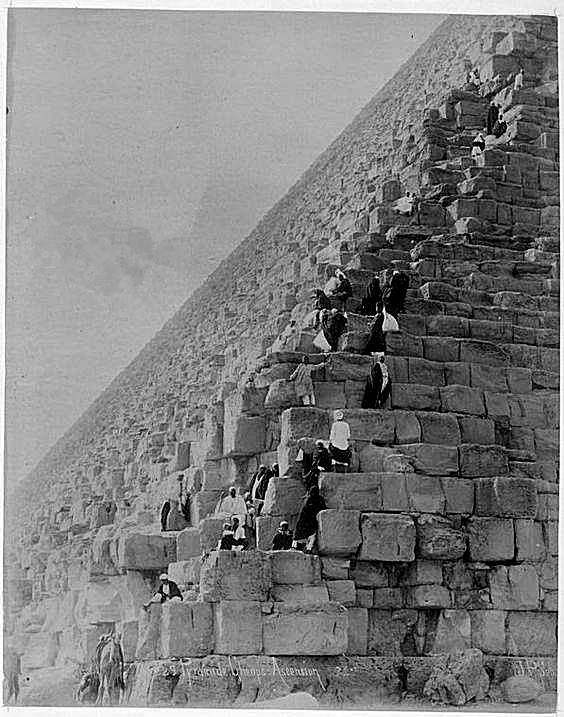
Some Pyramid scalers in 1885 (the year of Mabel’s ascent), by J. Pascal Sébah. Obviously clambering all over them was the thing to do back then; it is not recommended today (although it seems Emma Thompson famously did in ‘Fortunes of War’).
It’s a wonderful painting – your eye focusing on the dot of light at the end of the road, before glancing right, to the Pyramids themselves. Thoughts of the Bents in Cairo come to mind, notably in early 1885 when Mabel climbed Khufu, the Great, on her birthday (Wednesday 28 January): “… After dinner we went out in the bright moonlight and Theodore… went to visit the Sphinx but I preferred to go up the Pyramid, as I had not done it on Monday… I scrambled up all alone… I wondered if ‘Fair Rhodope who as the story tells’ sat on the top of the Pyramid, delighting all beholders, was a poor creature whose clothes had got torn off in the ascent and who could not get down. I thought of the dangers and difficulties in ‘Murray’ and ‘Baedeker’ and determined to read about them and tremble tomorrow, and I banished scornfully a very passing thought of the silk elbows of the only smart frock I have with me, and joyfully and proudly reached the summit, a strangely dressed figure – Hat, silk and velvet brocade body, white lace fichu over it and a blue cloth petticoat with a wide scarlet band, which I quite vainly tried to conceal by tying a black lace scarf round it; the skirt had been discarded before starting… It was splendid being up there and I think it very very unlikely that any other person has been up by moonlight on his birthday before…
(It was on this same trip, we can reveal, that Theodore and Mabel actually excavated at Saqqara (near Ti’s tomb) – not a widely reported fact and their activities went unpublished, but for Mabel’s diary entry of a picnic there on 30th January 1885: “We improved our knowledge of the letters and were so delighted with the outer part that the old man rattled his keys much and often to try and attract us inside. When we did get inside we felt we should be there a long time so sent for our luncheon which we ate in the outer part, digging a hole for orange peels etc., that they might not offend the sight of future comers.“)
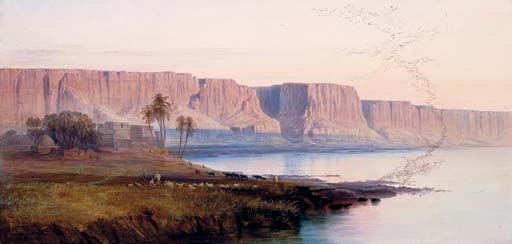
If you are curious, a search for the highest price paid for a Lear finds a sum of £938,400 in June 2007, at Christie’s, for another Egyptian view: Kasr-es-Saiyyad (Kasr es Saiad, El Qasr el Saiyad).
Edward Lear (wikipedia).
Astronomical prices indeed for an artist who had to work tirelessly in his lifetime to make ends meet and who eventually settled modestly in San Remo, Italy, where, in a manner of speaking, he met Bent: “Tozer of Oxford sends me a charming book… by Theodore Bent… all about the Cyclades. (Dearly beloved child let me announce to you that this word is pronounced ‘Sick Ladies,’ – howsomdever certain Britishers call it ‘Sigh-claides.’)…” (Lear to Chichester Fortescue, Lord Carlingford [30 April 1885, San Remo]).
Mabel Bent’s diaries are available from Archaeopress, Oxford.
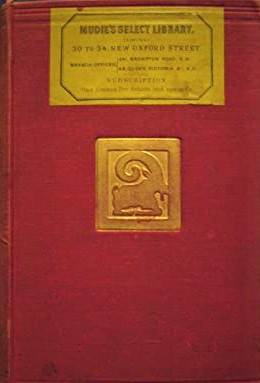
The cloth cover of ‘Southern Arabia’ (from an item on AbeBooks).
“We cannot too much admire the persistence, courage, and cheerful endurance of hardships displayed by Mr. Bent and his plucky wife.” – The Manchester Guardian
“Mrs. Bent has compiled a work rich in information. Much is included of extreme utility. The volume with its good maps and illustrations and instructive appendices, will deservedly take its place in the category of recognized and authoritative books of travel.” – The World
“May we hope for more.” – The Outlook
In anyone’s list of the best twenty books in the English language on explorations in the Middle East you are likely to find Mabel and Theodore Bent’s Southern Arabia, published in London on 26 January 1900.
This ambitious work, compiled by Mabel from her ‘Chronicles‘ and the notebooks and articles published by Theodore before his untimely death in May 1897, a few days after returning from Aden, now commands high prices for its first edition, handsome as it is with its red cloth binding, sketches by Theodore, Mabel’s photographs, and numerous maps.
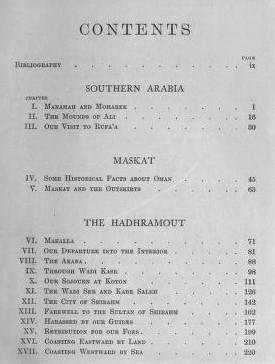
The first page of the Table of Contents from ‘Southern Arabia’.
The book would have cost you 18 shillings, quite a sum in those days, over £40 now. However, you will need to find over £500, or as much as £1500, for a good original copy today (March 2021). On-demand editions, thankfully, are easy to find and there are also excellent, highly-recommended (and free) online versions (e.g. archive.org), and the Table of Contents is reproduced here from one.
The region absorbed Theodore Bent for the last few years of his short life and it is thus unsurprising that Mabel spent the next ten years or so, the first decade of the twentieth century, returning for lengthy stays in Palestine, making Jerusalem her base. It has to be said that these sojourns were challenging for Mrs Bent – she had no partner, she became involved in intrigue and controversy, she tried her hand at bookselling, at caring for Gordon’s spurious Garden Tomb (editing a guidebook to it in the 1920s); and there was the episode of her ride alone in the wilderness and her fall and broken leg, and then there is the mystery of the so-called Bethel Seal. And much must be seen within the context of her formative years – a difficult father, the painful death of her mother, the assumed suicide of her younger brother, the early death from typhoid of her elder brother… the need to be somewhere else can be well understood.
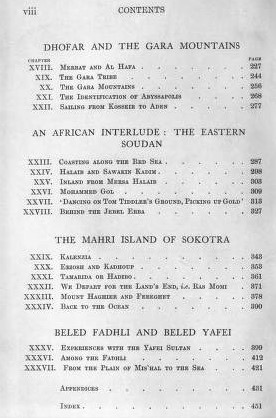
The second page of the Table of Contents from ‘Southern Arabia’.
Strangest of all, was Mabel’s obsession – for such it seems – with the controversial movement, British Israelism, and she used her months in Jerusalem to research and write that tract of nonsense she published in 1908 under the title Anglo-Saxons from Palestine. However the book serves two good purposes, one is to illustrate just how absurd the concept was, and is, and the other is to provide, of all things, fourteen pages of reviews of her 1900 publication – Southern Arabia.
Next time you publish, try asking your editor if you can include fourteen pages of reviews of your last book, and a book on someone else’s list to boot! See what answer you get! But you are not Mabel Bent of course – she was something of an unmovable force, much respected for her courage and ‘pluck’, in mountains and deserts, and on horse, donkey, and camel.
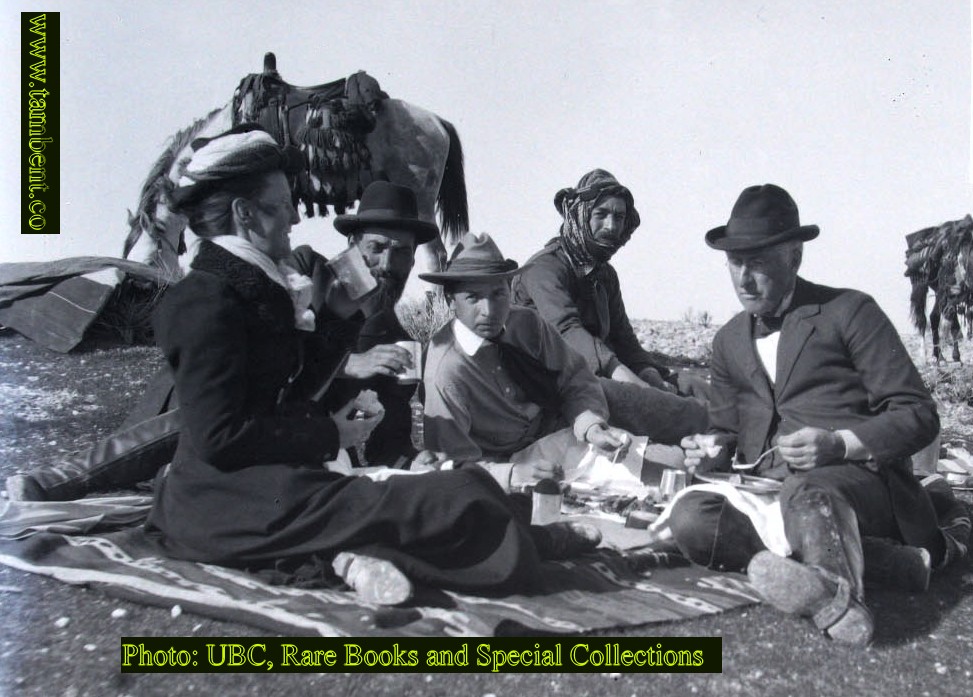
Mabel Bent taking tea with Moses Cotsworth and party in the Palestinian hinterland in 1900/1 (Moses Cotsworth collection, unknown photographer. Photo reproduced with the kind permission of Rare Books and Special Collections, Irving K. Barber Learning Centre, University of British Columbia).
Much of this is evident in what amounts to Mabel’s scrapbook of press cuttings on Southern Arabia, which we present for you via the link below. It is unlikely that they will have been read much since their publication. They are Mabel’s own selection, and she has judiciously edited them for negative remarks – a stinker (‘Man’, Vol. 1, 1901, 29-30) presumably by Arabist D. G. Hogarth, understandably, is not included, but he may well have had a pen in a couple of the others!
The Bents’ map of the Yemeni interior (from ‘Southern Arabia’).
Reading them, with their focus on Aden, Bahrain, Yemen, Dhofar, Oman, Muscat, Sokotra, the Red Sea, etc., you could just as well switch the geography to the Eastern Mediterranean, Egypt, Africa, Iran, the western seaboard of India, or Iran – those other theatres of exploration engaging the Bents for twenty years. And not lost on you, with the sense that Mabel is underscoring each, will be all the old adjectives of Empire – the review from the Illustrated London News is, well, illustrative: “That lady’s high spirit and courage, the tact and cleverness with which she managed to bear her position, as the only female traveller must have been a great help to her conjugal partner. This book is her memorial of him and will be acceptable to many readers.”
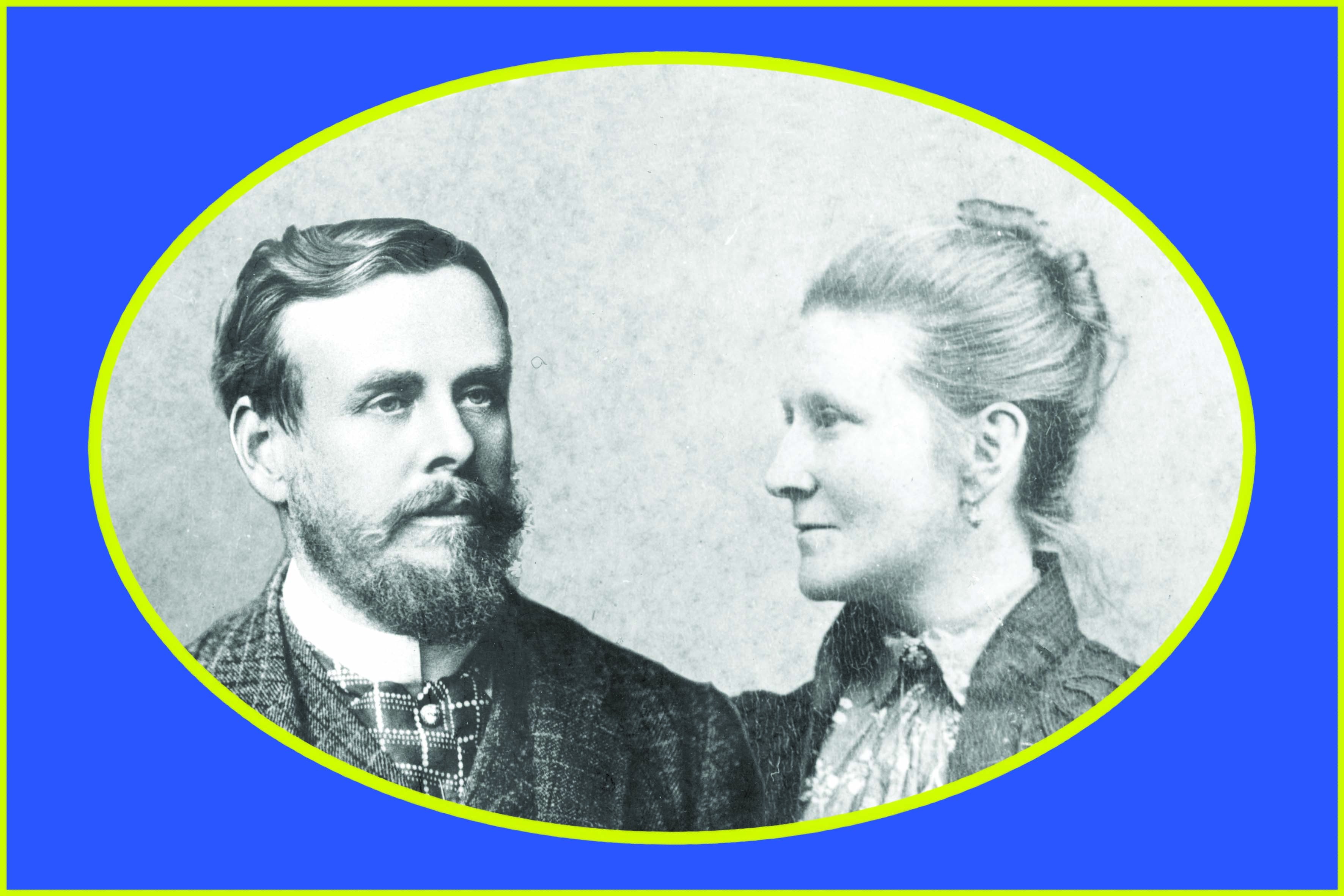
Theodore and Mabel Bent (the Bent Archive).
But no excuses are needed for drawing these lost glimpses of the Bents to your attention (the bibliographical references are incomplete, let us know if you want any specifically and we will try and help) – the notices will have reminded Mabel, of course, of her dead husband, and their fulfilled twenty years of adventures together, and, like all travel-addicts, her need to be somewhere else…
“The vivacity of her feminine humour, the keen observation of amusing little details, the lively recollection of droll anecdotes, and the brave wife’s spirit of comradeship in their frequent adventurous travels, grace with a peculiar charm the instructive revelation of much rare fresh learning which concerns the lore of historic antiquity, as well as the present condition of territories yet imperfectly known… That lady’s courage and high spirit, the tact and cleverness with which she managed to bear her position as the only female traveller, must have been a great help to her conjugal partner. This book is her memorial of him, acceptable to many readers who condole with her irreparable bereavement.” (The Illustrated London News, April 21, 1900, p. 556)
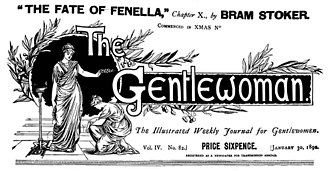
“[One] of the most notable and charming women of the day…” and her “museum” – 13 Great Cumberland Place, London, W1
“The Gentlewoman – The Illustrated Weekly Journal for Gentlewomen”, No. 175, Vol. VII, Saturday, November 11, 1893.
Both Theodore and Mabel Bent liked to style themselves ‘archaeologists’, and at times a case can be made that they were… and at others that they were anything but. But there can be no doubting they were truly exceptional travellers and explorers, regularly facing uncertainty and considerable hardships over a period of almost twenty years – ‘excavating’ where they could, usually in line with whatever Theodore’s current hobby-horse happened to be – early life in the Cyclades, the Phoenicians, the Queen of Sheba…
Theodore and Mabel Bent (the Bent Archive).
The Bents are an amazingly addictive couple and ‘the archaeology of the Bents’ is very much part of what the Bent Archive is all about. And now and then, once in twenty years of research, something truly remarkable, unique even, comes to light. The late summer of 2020 produced just such a discovery, beginning with an insignificant alert from the British Newspaper Archive saying that a quality women’s magazine, The Gentlewoman, had been added to its list of digital holdings, most of which originate from the British Library. Straightaway the search term ‘Theodore Bent’ (which will turn up either Mr or Mrs J. Theodore Bent) went in, and, just like an excavator in an opening trench, you wait to see if anything comes up. Bingo! There it was – The Gentlewoman – The Illustrated Weekly Journal for Gentlewomen, Vol. VII, Saturday, November 11, 1893, pages 621-622, Article title: Gentlewomen ‘At Home’, No. CLXXV, ‘Mrs. Theodore Bent… at 13, Great Cumberland Place’.
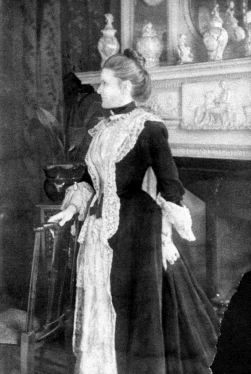
An intriguing portrait of Mabel Bent in the “Gentlewoman” article reprinted here.
An astonishing discovery, and for us as intriguing as anything the Bents brought home to London from the Eastern Mediterranean, Africa, or Arabia. And what makes the article so appealing is that it is the only piece unearthed so far that goes into any detail about the Bents’ archaeological and ethnographic finds that they had out on show in their London townhouse (an invitation and victim to the Blitz), 13 Great Cumberland Place, just a few hundred metres from Marble Arch. A further discovery is that the article also contains a very rare portrait of Mabel (which our research shows is by Henry Van der Weyde); there are also three unique photographs, sadly very dark, of the interior of their house.
This revelatory article from The Gentlewoman is now transcribed below and we make no apologies for its length – you can return to it as often as you like, and it is probably the first time for a hundred years it will have been re-read. Its context (and once more we have archaeology), reinforces the aura of celebrity the Bents had acquired following their 1891 trip to ‘Great Zimbabwe’, with Cecil Rhodes scheming behind him – and in a sense the great ‘Colossus’ made a minor one of Theodore, and Mabel too.
The last few paragraphs of the piece make reference to the 1893 scandal involving the controversy of whether women should continue being elected Fellows of the Royal Geographical Society – Mabel was in the proposed second cohort (22 or so had been elected thus far), but the RGS hierarchy managed to ban them from applying. It was a sorry story, not put right until 1913.
It is also worth noting that some of the dates mentioned in the article are inaccurate for some reason – perhaps Mabel’s memory let her down during the interview with the editor.
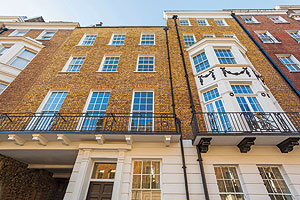
The Bents’ first home at 43 Great Cumberland Place. 13 Great Cumberland Place, alas, is no longer with us.
Nor does the article always make for happy reading – there are inclusions and stray finds that are unwelcome today, but which were the matrix of the day – the discovery that two ikons from the Patmos’ ‘Cave of the Apocalypse’ were removed is a shock (although Mabel in her diary records that at least one was ‘purchased’). Mabel died in 1929 and a few years previously she donated some of the artefacts she held most dear, those that reminded her most of happier times before Theodore’s early death in 1897, to the British Museum. All her remaining assets were bequeathed to her nieces, and her collections divided up, dispersed, sold off, reverting to anonymous items, and now in the main contextless, provenances lost. And the Patmos ikons? Where they are today, we don’t know. Let’s hope some future archaeologist turns them up and sees these little treasures returned to the Dodecanese…
… but let’s make a start on the transcription, and hand you over to Theodore and Mabel, in one of their cluttered drawing rooms, carriages rattling along in the street below, being interviewed by the editor of TheGentlewoman, Joseph Snell Wood. It is Autumn in London in 1893, an empire’s heyday, and the leaves in Hyde Park are changing colour…
Gentlewomen ‘At Home’, ‘Mrs. Theodore Bent… at 13, Great Cumberland Place’
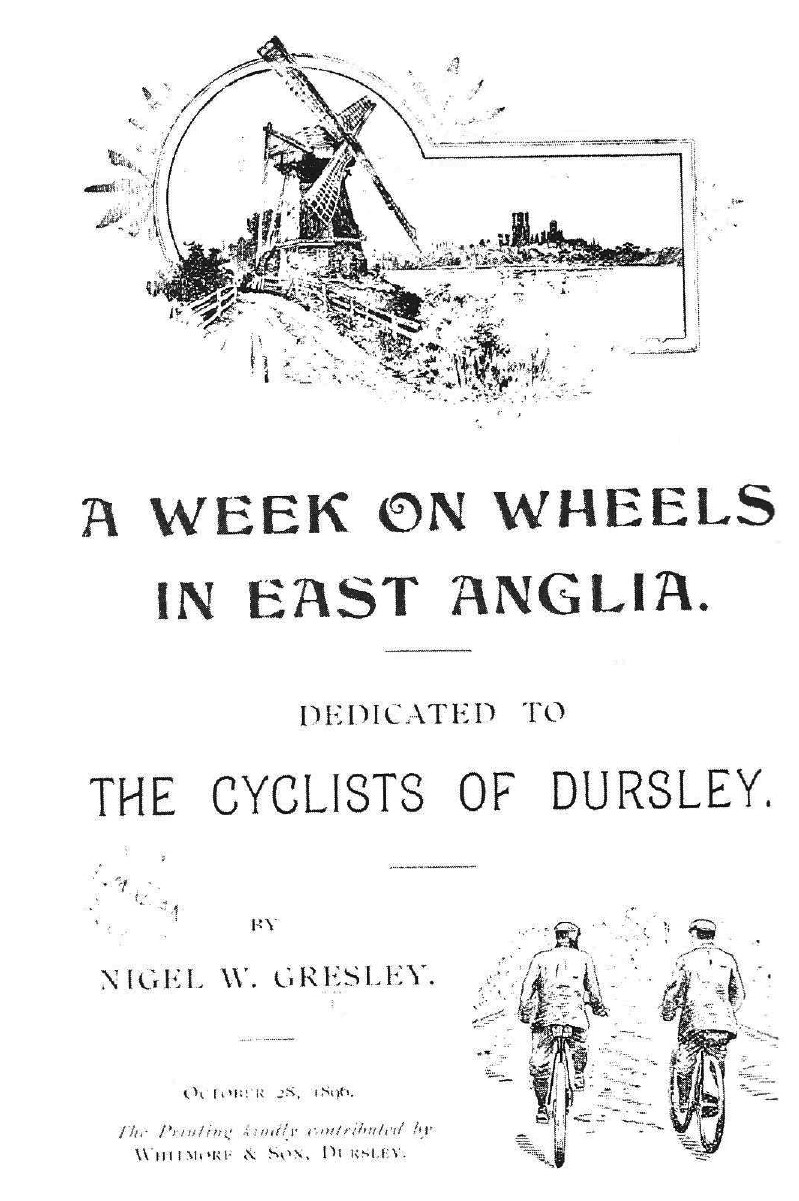
Possibly sketched by Theodore Bent himself, a detail from the cover of “A Week on Wheels in East Anglia”, Nigel Gresley’s 1896 account of their bicycle tour. (private collection)
A throwaway line in Mabel Bent’s ‘Chronicle’ of Monday, January 25th, 1897, written off the beaten track in Socotra, arouses curiosity and links us tangentially to her husband’s friend, Nigel Gresley: “All the booted portion of the party are now in anxiety about their foot gear, as to how it will hold out till Tamarida. We apply the gums of various trees to retard consumption. At last, instead of going over a precipice we (turned to the left) reached a river and on the other side of that we encamped… I was not tired. I am sure our legs will be in good training for our bicycles [our italics].” (Travel Chronicles of Mabel Bent, Volume 3, p. 300)
Bicycles? Yes indeed… The Bents were bikers by the 1890s, if not before.
(Grace’s Guides)
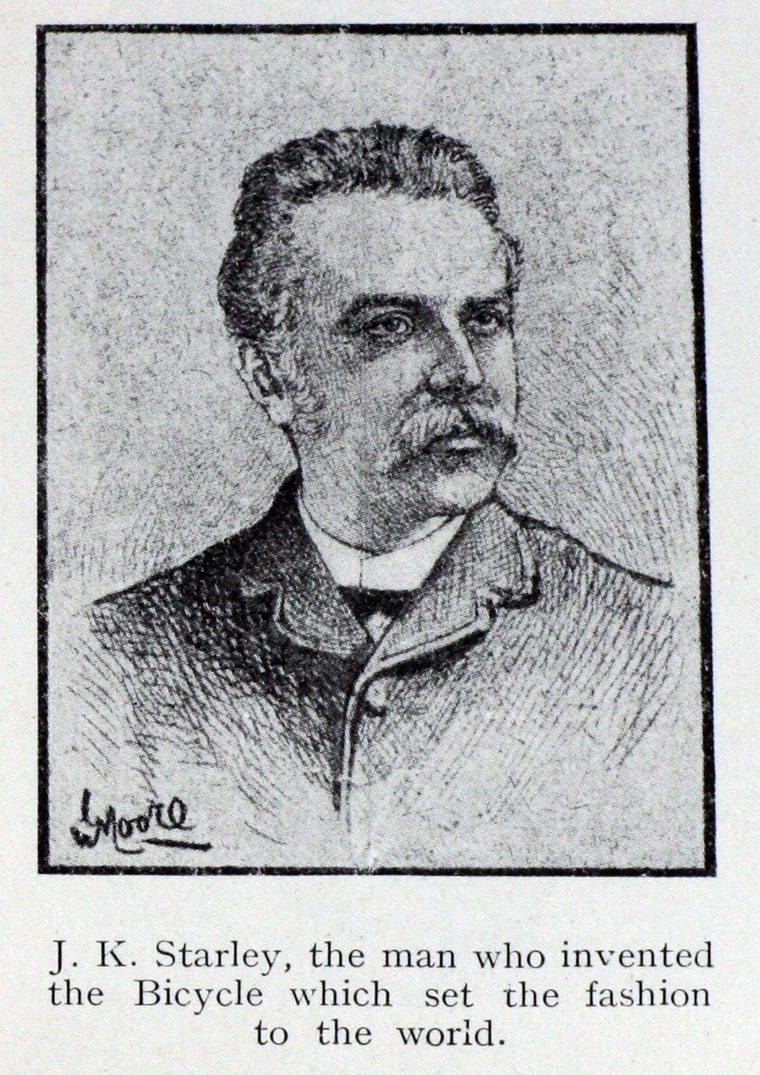
Around the early 1880s, soon after the Bents’ wedding in fact, bike designers were looking for ways of getting their riders nearer the ground (think ‘Penny-farthing’ here), i.e. safer. It was a British engineer, it seems, who cracked the problem – John Kemp Starley (1855-1901), with his 1885 ‘safety’ bicycle (coincidentally the year Theodore was also making a name for himself with his famous guidebook on the Cyclades). A revolutionary feature of this new invention was that now both wheels (with pneumatic tyres ) could be the same size, thanks to its chain drive mechanism.
The Starley ‘Rover’ (the polymath designer was involved with the founding of this famous brand) and other models soon started a craze for biking, and thousands of clubs sprang up all over Europe. Also revolutionary was the speedy acceptance of biking by women (suitably attired), and these bike clubs can be said to have played a proud and early role in gender equality! The only reference we have so far by Theodore himself to the sport comes in a letter of 13 September 1896 to the renowned cartographer H.R. Mill, from the house of Bent’s Irish in-laws in Co. Carlow: “We are having it miserably wet over here and biking is at a discount” (Mill Correspondence, RGS RGS/CB7/Bent, T&M).
But a few weeks later, in England once more, the clouds had mostly blown away and Bent was back in the saddle – this time not with Mabel (and we don’t have her opinion on this separation), but with his very old friend the Rev. Nigel Walsingham Gresley of Dursley, Gloucestershire (UK). Cairo to Cape Town (Bent knew them both)? No. Aden to Shibam (ditto)? No. What we have is an energetic week in gentrified East Anglia, eastern England – eating, drinking, fishing, sketching, brass-rubbing, and church-going.
The American bicyclist and adventurer Frank Lenz on his fateful tour of Asia Minor in 1894. The photo shows how to pack your gear. (wikipedia)
Clearly Bent’s trip with his old school and college friend was well prepared in advance, as there were prearranged stops to visit some of Theodore’s acquaintances, including the great novelist Rider Haggard (fellow enthusiast for Great Zimbabwe) and Sir Elwin and Lady Palmer, the former at the time was Financial Secretary to the Khedive in Egypt. In the record of the tour, we read that the friends ‘dined’ with the Palmers, raising the question of clothes! Gresley packed his fishing rod it appears, and what else did they pack for a week and how was it all carried? There are old photographs of fardels strapped to the fronts and backs of bikes, and others of knapsacks.
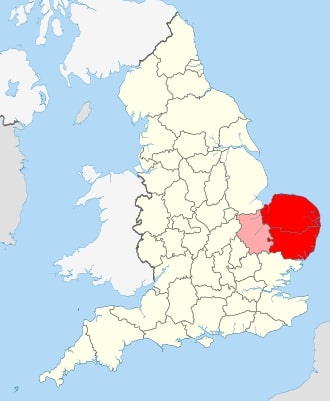
“East Anglia, in the east of England, comprises the counties of Norfolk, Suffolk and Cambridgeshire”. (wikipedia)
The map below itemizes where they lay their weary selves after each day’s ride and the major sights they took in along the way. East Anglia comprises the counties of Norfolk, Suffolk and Cambridgeshire, the name deriving “from the Anglo-Saxon kingdom of the East Angles, a tribe whose name originated in Anglia, in what is now northern Germany”, as Wikipedia informs us. In Bent’s day, as now, the region was a most pleasant recreational area – the location of the brisk Norfolk Broads, the birthplace of the great Nelson, and the site of a royal residence at Sandringham, among many other attractions.
We don’t have the actual dates of this biking ‘week in East Anglia’, but it must have been the autumn of 1896. Gresley’s (privately) published account is dated October 28, 1896, and it informs that the pair “starting from Dursley one Monday morning” reached Norwich that night by train; the following Tuesday they caught the midday train from King’s Lynn back to London. Sadly we don’t know what bikes they had, but, interestingly, Dursley later had its own bicycle factory! As they made several boat journeys during the week (in this watery landscape of lakes and twisty rivers – the Waveney, Bure, and Ant), it is not easy to estimate the miles they covered, and of course we have no way of knowing which roads they took then, but it must have been over the 200 miles Gresley claims (and where he makes specific references, or the routes seem relatively clear, a distance in miles has been inserted into his text.)
As for the cost of a bike in those days (1890), we are talking £12 – £20; this seems most reasonable, but remember a pound then would cost you £50 now – so for your new bike: £600-£1000 – rather like today.
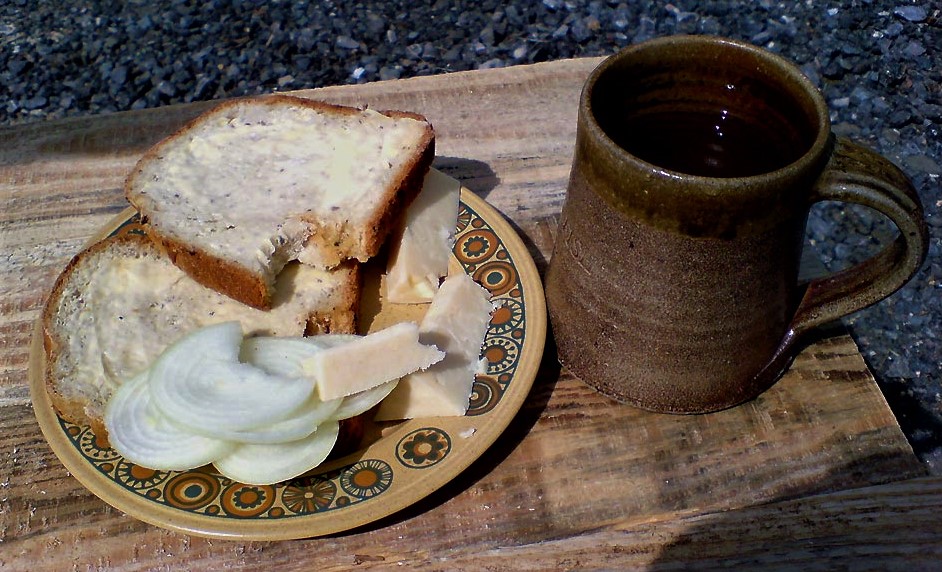
That ‘sine qua non’, the ploughman’s lunch. (wikipedia)
And a glance at any map of Suffolk and Norfolk will tell you how labyrinthine the area can be. What maps did our tourists take one wonders? We know Bent had his expedition maps prepared for him by the famous Edward Stanford of Charing Cross. Perhaps from them they ordered a set of the beautiful Ordnance Survey One-Inch maps of England and Wales (the Revised New Series of 1892-1908), a crucial feature of which is the word INN, found in most villages! As for how many times we would have seen the tourists’ bikes propped up against a thatched pub we are not apprised, but opening hours would have been observed no doubt: “… an uncommonly good luncheon of sausages, fried potatoes, and excellent cheese and butter (it is astonishing how hungry bicycling and sight-seeing make one!)”, writes Gresley.
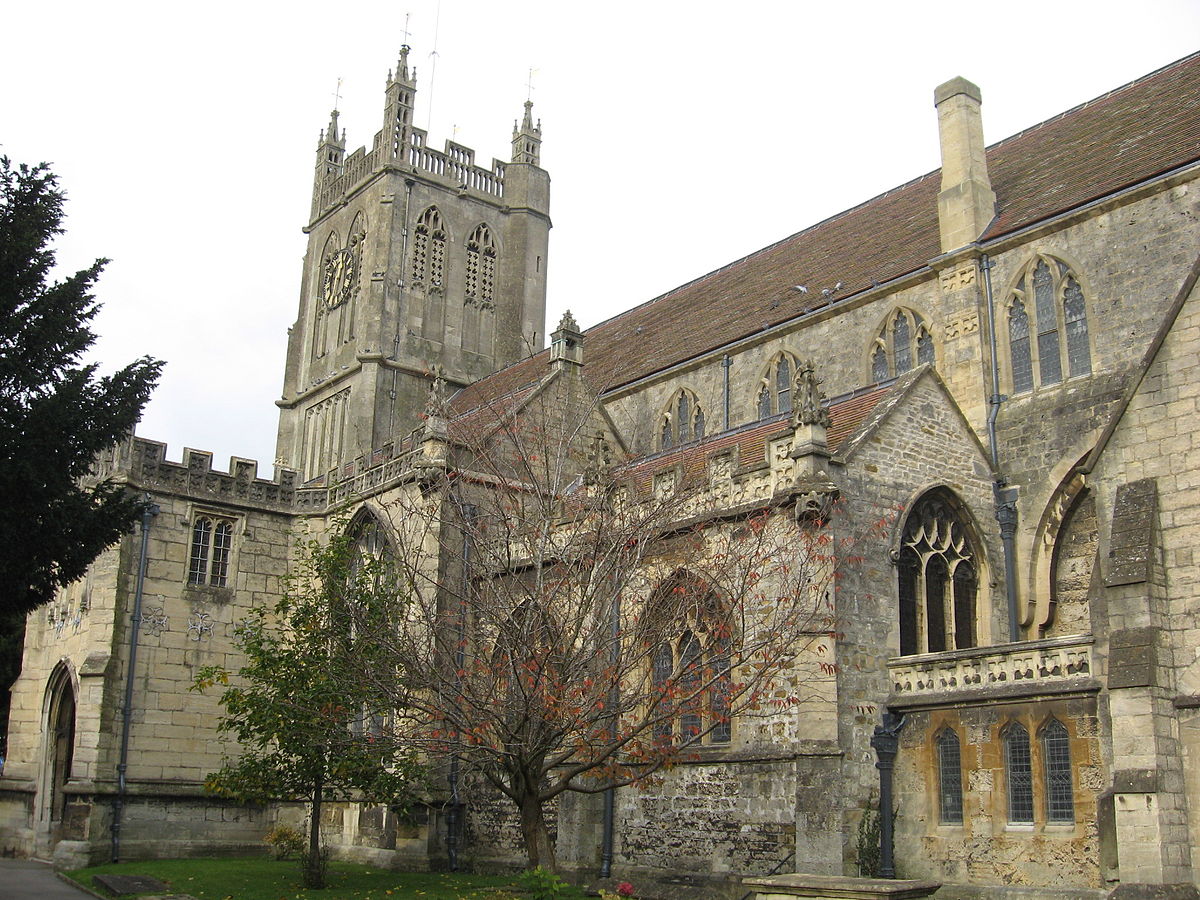
St James the Great, Dursley, Gloucestershire, England. (wikipedia)
During Gresley’s tale, one can imagine Theodore Bent chatting away, as the bike wheels click, of the lands and landscapes he had passed through over the last twenty years – Africa, Arabia, Persia, Ethiopia, the Sudan – and what a contrast to the benign byways of Norfolk and Suffolk. Of Bent’s cycling chum, the Rev. Nigel Walsingham Gresley, we know not much, other than what a few online references can provide (and should you have a photograph of him please let us know). He was born in 1850, probably in Ashby de la Zouche, and attended Repton School, beginning his friendship with Theodore Bent there. His father was a keen amateur archaeologist. He took an MA from Exeter College, Oxford (Bent was at Wadham). Having several ecclesiastical roles, he was rural dean of Dursley, Glos., at the time of this bike tour of East Anglia with Bent. He married Jane Drummond in 1878 (the year after the Bents’ nuptials). He died in 1909. There is no doubting he was a close and trusted friend of Theodore’s, being left £1000 in the latter’s will in 1897, tragically just a few months following the carefree tour of England’s eastern counties, which we are to let you read any minute now.
WikiTree appears to have much interesting information on the Gresley family (and see The Gresleys of Drakelowe (1899) by Falconer madan), including that they married into the venerable Italian di Langosco dynasty. In the Preface to his monograph on Genoa, Bent thanks “the Contessa C. di Langosco (née Gresley, 1809-1886), for… valuable assistance in aiding my research” (Genoa, how the Republic rose and fell, London, 1881, p.vi). note 1 The cover of “A Week on Wheels in East Anglia”, Nigel Gresley’s 1896 account. The bearded Bent is the gent on the left; possibly his own sketch. (private collection)
Jerome K. Jerome published Three Men in a Boat (To Say Nothing of the Dog) in 1889, and N. Walsingham Gresley peddled after the former, alas without the critical acclaim (and justly so), with his A Week on Wheels in East Anglia: Dedicated to the Cyclists of Dursley, a mere seven years later – you can spot the similarities, only for three men, change to two, and boat becomes bike… there is no dog, of course…never was.
“A Week on Wheels in East Anglia: Dedicated to the Cyclists of Dursley”
Note 1: In fact the Bents and Gresleys had ancestors in common and are distantly, if not tenuously, related. Michael Heathcote of Buxton in the late 18th century had two children, John and Elizabeth. John married Anne Gresley (b.1755), known as ‘Graceful Gresley’ “from her fine minuet dancing” in 1780 (Falcomer madan, The Gresleys of Drakelowe, 1899, p.112). Elizabeth married Theodore Bent’s great-uncle, the celebrated physician James Justin Bent (1739-1812) in 1776 and shared her husband’s great estate at Basford Hall, near Newcastle-under-Lyme. James Justin was the surgeon who amputated Josiah Wedgewood’s leg in 1768. Return from Note 1
In and out (just about) of the Wadi Hadramawt – Mabel of Arabia
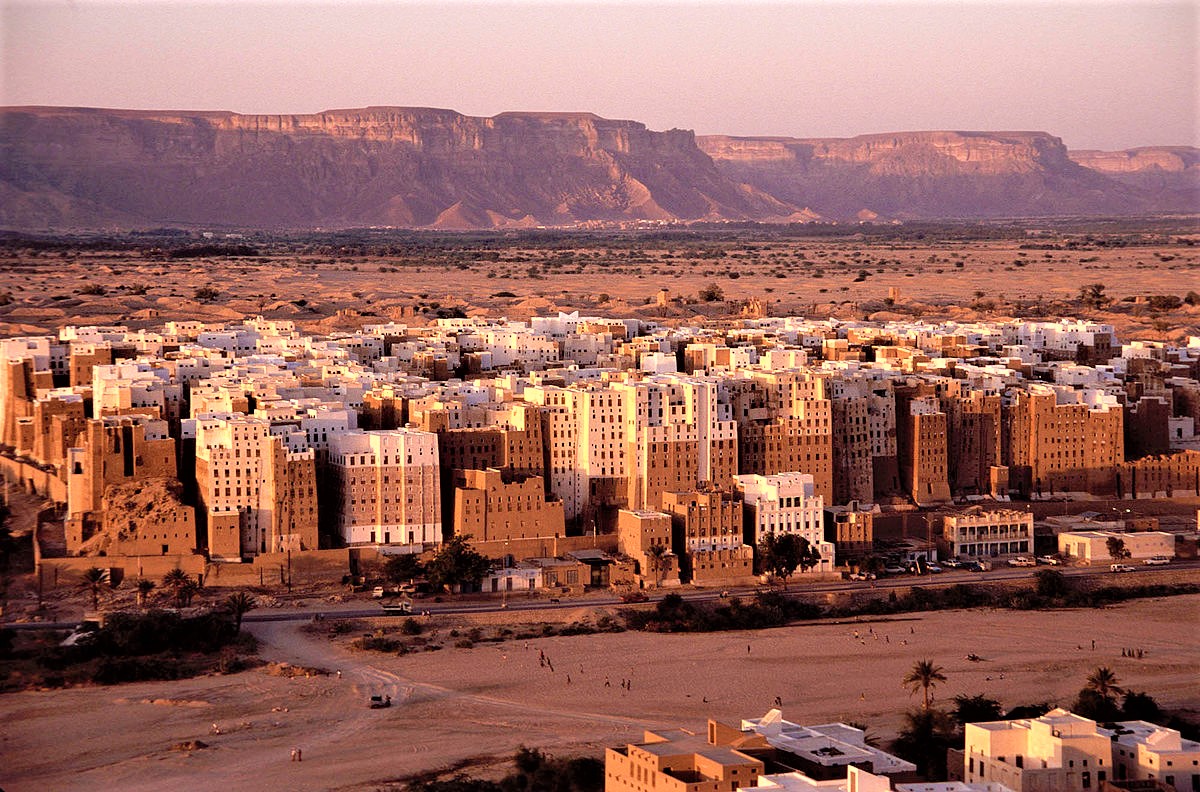
Shibam – “Manhattan of the Desert”, host to the Bents in early 1894 (wikipedia).
A recent Aljazeera feature on the mud-castle skyscrapers of the Hadramawt diverts and transports instantaneously. These castles strung along Yemen’s Wadi Hadramawt, bewildering CGI confections all, still miraculously exist – at risk equally from age-old threats of internecine wars, and new ones, such as mud-dissolving floods, initiated by climate change.
But if we want, we can fade to sepia and go back and look at these castles through the eyes of cavalier Victorian travellers of the 1890s:
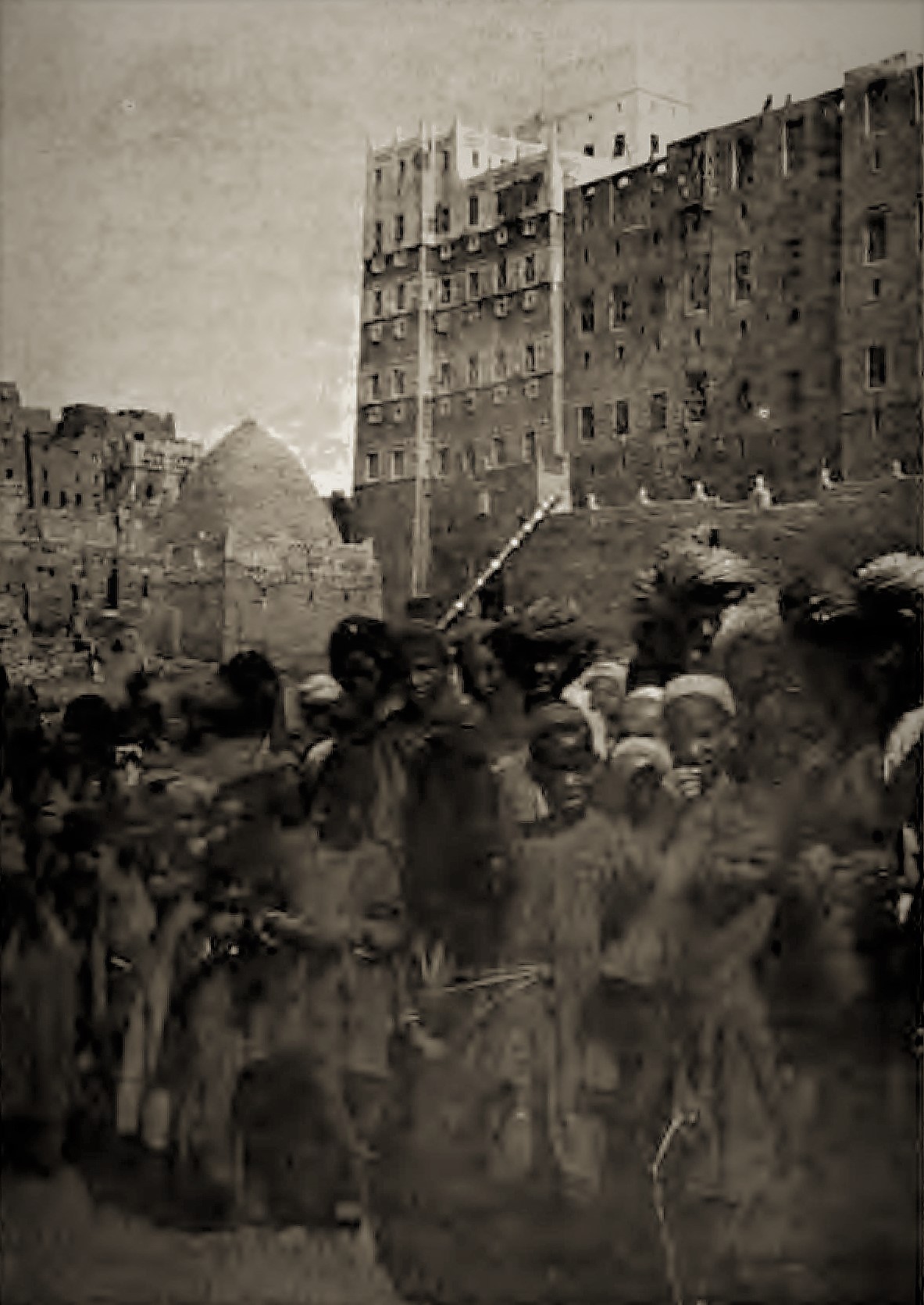
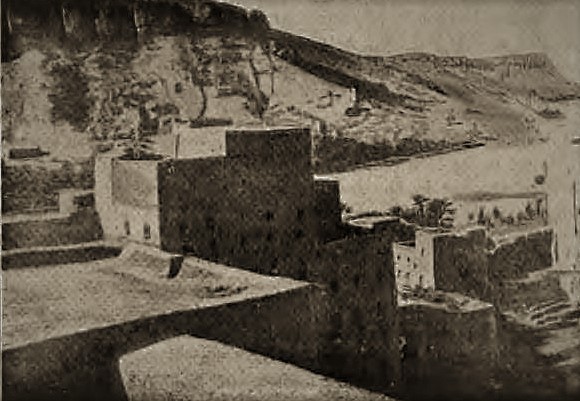
Mabel Bent’s own photo of the mud-castles of Shibam in the Wadi Hadramawt (1894).
“… the only possible way of making explorations in Arabia is to take it piecemeal… by degrees to make a complete map by patching together the results of a number of isolated expeditions. Indeed, this is the only satisfactory way of seeing any country.” (writes Mabel Bent in 1900)
Hands up then if you’ve heard of Theodore and Mabel Bent (1852-1897 and 1847-1929 respectively)? Ok – a couple of you. Chances are you met them in the Greek Cyclades, right? – over a copy of Bent’s great 1885 guide to the islands (by the way, still the best English introduction to them).
But these Victorians travelled further, much further. For instance? – well, e.g., they were paid by Cecil Rhodes in 1891 to explore the remains of Great Zimbabwe; they also rode, south–north, the length of Iran in 1889; and trekked the Ethiopian highlands in 1893; etc., etc…
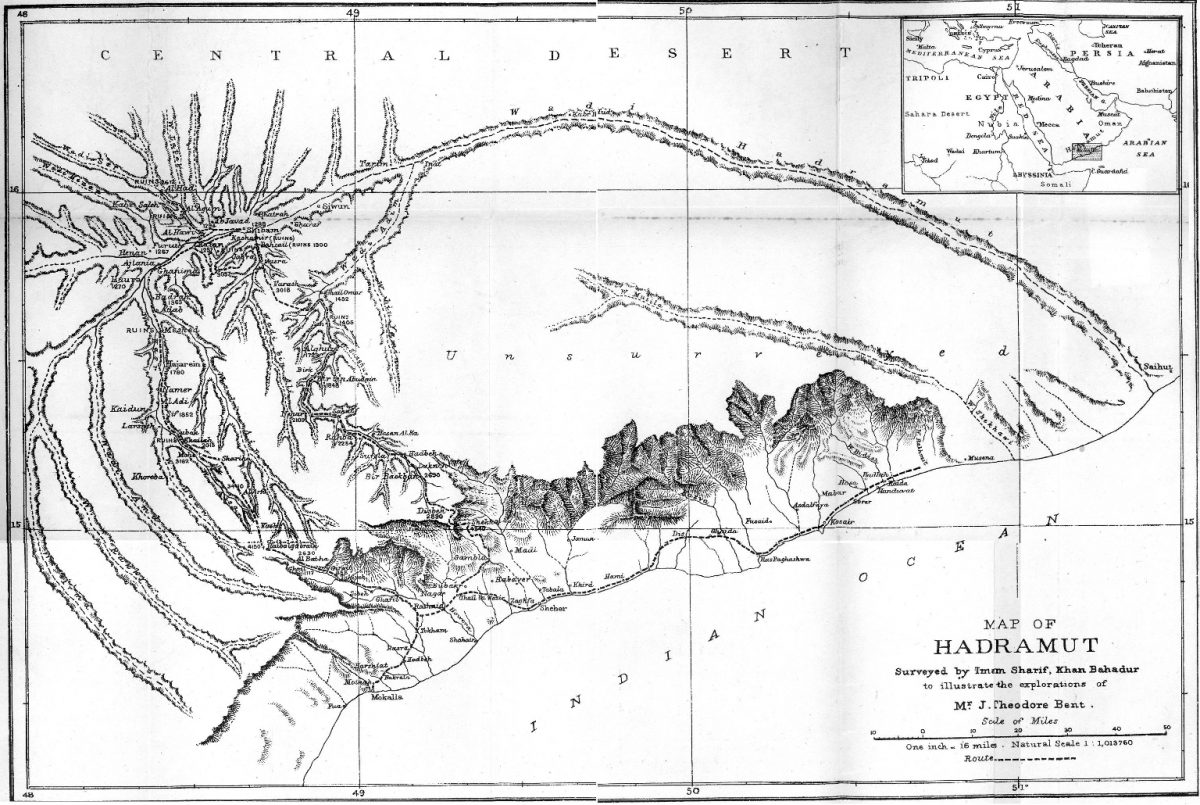
Bent’s own map from ‘Expedition to the Hadramut’. The ‘Geographical Journal’, Vol. 4 (4) (Oct), 315-31 (private collection).
Perhaps, though, their greatest folie à deux comprised the three attempts they made on the Wadi Hadramawt, in the Yemen, ‘Arabia Felix’, between 1894 and 1897. Where? Picture Aden on a map, wiggle your finger east along the coast for a few centimetres, move the same finger inland, northish, for a couple more, and you about have it – in all, 200 km or so of the most spectacular valley-landscape you will ever see.
The formidable Mabel Virginia Anna Bent, a detail from a society portrait (1890s?).
But of course you would be mad to try (check out the UK Foreign Office’s latest advice). Yemen is dangerous – in 1894 as now. In all probability, Mabel Bent, red-haired and no-nonsense, was the first western woman, voluntarily at least, ever to ride from the port of Mokulla up and into the Wadi Hadramawt, with its oases and fabulous cities of mud towers. An extraordinary adventure for an aristocratic Irishwoman, of the trout-brown Slaney River, Co. Wexford. (Theodore’s objectives for the expedition are beyond the scope of these short paragraphs, but they had something to do with the Queen of Sheba. Suffice it to say… his last trip killed him – Mabel got him home alive, somehow, in May 1897, to their house near London’s Marble Arch, where he shivered to death a few days later of malarial complications. He was 45, his wife was 50.)
Mabel’s diaries (she called them her ‘Chronicles’) have all been published (except for a missing volume – her trip to Ethiopia in early 1893). Here she is on her way east, to ‘the castle of the Sultan of Shibahm at Al Koton’ (al-Qatn); she took the photo you see here too.
This portrait of Theodore must have been one of Mabel’s favourites; she chose it for the frontispiece of her tribute volume to him, “Southern Arabia” (1900).
Friday, 12th January 1894: “[Theodore and I] still proceed among limestone cliffs along the wadis … Our journey was seven hours, always along the valley, more like a plain it was so wide. We intended to go on to Al Khatan, where the Sultan of Shibahm lives, but a messenger came saying he expected to see us tomorrow and we were to encamp at Al Furuth. So when we reached that place, where there is a very beautiful well, shaded by palms and with four oxen, two at each side, drawing up water, we set up our five tents in the smoothest part of a ploughed field. Towards evening came two viziers, gaily dressed on fine horses, to welcome us: Salem bin Ali and Salem bin Abdullah, cousins.
“[The viziers came to greet us] about 7.30 next morning. We had all stayed in bed till it was quite light and they brought two extra horses… While the camels were loaded a lot of women came to see me and I sat in a chair and took off my gloves at their request and let them hand my hands round. They asked to see my head, so then they got my hair down, dived their fingers down my collar, tried to open the front of my dress and take my boots off and turned up my gaiters…
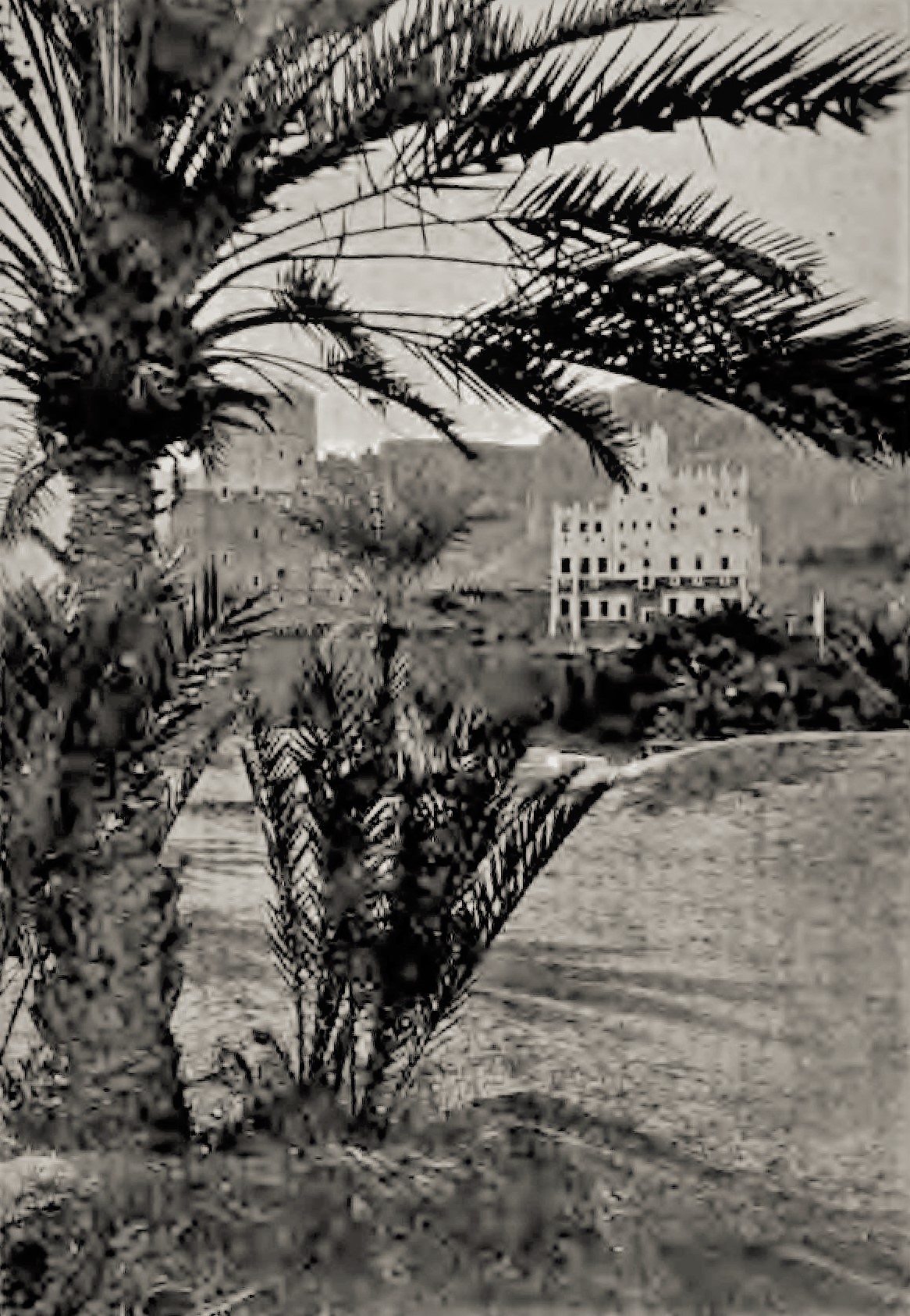
Mabel’s photo of Al-Hajarayn (Wadi Dawan), western Hadramawt (1894).
“We principal personages set out, leaving camels, etc., to follow… in ½ hour we arrived and were delighted with the appearance of this town of towers in the morning light, and the tallest, whitest and most decorated, shining against the precipitous mountains, was pointed out as our future home, and we all wondered what should next befall us and whether this was the farthest point of our journey or if we could get onward…” [The Travel Chronicles of Mabel Bent, Vol 3, Arabia, p.165 ff]
“The castle of Al Koton rears its battlemented towers.” Mabel Bent’s own photo (1894) of Al Qatn in the Wadi Hadramawt.
A few years later, after Theodore’s death, Mabel writes up the same event in her tribute book to her husband – Southern Arabia: “Like a fairy palace of the Arabian Nights, white as a wedding cake, and with as many battlements and pinnacles, with its windows painted red, the colour being made from red sandstone, and its balustrades decorated with the inevitable chevron pattern, the castle of Al Koton rears its battlemented towers above the neighbouring brown houses and expanse of palm groves; behind it rise the steep red rocks of the encircling mountains, the whole forming a scene of Oriental beauty difficult to describe in words. This lovely building, shining in the morning light against the dark precipitous mountains, was pointed out to us as our future abode.” (Southern Arabia, 1900, p. 111)
There we have it then, not Ludwig of Bavaria, but Mabel of Arabia, and the fantasy castles she wondered at some 130 years ago, and still, miraculously, standing.
Coda: “This war has to end” said President Biden the other day (Feb 2021), and “we’re ending all American support for offensive operations in the war in Yemen”. What will this mean and how can it end? Theodore and Mabel Bent were travelling in this extraordinary region in the 1890s, as a recent post in writer Jen Barclay’s blog outlines…
In September 2020, we were contacted by the philologist and historian Minas Chouvardas who is writing a book about past foreign travellers to the island of Karpathos. Minas is orginally from the village of Olympos, in the north of Karpathos, where the Bents spent Easter 1885. He was aware of the Bents’ important contribution to the documented social history of the island and has undertaken meticulous research into the events and the people described by both Theodore and Mabel in relation to Theodore’s article ‘On a far-off Island‘.
We were delighted when Minas offered us the chance to publish the results of his research on this website. His article precisely identifies individuals of whom Theodore only gave us vague details. Minas also investigates the murder which both Theodore and Mabel write about as having been instigated by one of their new friends while they were on the island. Overall, Minas’ article demonstrates his passion for the people, the places and the history of his native island.
Minas’ article is best enjoyed when you have ready access to Theodore’s original account and, with this in mind, our sister website has published an ebook version of Theodore’s story which can be freely viewed online or downloaded in a choice of formats. Clicking on the book cover will open a new window so that you can flip back and forth between Minas’ and Theodore’s articles.
So, without further ado, let’s hand over to Minas:
The “Karpathiote” Friends of Theodore Bent – by Minas Chouvardas
James Theodore Bent and Mabel V.A. Bent visited Karpathos in the spring of 1885 and remained on the island for about two months. Theodore Bent is the only foreign traveller to Karpathos in the 19th century who gives detailed information about the island’s ethnological composition, the archaeological findings, and the customs and traditions as he experienced them when he and his wife were there. He also gives detailed information about the Karpathian dialect, daily life, and the occupations of the inhabitants. Surprisingly, his important researches, which mainly concern the folklore of the island at the end of the 19th century, have passed unnoticed by modern scholars. Most Karpathian scholars know only of the contents of his extended article on Karpathos in the Journal of Hellenic Studies of 1885 note 1 . However, Theodore himself, when asked by his inner circle why he made the long journey to the remote island, and found so much of interest there, replied: “… it is one of the most lost islands of the Aegean Sea, lying between Crete and Rhodes, where no steamer touches, and … my wife and I spent some months on it last winter with a view to studying the customs of the 9000 Greeks who inhabit it, and who in their mountain villages have preserved through long ages many of the customs of the Greeks of old” note 2 .
At the same time, Mabel, during their two-month stay on Karpathos, was recording in her diary, in detail, their daily activities and the contacts they had with the locals and their Turkish rulers. Although she does not always provide descriptions of all the people and locations, Mabel presents us with the real situation of Karpathos a few years before the Italian conquest. She observes, records and judges the behaviours of the people, comments on the habits and beliefs of the inhabitants, and often compares the culture of the islanders with her own British one. But, mainly through the detailed recording of the events that she presents in her Chronicles (as she called them), she illuminates the aspects of the events and the information that Theodore may have overlooked in his own writings. But often the opposite happens: it is Theodore who mentions events and situations experienced on the island that Mabel either does not mention at all or skips over, and gives his own different view of things. In some places, in fact, information provided about an incident or person is contradictory. The reader, however, should not be surprised by this: although an inseparable couple, they have, of course, different characters and personalities, and thus we see things from different points of view – and therein lies the charm.
Mabel’s narration in her Chronicles fascinates her readers, now as then, transporting them to the small, and poor, societies of Karpathos at the end of the 19th century. Thanks to the testimonies of the Bents, we share in the toils of the Karpathian farmers and shepherds, the art of embroidery, the love of song, of fun and dance, of food and drink, of the prejudices and superstitions. In all this there is the simple figure of the Karpathian: the mayor, the priest, the prominent man, the interpreter, the worker, the rower, the old prophet, the teacher, the old ‘witch’ with a remedy for every ill.
During their stay on the island they meet with several residents of Karpathos and with some of them they clearly developed friendly ties. Accordingly, this present article aims to introduce the Bents’ native friends and reveal information about their lives and personalities. Let us begin then …
Coming to Karpathos, the Bents carry three letters of recommendation given to them by the Greek consular agent of Rhodes, Mr. Philemon, addressed to three prominent Karpathians of that time: Mr. Frangiskos Sakolarides, Mr. Koumpis and Mr. Manolakakis.
The first friend that Mabel mentions in her “Chronicles” is Mr. Manolakakis note 3 . She does not mention his first name at any point in her diary, while Theodore in his article “On a far-off Island” never mentions his name, but always addresses him as “our third friend“. This fact suggests that the phrase is used ironically, as we shall see, by Theodore. The question that occurs to a modern Karpathian reader of Mabel’s diary is ultimately “who is Manolakakis?” The surname is found until today in the southern villages of Karpathos. Of course, many Karpathians on the island know that a Manolakakis, named Emmanuel, was the first historian and folklorist of Karpathos note 4 . However, other intrinsic items in Mabel’s diary make it possible to verify the identity of that person. Mabel reports that Mr. Manolakakis had lunch with them at least twice, that they bought Rhodian plates from his mother note 5 and that his then 17-year-old daughter Ephrosini (Mrs Sophrosine Manolakakis) helped the couple carry their luggage from Aperi to Volada note 6 . Mabel, unlike Theodore, seems to have liked Mr. Manolakakis, after stating, on the occasion of the help offered by Ephrosini, that “she is the daughter of a very nice man“ note 7 . She never mentions in her diary what topics of discussion they had, nor does she describe his appearance or character. However, Mabel, concluding the narration of their stay in Karpathos, notes in the form of a postscript that Mr. Manolakakis was the instigator of a murder committed in Volada while they were in Karpathos note 8 .
Theodore is more descriptive and revealing when referring to Mr. Manolakakis. He immediately shows his dislike when he mentions that Mr. Manolakakis was the reason they left Mr. Sakellaridis’ house in Aperi and went to Volada, so that he could carry out the assassination plan against the Karpathian “dragoman” Frangiskos Sakellaridis a few weeks later note 9 . When Sevasti, the owner of the house in Volada, refused to allow the couple to dance and sing, it was Mr. Manolakakis who supported Theodore and Mabel note 10 . Elsewhere in his story, Theodore points out the poverty of Mr. Manolakakis, who in order to marry his eldest daughter, gave almost all his property as a dowry, while his second daughter (Ephrosini) lived in misery note 11 . Theodore also mentions that Mr. Manolakakis had invited him for dinner, but because Theodore left before the fun peaked, he considers it possible that Mr. Manolakakis was misunderstood note 12 . Theodore, in contrast to Mabel, emphasizes the murder that took place in Volada, giving more details and without hesitation names Mr. Manolakakis as the instigator of the murder. What is striking is that Theodore three times in his narrative speaks of the attempted murder against the interpreter note 13 .
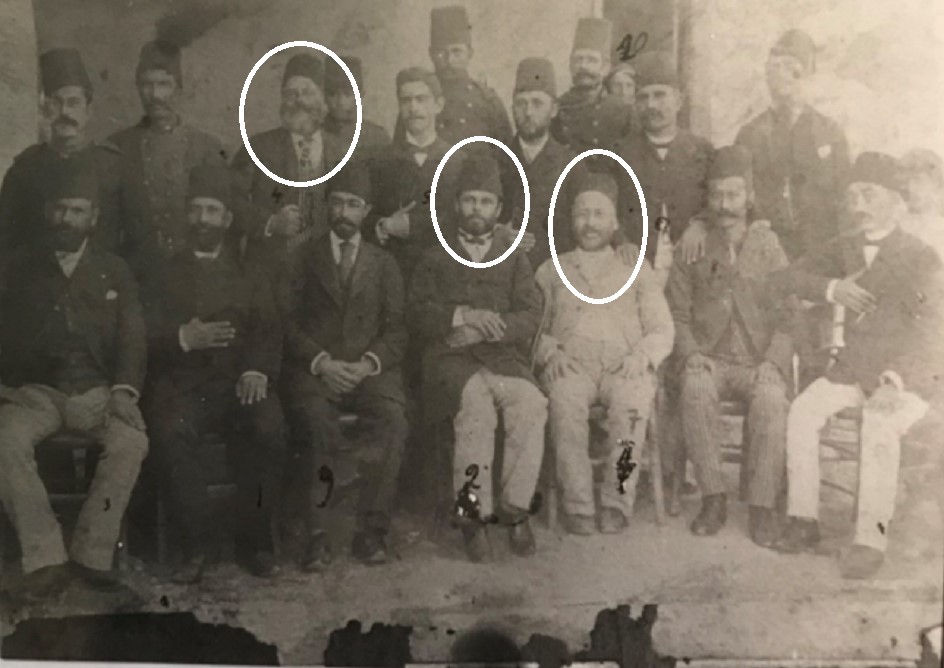
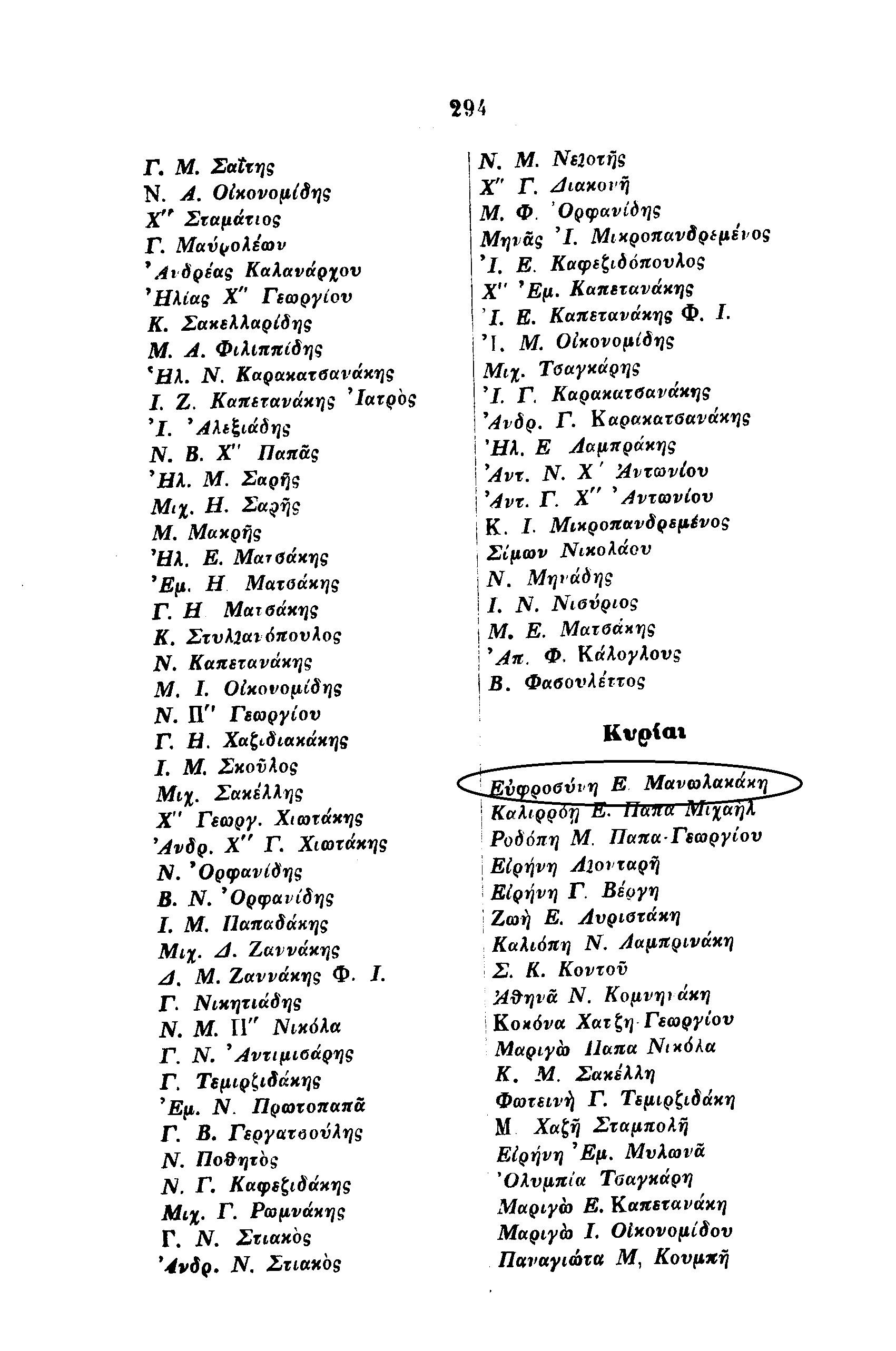
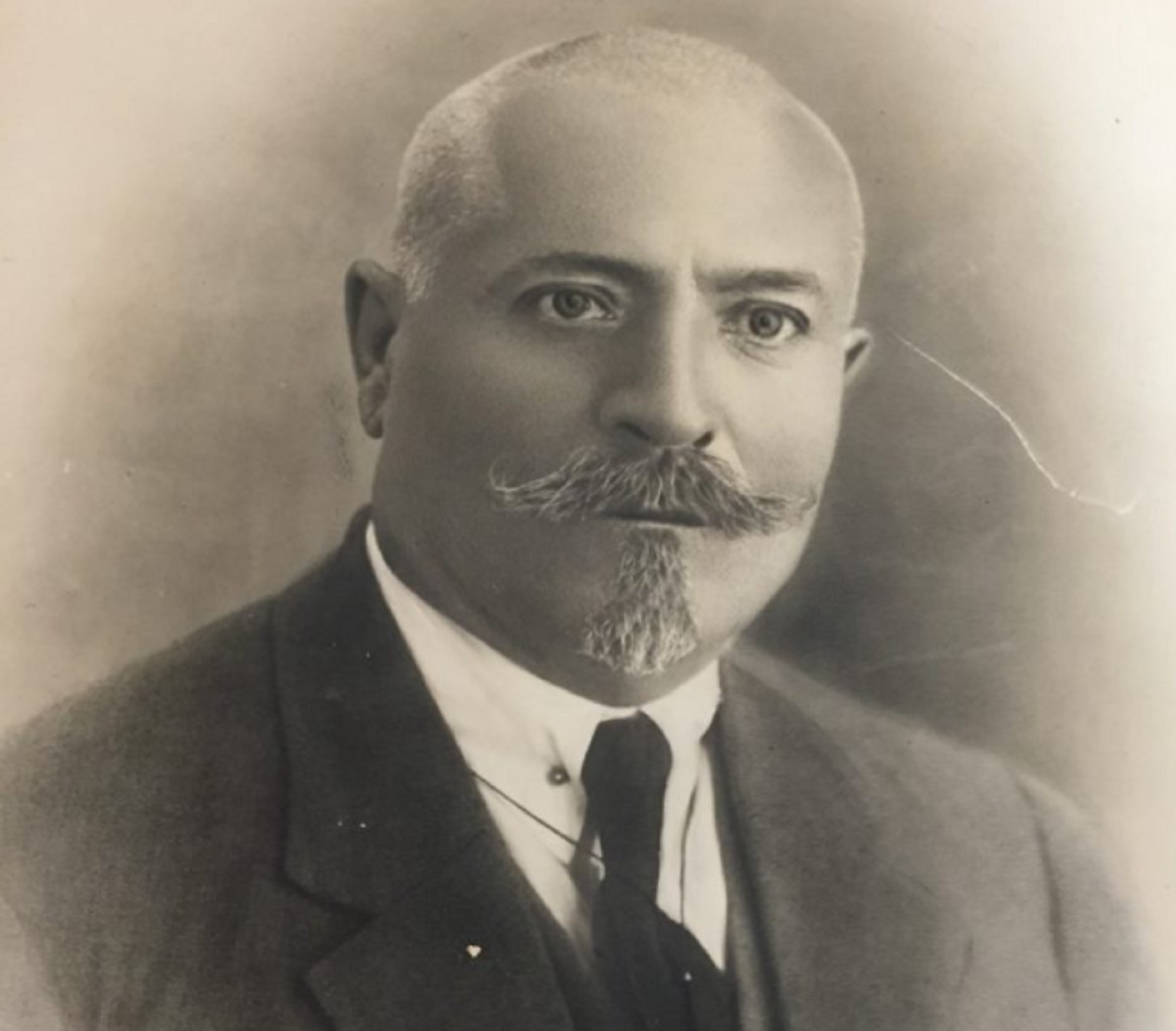
The “Mr. Manolakakis” whom Bent met is none other than Emmanuel Manolakakis, the author of Karpathiaka (1896). Emmanuel Manolakakis note 14 (fig.1) was born in 1830 and died on March 17, 1900 of a heart attack. He married Kalliopi Nikola and they had 11 children. He came from Volada and at the end of the 19th century he settled in Pigadia, where he served as mayor. He held Greek citizenship and was appointed in 1877, according to the testimony of his second son Georgios, consular agent of Greece in Karpathos. Manolakakis in Karpathiaka mentions T. Bent twice, describing him as a “wise” and “antiquarian” man note 15 . Ephrosini Manolakaki (Mabel refers to her as Sophrosini Manolakakis) was the fourth child of Emmanuel Manolakakis and the third of his daughters. She was born in 1868 and died in 1936 note 16 . In the list of subscribers of her father’s book Karpathiaka, only she appears to live in village Aperi note 17 (fig. 2). His second son Georgios (fig.3) served as mayor of Pigadia during the Italian occupation (1923-1933) note 18 , verifying Mabel’s prediction for Manolakakis’ children note 19 .
Bent’s second friend in Karpathos was Mr. Koumpis. Neither Mabel nor Theodore mention his first name. Theodore informs us that he was old and very talkative, and that of their three friends, only he was slow and late receiving them, due to a family problem note 20 . Mabel reports that on March 21, 1885, they went down to Aperi, met Mr. Koumpis and he then accompanied them to their home in Volada note 21 . This is the maritime art teacher Meletios Koumbis note 22 , who came from Megara, was in Karpathos, fell in love with Fotini Foka, the eldest daughter of Ioannis Fokas, the schoolmaster and mayor of Aperi, and settled in Aperi in the middle of the 19th century. He had three children with her, Kalliopi, Giannakis and Panagiotis. Bent reports that the year they visited Karpathos, Koumpis was an old man. He probably died in 1908 or 1909, because since then his name does not appear in the tax records of the municipality of Aperi, but the name of his widow does. The son that Theodore mentions as having recently married note 23 is Giannakis. Panagiotis (1869-1928) never married, but history recorded him as one of the best captains of Karpathos note 24 . Grandson of Meletios Koumpis and son of his daughter Kalliopi was the Karpathian hero pilot Panagiotis Orfanidis, who was killed in the Greek-Italian war note 25 .
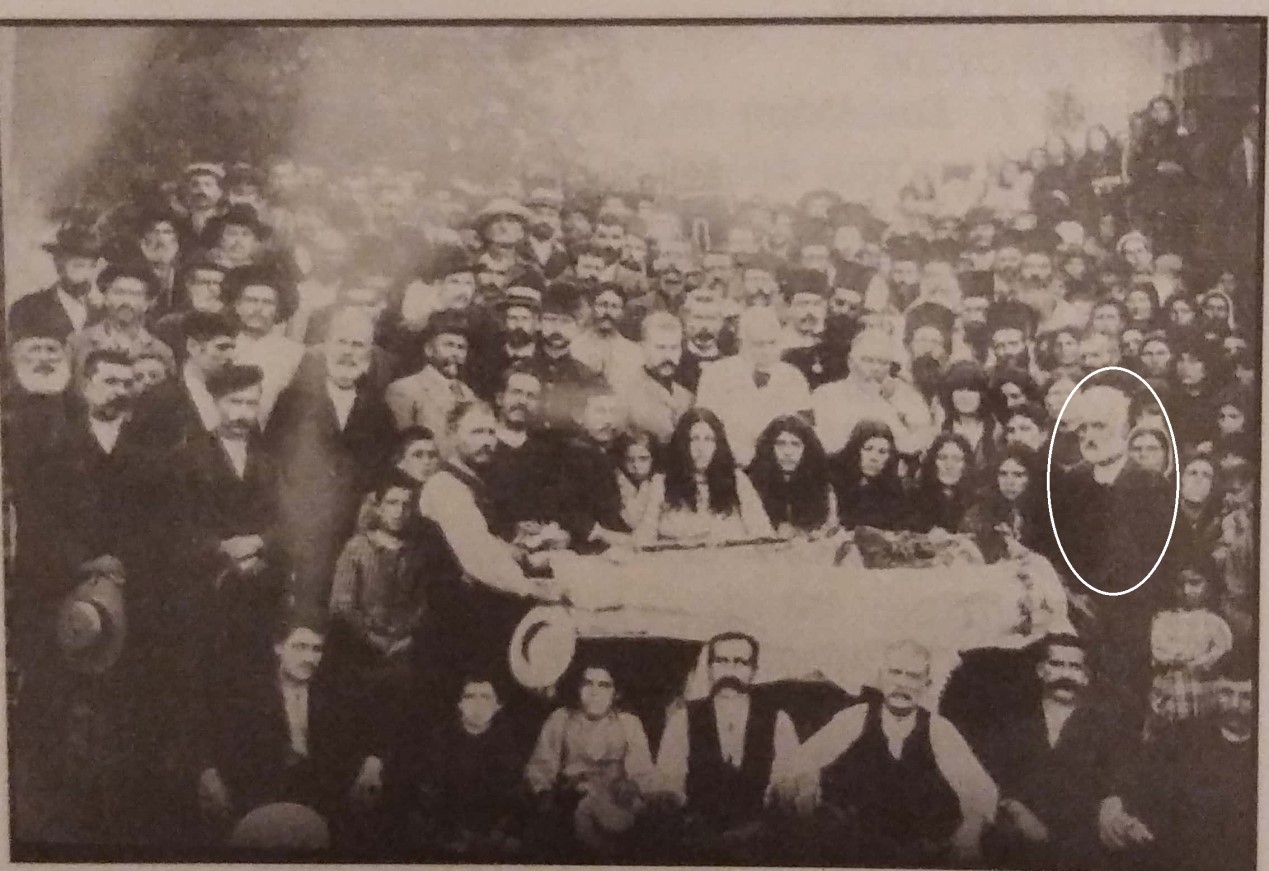
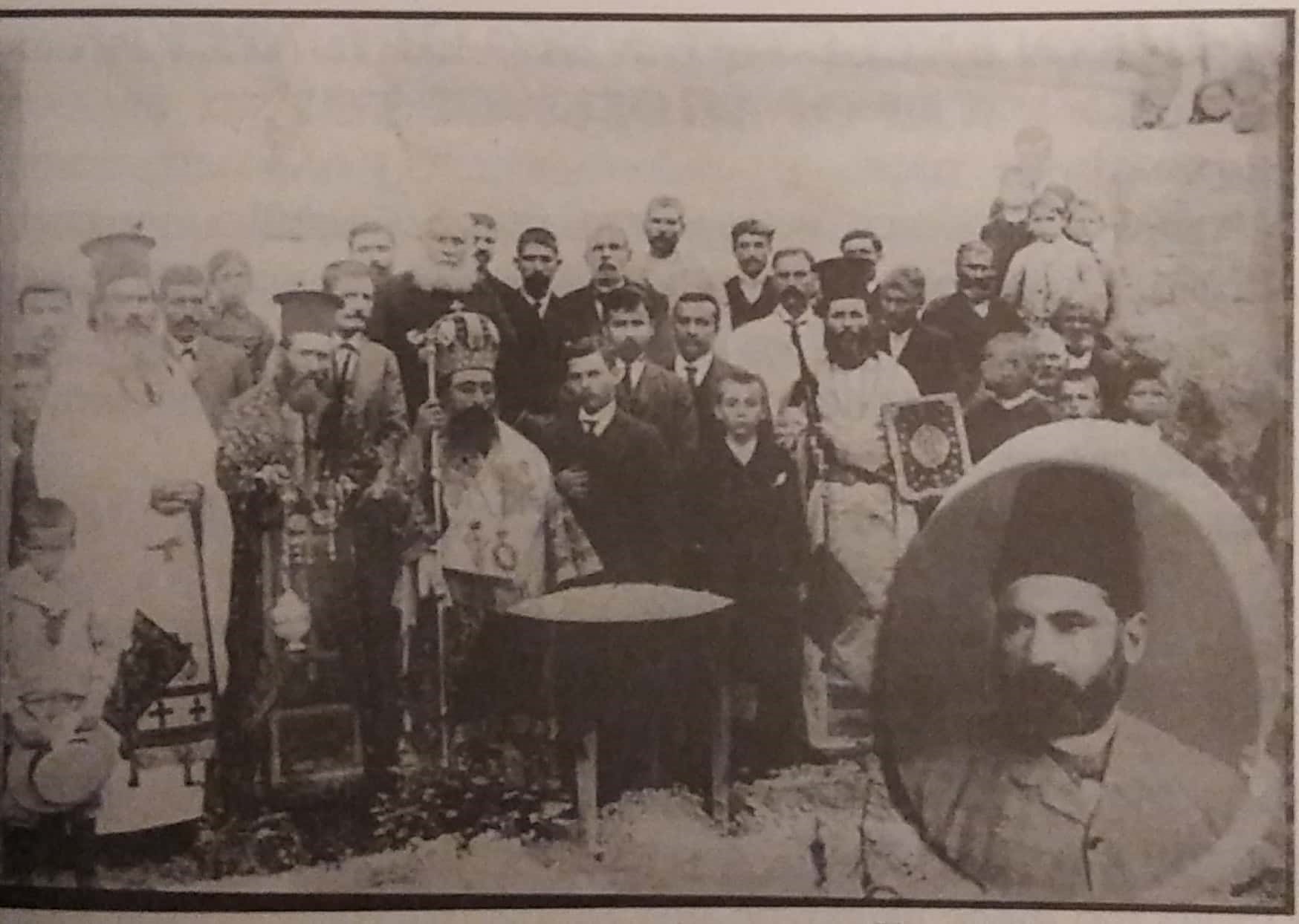
Fig. 4. The funeral of Kostis Sakellaridis (1905). To the right, next to the deceased, is Bent’s friend Frangiskos Sakellaridis. Source: M. Chiotis, “The Roots of Our Generation”, p. 242.
Bent’s third friend is named as Mr. Frangiskos Sakellaridis. Mabel pronounces and writes his last name as “Sakolarides”. Of the three persons mentioned, Mabel mentions the name (Frangisko) only in connection with Mr. Sakellaridis. On the contrary, Theodore always refers to him as “the interpreter“. Arriving for the first time in southern Karpathos, Bent spent two nights at his house in Aperi note 26 . He participated in the picnic at Kyra Panagia with his brother, while on his return to Volada, Frangiskos accompanied them to the village, offering them coffee at the café note 27 . On the first day the couple spent in the village of Elymbo, they found Mr. Sakellaridis chairing the village assembly note 28 . Theodore describes Sakellaridis’ very friendly relationship with his would-be assassin, while after the murder, where the wrong man was killed, Sakellaridis was always guarded by a Turkish soldier when he was outside note 29 . Frangiskos (Fragios) Sakellaridis (fig.4) note 30 (1847-1923) was the mayor of Volada and secretary of the Diocese of Aperi and was the youngest son of Georgios Sakellaridis from Aperi and Ernia Psaroudaki, daughter of the Cretan Georgios Psaroudakis who took refuge in Karpathos during the revolutionary period (1821-1830). The eldest son, Kostis (1844-1905), spoke and wrote the Turkish language fluently, serving in court positions (fig.5). Frangiskos married Rigopoula Kapetanaki and they had seven children. The eldest son, Georgios, was a doctor, while the second, Christoforos, was a teacher, secretary of the Holy Metropolis in Aperi and author of the proclamation of the Union of Karpathos with mother Greece (7/10/1944) note 31 . The son of Georgios and the eponymous grandson of Frangiskos was Frangios Sakellaridis (1897-1965), the doctor and brilliant scientist who dedicated his life to the health and well-being of his fellow citizens note 32 . In the year 1905, when the Turkish authorities tried to encroach on certain privileges granted to the islands ever since the time of Sultan Mahmud II (reigned 1808 – 1839), the Elders’ Council of Karpathos appointed Frangiskos Sakellaridis as a proxy to go to the Turkish governor of Rhodes and make the islanders’ case for the preservation of their privileges note 33 . Today, Volada’s football stadium is named after Frangiskos Sakellaridis (grandson of Bent’s friend).
Fig. 5. The memorial of Kostis Sakellaridis, Frangiskos’ brother, with his inset image at the bottom right. Source: M. Chiotis, “The Roots of Our Generation”, p. 243.
In the village of Elymbos the Bents were entertained at the schoolmaster’s house for the Easter period note 34 . Neither of them mention his name. In fact, Theodore in his article “A Christening in Karpathos” confuses him with the schoolmaster of the village of Mesochori, referring to Mabel’s anecdote about Jules Verne note 35 . From Mabel we learn that he had two little girls, “Maroukla” (Maria) and “Eirenio” (Irene) and that the mayor of the village, “Diako-Nikolas”, was his father-in-law note 36 . The schoolmaster that Theodore encounters in the café (kafeneion) and finally stays with in Elymbos, was the first “Greek teacher” Nikias Ioannou-Spanos note 37 , who was the first to organize the archives of the community and contributed hugely to the standard of education of the children of Elymbos (fig.6). Nikias Ioannou-Spanos was born in Kalymnos around the year 1837. His real last name was Spanos, however he became known by his patronymic (Ioannou). He came to Karpathos in the early 1860s, when the mayor of Elymbos, Diako-Nikolaos Diakogeorgiou, was on the island of Kalymnos to find a suitable schoolmaster for his village. His good luck leads him to Nikias Ioannou-Spanos, whom he hires as a teacher of Elymbos. Nikias, around the year 1876, will marry one of the daughters of Diako-Nikolas, the youngest girl, Magafoula, and they will have six children, Ioannis, Nikolaos, Georgios, Maroukla, Rinio and Evangelia. The two older daughters are mentioned by Mabel. His fame spread throughout Karpathos and apart from Elymbos, he taught in Aperi (1870, 1885-1888), Menetes, Kasos, Rhodes and Kos. The last years of his life he lived in Diaphani, where he died and was buried in the spring of 1923 at the age of 85-86. His family tradition states that his last words were that he was dying without being able to see the Dodecanese free at last.
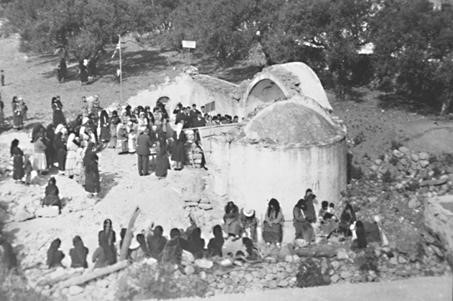
The Bents also met other residents of Karpathos with whom they had friendly (or non-friendly) relations. They, of course, met the Turkish governor of the island (the kaimakam) and his clever secretary Hassan Efendi (fig.1) note 38 . At the village of Spilies they met Mrs. Chrysanthi or Chrysanthemou note 39 . In Arkasa, Menetes and Mesochori they were put up by local residents. Finally, in Diaphani, they were hosted for five nights at the house of Protopapas note 40 . Unfortunately the Bents give few details about these personages, making it almost impossible to identify them today. Only for the latter, Protopapas, is it known that his family owned the church of “Panagia” in Diaphani. On February 9, 1948, a strong earthquake, measuring 7 on the Richter scale, shook Karpathos and the settlements of the island suffered severe damage – Diaphani’s old church collapsed and the modern church was built on the site in the 1960s (fig.7).
Fig. 7. Τhe destroyed church of Zoodochos Pigi (“Panagia”) in Diaphani after the earthquake of 1948.
As for the murder in Volada, it has been long forgotten by the collective memory and no one in Karpathos knows or has heard of it. No contemporary Karpathian writer ever mentions anything about the event. Manolakakis, the instigator of the crime according to Bent, on the contrary states that murder on the island is almost unknown, and if it ever happens it is due to the greatest provocation or revenge note 41 . Τhe greatest historian of Karpathos, M. Michailidis-Nouaros (1879-1954), although he lived close to the event, makes no mention. Τhere is only the testimony of the Bent couple about this event that shook the local community of Karpathos in the spring of 1885. From an historical point of view, of course, the testimonies of Mabel and Theodore still need to be corroborated by other sources, but considering overall the Bents’ extensive writings on the events they experienced on their almost two months on the island, their accounts have proved to be highly reliable.
Note 14: E. Cassotis & H. Koutelakis, “Thedocuments speak of Karpathos during the war years” (Τα ντοκουμέντα μιλούν για την Κάρπαθο στα χρόνια του πολέμου), Rhodes 2017, 239, 251. Return from Note 14
Note 22: M. Chiotis, “The local government during the period of Turkish and Italian occupation in the old capital of Karpathos ‘Aperion’ 1796-1943” (H τοπική αυτοδιοίκηση κατά την περίοδο της Τουρκοκρατίας και της Ιταλοκρατίας στην παλαιά πρωτεύουσα της Καρπάθου «Απέριον» 1796-1943), Athens 2013, 288, 830-832, 835-836. Return from Note 22
Incidentally, the Bents never opted to explore Crete, although we know Mabel spent the winter of 1899/1900 there. Perhaps the work of Arthur Evans on the island dissuaded them!
Matthias Nöth, a visit to the fortifications of Phoenix.
A short while ago (the summer of 2020), the Bent Archive received a most helpful communication from Matthias Nöth, pointing out anomalies in the Google map we had plotted showing the itinerary Theodore and Mabel Bent had taken in 1888 when exploring areas of the western coast of Turkey, as far down as the (now Greek) island of Kastellorizo.
Realizing Matthias had a much deeper knowledge of the region than we did, we asked him if he would care to write for us a short illustrated sketch, a Bent-tour if you like, just referring to some of the sites the couple visited, perhaps from a modern archaeological perspective, something that dedicated travellers to those, still unspoiled, spots would enjoy.
And so, without further ado, we hand you over to Matthias (who shares his Christian name, incidentally, with the Bents long-term assistant from Anafi, who was with the couple on their slow cruise down this delightful extent of the Outer Levant — Matthias, the floor is yours:-
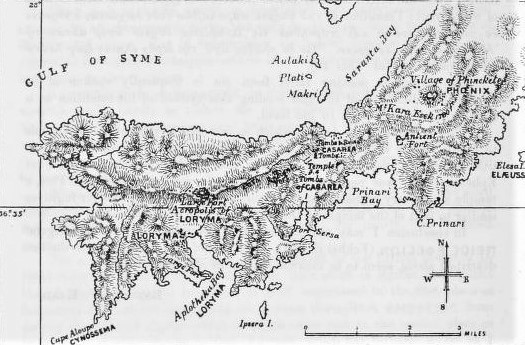
Theodore Bent’s map of Ancient Loryma and its environs for E.L. Hicks’ paper in JHS 1889, Vol. 10, page 46 (The Internet Archive).
Between 1882 and 1898, Theodore and Mabel Bent made a total of seven trips that took them along the Greek and Turkish coasts. Mabel had kept diaries of all these trips. In these, the couple’s sixth voyage, or thereabouts, which took place in 1888 note 1 , we learn that the Bents – after a short stay on Symi – anchored in the bay of “Aplotheka” on the night of 10th March to the 11th.
They decided on this bay, which Mabel describes as having a “very deep, slope to the water in most places, but there are several little beaches of sand where landing is easy”, as there one may find “the ruins of ancient Loryma”. On one of these beaches there are “the remains of some large building and another a mandhra, or sheep fold. The wall of the yard runs along the shore and the family live in a little hut of rough stones, that one can see through, about 12ft. x 10ft. No window or chimney, fire on the earth in one corner, a few sticks stuck between the stones to hang things on and a shelf made with a pole across the end of the room and some branches on it. It is about 3 feet 6 inches wide and may be the bedroom, but we saw very few bedclothes or possessions of any kind, and yet the people seemed clean in their persons and certainly provide us with excellent cream and milk.”.
About her stay in the bay, we learn from Mabel that her husband Theodore undertook “a walk in the morning with Vassilis […] and Ioannis” on March 11th, while she stayed on board their ship. In the afternoon she roamed the bay with her husband and “choose a digging place for the morrow”. For March 12th, she reports that they were excavating “quite unmolested at large tombs, all with altars on them, but vainly”. Unfortunately, as with Theodore’s article in the Journal of Hellenic Studies (Vol. 9, 1888), Mabel’s chronicles are not very meaningful from an archaeological point of view. Presumably he does not elaborate on the ruins there as they were presented by O. Benndorf and G. Niemann four years earlier in their Reisen in Lykien und Karien (Vienna 1884) note 2 .
Fig. 1: View of Bozukkale, or Loryma Bay, from north-northwest, with the island of Rhodes in the distance (Matthias Nöth).
“Aplotheka” bay is known today as Bozukkale or Loryma Bay (Fig. 1), located on the southwestern edge of the Bozburun peninsula. This was known in antiquity as the Carian Chersonese and later belonged to the Rhodian Peraia. The bay itself can only be reached by boat or by taking a long walk overland. Despite, or perhaps because of, its remote location, it is a popular destination for sailing tourists, and since the opening of the Carian Trail also for hiking tourists. There are three seasonal restaurants in the bay and apart from these there are only two or three huts inhabited by shepherds.
Fig. 2: Loryma: View from the southeast over the Rhodian harbour fortress (Matthias Nöth).
Thus little has changed since the Bents stayed there. The “remains of some large building” mentioned by Mabel have also been preserved. These could be the remains of a large building, probably built from spolia in Byzantine times, which may be seen in connection with an Amalfi trading post [Αποθήκη = warehouse ?]. It was built on the site where there were five ship sheds in antiquity (Fig. 1, right of the rocks in the foreground). The “ruins of ancient Loryma” include the large Rhodian harbour fortress (Fig. 2), the scant remains of two temples, the Loryma settlement, numerous ancient farmsteads, and the extensive settlement necropolis in which Mabel and Theodore apparently carried out excavations. The “altars” on the graves mentioned by Mabel are the grave top parts typical of the Carian Chersonese, in the form of monolithic or composite stepped bases (in English also referred to as “stepped pyramids”) (Fig. 3).
Fig. 3: Examples of grave top parts, typical of the Carian Chersonese (Matthias Nöth).
On March 13th, the Bents, accompanied by a shepherd serving as a guide, went eastwards to “a little harbor called Sigás and then walked to the sea on the other side of the promontory called Sikies (fig tree)” (= north coast). However, the excursion was, in Mabel’s words “disappointing”, probably because they did not make the hoped-for discoveries.
Fig. 4: View from the north over the “hidden” port of Serçe Limanı and its small entrance (Matthias Nöth).
The port “Sigás”, which – according to the memoranda of Theodore published by E. L. Hicks (JHS 10, 1889) – was also called “Sersa” in Bent’s time, and is a bay now known as Serçe Limanı (Fig. 4). In ancient times it was called Κρήσα λιμήν or “portus Cressa”. Although the entrance to the “curiously hidden” bay is quite narrow – as Theodore wrote in his article – it was apparently a popular anchorage over the ages; this is shown by the five shipwrecks found there that date from the 3rd century BC to early 11th century AD.
In addition to Mabel’s chronicle entry, we learn from Theodore’s article that, after “about an hour’s walk”, there are extensive ruins in “a basin”. According to Theodore’s memoranda, he found there “covered by the ruins of a Byzantine church”, “a row of bases of columns (apparently in situ), as if a temple had stood here”, as well as numerous graves and a few inscriptions. According to one of these inscriptions, the temple was dedicated to Apollo. Three more inscriptions are featured in Hick’s article. In the north of the valley Theodore’s memoranda mentions “tombs composed of blocks of marble piled pyramid-wise upon each other”.
Fig. 5: The so-called Asardibi plain, seen from the north. At the edges are the remains of ancient agricultural terraces (Matthias Nöth).
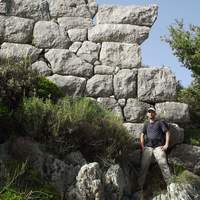
The “basin” is the valley that adjoins Serçe Limanı to the north and is known today as Asardibi; ancient Kasara is also located there. Today only a few ruins have survived in this valley (Fig.5). The alleged temple remains were apparently not found in the recent survey, as they are not mentioned in the relevant publications. The ruins visible today are mainly graves with the grave top parts of the form known from Loryma, as well as some ancient farmsteads and the remains of associated agricultural terraces. In the far north of the valley, on a prominent hill, are the sparse remains of a small Byzantine settlement or fortress. However, between the Byzantine walls there are also remains of more ancient ones, so that one might possibly look for the acropolis of ancient Kasara on that hill. A few years ago, at the western foot of the hill, you could still see the graves discovered by the Bents; however, illegal construction work has taken place there, which has destroyed a large part of the historical substance.
Apparently Mabel and Theodore visited another ancient site on their trip to Kasara, i.e. locating Phoenix “about an hour’s walk [in an] eastward direction”. Since Theodore only mentions it briefly in his article (“… the modern village of Phoenike […] is built on the site of the old town …”), it will not be discussed further here. However, Phoenix and other ruins in the area are shown on the map created by Theodore for Hicks’ article. From an archaeological point of view, this map is also the most interesting result of the Bents’ stay on the Carian Chersonese, as some of the ancient ruins recorded there by Theodore are still almost unexplored.
About Matthias Nöth
After doing his Magister Artium in Classical Archaeology at the University of Würzburg, Matthias completed an archaeological traineeship at the Archäologisches Spessartprojekt (with a focus on Medieval archaeology). He then went on to read for a Doctorate in Classical Archaeology at the University of Marburg, graduating in 2015. His dissertation on the Fortifications of the Carian Chersonese is currently in press. For his bibliography, see here.
During his studies, and as a volunteer, Matthias took part in several excavations in Bavaria, before he participated in survey projects in Turkey: at “Loryma” (2000) and “Bybassos and Kastabos” (2006-2011, 2015), both of which are on the Carian Chersones, today the Marmaris/Muğla region. After several round trips and hikes in the area, Matthias now knows the Carian Chersonese very well.
Note 2: The ancient remains were examined between 1995 and 2001 by Dr. Winfried Held in a survey in which the author was also able to participate. Partial results of this survey were last published in: W. Held (ed.), Die Karische Chersones von Chalkolithikum bis in die byzantinische Zeit. Forschungen auf der Karischen Chersones Band 1 (Marburg 2019). Return from Note 2
Our recent post (13 Oct 2020) on the hundreds of items in the British Museum collected by Theodore and Mabel Bent, was ultimately about things – their contexts, consequences, associations, the meanings of value…
It will probably come as no surprise that Mabel Bent’s paternal grandmother, Elizabeth Hall Dare (née Grafton, 1793-1858), also had a great many things (the wider family units being landowners in Essex and with interests in the sugar plantations of British Guyana)… including, it seems, a towel, a drinking-horn, a bell, a thermometer, and, oh yes, a quantity of butter, two and half pounds in weight in actual fact.
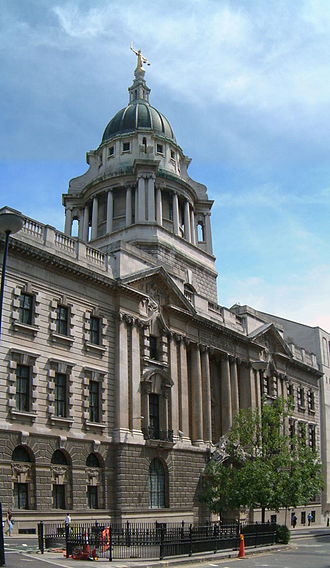
The Old Bailey, London (wikipedia).
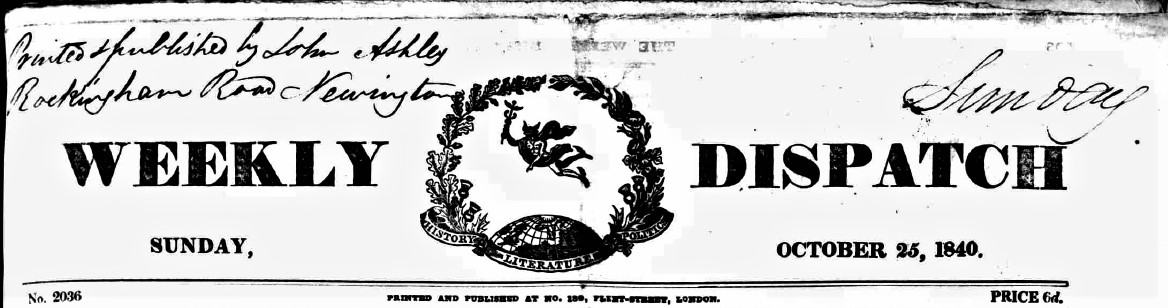
Oddly, let’s move at this point to that lowering fortress of justice, the Old Bailey in London in 1840, as recorded in The Weekly Dispatch (page 507) of Sunday, 25 October, with reference to a petty case that was tried on the 19th of that month and year.
We read in the said tabloid, obiter dicta: “Christopher Johann Frederick Auguste Struve, described as a dealer, was… indicted for burglariously entering the dwelling house of Mrs. Elizabeth Hall Dare, and stealing therefrom a towel, a drinking-horn, a bell, a quantity of butter, and various other articles. Mary Humby, servant to the prosecutrix, a widow lady, residing on Streatham-common, stated that on the night of the 11th of September [1840] she fastened the doors and windows previous to retiring to bed. She left the larder-window open, but secured before it an iron grating, which, on the following morning, between five and six o’clock, she found broken down, and a number of articles, named in the indictment, were taken away; there was also a thermometer taken from the side of the window.”
Masthead of the “Weekly Dispatch” for Sunday, 25 October 1840 (The British Library).
We need more evidence, clearly, and the verdict – although it rather seems an open-and-shut case, doesn’t it? The Weekly Dispatch obliges: “Inspector Campbell stated that on the 15th of September he went to the prisoner’s lodgings, and on searching his room discovered various property, and amongst it all the articles stolen from Mrs. Dare’s. Eleanor Evans said the prisoner had occupied a room in her house for about a month previous to his being taken into custody. He always locked his door when he went out, so that nobody had access to it. When called upon for his defence the prisoner said he purchased all the articles sworn to by the witnesses of a person in the street. The Recorder having summed up the evidence, the Jury returned a verdict of Guilty. The Recorder told the prisoner that he appeared to be an experienced and systematic robber. He had been convicted of two burglaries committed within three or four days of each other. It was quite impossible that he could be allowed to remain in the country. The sentence of the Court, therefore, was that he be transported beyond the seas for the space of ten years.”
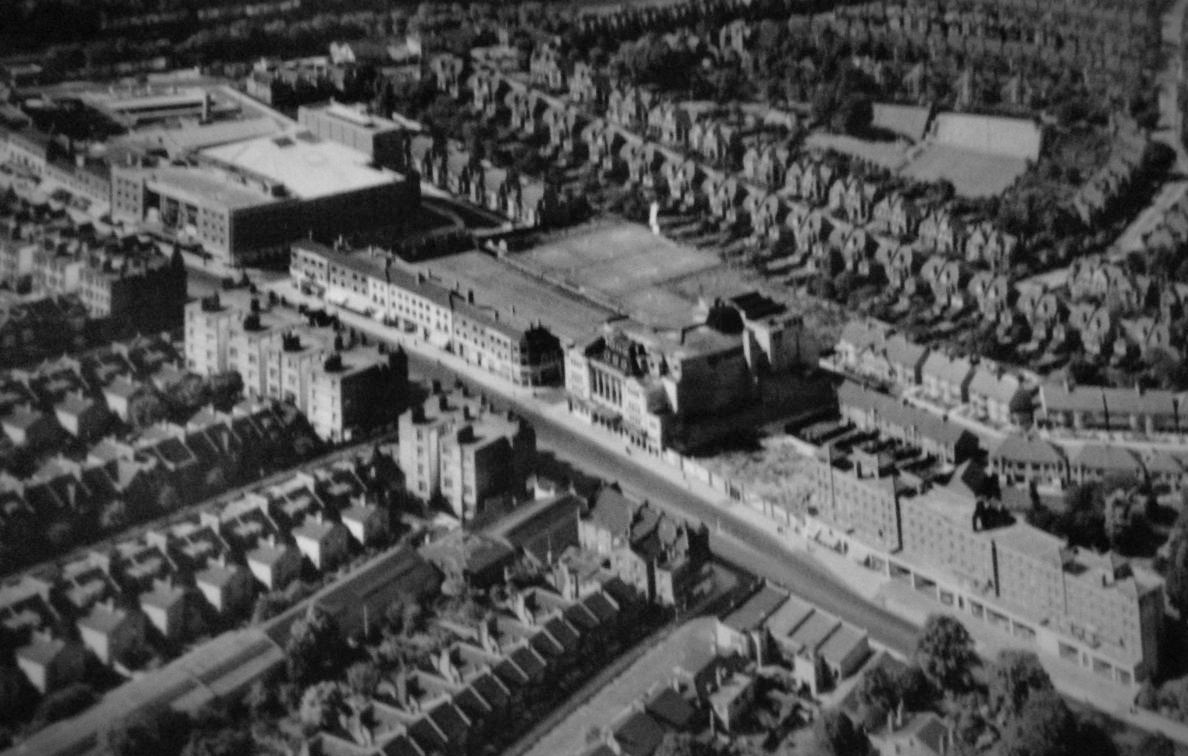
Fashionable Streatham Hill (Sutton & Croydon Guardian).
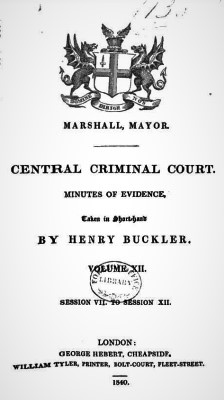
For the location of the house concerned, we refer you at this point to our second source for this abominable crime perpetrated on Elizabeth Hall Dare, Mabel Bent’s grandmother, i.e. the Central Criminal Court, Minutes of Evidence(1840, Vol 12, p. 1059), which informs us that the property was in South London’s fashionable Streatham parish, an enclave of well-heeled souls in Victorian times.
Title page of “Central Criminal Court, Minutes of Evidence”, Volume 12, 1840 (via Google Books).
The facts and characters of the case are a cross between Tom Jones and Much Ado About Nothing. It is worth extensively quoting, if for nothing more than a reprise of ‘burglarously’ – a word it’s doubtful you will encounter three times in your life, and for the true value of things:
“Christopher Johann Frederick Auguste Struve was again indicted for burglarously breaking and entering the dwelling house of Elizabeth Grafton Hall Dare, at Streatham, about twelve o’clock in the night of the 11th September, with intent to steal, and stealing therein, 1 towel, value 1s.; 2½ lbs. weight of butter, value 2s.; 1 bell, value 5s.; 1 butter-mould, value 6d.; 1 plate, value 1d.; and 1 cup, value 6d.; her property.
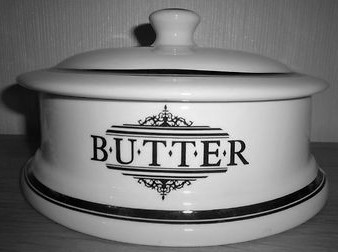
Hard to believe… but true. A Victorian butter dish (one of several examples online).
“Mary Hamby: I am single, and am cook to Mrs. Elizabeth Grafton Hall Dare, widow, of Streatham Common, in the parish of Streatham. On the night of the 11th of September the larder window was open, but there was a wire-guard inside before it, which must be broken to get at anything. I saw it safe a little after ten o’clock – it opens into the garden – the grating was secured by four large nails – the next morning I went down into the larder before six o’clock, and found the wire pushed quite round behind a milk pan, to prevent it going back to its place. I missed the articles stated. A person could get through the wire place – he had then opened a door out of the larder, and taken a white jug, bell, and drinking-horn – I lost a thermometer from outside the window.
“Prisoner: I bought these things of a man in the street.
“Eleanor Evans: I am the wife of John Evans and live in Church-street Minories. The prisoner lived with us four weeks and three days until he was apprehended – the policeman came to me, and I showed him his room – they found this jug, the bell and other articles there – nobody but him could have put them there, as the door was locked – I did not see the articles there till they were found – I had missed him two or three days before that, but did not know he was in custody.
“Samson Darkin Campbell: I am a police-inspector, of the V division. On the 15th of September I went with Pitcher to No. 51, Church-street. Evans showed me a room, and I found this towel, with the name of Hall Dare on it, a thermometer, a butter-strainer, two files, a pair of pliers, and some skeleton-keys, some of them unfinished.
“Thomas Pitcher (police-constable P 167.) I accompanied Campbell, and found these articles in the room – the prisoner was in custody at the time. (Property produced and sworn to.)
“GUILTY. Aged 41. Transported for Ten Years.” (‘Central Criminal Court, Minutes of Evidence’, Vol. 12, 1840, p. 1059)
The unfurled “David Clarke”; she transported Struve to Tasmania in 1841 (www.gouldgenealogy.com).
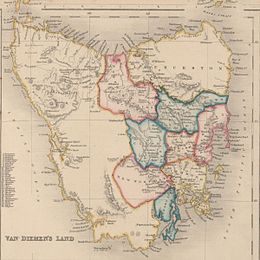
Researches are continuing into the life of Christopher Struve -could he have been a black sheep in the noble Struve family we can read about online? His convict records inform us simply that he was 41, married to Maria, had two girls, and was a Lutheran. We are still researching, too, exactly where in London’s fashionable Streatham it was that Christopher Struve decided to enter and remove therefrom a towel, a drinking-horn, a bell, a thermometer; and a quantity of butter – the most expensive thing in his swag, worth over £10 in today’s money. Wherever it was, it was a long way from Van Diemen’s Land (Tasmania), something Christopher Struve wasn’t when he arrived in Hobart on 4 October 1841, transported in the yare David Clarke with 308 or so other men, one of whom (John Timbers, 19) died on the journey.
Tasmania/Van Diemen’s Land (wikipedia).
Probably in some form of restraint, it is unlikely that Struve met with the captain, William B. Mills, or saw that much of the Sound when they sailed from Plymouth on 7 June 1841 on that four-month voyage to Tasmania’s prison colony. Unloading her human cargo, the David Clarke sailed away again “for Bombay in ballast on 17 October 1841”; Christopher Struve remained, and we can imagine him coming ashore, almost exactly a year after his trial, contemplating the true value of a towel, a drinking-horn, a bell, a thermometer; all in all, it was a long, long way to come for a plate of butter.
We don’t know where these things are now, but they are not in the British Museum with the collections of Theodore and Mabel Bent.
On 24 April 1885, British explorer Theodore Bent wrote from Syros in the Cyclades to Charles Thomas Newton, famous traveller himself and now Keeper of the Department of Greek and Roman Antiquities at the British Museum (BM): “We returned from Karpathos yesterday and had hoped to catch a steamer which would have brought us and our things straight to England. Unfortunately we shall have to wait a week at least, and as we have so much plunder we cannot take the Marseilles route. I had hoped to have been in time for the Hellenic meeting, but of course now we shall not reach England till the middle of May. We were fairly successful in Karpathos, finding a large number of rock cut graves unopened which have produced pottery, etc., which, if not of the highest order, offer a good deal which I believe to be of a new character… Of quaint manners and customs I have got a fine collection, also of old Karpathiote dresses and jewelry… We had rather a rough time of it, Karpathos being very far behind the world in comforts, and decidedly we enjoyed ourselves best when living in our own tent. Mrs. Bent survives and is well and begs her kind regards. Yours very truly, J. Theodore Bent.” (Mabel Bent 2006: 123, fn. 74)
(The Bents’ trip to the Dodecanese in 1885 was probably contributed to by the BM, and significant finds from there are now in London.)
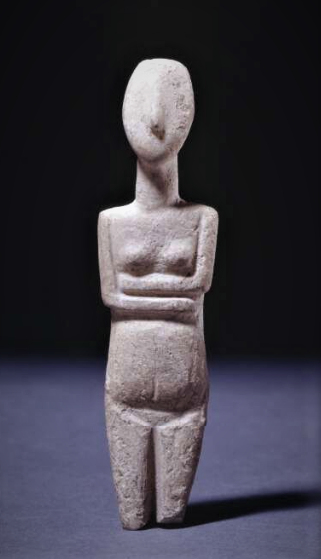
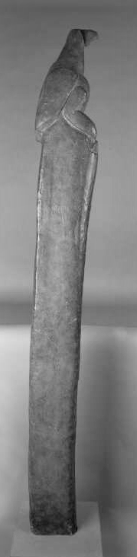
To draw attention to, and thank the BM for their great and newly re-vamped online database, and make a nod to Neil MacGregor’s seminal TV/radio series, and subsequent exhibition, at the same time, the Bent Archive is selecting four significant objects to feature from the several hundreds of items (752, no less, the BM claim, though some are duplicated) either donated to or sold by Theodore and Mabel Bent to the Museum over a period of five decades or so from the 1880s, beginning with the artifacts Bent brought home from the Cycladic island of Antiparos, then an almost abandoned islet, today a hipster destination for some of Europe’s silliest teenagers; the Bents would be amused. The fifth item, as we shall see, is one that got away… but it should be there.
For about twenty years, Theodore and Mabel Bent travelled to regions in the Eastern Mediterranean, Africa, and Arabia, on the look out for things of archaeological and ethnographical interest (usually linked to Theodore’s current bonnet-bees and theories). Occasionally the British Museum contributed to the Bents’ travel costs on the understanding that the institution would get first refusal. We know that the museum also paid Theodore for certain acquisitions, but there were also donations from the Bents – in particular the large assemblage given by Mabel in 1926, a few years before her death (Theodore, alas, died early, in 1897).
The Museum’s archives (and elsewhere) contain much correspondence between Bent and their various curators and associated scholars, such as William Paton, E. L. Hicks, David Hogarth, Sir William Mitchell Ramsay, Charles Newton, Arthur Smith, Alexander Stuart Murray, Cecil Smith, William Henry Flower …
Good examples of these interactions include a letter from Theodore to the Keeper at the British Museum, dated 30 May 1884: “Dear Sir, Do you care to make me an offer for my figures, vases, ornaments, etc., from Antiparos? It occurs to me that a collection of this nature is rather lost in private hands. Yrs truly, J. Theodore Bent.” (Mabel Bent 2006: 46, fn. 49)
The BM archives also include the Museum’s day books and accession registers, fascinating records that bring you closer to collector and curator, in contexts of mutual scholarship, curiosity, and wonder.
This is not the place to comment on the history of the Museum, collectors’ activities, or the acquisition policies current in the late 19th century. You will have your own thoughts and opinions.
The objects collected by the Bents are featured below, in a sort of virtual ‘The Bents at the BM’ mini-exhibition, by the date they were acquired by the Museum, and representing the main regions of the Bents’ fields of studies, as already mentioned – the Eastern Mediterranean, Africa, and Arabia, over a period twenty years following their marriage in 1877. In most cases the BM item number consists in part of the year the piece was acquired from the Bents, i.e. Af1892,0714.144, denotes 1892 – in this instance when Theodore and Mabel returned out of Africa.
Thus, without further ado… “The Bents and the BM: in Five Objects”
Let’s make a start in the Greek Cyclades – the scene of Theodore’s first (1883/4) substantial ‘excavations’ (although his modus operandi bears little resemblance to the science of today and raises eyebrows, if not ire, still among archaeologists).
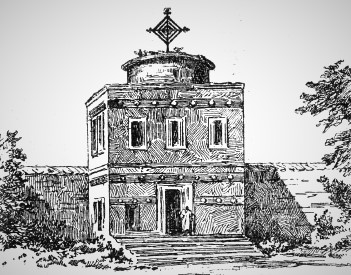
‘The Church of the Saviour of the World, Adowa’. Sketch by Theodore Bent. ‘The Illustrated London News’, 6 May 1893, p.556 (The Bent Archive).
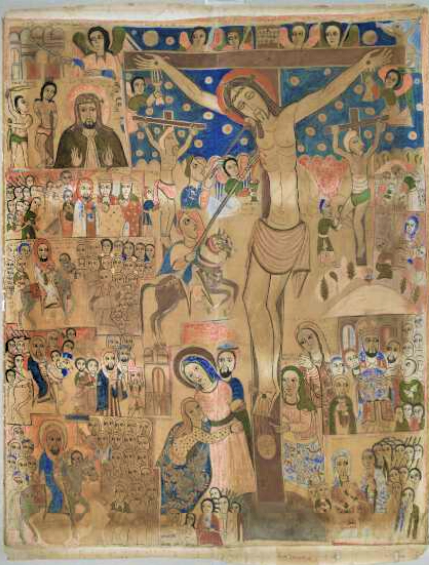
The Bents’ 1883 tour of the region was ultimately unsuccessful due to local unrest, exacerbated by the colonial ambitions of the Italians. By far the most interesting of the artifacts Bent brought back was this large painting of the Crucifixion, he bought for ‘Ten pieces of silver’ from the Church of the Saviour of the World, Adwa. Bent describes the transaction in the book that resulted from the journey: “It was here… that I espied a picture cast on one side, for the colours were somewhat faded, which I faintly hoped to acquire. At first our offers were received with contempt, but again and again we sent our interpreter, and with him ten pieces of silver, the sight of which eventually overcame the priest’s dread of mutilation, and the evening before our final departure from Adoua the picture was ours. Our interpreter himself was terrified at what he had done, ‘We must not breathe a word of the transaction, even to the Italians,’ he said ; ‘we must bury the treasure at the bottom of our deepest bag ‘ ; and to all these regulations we gladly acquiesced, for we knew the great difficulty of acquiring these things in Abyssinia, and the danger to which we all should be exposed if our transaction should be discovered, and I am pretty nearly sure that this picture which is now in the British Museum is the first of its kind which has reached Europe…” (The Sacred City of the Ethiopians, 1893, pp. 129-33)
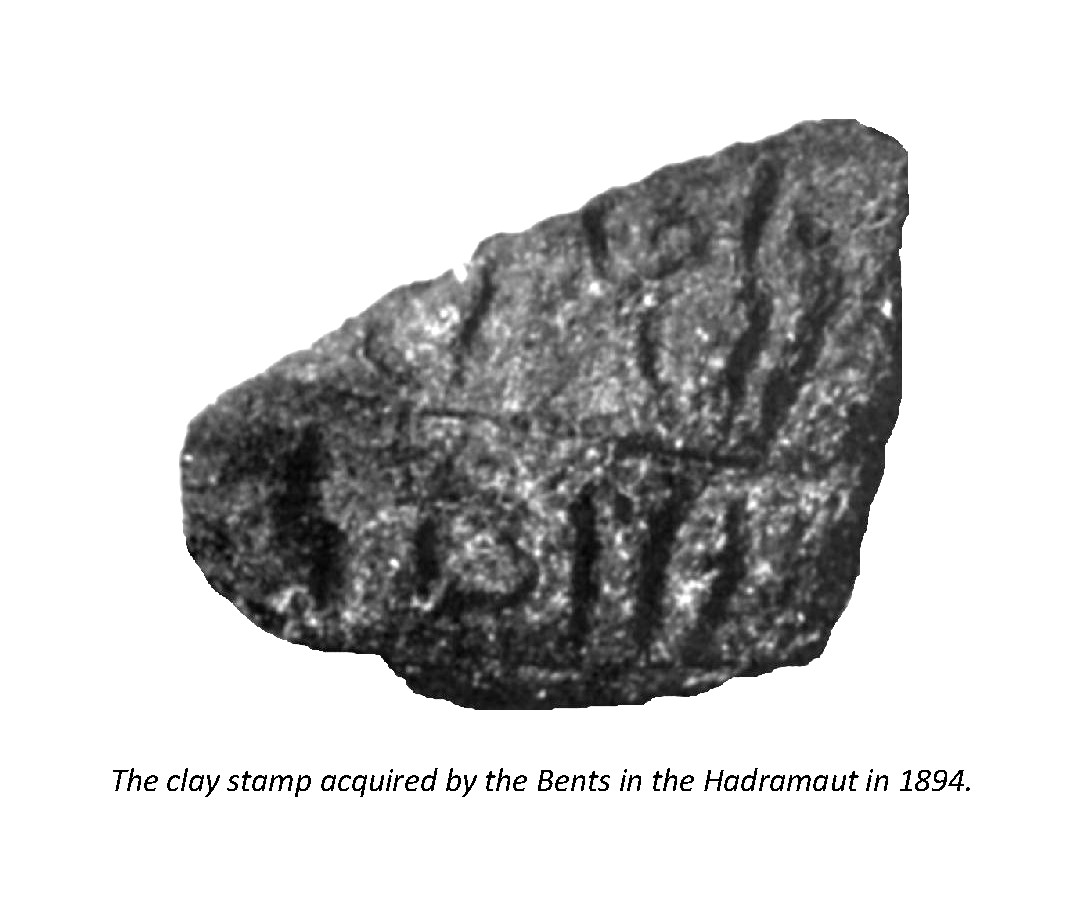
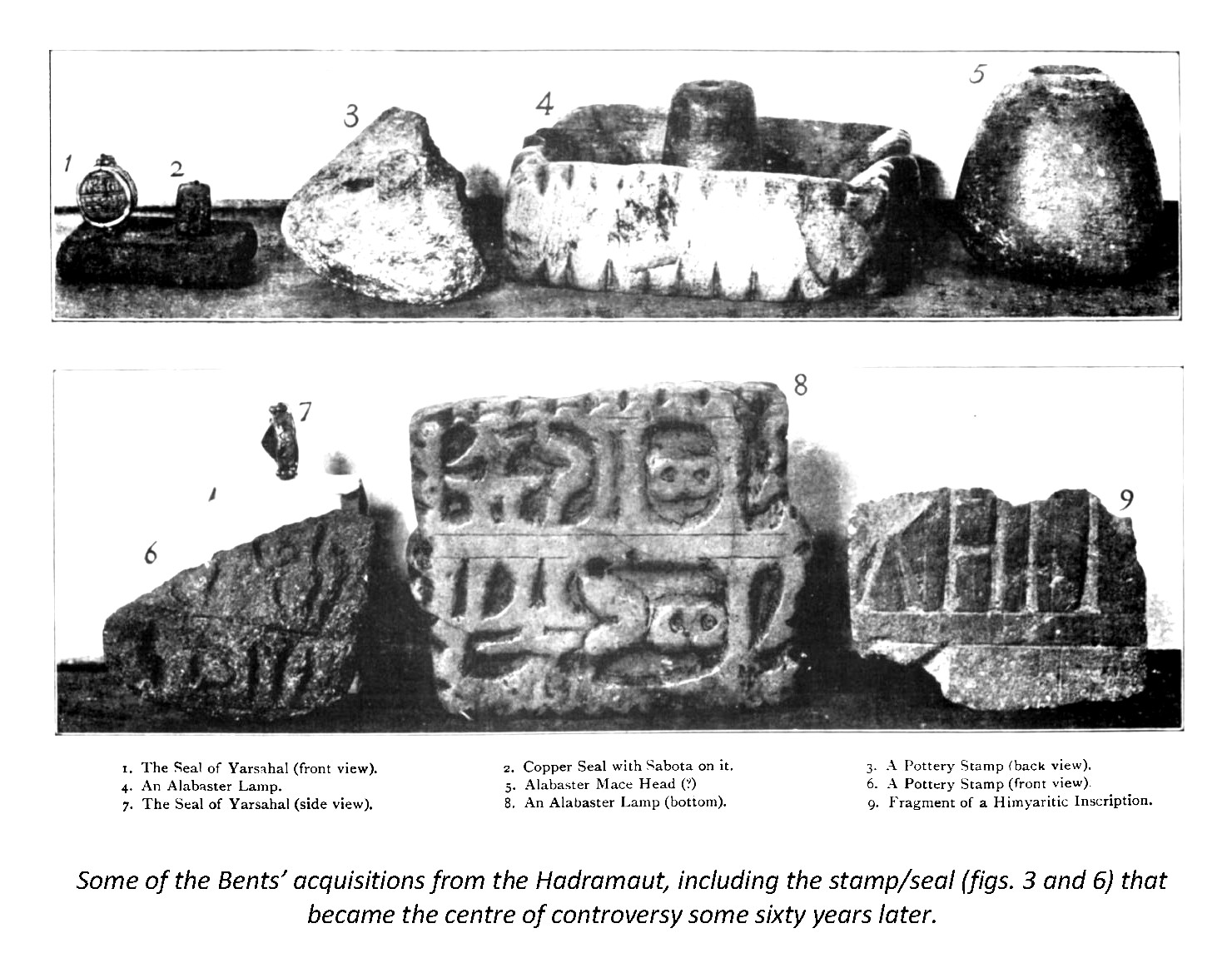
[Cultured female voice, slow, musical, dark, clear] “Object No. 5: A pottery stamp/clay seal from the Wadi Hadramaut, Yemen, aka ‘The Bethel Seal’? Used presumably by a merchant for designating ownership, or contents, of traded merchandise. Date uncertain.” It must be quickly said that this is a deceit; it is a mystery object that should have been given by Mabel with a few other artifacts from the Wadi Hadramaut (Yemen) in 1926, but was not, and thereby hangs a tale worth the telling.
The Bents are admired for their three attempts to traverse the dangerous Wadi Hadramaut in the Yemen, from west to east and down to the Gulf of Aden, from 1894-7. The final trip cost Theodore his life. The couple were travelling on horses and camels and were restricted in what they could bring away with them and the largest collection consisted of hundreds of botanical specimens, reasonably light, now in the Herbarium, Kew.
Mabel has left us in her diary some idea as to how acquisitions were made along the way: “On Saturday the 13th [January 1894], the day after our arrival, at 8 o’clock, the Sultan, Theodore, Saleh and a groom on the four horses, and I on [my horse] Basha, and a vizier on a camel with a soldier, and the soldiers on foot, rode about five miles to a good old ruin (Al Gran), but embedded in an inhabited house so that excavation would be impossible; from a very well cut scrap of ornament we thought it to be a temple, and it is perhaps from this temple that a kind of small stone trough has been brought, with a dedication, rather long, in Sabean, which Theodore has nearly deciphered – a trough with a spout coming to England. Two stones have been brought us by camels at the Sultan’s orders.” (Mabel Bent 2010: 167)
The Bents returned in 1894 from the Hadramaut with the modest lump of clay – the stamp/seal in question. It featured with a small collection of other items on page 436 of the Bents’ great book on Southern Arabia (1900), including the ‘trough’ Mabel mentions above. Then, rather like a great ring, the seal disappeared from view – until it reappeared in an archaeologist’s shovel in the late 1950s at a site at Beitin, Biblical Bethel, Palestine, and the scene of Mabel Bent’s accident in the early 1900s, when she broke a leg in the wilderness, riding, unaccountably, on her own.
But was it the same modest lump of clay, or another, identical artifact? Today it (or both?) is/are lost, and a debate has waxed and waned over the mystery ever since. A strong argument is made that Mabel, distressed, widowed, mourning her late husband and her lost life as an explorer, ceremoniously placed the stamp in a deposit at Bethel in the early 1900s as a tribute to Theodore – not caring if it were ever found again or not – the significance of the site being that it marked the end of a frankincense route (the resin being one of his passions) that began thousands of miles away in the Wadi Hadramaut – and thus Theodore could rest easily, his journey over; the love of a grieving widow.
For a scholarly overview of the seal in context, see ‘Arabian and Arabizing Epigraphic Finds from the Iron Age Southern Levant’, by Pieter Gert Van Der Veen with François Bron, in J.M. Tebes (ed.) Unearthing The Wilderness: Studies on the History and Archaeology of the Negev and Edom in the Iron Age: 203-226. Leuven: Peters.
As a coda, perhaps the Bents’ acquisitions no longer quite justify the hyperbole appearing in Mabel’s interview to The Hearth and Home (2 November 1893) before leaving for Arabia: “Gifted with great artistic taste, Mrs. Bent’s personal collection of curiosities include many beautiful things brought from abroad, and, as our readers are doubtless aware, ‘The Bent Collection’ in the British Museum is one of the most interesting in that venerable building.”
Other finds: Very much smaller collections of the Bents’ acquisitions can be found in: the V&A, London; the Pitt Rivers Museum, Oxford; as well as in Cape Town, Harare, Istanbul, and elsewhere.
Don’t overlook, too, the wonderful, though small, collection of dried plants in the Herbarium, Kew Gardens. Most of the specimens were collected by Kew’s William Lunt, who travelled to the Hadramaut with the Bents in 1894, but there is some additional material from their later expeditions. Kew’s super online catalogue (with some illustrations) makes a great start.
It should also be remembered that in the late 19th century London’s Natural History Museum legally remained a department of the British Museum with the formal name ‘British Museum (Natural History)’. Thus the select assemblage of molluscs, insects and reptiles the Bents collected was gradually transferred to their care, e.g. we know that Mabel presented her collection of 186 “land and freshwater shells from the island of Socotra, including several new species”. (For publications on the shells, see, e.g. J.C. Melvill, Journal of Molluscan Studies, Vol. 1, Issue 5, 224-5; for some of the Bents’ shells in the NHM, click here). [For an article on new botanical and zoological species discovered by the Bents, click here].
Very importantly, the skeletal material Bent removed from two sites on Cycladic Antiparos in 1884, believed lost but now rediscovered, is stored in the National History Museum, awaiting further study.
(In 1926, a few years before she died (1929), Mabel had a sort out of the things she still treasured in her London home. This explains why many of the inventory numbers in the above museums have a 1926 date.)

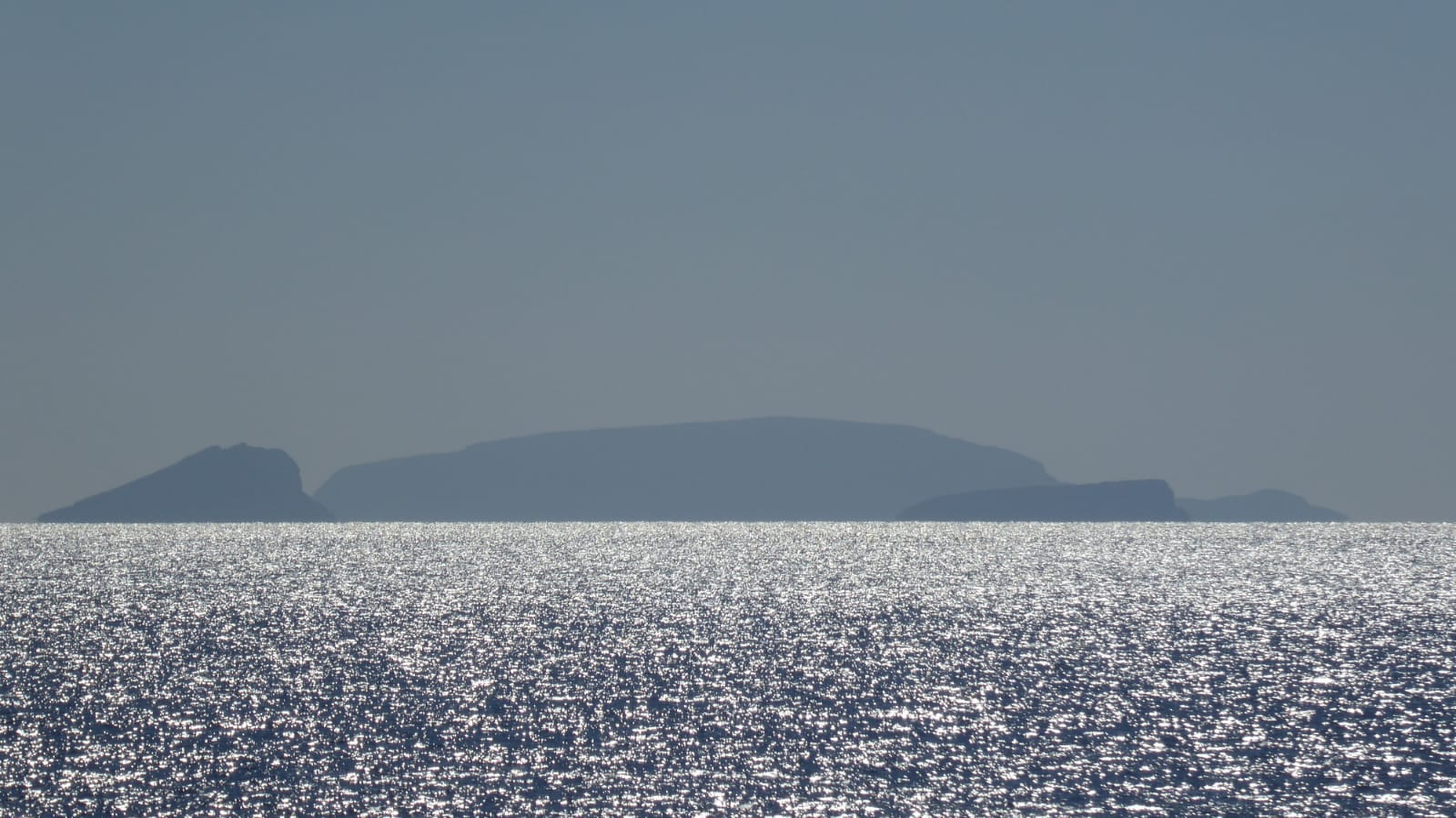
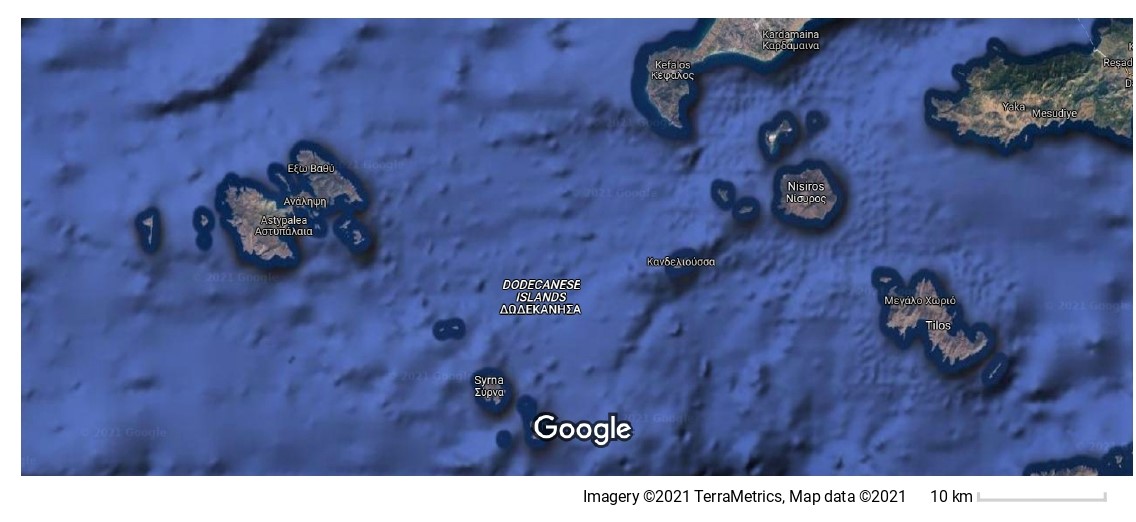
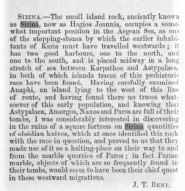
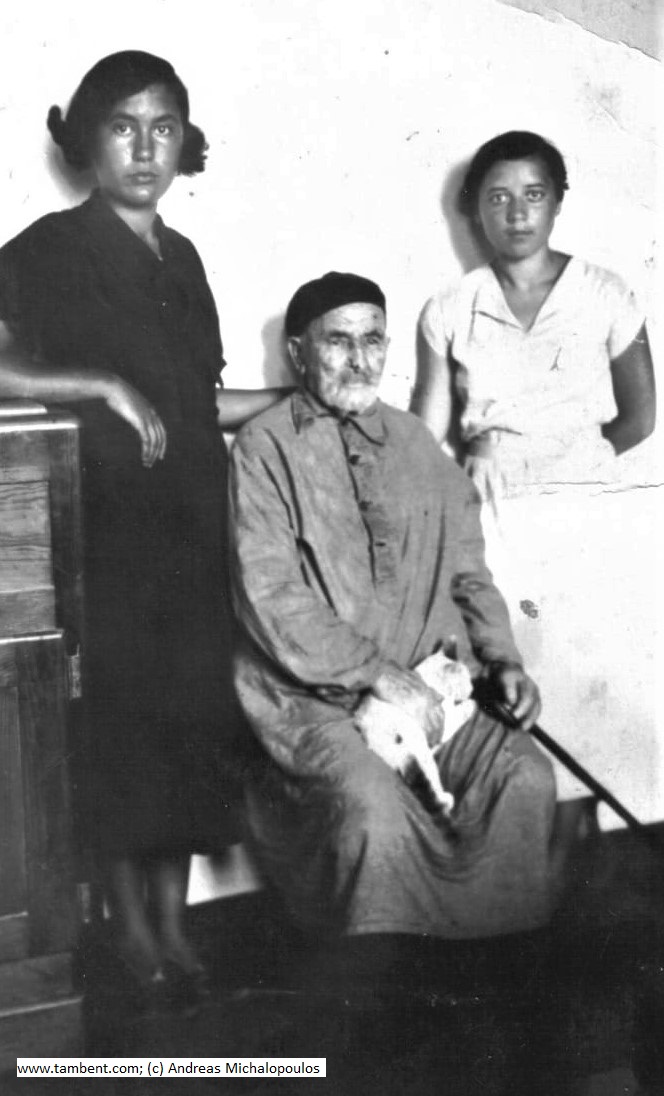
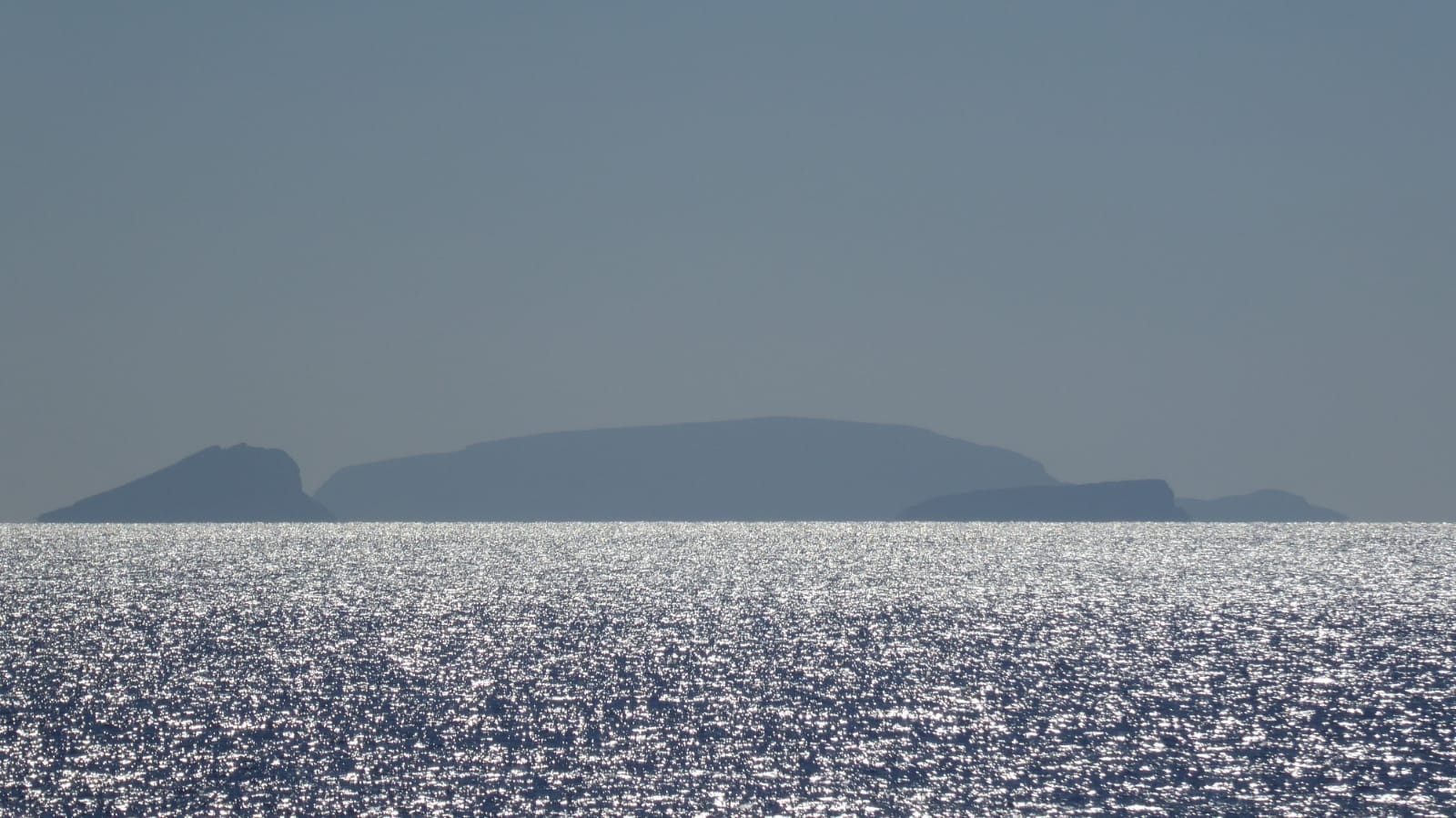
 Leave a comment or contact us about this article