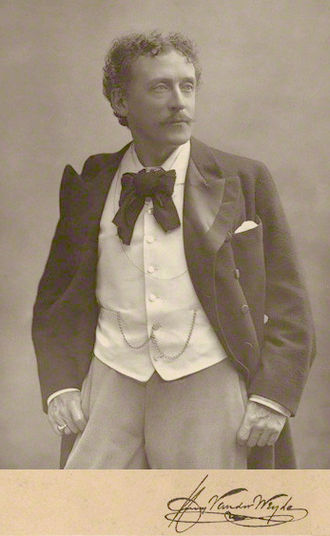
And tonight we have for you… Mr. Theodore Bent!

Lecturing with lantern-slides (Youtube: Victorian and Albert Museum)

There is no denying that Theodore Bent worked incredibly hard: if not travelling he would be planning the next expedition, fund-raising, researching, writing up, or lecturing. For the approximately twenty years of his travels (coming to style himself more and more as an ‘archaeologist’) he would return to London in the spring of each year (with the odd exception) and immediately begin to think of publishing and publicising his finds – he had always depended much on self-promotion and PR for the funding and support of his subsequent researches; he had good contacts with the press and would submit progress updates to them assiduously from far-flung outposts, via Reuters and other agencies.

An unscientific trawl through the press cuttings of the time shows how Theodore reached the peak of his ‘fame’ in 1893-4, after a trio of consecutive hits – Great Zimbabwe, Aksum, and Wadi Hadramaut. He and his wife were soon London celebrities and news and details of their adventures was syndicated widely at home and abroad.

Mabel was tasked with sorting out her photographs and ensuring that they were ready for transferal to lantern-slide or printer’s plate. There was also the constant process of unpacking and caring for case after case of acquisitions: archaeological, ethnographical, botanical, and zoological. The couple would quickly make decisions on what they wanted to keep for themselves, and exhibit in their London townhouse, and what they would offer to museums (for a remuneration if possible).

What is particularly striking is how quickly Theodore would settle to study and write up his monographs (frequently asking other specialists for contributions). His hard-pressed publishers (mostly Kegan Paul and Longmans) usually had them announced and on bookshop shelves within six to nine months of Bent’s return from the field.
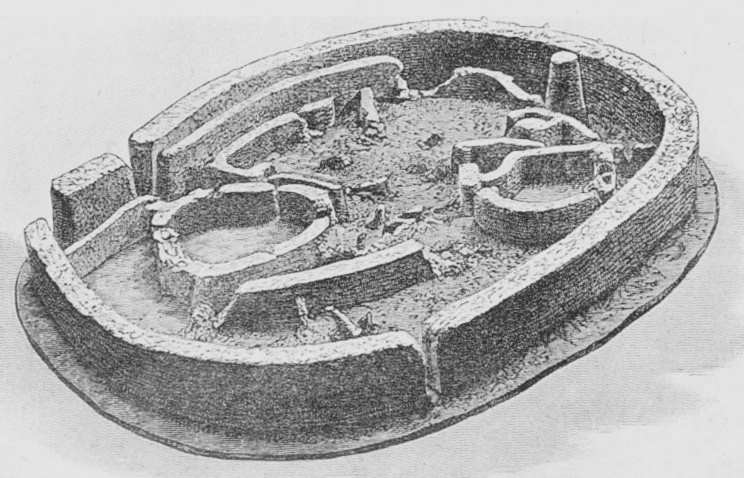
Model of Bent’s ‘Elliptical Temple’, from R.N. Hall, ‘Great Zimbabwe, Mashonaland, Rhodesia’, 1905, opp. page xl.

And within short weeks of reaching home again – from the Levant, Africa, or Arabia – Theodore was ready to give talks and lectures, all over the UK, to the relevant grand institutions of the day, and before the great and the good (in the spring of 1892 even William Gladstone came along to hear). Mabel’s job was to have the lantern-slides ready, and any artifacts neatly labelled for display.

Other display aids might be needed – perhaps a 3D model (e.g. of his famous ‘Elliptical Temple’ at Great Zimbabwe), and then there was the commissioning of maps from the famous London cartographers Edward Stanford to be seen to.
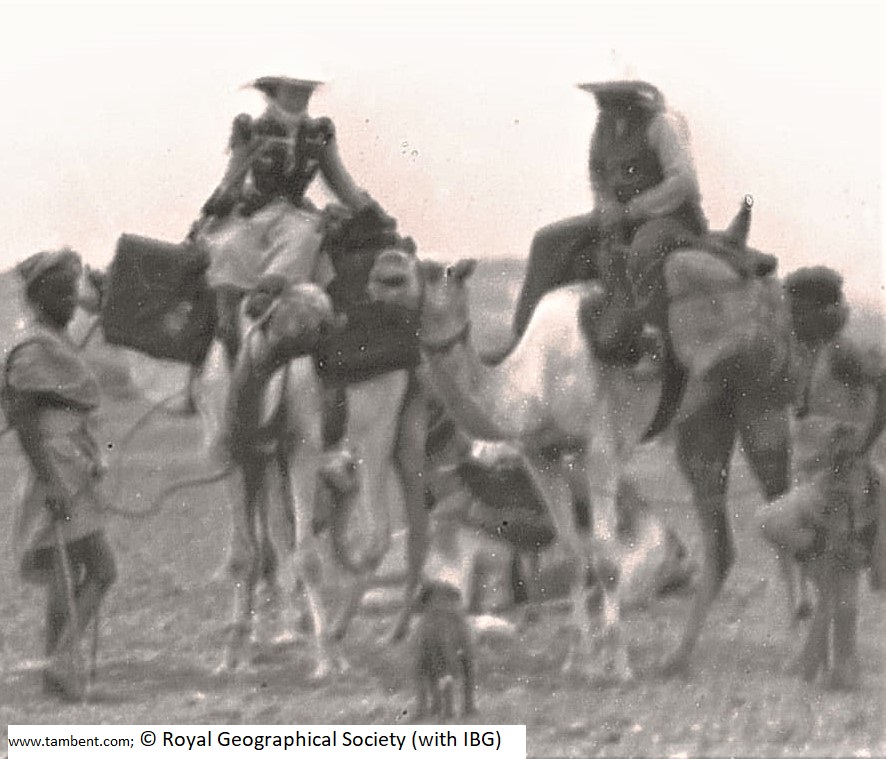
Detail from a lantern-slide (1896) of Mabel Bent on her camel in the Sudan.

What follows here, taken from newspapers and journals, is a chronological list (with no claims to completeness) of Theodore’s talks and presentations, giving a very good sense of the explorer’s Yorkshire-bred proclivity for hard graft. An interesting additional discovery seems to suggest that there was even an attendance charge for his talks in the provinces! The Newcastle Daily Chronicle for 2 March 1892 records that to hear Theodore lecture in Tyneside would cost you the equivalent of c. £3 today for a seat in the main hall, or c. £1.50 in galleries – money well spent! And illustrating Bent’s energy (especially when we realize he was not that long back from his year in Africa) the previous evening (Tuesday, 1 March 1892) he was lecturing to the Leeds Philosophical and Literary Society on ‘Exploration among the ruined cities of Mashonaland’.

At another event we hear that Theodore’s ‘remarks throughout were admirably illustrated with a large series of photographic and other views of the places which were visited on the tour. The photographs were the production of Mrs. Bent, and incidentally Mr. Bent mentioned, in apology for some of the views which were somewhat wanting in sharpness, that the technical difficulties of photography, on account of the intense heat and other causes in Arabia, were almost inconceivable.’ (Wharfedale & Airedale Observer, 19 October 1894). Complete sets of Mabel’s lantern-slides survived until the early 1950s, when they were discarded by the Royal Geographical Society, deemed too faded and damaged to merit keeping. A huge loss.
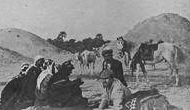
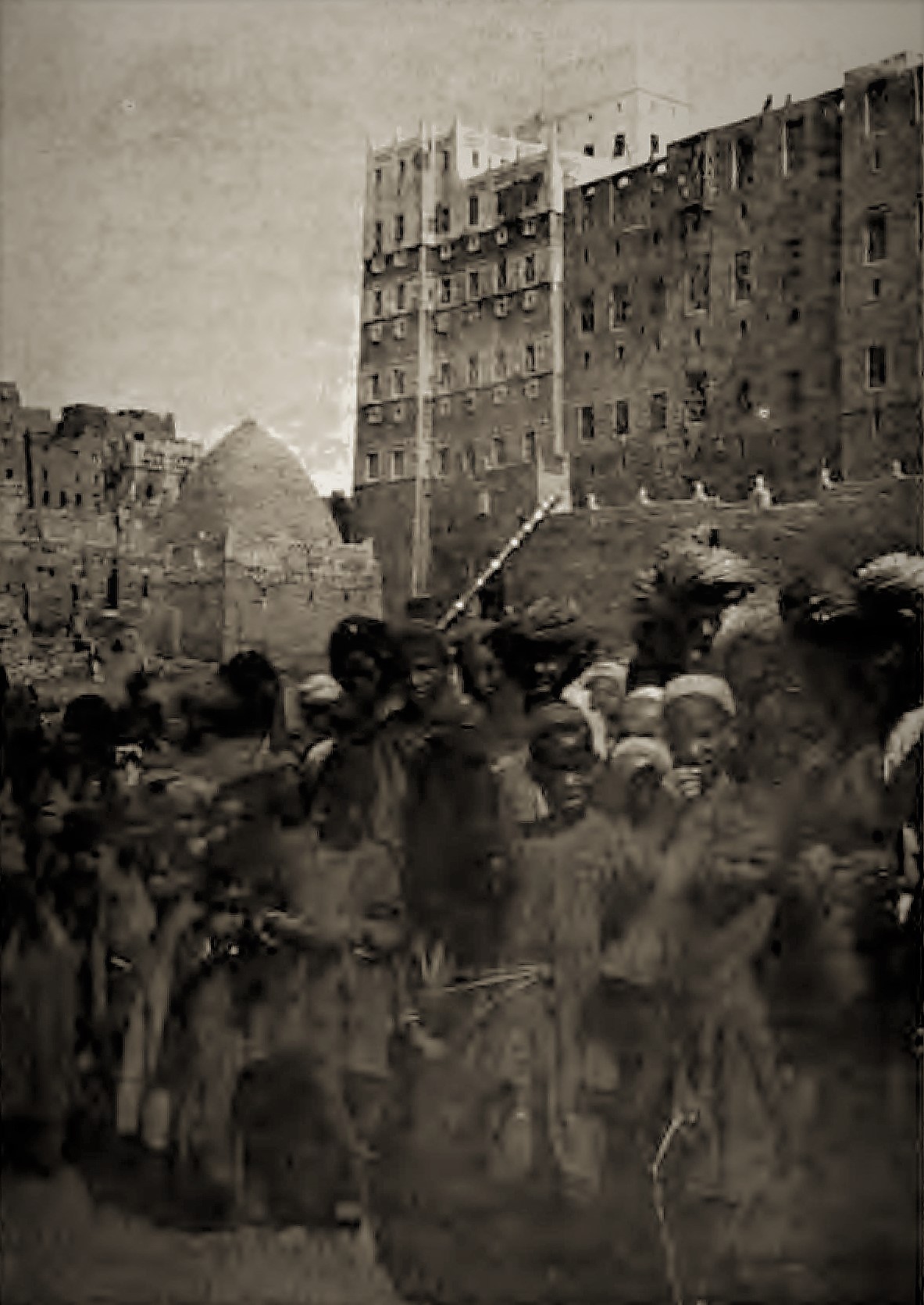
Bent lecturing locals at the the Mounds of Ali, Bahrain, in 1889 (opposite page 24, the Bents’ ‘Southern Arabia’, 1900)

It takes very little imagination today to see Theodore in front of the camera presenting a sequence of his own mini-series – The Eastern Mediterranean and the Levant, The Persian Gulf, Africa North & South, and Southern Arabia. Let’s hope one day they will appear – on National Geographic perhaps!


Theodore Bent’s Talks, Presentations, and Lectures (some dates are approx) note 1 

1883 [The Bents make their first visit to Greece and Turkey in the spring]

1884 [The Bents in the Greek Cyclades]

  • 8th May: ‘A general meeting of the Hellenic Society will be held at 22, Albermarle Street on Thursday next [8 May], at 5 p.m., when Mr. Theodore Bent will read a paper on a recent journey among the Cyclades.’ [The Athenaeum, No. 2949, May 3, 1884, p. 569]

1885 [The Bents in the Greek Dodecanese]

  • 14th September: ‘At the meeting of the British Association in Aberdeen… in the Anthropological Section, Mr J. Theodore Bent read a paper to show that the study of tombs in the Greek Islands was conducive to a knowledge of ancient and forgotten lines of commerce.’ [South Wales Daily Telegram, Friday, 18 September 1885]

1886 [The Bents in the Eastern Aegean and Turkey]

  • June 3 (Thursday), 4 p.m. Royal Archaeological Institute ‘Greek Death-wails’, by Mr. Theodore Bent (Academy, 29 May 1886, p. 382).
  • 24th June: At the annual meeting of the Hellenic Society in London the Hon. Sec. read a short paper by Mr. Bent on ‘A recent visit to Samos’.

1887 [The Bents in the Eastern Aegean and Turkey]

  • 23rd June: At the annual meeting of the Hellenic Society in London, Mr. Bent gave a short account of his work on Thasos.

1888 [The Bents in the Eastern Aegean and Turkey]

  • 11th September: ‘At the meeting of the British Association at Bath… in the Anthropology Section, Mr. J. Theodore Bent contributed a paper on sun-myths in modern Hellas.’ [St. James’s Gazette, 12 September 1888]

1889 [The Bents in Bahrain and Iran]

  • 17th September: At the meeting of the British Association at Newcastle, ‘in the Geography Section Mr Theodore Bent read a paper on the Bahrien Islands, in the Persian Gulf, in which he dealt with the position and general features the two islands, character of the seas, and the pearl fisheries and other features.’ [Dundee Advertiser, 20 September 1889]
  • October: A course of lectures on ‘National Life and Thought throughout the World’ was to be given ‘on Sunday afternoons during the next three months at the South Place Institute, Finsbury [London]’. Bent was to lecture on ‘Greece’. (Academy, 5 October 1889, p. 218)
  • 25th November, 8.30 p.m. Geographical Society ‘The Bahrein Islands, Persian Gulf’ by Mr. J. Theodore Bent (Academy, 23 November 1889, p. 342).
  • 2nd December: ‘The meeting of the Geographical Society on Monday at Burlington House [London] was one of exceptional brilliancy, and was fully attended. Mr J. Theodore Bent… read an interesting and exhaustive paper on the Bahrein Islands in the Persian Gulf. This was rendered the more interesting by some realistic photographs, thrown on a white screen as dissolving views, and taken by Mrs Bent on the spot.’ [The Queen, 7 December 1889]

1890 [The Bents in the Eastern Aegean and Turkey]

  • 30th June: ‘Royal Geographical Society. Mr. J. Theodore Bent read a paper at the fortnightly meeting of of this society, held last night in the theatre of the London University, on explorations he had made in Cilicia Trachea.’ [Daily News (London), 1 July 1890]
  • 22nd July: Theodore Bent reads his paper ‘Notes on the Armenians in Asia Minor’ to the Manchester Geographical Society [MGS, Vol. 6, 220-222]
  • 5th September: At the meeting of the British Association at Leeds, in the Anthropology Section, Mr Theodore Bent read a paper on the Yourouks of Asia Minor, who, he said, were the least religious people he had ever heard of; but the religion honesty was deeply implanted their breasts. No more polygamous people existed anywhere, a Yourouk regarding himself as a disgrace unless he had six or seven wives. As a consequence womanhood bad sunk very low among them.’ [Yorkshire Post and Leeds Intelligencer, 6 September 1890]

1891 [The Bents are away all year exploring the remains at Great Zimbabwe for Cecil Rhodes]

  • February (uncertain date): Theodore Bent lectures on the Castle Line Garth Castle on his way to Cape Town. [As recorded in Mabel Bent’s diary, 10 March 1891. Mabel does not give the title of the lecture]

1892 [The Bents return early in the year from South Africa, leaving for Ethiopia at the end of it]

  • 22nd February: ‘At a meeting of the Royal Geographical Society, held in the theatre of the University of London last night, Mr. J. Theodore Bent read a paper entitled “Journeys in Mashonaland, and Explorations among the Zimbabwe and other ruins”’. [London Evening Standard, 23 February 1892]
  • 2nd March: ‘Although Lord Randolph Churchill declined the [Tyneside Geographical] society’s invitation to lecture on Mashonaland, Mr. Smithson was fortunate enough to secure the services of Mr. J. Theodore Bent, one of the Council of the Royal Geographical Society and of the British Association. Mr. Bent and his wife embarked on an adventurous journey into Mashonaland, and conducted excavations and explorations among the Zimbaybe [sic] ruins —the supposed “Land of Ophir”. Mr. Bent will deliver his lecture on the subject next week – on Wednesday, March 2nd.’ [Lovaine Hall; admission charged is to be 1 shilling (c. £3) in main hall, and sixpence (c. £1.50) in the galleries!] [Newcastle Daily Chronicle, 26 February 1892]
  • 23rd March 1892: ‘At the meeting of the Anthropological Institute to be held to-morrow evening, Mr. Theodore Bent will read a paper on the archaeology of the Zimbabwe Ruins, illustrated by the optical lantern [i.e. Mabel’s photographs]. I hear that Mr. Gladstone has expressed his intention to be present, and that Mr. Bent will on this occasion make special reference to the manners and customs of the early inhabitants of these remote regions of South Africa.’ [Birmingham Daily Post, 22 March 1892] [Bent was elected member of the Anthropological Institute at its meeting on 21 June 1892 (but not Mabel), see, Journal of the Anthropological Institute of Great Britain and Ireland, v.22, 1893, p. 174]
  • Before 13 April: ‘Mr. and Mrs. Theodore Bent’s party was successful and interesting [at their London home]. Her sister, Mrs. Hobson, and few intimate friends assisted Mr. Bent and his fellow-traveller, Mr. Swan, in explaining the relics [of Great Zimbabwe] to the learned and unlearned, to the latter of whom the trophies… might otherwise have seemed just so many rudely carved old stones, instead of being silent witnesses of the ancient civilisation and worship traced out by Mr. Bent in the wonderful walled fortresses of Central Africa.’ [Taunton Courier, and Western Advertiser, 13 April 1892]
  • 5th August: At the meeting of the British Association at Edinburgh, in the Anthropology Section, Mr Theodore Bent read a paper on ‘The Present Inhabitants of Mashonaland and Their Origin’. [St. James’s Gazette, 6 August 1892]
  • 7th September: At the 9th International Congress of Orientalists (opened in the theatre of the London University, Burlington-gardens), ‘Mr. J. Theodore Bent [in the Council Room of the Royal Geographical Society] gave an account of the more recent discoveries among the ruins of Zimbabwe and its neighbourhood.’ [London and China Express, 9 September 1892]
  • 19th October: At a gathering of the Manchester Geographical Society in the Cheetham Town Hall, Mr. J Theodore Bent gave a talk on the Zimbabwe Ruins in Mashonaland. [Manchester Courier and Lancashire General Advertiser, 20 October 1892]
  • 13th November: ‘Mr. Theodore Bent will deliver a lecture on “Mashonaland and the Ruins of Zimbabwe”, at the South Place Institute [Finsbury, London].’ [Colonies and India, 12 November 1892]
  • 14th November: Bent lectures on Mashonaland finds at the London Institute. Mabel’s lantern slides feature. [Academy, 19 November 1892, p.465]
  • 1st December: Mr. Bent lectured in Gloucester Guildhall, for the Literary and Scientific Association, on Mashonaland. [Gloucester Citizen, 7 December 1892]
  • 7th December: ‘… at the Royal Spa Rooms, Harrogate. Mr. Theodore Bent, F.R.G.S., lectured on “The ruined cities of Mashonaland”, his interesting remarks being illustrated with excellent limelight views.” [Knaresborough Post, 10 December 1892]

1893 [The Bents in Ethiopia until early spring, leaving for the Yemen at year end]

  • 19th June: At the annual meeting of the Hellenic Society, ‘Mr. Theodore Bent spoke of his researches in Abyssinia.’ [The Globe, 20 June 1893]
  • 18th September: At the British Association meeting in Nottingham, Mr. J. Theodore Bent reported ‘to the Committee on the Exploration of Ancient Remains at Aksum.’ [Nottingham Journal, 19 September 1893]
  • 20th October: ‘Mr. J. Theodore Bent, the African traveller, delivered an address before the members of the Balloon Society, at St. James’s Hall [London].’ [London Standard, 21 October 1893]

1894 [The Bents make their first foray into the Yemeni interior, being home in the spring. They return to the region (via Oman) at the year end]

  • 21st May: ‘There was an overflowing meeting last night… at the Royal Geographical Society [London] to welcome back Mr. and Mrs. Theodore Bent from their journeys in Southern Arabia.’ [St. James’s Gazette, 22 May 1894]
  • 10th July: ‘At the London Chamber of Commerce, in the Council-room, Botolph-house, Eastcheap… Mr. J. Theodore Bent delivered an address on the expedition which he and his wife made last winter to the Hadramut Valley, South Arabia.’ [Home News for India, China and the Colonies, 13 July 1894]
  • 14th August: At the meeting of the British Association in Oxford, ‘Mr. Theodore Bent read a paper on the natives of the Hadramaut in South Arabia.’ [St. James’s Gazette, 15 August 1894]
  • 2nd October: ‘Mr. J. Theodore Bent lectured at a meeting of the Balloon Society on the subject of the explorations which he and Mrs. Bent made a few months ago in South Arabia, and the occasion was taken advantage of to present Mr. Bent with the Society’s gold medal.’ [Civil & Military Gazette (Lahore), 25 October 1894]
  • 11th October: ‘Mr. Theodore Bent, F.R.G.S., who formerly resided at The Rookery, Low Baildon (now the residence of Alderman Smith Feather), delivered a lecture… at the Bradford Mechanics’ Institute, before the members of the Bradford Philosophical Society, upon his recent travels in Arabia.’ [Wharfedale & Airedale Observer, 19 October 1894]
  • 25th October: ‘There was a numerous attendance at a meeting [of the Liverpool Geographical Society] held in connection with this society, at the Royal Institution, in Colquitt-street, last evening, when Mr. J. Theodore Bent, F.S.A., F.R.G.S., gave an interesting lecture on “The Hadramaut: a journey in Southern Arabia,” which was illustrated by a series of photographic slides.’ [Liverpool Mercury, 26 October 1894]

1895 [The Bents return from the Hadramaut coast in the spring and leave for the Sudan at the year end]

  • 6th June: ‘Mr. J. Theodore Bent read last night a paper on “Journeys in Southern Arabia” in the Lecture Hall the University of London.’ [St. James’s Gazette, 7 June 1895]
  • 12th June: ‘Lord and Lady Kelvin received a brilliant and distinguished company last night in the rooms of the Royal Society in Burlington House’, when the Bents presented photographs and finds from Southern Arabia. [St James’s Gazette, 13 June 1895]
  • 1st July: ‘Mr. J. Theodore Bent delivered a lecture at the Anthropological Institute of Great Britain and Ireland, at Hanover-square… The lecturer dealt with the Hadramaut, and Dhofar, the frankincense and myrrh countries.’ [Globe, 2 July 1895]
  • 18th September: ‘At the close of the British Association meeting at Ipswich, Mr. Theodore Bent gave a paper on “The Peoples of Southern Arabia”.’ [St. James’s Gazette, 19 September 1895]
  • 7th November: The Royal Scottish Geographical Society – Glasgow Branch. The Anniversary Address will be delivered in the Hall, 207 Bath St… at 8 o’clock , ‘by Mr. J. Theodore Bent, on “Southern Arabia”. Sir Renny Watson Chairman of the Branch will preside. Admission only by Ticket, two of which have been forwarded to each Member of the Branch.’ [Glasgow Herald, 6 November 1895]
  • 8th November: ‘In connection with the Royal Geographical Society, a lecture was delivered… by Mr. Theodore Bent, in the National Portrait Gallery, Queen Street [Edinburgh]. The subject of the lecture was Arabia, and it was illustrated by lime-light views. There was a good attendance.’ [Edinburgh Evening News, 9 November 1895]

1896 [The Bents return from the Sudan in the spring and leave for their last trip together, to Sokotra and Aden, at the year end]

  • 1st June: Mr. Bent read a paper on the Sudan to the Royal Geographical Society, London.
  • 13th October: Mr. Bent lectures on Arabia at the Royal Victoria Hall, London. [South London Press, 17 October 1896]

The above, it seems, was Theodore Bent’s final lecture. The lantern flame flickers and disappears.

For some background, see also a reference to the Bents, in Emily Hayes, Geographical Projections: Lantern-Slides and the Making of Geographical Knowledge at the Royal Geographical Society C. 1885–1924. Unpublished PhD dissertation, University of Exeter, 2016, p. 342.

Note 1: See Bent’s Bibliography for the texts of many of these talks/lectures.
Return from Note 1

Mrs Theodore Bent – The Queen of Explorers

“Like most travellers, this lady has found that the less she and her nomad husband see of spirits and wine the better, and so with the exception of a little brandy for medicinal purposes, the whole party travel on tea, beef essence, and condensed milk…”

To mark Mabel Bent’s birthday (28 January 1847) this year (2022), let’s read more from a rare article on her from an arcane newspaper – The Newry Telegraph, 3rd January 1895, published by an unknown publisher in Newry, Co. Down, Northern Ireland. It seems that it is an original editorial by an unknown author and not a piece syndicated from any other contemporary English source. There is every chance that it was written, or co-written, by Mabel’s sister Frances Maria Hobson, wife of the Rector of Portadown (a corner of that devout triangle, Newry, Portadown, Armagh. The wagging finger to the intemperate above is a clue perhaps, ironic rather as Theodore’s fortunes derived in part from brewing!).

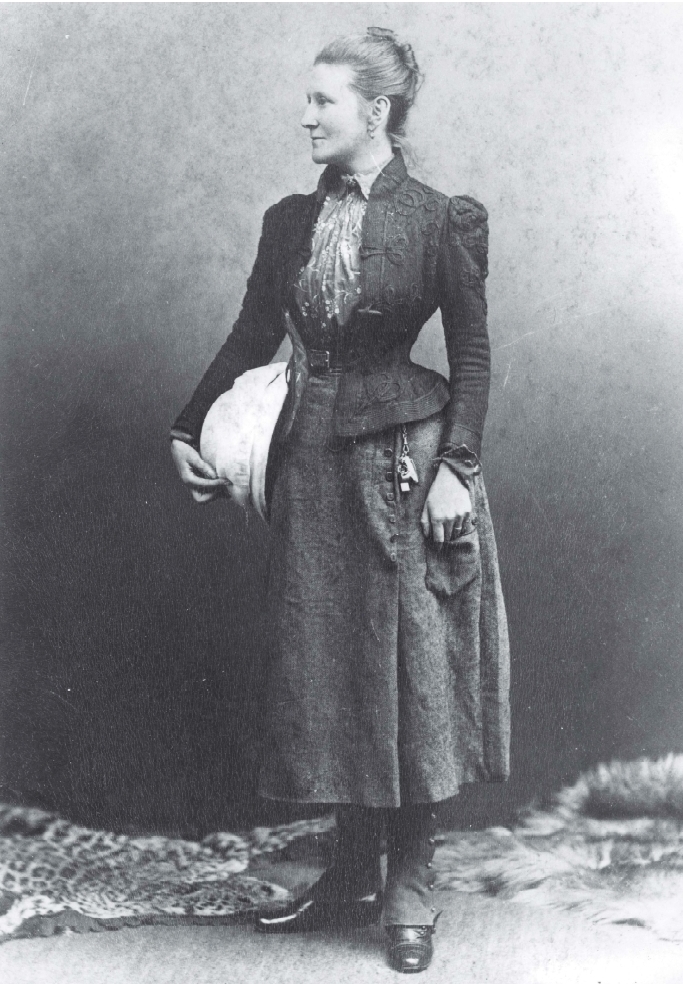
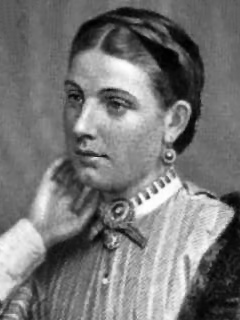
Mabel in her prime and on her way to explore the ruins of Great Zimbabwe for Cecil Rhodes in 1891 (presumably a studio photo from Cape Town or Kimberley, the Bent Archive)

The featured photo, probably from Cape Town in 1891, shows Mabel in her prime and on her way to explore the ruins of Great Zimbabwe for Cecil Rhodes. Mabel’s confident air presages the Bents’ imminent fame as they join the cadre of the nation’s most popular and best-known adventurers. Their work in the Eastern Mediterranean is behind them, their celebrated Arabian expeditions ahead.  Thus this article in The Newry Telegraph that follows reflects this prestige awaiting Mabel in 1895 perfectly, as well, of course, as the attitudes and jingoism of the day. And no excuse is ever needed for an oblique reference to another extraordinary traveller, Raymonde Bonnetain.
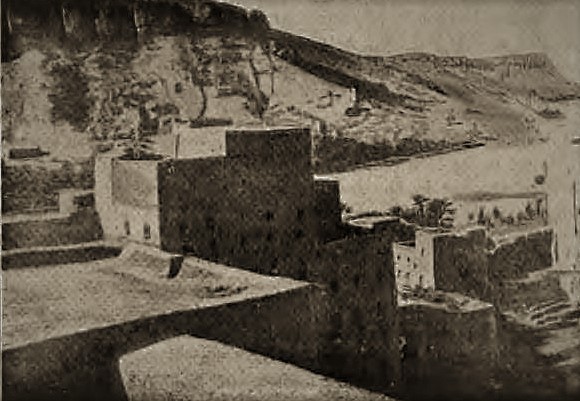
So, without further exposition,  we join parlour-readers, heads and arms on their antimacassars, of The Newry Telegraph for Thursday, 3rd January 1895:

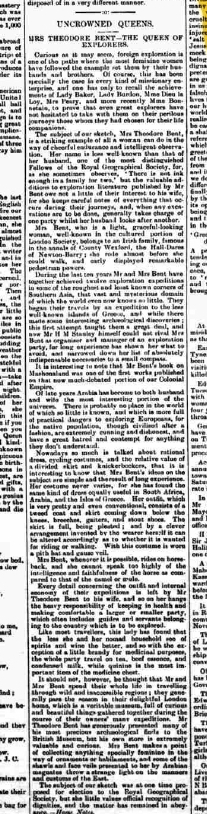
Mabel Bent, Queen of Explorers (The Newry Telegraph, 3 January 1895)

“Mrs Theodore Bent – The Queen of Explorers: Curious as it may seem, foreign exploration is one of the paths where the most feminine women have followed the example set them by their husbands and brothers. Of course, this has been especially the case in every kind of missionary enterprise, and one has only to recall the achievements of Lady Baker, Lady Burdon, Mme Dieu la Loy [sic], Mrs Peary, and more recently Mme Bonnetain  note 1 ,  to prove that even great explorers have not hesitated to take with them on their perilous journeys those whom they had chosen for their life companions.

The subject of our sketch, Mrs. Theodore Bent, is a striking example of all a woman can do in the way of cheerful endurance and intelligent observation. Her name is less well-known than that of her husband, one of the most distinguished Fellows of the Royal Geographical Society, for, as she sometimes observes, ‘There is not ink enough in a family for two’, but the valuable additions to exploration literature published by Mr Bent owe not a little of their interest to his wife, for she keeps careful notes of everything that occurs during their journeys  note 2 ,  and, when any excavations are to be done, generally takes charge of one party whilst her husband looks after another.

Mrs Bent, who is a light, graceful-looking woman, well-known in the cultured portion of London Society, belongs to an Irish family, famous in the annals of County Wexford, the Hall-Dares of Newton-Barry; she rode almost before she could walk, and early displayed remarkable pedestrian powers.

During the last ten years Mr and Mrs Bent have together achieved twelve exploration expeditions in some of the roughest and least known corners of Southern Asia, that vast and mysterious domain of which the world even now knows little. They began their travels by an expedition to the less well-known islands of Greece, and while there made some interesting archaeological discoveries; this first attempt taught them a great deal, and now Mr H M Stanley  himself could not rival Mrs Bent as organiser and manger of an exploration party, for long experience has shown her what to avoid, and narrowed down her list of absolutely indispensable necessaries to a small compass.

It is interesting to note that Mr Bent’s book on Mashonaland  was one of the first works published on that now much-debated portion of our Colonial Empire.

Of late years Arabia has become to both husband and wife the most interesting portion of the universe. There is probably no place in the world of which so little is known, and which is more full of practical dangers to exploring Europeans, for the native population, though civilised after a fashion, are extremely cunning and dishonest, and have a great hatred and contempt for anything they don’t understand.

Nowadays so much is talked about rational dress, cycling costumes, and the relative value of a divided skirt and knickerbockers, that it is interesting to know that Mrs Bent’s ideas on the subject are simple and the result of long experience. Her costume never varies, for she has found the same kind of dress equally useful in South Africa, Arabia, and the Isles of Greece. Her outfit, which is very pretty and even conventional, consists of a tweed coat and skirt coming down below the knees, breeches, gaiters, and stout shoes. The skirt is full, being pleated; and by a clever arrangement invented by the wearer herself it can be altered accordingly as to whether it is wanted for riding or walking. With this costume is worn a pith hat and gause veil.

Mabel on a camel in the Sudan in 1896.

Mrs Bent, whenever it is possible, rides on horseback, and she cannot speak too highly of the intelligence and faithfulness of the horse as compared to that of a camel or mule.

Every detail concerning the outfit and internal economy of their expeditions is left by Mr Theodore Bent to his wife, and so on her hangs the heavy responsibility of keeping in health and making comfortable a larger or smaller party, which often includes guides and servants belonging to the country which is to be explored.

Like most travellers, this lady has found that the less she and her nomad husband see of spirits and wine the better, and so with the exception of a little brandy for medicinal purposes, the whole party travel on tea, beef essence, and condensed milk, while quinine is the most important item of the medicine chest.

Frances Hobson, Mabel’s sister, and possible co-author of the ‘Newry Telegraph’ article featured here (The Bent Archive)

It should not, however, be thought that Mr and Mrs Bent spend their whole life in travelling through wild and inaccessible regions; they generally pass the season in their delightful London home, which is a veritable museum, full of curious and beautiful things gathered together during the course of their owners’ many expeditions. Mr Theodore Bent has generously presented many of his most precious archaeological finds to the British Museum, but his own store is extremely valuable and curious.  Mrs Bent makes a point of collecting anything specially feminine in the way of ornaments or habilaments, and some of the shawls and face veils presented to her by Arabian magnates throw a strange light on the manners and customs of the East.

The subject of our sketch was at one time proposed for election to the Royal Geographical Society, but she little values official recognition of dignities, and the matter has remained in abeyance note 3 .”

Notes

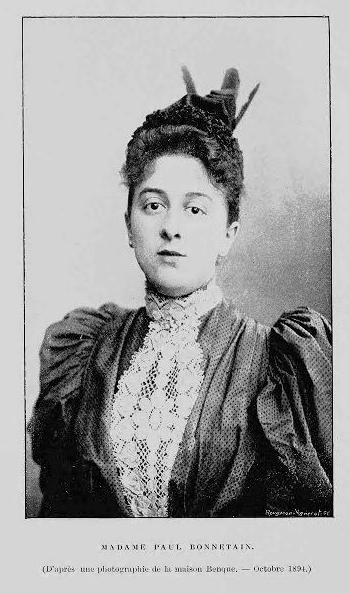
Raymonde Bonnetain (1868-1913), African explorer (archive.org)
Note 1: : 1) Florence, Lady Baker or Florica Maria Sas (1841–1916), Hungarian-born British explorer; 2) Phoebe Esther Burdon, née Alder (1829–1898), Far-Eastern traveller; 3) Jane Dieulafoy (1851-1916), French archaeologist, explorer, novelist, and journalist. She crossed swords with Mabel Bent, as it were, in Persia in 1889; 4) Josephine Cecilia Diebitsch Peary (1863-1955) was an American author and arctic explorer; 5) Raymonde Bonnetain (1868-1913), travelled to Africa in 1892, taking her seven-year-old daughter with her. Reputedly she was the first European woman to see the Niger River, and compiled her reminiscences in her travelogue Une française au Soudan: sur la route de Tombouctou, du Sénégal au Niger (1894). (For more travellers linked to Mabel see the post ‘In Exalted Company‘.)
Return from Note 1

Note 2: A reference of course to Mabel’s travel diaries, or ‘Chronicles‘ as she called them.
Return from Note 2

Note 3: This is a reference to the long-running scandal over admitting women as Fellows to the RGS.
Return from Note 3

Brand Bent: Two interviews, September & November 1893

Detail of a lantern-slide showing Mabel Bent on a camel in the Sudan in 1896. Next to her is the Bents’ long-suffering dragoman, Manthaios Simos from Anafi in the Greek Cyclades.

Following their work at Great Zimbabwe in 1891, the Bents were minor celebrities both in the UK and overseas; 1892 saw the first edition of Theodore’s Ruined Cities of Mashonaland. Barely taking a breath, the couple prepared for a trek to Aksum (Ethiopia) in the early months of 1893, and a monograph soon followed – The Sacred City of the Ethiopians (1893). Bent’s interest in early civilizations to the west of the Red Sea now enticed the two travellers to its east, and into the mysterious and dangerous Wadi Hadramaut (modern Yemen), marking the start of Theodore’s final field of study. In effect, it would kill him.

Brand Bent now went into overdrive in the summer of 1893 – meetings, finance and support were sought, inter alia, from the Royal Geographical Society, Royal Botanic Gardens, Kew, the British Museum, the India/Foreign Office…

The couple had just a few months to put everything in place, including a full programme of self-promotion. Theodore lectured and sent out press releases, Mabel gave a series of interviews to newspapers and periodicals, two appear below, with transcriptions, and they are typical of many!

Interview with Mabel Bent for The Lady of the House* (later the Irish Sketch/Irish Tatler), 15 September 1893
Mabel Bent’s interview for ‘The Lady of the House’, 15 September 1893 (photo: The Bent Archive).

“In the present day travelling has been made so easy that under the auspices of Messrs. Cook & Son it is possible to make oneself acquainted with all parts of the civilised world at a cost which is – comparatively speaking – trifling, and one can go to India, for instance, in a shorter time than it took our ancestors at the beginning of this century to make ‘the grand tour of Europe’, without which no young man of position was supposed to be educated! But all travellers now-a-days are not content with the stereotyped tours ‘personally conducted’ (excellent and convenient as these undoubtedly are), and of late years we have heard of journeys which involved considerable risk and privation, and resulted in most important antiquarian discoveries.

“That an Irish lady should be the most distinguished member of her sex in this respect is distinctly gratifying to our patriotic feelings, and her countrymen and women may be justly proud of Mrs. Theodore Bent, who has shared with her husband all the dangers of exploring remote districts, and in assisting in his geographical research. Mrs. Bent is a daughter of the late Mr. Hall-Dare, of Newtownbarry, Co. Wexford, and her mother was Miss Lambart of Beau Parc, Meath.

“Although Mrs. Bent’s travels usually occupy a considerable portion of each year, and her home is now in England, she always manages time for an annual visit to Ireland; and the lace industry established by her family at Newtownbarry for the benefit of the tenantry and cottages in the vicinity has still a staunch supporter in the subject of this sketch. As to the journeys accomplished by Mr. and Mrs. Bent, it is, unfortunately, only possible to give a brief outline, but doubtless most readers are aware that the recent discussion at the Royal Geographical Society arose by reason of the wish of several members to confer on Mrs. Bent the distinction of being a ‘Fellow’ of that body of notable travellers. Those who were against the admission of ladies have temporarily, at least, gained the day, but Mrs. Bent has not experienced the slightest disappointment about the matter, as she never sought a ‘Fellowship’, and is quite content with the privileges she already enjoys.

It is about nine years since Mr. and Mrs. Bent started for Athens, and made themselves acquainted with the most interesting portions of Greece, returning next year to the Cyclades Isles, and bringing back to the British Museum many valuable relics dug out of the ruins at Antiparos. In Egypt, too, some successful digging was accomplished, and also at an Egyptian town near Thrace**, while at Cilicia this adventurous couple discovered Olba and the famous ‘Korycian Cave’. A long tour through Persia and over the Caucasus preceded their celebrated expedition to Mashonaland, and last winter they went to Abyssinia, where they made several valuable discoveries and returned with a collection of curiosities for the British Museum.” (The Lady of the House (later the Irish Sketch/Irish Tatler), 15 September 1893, p.19)

* “The ‘Lady of the House’, in addition to a variety of literary contributions of merit, has a specially attractive feature in its publication this week… Mrs Theodore Bent is the subject of the ‘Society Portraits’. Mrs Bent is a daughter of the late Mr Hall-Dare of Newtownbarry, Co. Wexford, who was married to Miss Lambart of Beau Park, Co Meath.’   (Dublin Daily Express, Friday 15 September 1893)

(The very popular ladies’ periodical The Lady of the House was published in Ireland, appearing 1880-1924, when it joined with The Irish Tatler and Sketch. It was favoured for its content and production standards, photographs, etc. Although it mainly covered items to do with appearance and being ‘at home’, the newspaper also looked at matters political, economic, and societal. It was the brainchild of the Dublin advertising company Wilson Hartnell, being planned initially as a monthly or bimonthly format for advertising, in particular a marketing forum for Messrs Findlater & Co., a wine merchant and grocer whose clientele were primarily the upper middle class ladies of Dublin. “Although [showcasing] philanthropic, titled ladies in its early years, the readership, as is clear from reader engagement and advertising, were middle- to lower-middle-class women throughout the country who held some purchasing power but who did most or all of their own housework”.)

** Rather an odd reference. The Bents never dug in Egypt (apart from burying the remains of a picnic below the Sphinx in 1885!). Perhaps Mabel is thinking of their work on Thracian Thasos in the late 1880s).

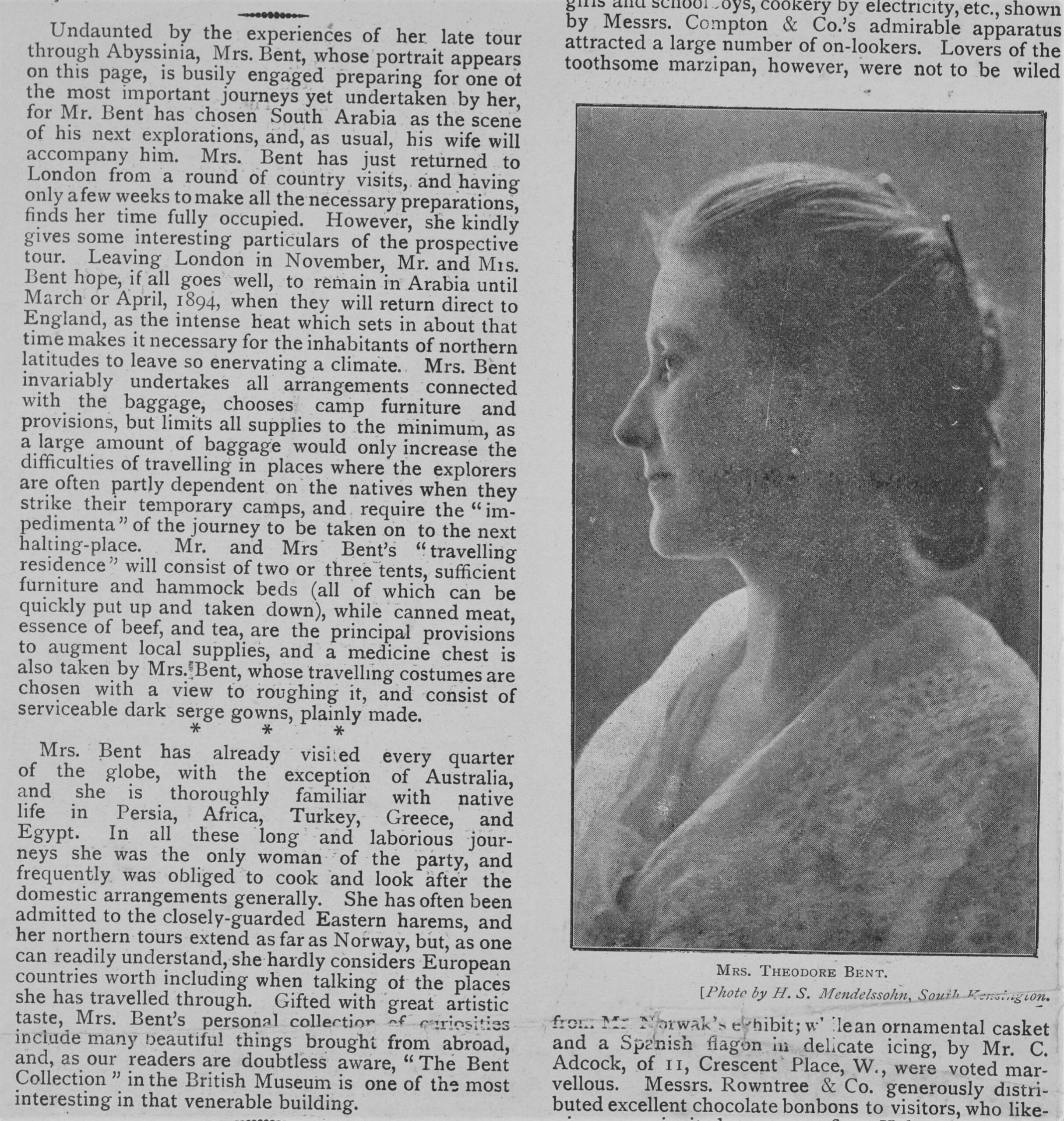
Interview with Mabel Bent, 2 November 1893, in the Irish weekly The Hearth and Home
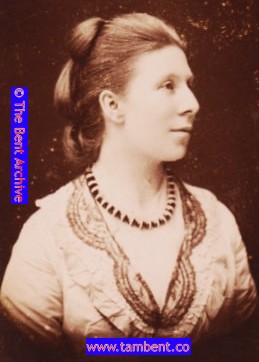
Mabel Bent’s interview, 2 November 1893, for the Irish weekly ‘The Hearth and Home’ (photo: The Bent Archive).

“Undaunted by the experiences of her late tour through Abyssinia, Mrs. Bent, whose portrait appears on this page, is busily engaged preparing for one of her most important journeys yet undertaken by her, for Mr. Bent has chosen South Arabia as the scene of his next explorations, and, as usual, his wife will accompany him. Mrs. Bent has just returned to London from a round of country visits, and having only a few weeks to make all the necessary preparations finds her time fully occupied. However, she kindly gives some interesting particulars of the prospective tour. Leaving London in November, Mr. and Mrs. Bent hope, if all goes well, to remain in Arabia until March or April, 1894, when they will return direct to England, as the intense heat which sets in about that time makes it necessary for the inhabitants of northern latitudes to leave so enervating a climate. Mrs. Bent invariably undertakes all arrangements connected with the baggage, chooses camp furniture and provisions, but limits all supplies to the minimum, as a large amount of the baggage would only increase the difficulties of travelling in places where the explorers are often partly dependent on the natives when they strike their temporary camps, and require the ‘impedimenta’ of the journey to be taken to the next halting-place. Mr. and Mrs. Bent’s ‘travelling residence’ will consist of two beds or three tents, sufficient furniture and hammock beds (all of which can be quickly put up and taken down), while canned meats, essence of beef, and tea, are the principal provisions to augment local supplies, and a medicine chest is also taken by Mrs. Bent.’ Whose travelling costumes are chosen with a view to roughing it, and consist of serviceable dark serge gowns, plainly made.

“Mrs. Bent has already visited every quarter of the globe, with the exception of Australia and she is thoroughly familiar with native life in Persia, Africa, Turkey, Greece, and Egypt. In all these long and laborious journeys she was the only woman of the party , and frequently was obliged to cook and look after the domestic arrangements generally. She has often been admitted to the closely-guarded Eastern harems, and her northern tours extend as far as Norway,* but, as one can readily understand, she hardly considers European countries worth including when talking of the places she has travelled through. Gifted with great artistic taste, Mrs. Bent’s personal collection of curiosities include many beautiful things brought from abroad, and, as our readers are doubtless aware, ‘The Bent Collection’ in the British Museum is one of the most interesting in that venerable building.” (Interview with Mabel, 2 November 1893, in the Irish weekly The Hearth and Home)

*Mabel writes elsewhere that she met Theodore Bent in Norway.

[You may also enjoy two interviews Mabel gave to Lady of the House in 1893 and 1894]

The lost reviews of ‘Southern Arabia’ (1900), by Mabel and Theodore Bent

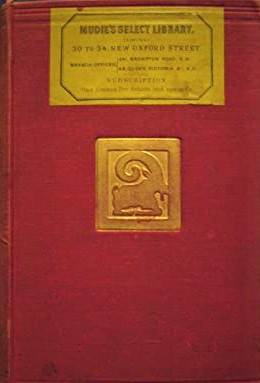
The cloth cover of ‘Southern Arabia’ (from an item on AbeBooks).

“We cannot too much admire the persistence, courage, and cheerful endurance of hardships displayed by Mr. Bent and his plucky wife.” – The Manchester Guardian

“Mrs. Bent has compiled a work rich in information. Much is included of extreme utility. The volume with its good maps and illustrations and instructive appendices, will deservedly take its place in the category of recognized and authoritative books of travel.” – The World

“May we hope for more.” – The Outlook

In anyone’s list of the best twenty books in the English language on explorations in the Middle East you are likely to find Mabel and Theodore Bent’s Southern Arabia, published in London on 26 January 1900.

This ambitious work, compiled by Mabel from her ‘Chronicles‘ and the notebooks and articles published by Theodore before his untimely death in May 1897, a few days after returning from Aden, now commands high prices  for its first edition, handsome as it is with its red cloth binding, sketches by Theodore, Mabel’s photographs, and numerous maps.

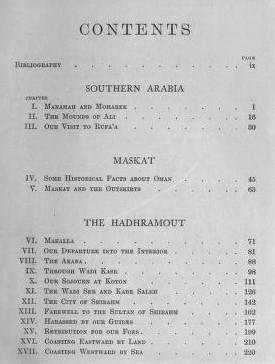
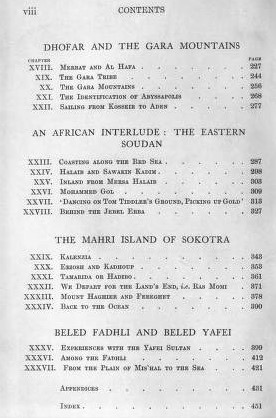
The first page of the Table of Contents from ‘Southern Arabia’.

The book would have cost you 18 shillings, quite a sum in those days, over £40 now.  However,  you will need to find over £500, or as much as £1500, for a good original copy today (March 2021). On-demand  editions, thankfully, are easy to find and there are also excellent, highly-recommended (and free) online versions (e.g. archive.org), and the Table of Contents is reproduced here from one.

The region absorbed Theodore Bent for the last few years of his short life and it is thus unsurprising that Mabel spent the next ten years or so, the first decade of the twentieth century, returning for lengthy stays in Palestine, making Jerusalem her base. It has to be said that these sojourns were challenging for Mrs Bent – she had no partner, she became involved in intrigue and controversy, she tried her hand at bookselling, at caring for Gordon’s spurious Garden Tomb (editing a guidebook to it in the 1920s); and there was the episode of her ride alone in the wilderness and her fall and broken leg, and then there is the mystery of the so-called Bethel Seal. And much must be seen within the context of her formative years – a difficult father, the painful death of her mother, the assumed suicide of her younger brother, the early death from typhoid of her elder brother… the need to be somewhere else can be well understood.

The second page of the Table of Contents from ‘Southern Arabia’.

Strangest of all, was Mabel’s obsession – for such it seems – with the controversial movement, British Israelism, and she used her months in Jerusalem to research and write that tract of nonsense she published in 1908 under the title Anglo-Saxons from Palestine. However the book serves two good purposes, one is to illustrate just how absurd the concept was, and is, and the other is to provide, of all things, fourteen pages of reviews of her 1900 publication – Southern Arabia.

Next time you publish, try asking your editor if you can include fourteen pages of reviews of your last book, and a book on someone else’s list to boot! See what answer you get! But you are not Mabel Bent of course – she was something of an unmovable force, much respected for her courage and ‘pluck’, in mountains and deserts, and on horse, donkey, and camel.

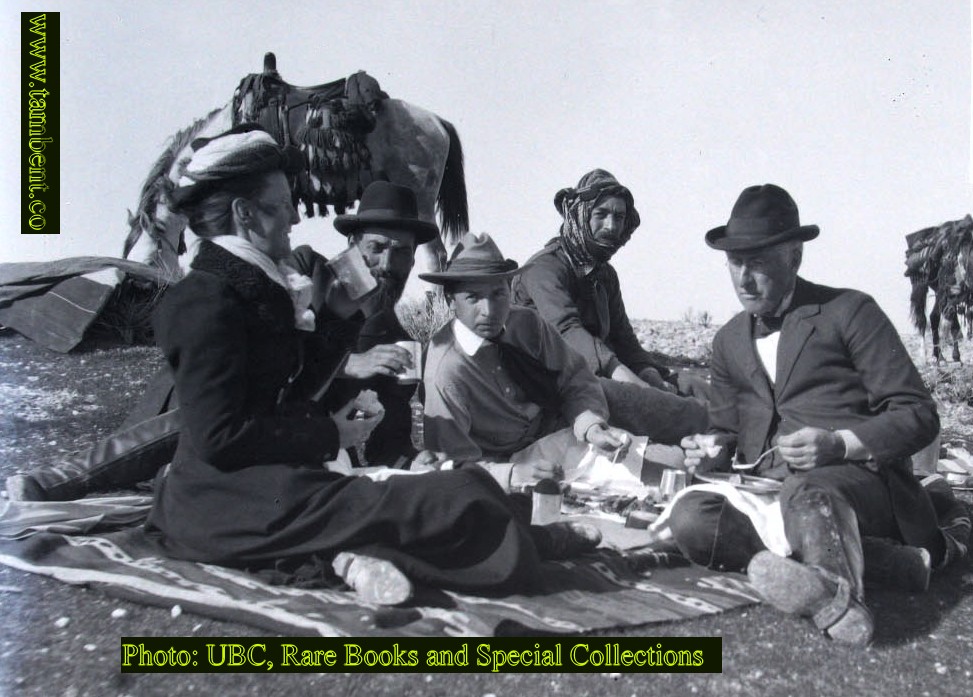
Mabel Bent taking tea with Moses Cotsworth and party in the Palestinian hinterland in 1900/1 (Moses Cotsworth collection, unknown photographer. Photo reproduced with the kind permission of Rare Books and Special Collections, Irving K. Barber Learning Centre, University of British Columbia).

Much of this is evident in what amounts to Mabel’s scrapbook of press cuttings on Southern Arabia, which we present for you via the link below. It is unlikely that they will have been read much since their publication. They are Mabel’s own selection, and she has judiciously edited them for negative remarks – a stinker  (‘Man’, Vol. 1, 1901, 29-30) presumably by Arabist D. G. Hogarth, understandably, is not included, but he may well have had a pen in a couple of the others!

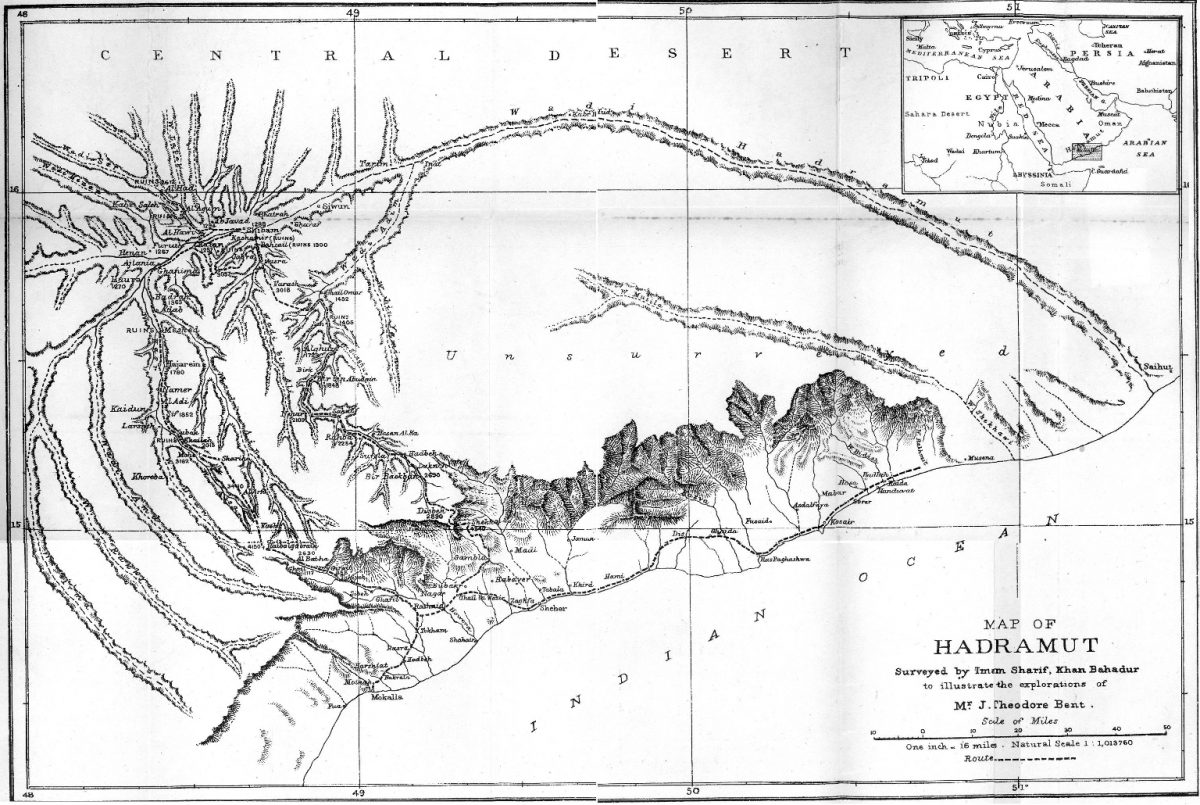
The Bents’ map of the Yemeni interior (from ‘Southern Arabia’).

Reading them, with their focus on Aden, Bahrain, Yemen, Dhofar, Oman, Muscat, Sokotra, the Red Sea, etc., you could just as well switch the geography to the Eastern Mediterranean, Egypt, Africa, Iran, the western seaboard of India, or Iran – those other theatres of exploration engaging the Bents for twenty years. And not lost on you, with the sense that Mabel is underscoring each, will be all the old adjectives of Empire – the review from the Illustrated London News is, well, illustrative: “That lady’s high spirit and courage, the tact and cleverness with which she managed to bear her position, as the only female traveller must have been a great help to her conjugal partner. This book is her memorial of him and will be acceptable to many readers.”

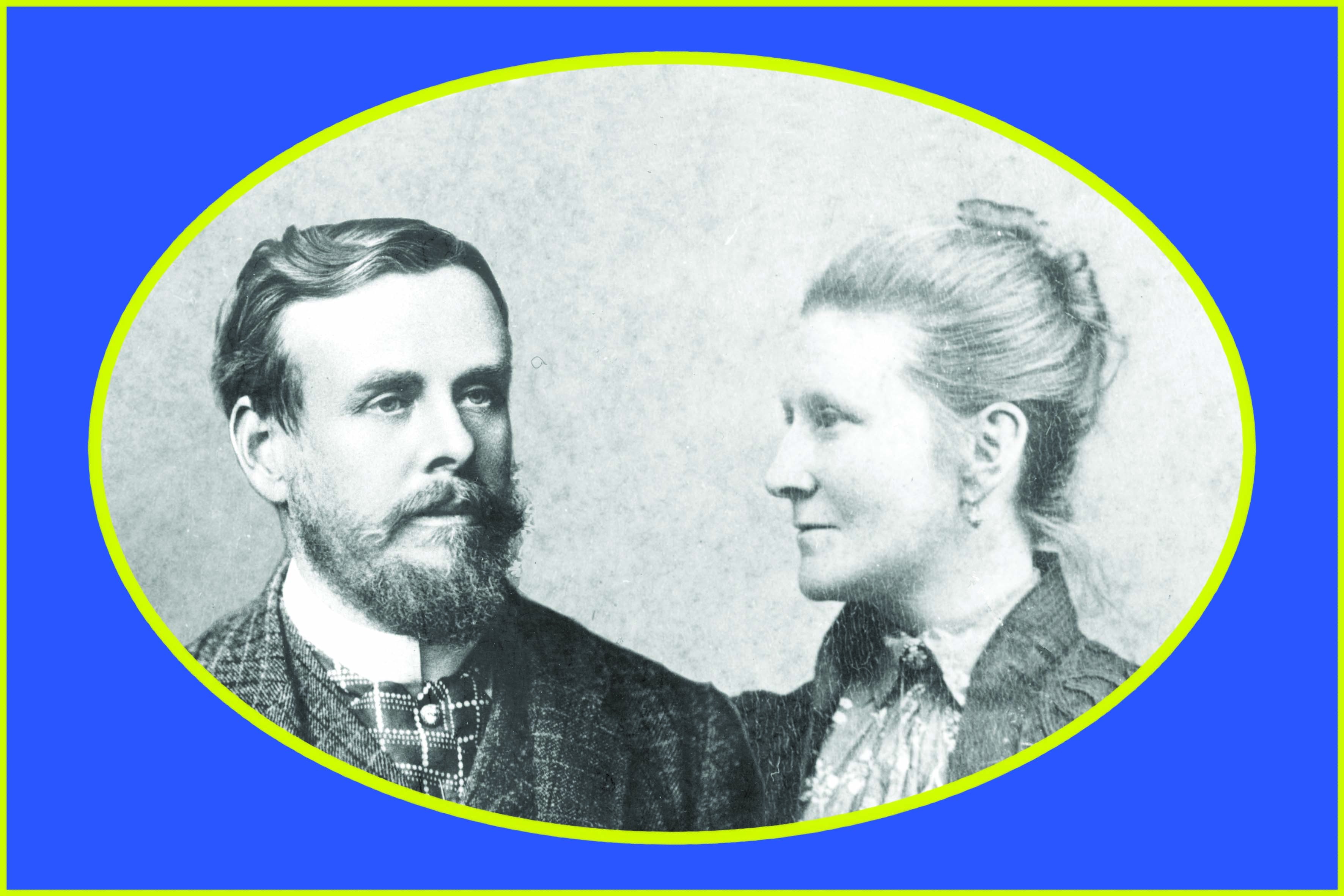
Theodore and Mabel Bent (the Bent Archive).

But no excuses are needed for drawing these lost glimpses of the Bents  to your attention (the bibliographical references are incomplete, let us know if you want any specifically and we will try and help) – the notices will have reminded Mabel, of course, of her dead husband, and their fulfilled twenty years of adventures together, and, like all travel-addicts, her need to be somewhere else…

The lost reviews of ‘Southern Arabia’ by Mabel and Theodore Bent

“The vivacity of her feminine humour, the keen observation of amusing little details, the lively recollection of droll anecdotes, and the brave wife’s spirit of comradeship in their frequent adventurous travels, grace with a peculiar charm the instructive revelation of much rare fresh learning which concerns the lore of historic antiquity, as well as the present condition of territories yet imperfectly known… That lady’s courage and high spirit, the tact and cleverness with which she managed to bear her position as the only female traveller, must have been a great help to her conjugal partner. This book is her memorial of him, acceptable to many readers who condole with her irreparable bereavement.” (The Illustrated London News, April 21, 1900, p. 556)

Mabel’s Museum – 13 Great Cumberland Place, London, W1

“[One] of the most notable and charming women of the day…” and her “museum” – 13 Great Cumberland Place, London, W1

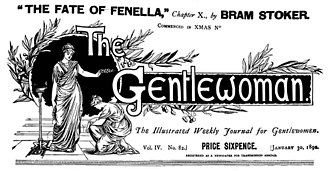
“The Gentlewoman – The Illustrated Weekly Journal for Gentlewomen”, No. 175, Vol. VII, Saturday, November 11, 1893.

Both Theodore and Mabel Bent liked to style themselves ‘archaeologists’, and at times a case can be made that they were… and at others that they were anything but. But there can be no doubting they were truly exceptional travellers and explorers, regularly facing uncertainty and considerable hardships over a period of almost twenty years – ‘excavating’ where they could, usually in line with whatever Theodore’s current hobby-horse happened to be – early life in the Cyclades, the Phoenicians, the Queen of Sheba…

Theodore and Mabel Bent (the Bent Archive).

The Bents are an amazingly addictive couple and ‘the archaeology of the Bents’ is very much part of what the Bent Archive is all about. And now and then, once in twenty years of research, something truly remarkable, unique even, comes to light. The late summer of 2020 produced just such a discovery, beginning with an insignificant alert from the British Newspaper Archive saying that a quality women’s magazine, The Gentlewoman, had been added to its list of digital holdings, most of which originate from the British Library. Straightaway the search term ‘Theodore Bent’ (which will turn up either Mr or Mrs J. Theodore Bent) went in, and, just like an excavator in an opening trench, you wait to see if anything comes up. Bingo! There it was – The Gentlewoman – The Illustrated Weekly Journal for Gentlewomen, Vol. VII, Saturday, November 11, 1893, pages 621-622, Article title: Gentlewomen ‘At Home’, No. CLXXV, ‘Mrs. Theodore Bent… at 13, Great Cumberland Place’.

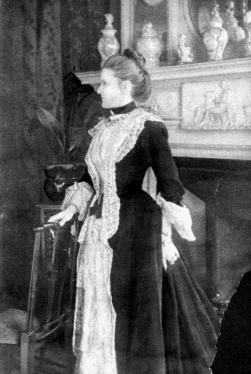
An intriguing portrait of Mabel Bent in the “Gentlewoman” article reprinted here.

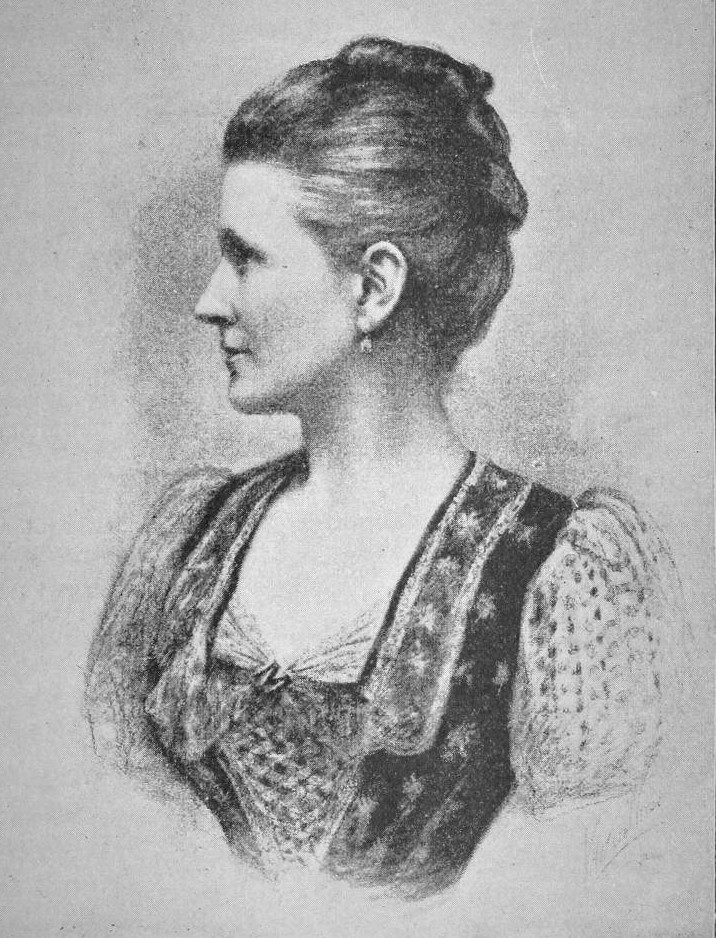
An astonishing discovery, and for us as intriguing as anything the Bents brought home to London from the Eastern Mediterranean, Africa, or Arabia.  And what makes the article so appealing is that it is the only piece unearthed  so far that goes into any detail about the Bents’ archaeological and ethnographic finds that they had out on show in their London townhouse (an invitation and victim to the Blitz), 13 Great Cumberland Place, just a few hundred metres from Marble Arch. A further discovery is that the article also contains a very rare portrait of Mabel (which our research shows is by Henry Van der Weyde); there are also three unique photographs, sadly very dark, of the interior of their house.

This revelatory article from The Gentlewoman is now transcribed below and we make no apologies for its length – you can return to it as often as you like, and it is probably the first time for a hundred years it will have been re-read. Its context (and once more we have archaeology), reinforces the aura of celebrity the Bents had acquired following their 1891 trip to ‘Great Zimbabwe’, with Cecil Rhodes scheming behind him – and in a sense the great ‘Colossus’ made a minor one of Theodore, and Mabel too.

The last few paragraphs of the piece make reference to the 1893 scandal involving the controversy of whether women should continue being elected Fellows of the Royal Geographical Society – Mabel was in the proposed second cohort (22 or so had been elected thus far), but the RGS hierarchy managed to ban them from applying. It was a sorry story, not put right until 1913.

It is also worth noting that some of the dates mentioned in the article are inaccurate for some reason – perhaps Mabel’s memory let her down during the interview with the editor.

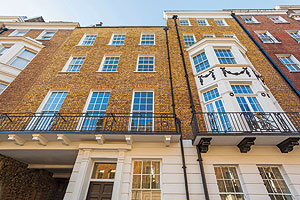
43 Great Cumberland Place - missing its blue plaque
The Bents’ first home at 43 Great Cumberland Place. 13 Great Cumberland Place, alas, is no longer with us.

Nor does the article always make for happy reading – there are inclusions and stray finds that are unwelcome today, but which were the matrix of the day – the discovery that two ikons from the Patmos’ ‘Cave of the Apocalypse’ were removed is a shock (although Mabel in her diary records that at least one was ‘purchased’). Mabel died in 1929 and a few years previously she donated some of the artefacts she held most dear, those that reminded her most of happier times before Theodore’s early death in 1897, to the British Museum. All her remaining assets were bequeathed to her nieces, and her collections divided up, dispersed, sold off, reverting to anonymous items, and now in the main contextless, provenances lost. And the Patmos ikons? Where they are today, we don’t know. Let’s hope some future archaeologist turns them up and sees these little treasures returned to the Dodecanese…

… but let’s make a start on the transcription, and hand you over to Theodore and Mabel, in one of their cluttered drawing rooms, carriages rattling along in the street below, being interviewed by the editor of The Gentlewoman, Joseph Snell Wood. It is Autumn in London in 1893, an empire’s heyday, and the leaves in Hyde Park are changing colour…

Gentlewomen ‘At Home’, ‘Mrs. Theodore Bent… at 13, Great Cumberland Place’


“A Week on Wheels in East Anglia” – Bent gets on his bike

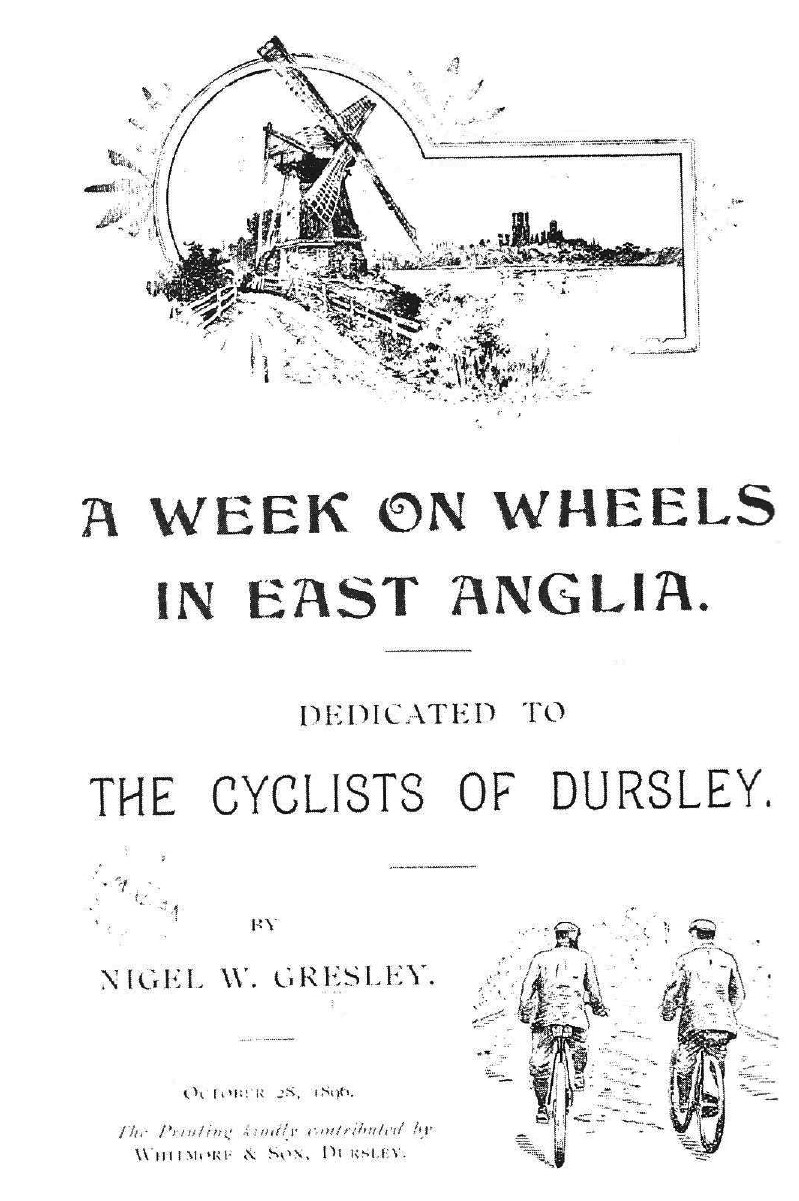
Possibly sketched by Theodore Bent himself, a detail from the cover of “A Week on Wheels in East Anglia”, Nigel Gresley’s 1896 account of their bicycle tour. (private collection)

A throwaway line in Mabel Bent’s ‘Chronicle’ of Monday, January 25th, 1897, written off the beaten track in Socotra, arouses curiosity and links us tangentially to her husband’s friend, Nigel Gresley: “All the booted portion of the party are now in anxiety about their foot gear, as to how it will hold out till Tamarida. We apply the gums of various trees to retard consumption. At last, instead of going over a precipice we (turned to the left) reached a river and on the other side of that we encamped… I was not tired. I am sure our legs will be in good training for our bicycles [our italics].” (Travel Chronicles of Mabel Bent, Volume 3, p. 300)

Bicycles? Yes indeed… The Bents were bikers by the 1890s, if not before.

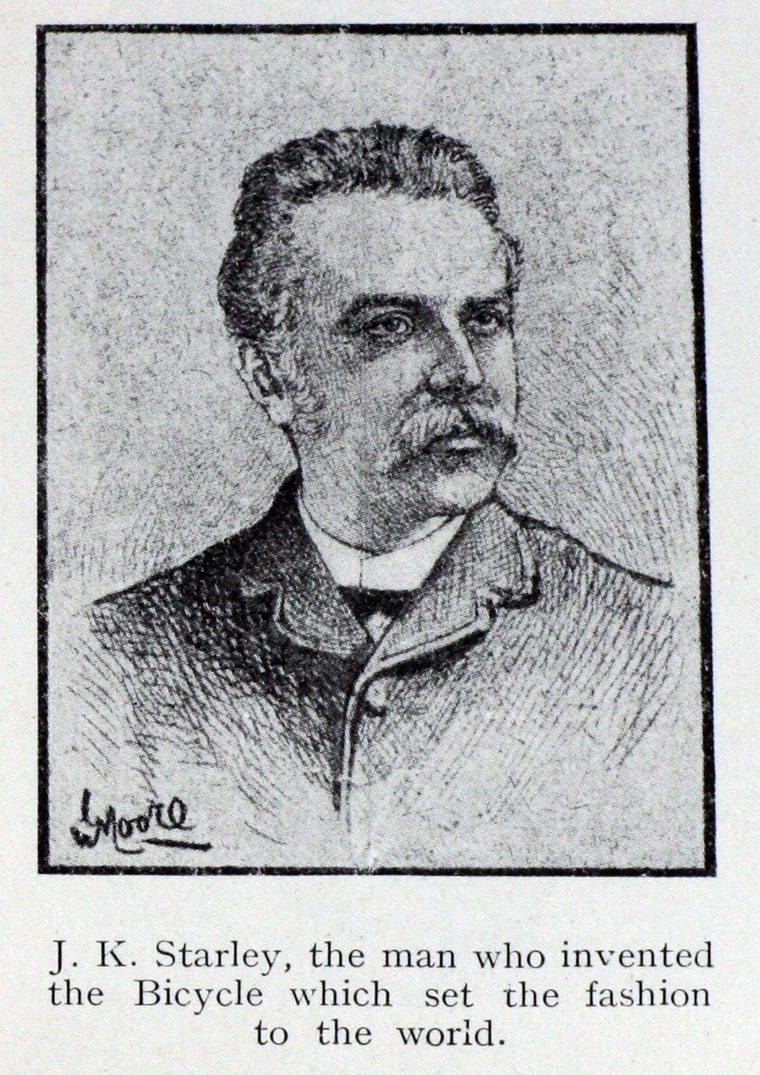
(Grace’s Guides)

Around the early 1880s, soon after the Bents’ wedding in fact, bike designers were looking for ways of getting their riders nearer the ground (think ‘Penny-farthing’ here), i.e. safer. It was a British engineer, it seems, who cracked the problem – John Kemp Starley (1855-1901), with his 1885 ‘safety’ bicycle (coincidentally the year Theodore was also making a name for himself with his famous guidebook on the Cyclades). A revolutionary feature of this new invention was that now both wheels (with pneumatic tyres ) could be the same size, thanks to its chain drive mechanism.

The Starley ‘Rover’ (the polymath designer was involved with the founding of this famous brand) and other models soon started a craze for biking, and thousands of clubs sprang up all over Europe. Also revolutionary was the speedy acceptance of biking by women (suitably attired), and these bike clubs can be said to have played a proud and early role in gender equality! The only reference we have so far by Theodore himself to the sport comes in a letter of 13 September 1896 to the renowned cartographer H.R. Mill, from the house of Bent’s Irish in-laws in Co. Carlow: “We are having it miserably wet over here and biking is at a discount” (Mill Correspondence, RGS  RGS/CB7/Bent, T&M).

But a few weeks later, in England once more, the clouds had mostly blown away and Bent was back in the saddle – this time not with Mabel (and we don’t have her opinion on this separation), but with his very old friend the Rev. Nigel Walsingham Gresley of Dursley, Gloucestershire (UK). Cairo to Cape Town (Bent knew them both)? No. Aden to Shibam (ditto)? No. What we have is an energetic week in gentrified East Anglia, eastern England – eating, drinking, fishing, sketching, brass-rubbing, and church-going.

The  American bicyclist and adventurer  Frank Lenz on his fateful tour of Asia Minor in 1894. The photo shows how to pack your gear. (wikipedia)

Clearly Bent’s trip with his old school and college friend was well prepared in advance, as there were prearranged stops to visit some of Theodore’s acquaintances, including the great novelist Rider Haggard (fellow enthusiast for Great Zimbabwe) and Sir Elwin and Lady Palmer, the former at the time was Financial Secretary to the Khedive in Egypt. In the record of the tour, we read that the friends ‘dined’ with the Palmers, raising the question of clothes! Gresley packed his fishing rod it appears, and what else did they pack for a week and how was it all carried? There are old photographs of fardels strapped to the fronts and backs of bikes, and others of knapsacks.

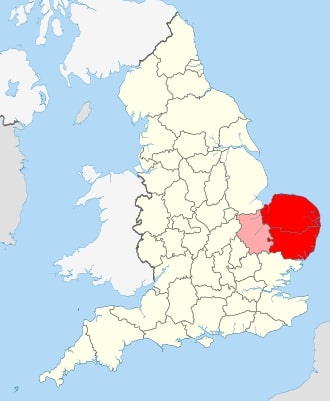
“East Anglia, in the east of England, comprises the counties of Norfolk, Suffolk and Cambridgeshire”. (wikipedia)

The map below itemizes where they lay their weary selves after each day’s ride and the major sights they took in along the way. East Anglia comprises the counties of Norfolk, Suffolk and Cambridgeshire, the name deriving “from the Anglo-Saxon kingdom of the East Angles, a tribe whose name originated in Anglia, in what is now northern Germany”, as Wikipedia informs us. In Bent’s day, as now, the region was a most pleasant recreational area – the location of the brisk Norfolk Broads, the birthplace of the great Nelson, and the site of a royal residence at Sandringham, among many other attractions.

We don’t have the actual dates of this biking ‘week in East Anglia’, but it must have been the autumn of 1896. Gresley’s (privately) published account is dated October 28, 1896, and it informs that the pair “starting from Dursley one Monday morning” reached Norwich that night by train; the following Tuesday they caught the midday train from King’s Lynn back to London. Sadly we don’t know what bikes they had, but, interestingly, Dursley later had its own bicycle factory! As they made several boat journeys  during the week (in this watery landscape of lakes and twisty rivers – the Waveney, Bure, and Ant), it is not easy to estimate the miles they covered, and of course we have no way of knowing which roads they took then, but it must have been over the 200 miles Gresley claims (and where he makes specific references,  or the routes seem relatively clear, a distance in miles has been inserted into his text.)

As for the cost of a bike in those days (1890), we are talking £12 – £20; this seems most reasonable, but remember a pound then would cost you £50 now – so for your new bike: £600-£1000 – rather like today.

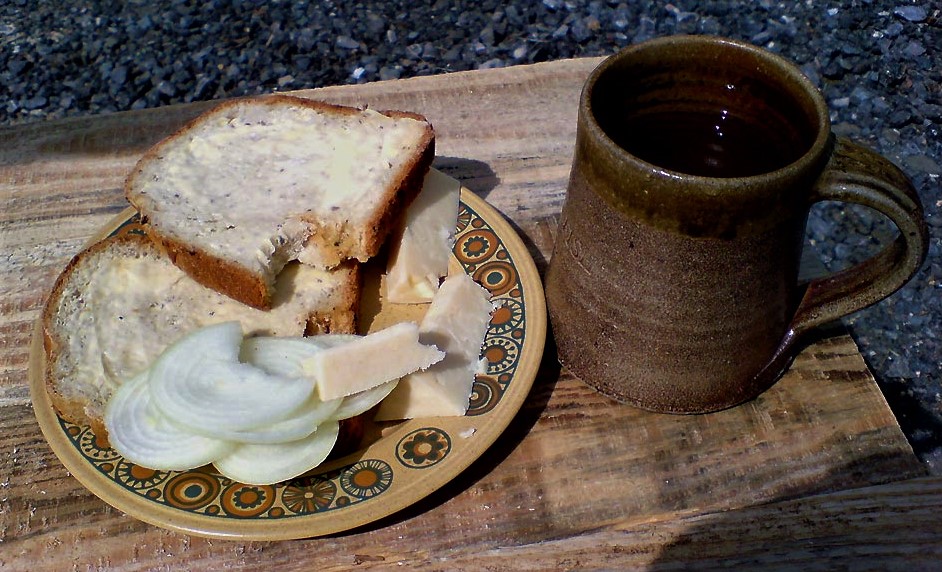
That ‘sine qua non’, the ploughman’s lunch. (wikipedia)

And a glance at any map of Suffolk and Norfolk will tell you how labyrinthine the area can be. What maps did our tourists take one wonders? We know Bent had his expedition maps prepared for him by the famous Edward Stanford of Charing Cross. Perhaps from them they ordered a set of the beautiful Ordnance Survey One-Inch maps of England and Wales (the Revised New Series of 1892-1908), a crucial feature of which is the word INN, found in most villages!  As for how many times we would have seen the tourists’ bikes propped up against a thatched pub we are not apprised, but opening hours would have been observed no doubt: “… an uncommonly good luncheon of sausages, fried potatoes, and excellent cheese and butter (it is astonishing how hungry bicycling and sight-seeing make one!)”, writes Gresley.

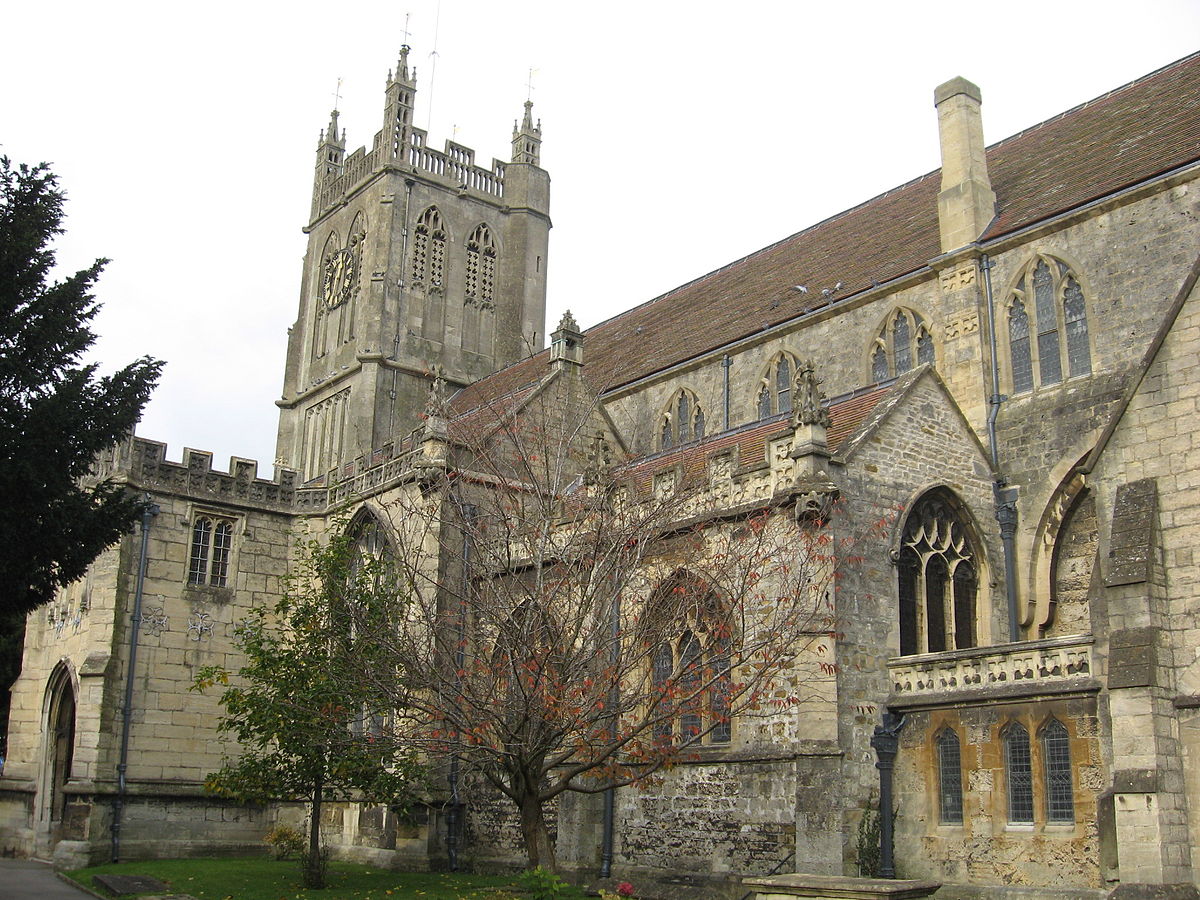
St James the Great, Dursley, Gloucestershire, England. (wikipedia)

During Gresley’s tale, one can imagine Theodore Bent chatting away, as the bike wheels click, of the lands and landscapes he had passed through over the last twenty years – Africa, Arabia, Persia, Ethiopia, the Sudan – and what a contrast to the benign byways of Norfolk and Suffolk. Of Bent’s cycling chum, the Rev. Nigel Walsingham Gresley, we know not much, other than what a few online references can provide (and should you have a photograph of him please let us know). He was born in 1850, probably in Ashby de la Zouche, and attended Repton School, beginning his friendship with  Theodore Bent there. His father was a keen amateur archaeologist. He took an MA from Exeter College, Oxford (Bent was at Wadham). Having several ecclesiastical roles, he was rural dean of Dursley, Glos., at the time of this bike tour of East Anglia with Bent. He married Jane Drummond in 1878 (the year after the Bents’ nuptials). He died in 1909. There is no doubting he was a close and trusted friend of Theodore’s, being left £1000 in the latter’s will in 1897, tragically just a few months following the carefree tour of England’s eastern counties, which we are to let you read any minute now.

WikiTree appears to have much interesting information on the Gresley family (and see The Gresleys of Drakelowe (1899) by Falconer madan), including that they married into the venerable Italian di Langosco dynasty. In the Preface to his monograph on Genoa, Bent thanks “the Contessa C. di Langosco (née Gresley, 1809-1886), for… valuable assistance in aiding my research” (Genoa, how the Republic rose and fell, London, 1881, p.vi). note 1 

The cover of “A Week on Wheels in East Anglia”, Nigel Gresley’s 1896 account. The bearded Bent is the gent on the left; possibly his own sketch. (private collection)

Jerome K. Jerome published Three Men in a Boat (To Say Nothing of the Dog) in 1889, and N. Walsingham Gresley peddled after the former, alas without the critical acclaim (and justly so), with his A Week on Wheels in East Anglia: Dedicated to the Cyclists of Dursley, a mere seven years later – you can spot the similarities, only for three men, change to two, and boat becomes bike… there is no dog, of course…never was.

 
“A Week on Wheels in East Anglia: Dedicated to the Cyclists of Dursley”

Note 1: In fact the Bents and Gresleys had ancestors in common and are distantly, if not tenuously, related. Michael Heathcote of Buxton in the late 18th century had two children, John and Elizabeth. John married Anne Gresley (b.1755), known as ‘Graceful Gresley’  “from her fine minuet dancing” in 1780 (Falcomer madan, The Gresleys of Drakelowe, 1899, p.112). Elizabeth married Theodore Bent’s great-uncle, the celebrated physician James Justin Bent (1739-1812) in 1776 and shared her husband’s great estate at Basford Hall, near Newcastle-under-Lyme. James Justin was the surgeon who amputated Josiah Wedgewood’s leg in 1768.
Return from Note 1

In and out (just about) of the Wadi Hadramawt – Mabel of Arabia

In and out (just about) of the Wadi Hadramawt – Mabel of Arabia

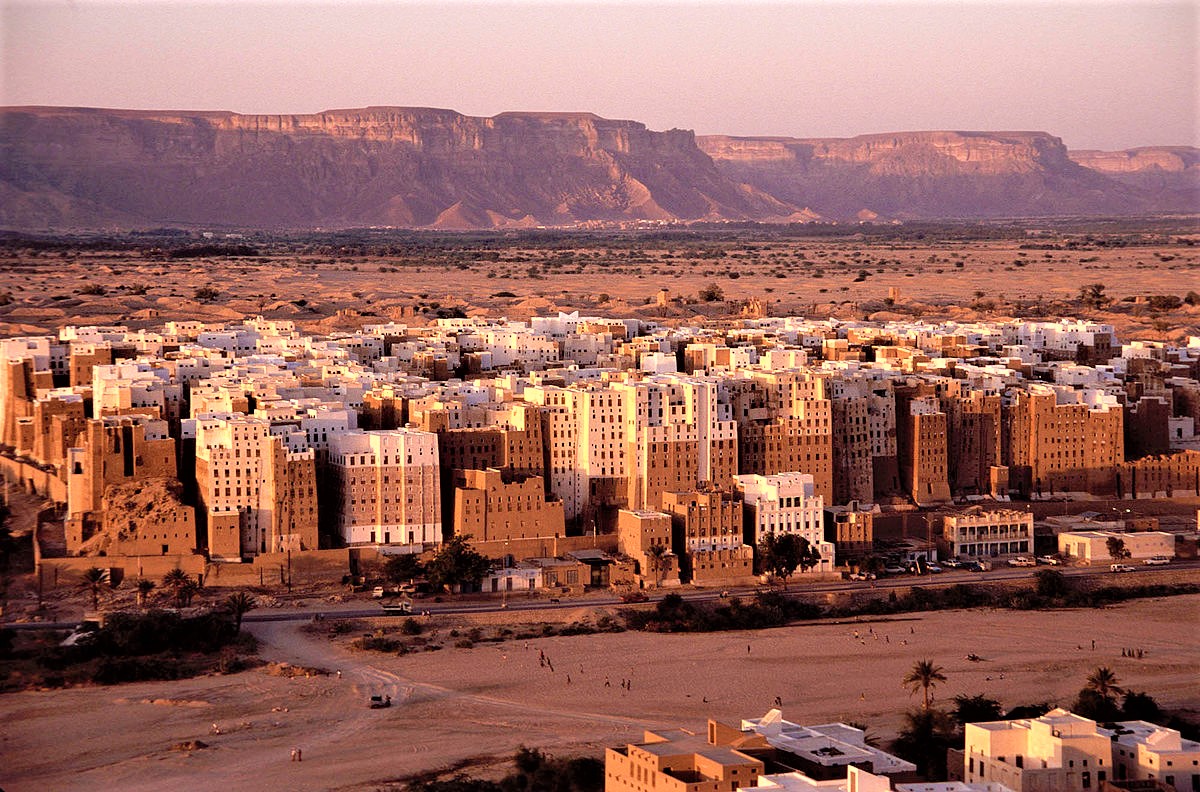
Shibam – “Manhattan of the Desert”, host to the Bents in early 1894 (wikipedia).

A recent Aljazeera feature on the mud-castle skyscrapers of the Hadramawt diverts and transports instantaneously.  These castles strung along Yemen’s Wadi Hadramawt, bewildering CGI confections all, still miraculously exist – at risk equally from age-old threats of internecine wars, and new ones, such as mud-dissolving floods, initiated by climate change.

But if we want, we can fade to sepia and go back and look at these castles through the eyes of cavalier Victorian travellers of the 1890s:

Mabel Bent’s own photo of the mud-castles of Shibam in the Wadi Hadramawt (1894).

“… the only possible way of making explorations in Arabia is to take it piecemeal… by degrees to make a complete map by patching together the results of a number of isolated expeditions. Indeed, this is the only satisfactory way of seeing any country.” (writes Mabel Bent in 1900)

Hands up then if you’ve heard of Theodore and Mabel Bent (1852-1897 and 1847-1929 respectively)? Ok – a couple of you. Chances are you met them in the Greek Cyclades, right? – over a copy of Bent’s great 1885 guide to the islands (by the way, still the best English introduction to them).

But these Victorians travelled further, much further. For instance? – well, e.g., they were paid by Cecil Rhodes in 1891 to explore the remains of Great Zimbabwe; they also rode, south–north, the length of Iran in 1889; and trekked the Ethiopian highlands in 1893; etc., etc…

Bent’s own map from ‘Expedition to the Hadramut’. The ‘Geographical Journal’, Vol. 4 (4) (Oct), 315-31 (private collection).

Perhaps, though, their greatest folie à deux comprised the three attempts they made on the Wadi Hadramawt, in the Yemen, ‘Arabia Felix’, between 1894 and 1897. Where? Picture Aden on a map, wiggle your finger east along the coast for a few centimetres, move the same finger inland, northish, for a couple more, and you about have it – in all, 200 km or so of the most spectacular valley-landscape you will ever see.

The formidable Mabel Virginia Anna Bent, a detail from a society portrait (1890s?).

But of course you would be mad to try (check out the UK Foreign Office’s latest advice). Yemen is dangerous – in 1894 as now. In all probability, Mabel Bent, red-haired and no-nonsense, was the first western woman, voluntarily at least, ever to ride from the port of Mokulla up and into the Wadi Hadramawt, with its oases and fabulous cities of mud towers. An extraordinary adventure for an aristocratic Irishwoman, of the trout-brown Slaney River, Co. Wexford. (Theodore’s objectives for the expedition are beyond the scope of these short paragraphs, but they had something to do with the Queen of Sheba. Suffice it to say… his last trip killed him – Mabel got him home alive, somehow, in May 1897, to their house near London’s Marble Arch, where he shivered to death a few days later of malarial complications. He was 45, his wife was 50.)

Mabel’s diaries (she called them her ‘Chronicles’) have all been published (except for a missing volume – her trip to Ethiopia in early 1893). Here she is on her way east, to ‘the castle of the Sultan of Shibahm at Al Koton’ (al-Qatn); she took the photo you see here too.

This portrait of Theodore must have been one of Mabel’s favourites; she chose it for the frontispiece of her tribute volume to him, “Southern Arabia” (1900).

Friday, 12th January 1894: “[Theodore and I] still proceed among limestone cliffs along the wadis … Our journey was seven hours, always along the valley, more like a plain it was so wide. We intended to go on to Al Khatan, where the Sultan of Shibahm lives, but a messenger came saying he expected to see us tomorrow and we were to encamp at Al Furuth. So when we reached that place, where there is a very beautiful well, shaded by palms and with four oxen, two at each side, drawing up water, we set up our five tents in the smoothest part of a ploughed field. Towards evening came two viziers, gaily dressed on fine horses, to welcome us: Salem bin Ali and Salem bin Abdullah, cousins.

“[The viziers came to greet us] about 7.30 next morning. We had all stayed in bed till it was quite light and they brought two extra horses… While the camels were loaded a lot of women came to see me and I sat in a chair and took off my gloves at their request and let them hand my hands round. They asked to see my head, so then they got my hair down, dived their fingers down my collar, tried to open the front of my dress and take my boots off and turned up my gaiters…

Mabel’s photo of Al-Hajarayn (Wadi Dawan), western Hadramawt (1894).

“We principal personages set out, leaving camels, etc., to follow… in ½ hour we arrived and were delighted with the appearance of this town of towers in the morning light, and the tallest, whitest and most decorated, shining against the precipitous mountains, was pointed out as our future home, and we all wondered what should next befall us and whether this was the farthest point of our journey or if we could get onward…” [The Travel Chronicles of Mabel Bent, Vol 3, Arabia, p.165 ff]

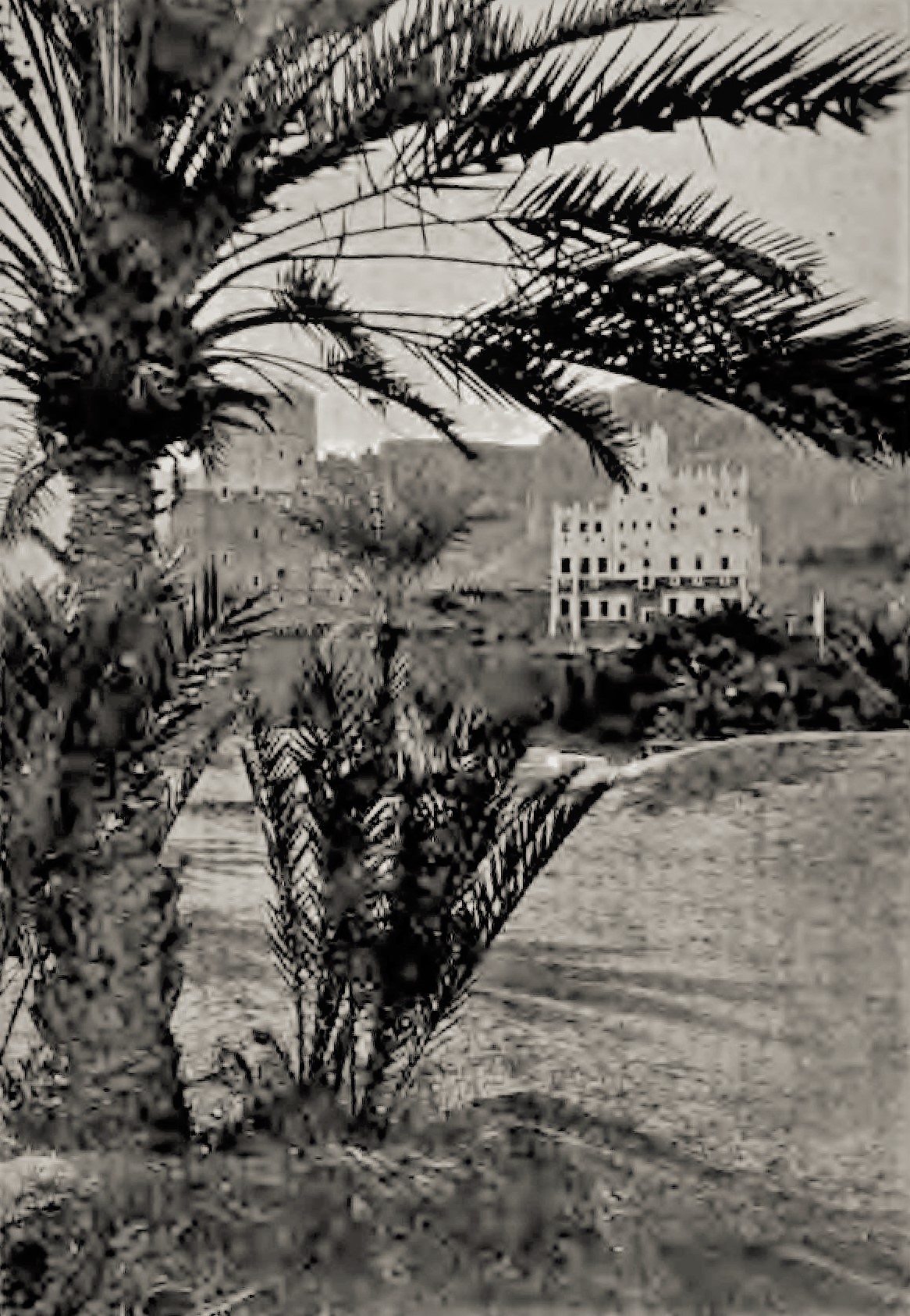
“The castle of Al Koton rears its battlemented towers.” Mabel Bent’s own photo (1894) of Al Qatn in the Wadi Hadramawt.

A few years later, after Theodore’s death, Mabel writes up the same event in her tribute book to her husband – Southern Arabia: “Like a fairy palace of the Arabian Nights, white as a wedding cake, and with as many battlements and pinnacles, with its windows painted red, the colour being made from red sandstone, and its balustrades decorated with the inevitable chevron pattern, the castle of Al Koton rears its battlemented towers above the neighbouring brown houses and expanse of palm groves; behind it rise the steep red rocks of the encircling mountains, the whole forming a scene of Oriental beauty difficult to describe in words. This lovely building, shining in the morning light against the dark precipitous mountains, was pointed out to us as our future abode.” (Southern Arabia, 1900, p. 111)

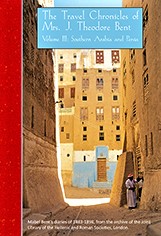
Cover photograph © Jane Taylor (Shibam, Wadi Hadramawt, Yemen).


There we have it then, not Ludwig of Bavaria, but Mabel of Arabia, and the fantasy castles she wondered at some 130 years ago, and still, miraculously, standing.

Available from Archaeopress and other sources.


Coda: “This war has to end” said President Biden the other day (Feb 2021), and “we’re ending all American support for offensive operations in the war in Yemen”. What will this mean and how can it end? Theodore and Mabel Bent were travelling in this extraordinary region in the 1890s, as a recent post in writer Jen Barclay’s blog outlines…


An archaeological view of the stay of the Bents on the Carian Chersonese

Matthias Nöth, a visit to the fortifications of Phoenix.

In the summer of 2020, the Bent Archive received a most helpful communication from Matthias Nöth, pointing out anomalies in the Google map we had plotted showing the itinerary Theodore and Mabel Bent had taken in 1888 when exploring areas of the western coast of Turkey, as far down as the (now Greek) island of Kastellorizo.

Realizing Matthias had a much deeper knowledge of the region than we did, we asked him if he would care to write for us a short illustrated sketch, a Bent-tour if you like, just referring to some of the sites the couple visited, perhaps from a modern archaeological perspective, something that dedicated travellers to those, still unspoiled, spots would enjoy.

And so, without further ado, we hand you over to Matthias (who shares his Christian name, incidentally, with the Bents long-term assistant from Anafi, who was with the couple on their slow cruise down this delightful extent of the Outer Levant — Matthias, the floor is yours:-

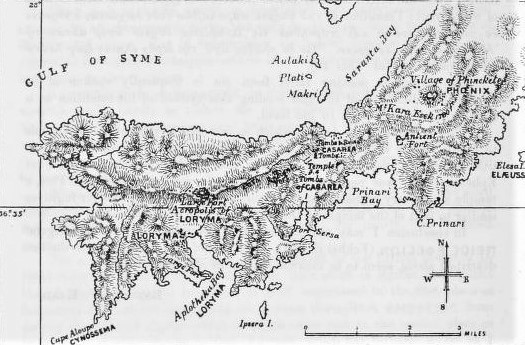
Theodore Bent’s map of Ancient Loryma and its environs for E.L. Hicks’ paper in JHS 1889, Vol. 10, page 46 (The Internet Archive).

Between 1882 and 1898, Theodore and Mabel Bent made a total of seven trips that took them along the Greek and Turkish coasts. Mabel had kept diaries of all these trips. In these, the couple’s sixth voyage, or thereabouts, which took place in 1888  note 1 , we learn that the Bents – after a short stay on Symi – anchored in the bay of “Aplotheka” on the night of 10th March to the 11th.

They decided on this bay, which Mabel describes as having a “very deep, slope to the water in most places, but there are several little beaches of sand where landing is easy”, as there one may find “the ruins of ancient Loryma”. On one of these beaches there are “the remains of some large building and another a mandhra, or sheep fold. The wall of the yard runs along the shore and the family live in a little hut of rough stones, that one can see through, about 12ft. x 10ft. No window or chimney, fire on the earth in one corner, a few sticks stuck between the stones to hang things on and a shelf made with a pole across the end of the room and some branches on it. It is about 3 feet 6 inches wide and may be the bedroom, but we saw very few bedclothes or possessions of any kind, and yet the people seemed clean in their persons and certainly provide us with excellent cream and milk.”.

About her stay in the bay, we learn from Mabel that her husband Theodore undertook “a walk in the morning with Vassilis […] and Ioannis” on March 11th, while she stayed on board their ship. In the afternoon she roamed the bay with her husband and “choose a digging place for the morrow”. For March 12th, she reports that they were excavating “quite unmolested at large tombs, all with altars on them, but vainly”. Unfortunately, as with Theodore’s article in the Journal of Hellenic Studies (Vol. 9, 1888), Mabel’s chronicles are not very meaningful from an archaeological point of view. Presumably he does not elaborate on the ruins there as they were presented by O. Benndorf and G. Niemann four years earlier in their Reisen in Lykien und Karien (Vienna 1884)  note 2 .

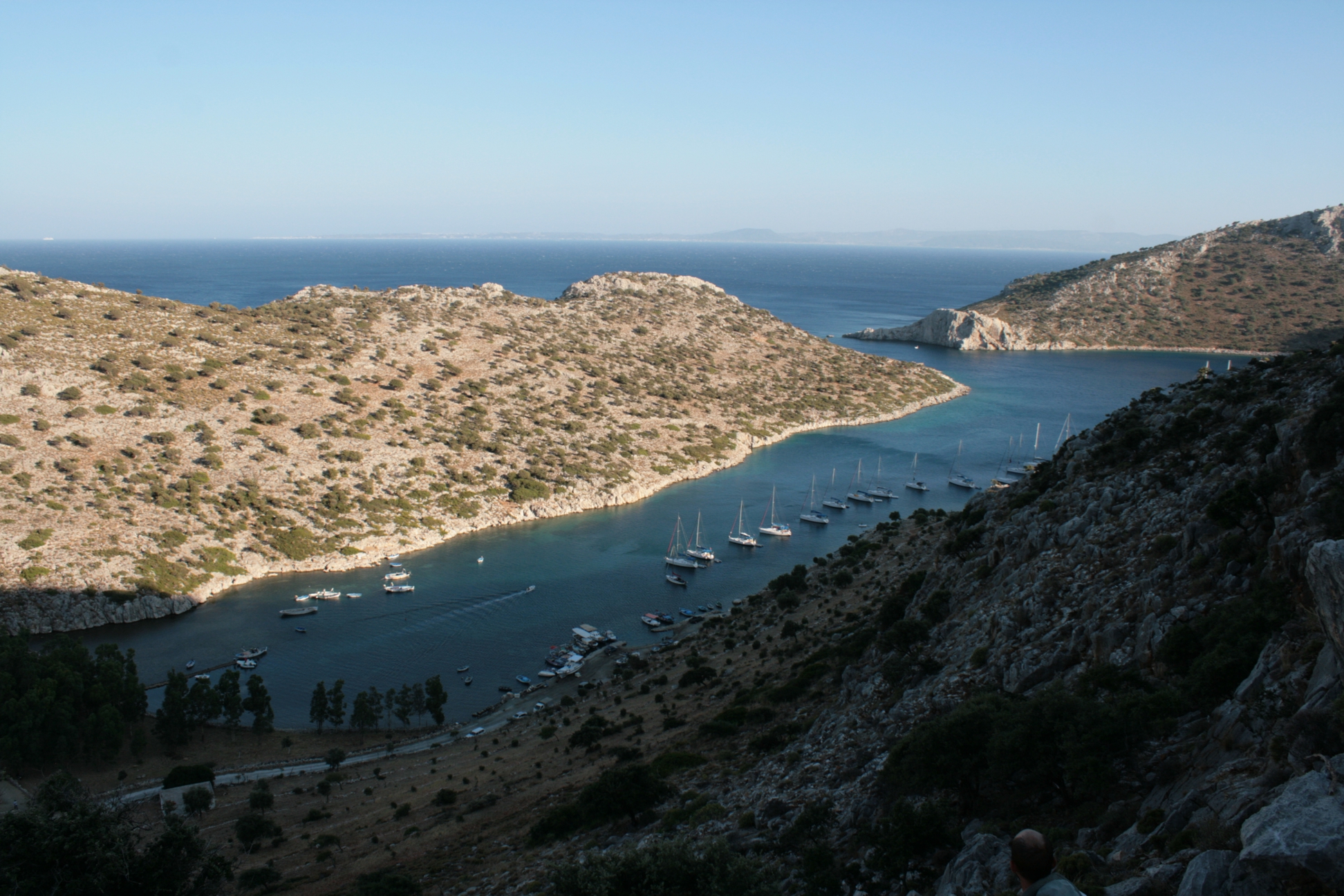
Fig. 1:   View of Bozukkale, or Loryma Bay, from north-northwest, with the island of Rhodes in the distance (Matthias Nöth).

“Aplotheka” bay is known today as Bozukkale or Loryma Bay (Fig. 1), located on the southwestern edge of the Bozburun peninsula. This was known in antiquity as the Carian Chersonese and later belonged to the Rhodian Peraia. The bay itself can only be reached by boat or by taking a long walk overland. Despite, or perhaps because of, its remote location, it is a popular destination for sailing tourists, and since the opening of the Carian Trail also for hiking tourists. There are three seasonal restaurants in the bay and apart from these there are only two or three huts inhabited by shepherds.

Fig. 2: Loryma: View from the southeast over the Rhodian harbour fortress (Matthias Nöth).

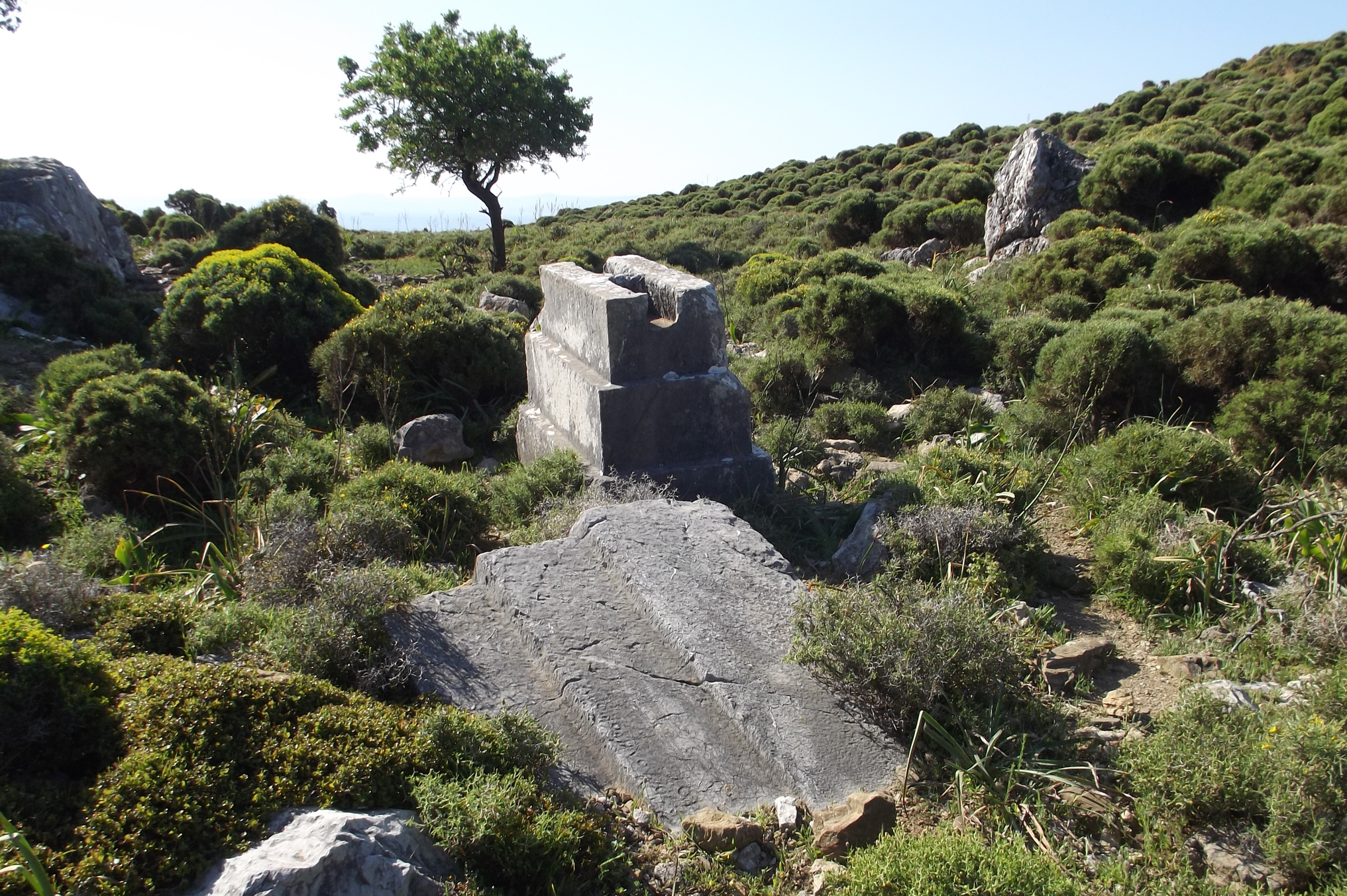
Thus little has changed since the Bents stayed there. The “remains of some large building” mentioned by Mabel have also been preserved. These could be the remains of a large building, probably built from spolia in Byzantine times, which may be seen in connection with an Amalfi trading post [Αποθήκη = warehouse ?]. It was built on the site where there were five ship sheds in antiquity (Fig. 1, right of the rocks in the foreground). The “ruins of ancient Loryma” include the large Rhodian harbour fortress (Fig. 2), the scant remains of two temples, the Loryma settlement, numerous ancient farmsteads, and the extensive settlement necropolis in which Mabel and Theodore apparently carried out excavations. The “altars” on the graves mentioned by Mabel are the grave top parts typical of the Carian Chersonese, in the form of monolithic or composite stepped bases (in English also referred to as “stepped pyramids”) (Fig. 3).

Fig. 3: Examples of grave top parts, typical of the Carian Chersonese (Matthias Nöth).

On March 13th, the Bents, accompanied by a shepherd serving as a guide, went eastwards to “a little harbor called Sigás and then walked to the sea on the other side of the promontory called Sikies (fig tree)” (= north coast). However, the excursion was, in Mabel’s words “disappointing”, probably because they did not make the hoped-for discoveries.

Fig. 4:  View from the north over the “hidden” port of Serçe Limanı and its small entrance (Matthias Nöth).

The port “Sigás”, which – according to the memoranda of Theodore published by E. L. Hicks (JHS 10, 1889) – was also called “Sersa” in Bent’s time, and is a bay now known as Serçe Limanı (Fig.  4). In ancient times it was called Κρήσα λιμήν or “portus Cressa”. Although the entrance to the “curiously hidden” bay is quite narrow – as Theodore wrote in his article – it was apparently a popular anchorage over the ages; this is shown by the five shipwrecks found there that date from the 3rd century BC to early 11th century AD.
In addition to Mabel’s chronicle entry, we learn from Theodore’s article that, after “about an hour’s walk”, there are extensive ruins in “a basin”. According to Theodore’s memoranda, he found there “covered by the ruins of a Byzantine church”, “a row of bases of columns (apparently in situ), as if a temple had stood here”, as well as numerous graves and a few inscriptions. According to one of these inscriptions, the temple was dedicated to Apollo. Three more inscriptions are featured in Hick’s article. In the north of the valley Theodore’s memoranda mentions “tombs composed of blocks of marble piled pyramid-wise upon each other”.

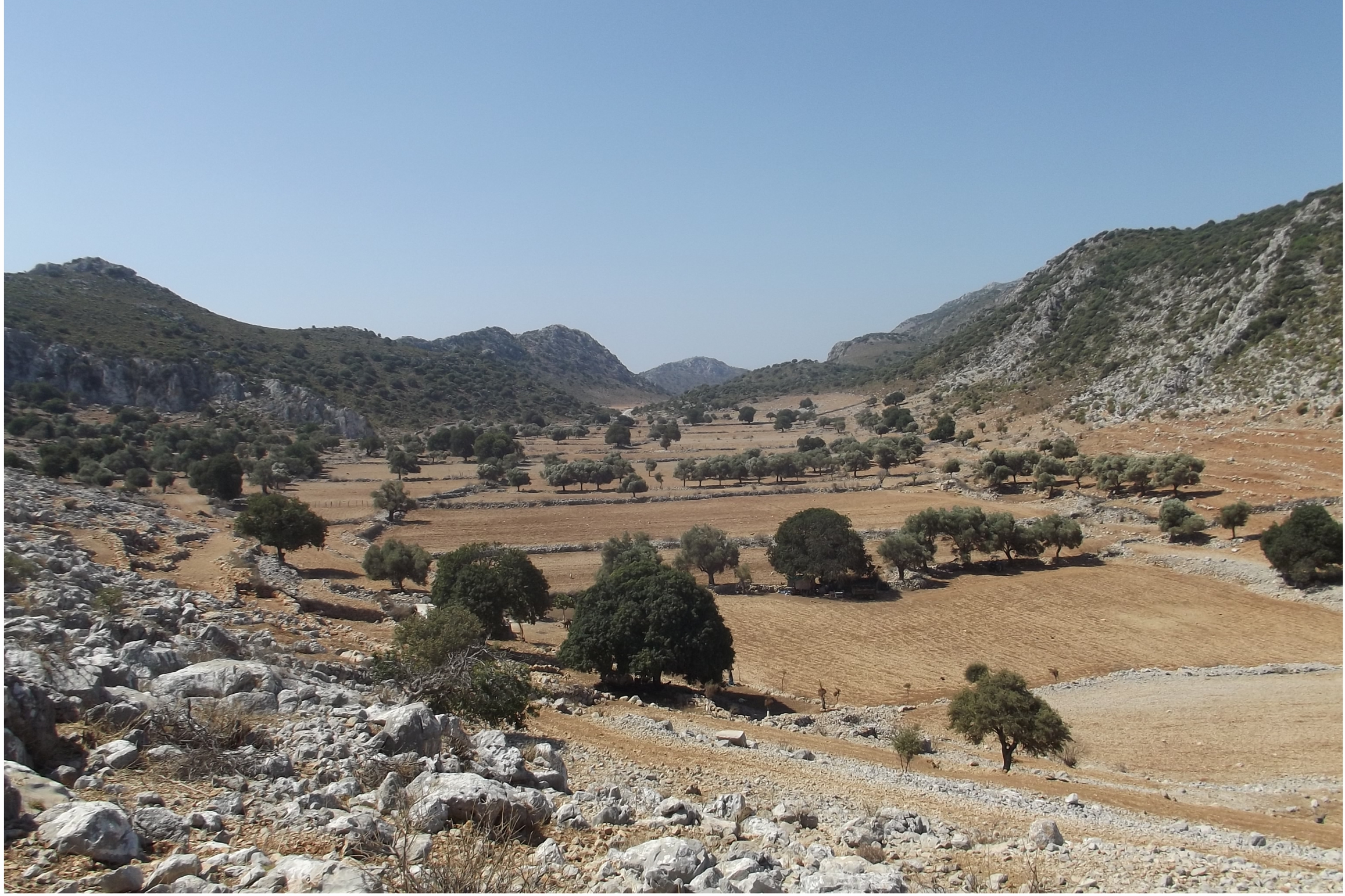
Fig. 5: The so-called Asardibi plain, seen from the north. At the edges are the remains of ancient agricultural terraces (Matthias Nöth).

The “basin” is the valley that adjoins Serçe Limanı to the north and is known today as Asardibi; ancient Kasara is also located there. Today only a few ruins have survived in this valley (Fig. 5). The alleged temple remains were apparently not found in the recent survey, as they are not mentioned in the relevant publications. The ruins visible today are mainly graves with the grave top parts of the form known from Loryma, as well as some ancient farmsteads and the remains of associated agricultural terraces. In the far north of the valley, on a prominent hill, are the sparse remains of a small Byzantine settlement or fortress. However, between the Byzantine walls there are also remains of more ancient ones, so that one might possibly look for the acropolis of ancient Kasara on that hill. A few years ago, at the western foot of the hill, you could still see the graves discovered by the Bents; however, illegal construction work has taken place there, which has destroyed a large part of the historical substance.

Apparently Mabel and Theodore visited another ancient site on their trip to Kasara, i.e. locating Phoenix “about an hour’s walk [in an] eastward direction”. Since Theodore only mentions it briefly in his article (“… the modern village of Phoenike […] is built on the site of the old town …”), it will not be discussed further here. However, Phoenix and other ruins in the area are shown on the map created by Theodore for Hicks’ article. From an archaeological point of view, this map is also the most interesting result of the Bents’ stay on the Carian Chersonese, as some of the ancient ruins recorded there by Theodore are still almost unexplored.
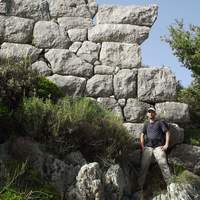
About Matthias Nöth

“Inscriptions from Kasarea, Cape Alopex, Asia Minor, next to Loryma, the Portus Cressa of C. Ptolemaius [5.2.11], not as Leake has it at Aplotheka.” With Rhodes just visible at the bottom of the page, Bent’s sketch (March 1888) of Symi and today’s Bozburun Peninsula (Cape Alopeka) opposite (Loryma and ‘Portus Cressa’ are detailed). The identification of Kasarea/Portus Cressa is credited to Bent. From Bent’s unpublished notebook (p. 38) ‘Greek Tablets’ (Inscriptions 1888: from Patara, Lydae, Lissa, Myra, Kasarea, Nicaea) in the archive of the Hellenic Society, London (CC).
After doing his Magister Artium in Classical Archaeology at the University of Würzburg, Matthias completed an archaeological traineeship at the Archäologisches Spessartprojekt (with a focus on Medieval archaeology).  He then went on to read for a Doctorate in Classical Archaeology at the University of Marburg, graduating in 2015.  His dissertation on the Fortifications of the Carian Chersonese is currently in press. For his bibliography, see here.

During his studies, and as a volunteer, Matthias took part in several excavations in Bavaria, before he participated in survey projects in Turkey: at “Loryma” (2000) and “Bybassos and Kastabos” (2006-2011, 2015), both of which are on the Carian Chersones, today the Marmaris/Muğla region. After several round trips and hikes in the area, Matthias now knows the Carian Chersonese very well.

Note 1: The travel diaries are published in: The Travel Chronicles of Mrs J. Theodore Bent. Volume I: Greece and the Levantine Littoral. Mabel Bent’s diaries of 1883-1898, from the archive of the Joint Library of the Hellenic and Roman Societies, London. Edited and with additional material by Gerald Brisch. Oxford: Archaeopress (2006), pages 237ff.
Return from Note 1

Note 2: The ancient remains were examined between 1995 and 2001 by Dr. Winfried Held in a survey in which the author was also able to participate. Partial results of this survey were last published in: W. Held (ed.), Die Karische Chersones von Chalkolithikum bis in die byzantinische Zeit. Forschungen auf der Karischen Chersones Band 1 (Marburg 2019).
Return from Note 2

For recent archaeological work on the area, see Asil Yaman et al. (2025) Preliminary Report on the 2023 Fieldwork at Phoenix and Casara. Anatolia antiqua = Eski anadolu, 2025, XXXII (hal-04844926).

For more on the Bents along the Eastern Mediterranean coasts, see Further Travels Among the Insular Greeks (Archaeopress, Oxford)


The Bents and the British Museum: in Five Objects

The Bents and the British Museum: in Five Objects

The British Museum, London (wikipedia).

On 24 April 1885, British explorer Theodore Bent wrote from Syros in the Cyclades to Charles Thomas Newton, famous traveller himself and now Keeper of the Department of Greek and Roman Antiquities at the British Museum (BM): “We returned from Karpathos yesterday and had hoped to catch a steamer which would have brought us and our things straight to England. Unfortunately we shall have to wait a week at least, and as we have so much plunder we cannot take the Marseilles route. I had hoped to have been in time for the Hellenic meeting, but of course now we shall not reach England till the middle of May. We were fairly successful in Karpathos, finding a large number of rock cut graves unopened which have produced pottery, etc., which, if not of the highest order, offer a good deal which I believe to be of a new character… Of quaint manners and customs I have got a fine collection, also of old Karpathiote dresses and jewelry… We had rather a rough time of it, Karpathos being very far behind the world in comforts, and decidedly we enjoyed ourselves best when living in our own tent. Mrs. Bent survives and is well and begs her kind regards. Yours very truly, J. Theodore Bent.” (Mabel Bent 2006: 123, fn. 74)

(The Bents’ trip to the Dodecanese in 1885 was probably contributed to by the BM, and significant finds from there are now in London.)

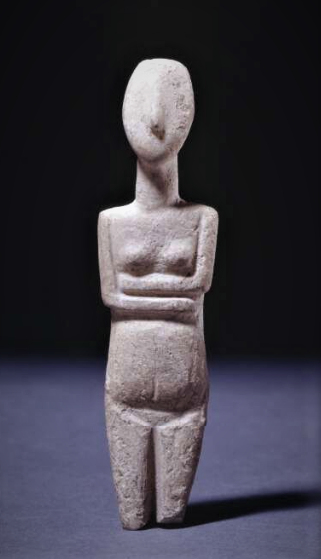
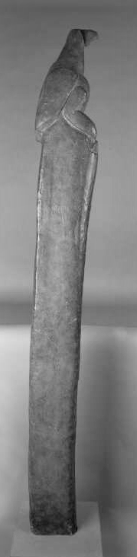
To draw attention to, and thank  the BM for their great and newly re-vamped online database, and make a nod to Neil MacGregor’s seminal TV/radio series, and subsequent exhibition, at the same time, the Bent Archive is selecting four significant objects to feature from the several hundreds of items (752, no less, the BM claim, though some are duplicated) either donated to or sold by Theodore and Mabel Bent to the Museum over a period of five decades or so from the 1880s, beginning with the artifacts Bent brought home from the Cycladic island of Antiparos, then an almost abandoned islet, today a hipster destination for some of Europe’s silliest teenagers; the Bents would be amused. The fifth item, as we shall see, is one that got away… but it should be there.

The expeditions
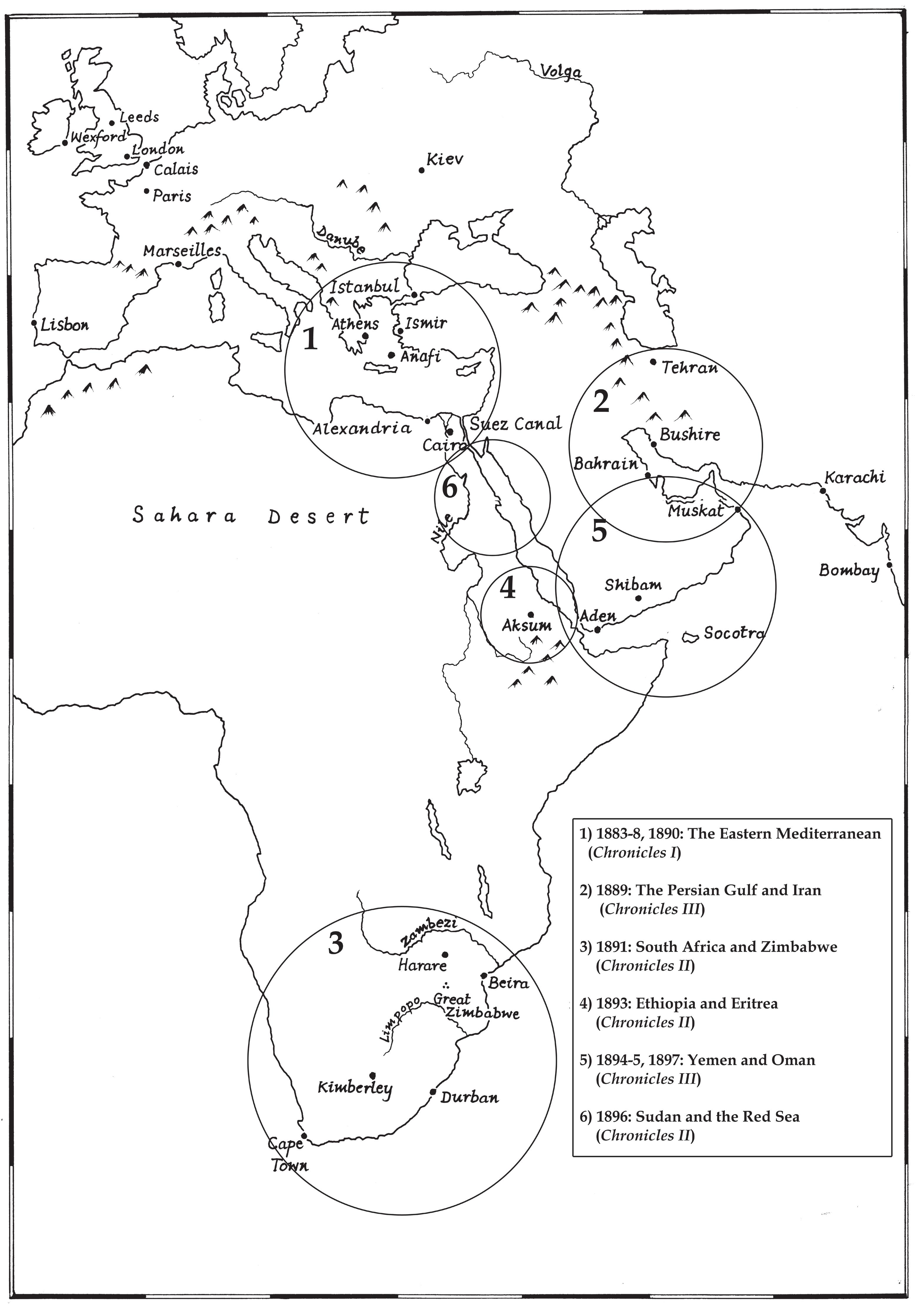
The expeditions of Theodore & Mabel Bent, 1883-1897 (© Glyn Griffiths and the Bent Archive)

For about twenty years, Theodore and Mabel Bent travelled to regions in the Eastern Mediterranean, Africa, and Arabia, on the look out for things of archaeological and ethnographical interest (usually linked to Theodore’s current bonnet-bees and theories). Occasionally the British Museum contributed to the Bents’ travel costs on the understanding that the institution would get first refusal. We know that the museum also paid Theodore for certain acquisitions, but there were also donations from the Bents – in particular the large assemblage given by Mabel in 1926, a few years before her death (Theodore, alas, died early, in 1897).

The Museum’s archives (and elsewhere) contain much correspondence between Bent and their various curators and associated scholars, such as William Paton, E. L. Hicks, David Hogarth, Sir William Mitchell Ramsay, Charles Newton, Arthur Smith, Alexander Stuart Murray, Cecil Smith, William Henry Flower …

Good examples of these interactions include a letter from Theodore  to the Keeper at the British Museum, dated 30 May 1884: “Dear Sir, Do you care to make me an offer for my figures, vases, ornaments, etc., from Antiparos? It occurs to me that a collection of this nature is rather lost in private hands. Yrs truly, J. Theodore Bent.” (Mabel Bent 2006: 46, fn. 49)

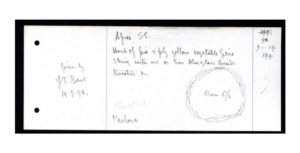
BM inventory record Af1892,0714.144, for a necklace made of plaited vegetable fibre, from Bent’s Mashonaland year (1891) (© The British Museum).

The BM archives also include the Museum’s day books and accession registers, fascinating records that bring you closer to collector and curator, in contexts of mutual scholarship, curiosity, and wonder.

This is not the place to comment on the history of the Museum, collectors’ activities, or the acquisition policies current in the late 19th century. You will have your own thoughts and opinions.

The objects collected by the Bents are featured below, in a sort of virtual ‘The Bents at the BM’ mini-exhibition, by the date they were acquired by the Museum, and representing the main regions of the Bents’ fields of studies, as already mentioned – the Eastern Mediterranean, Africa, and Arabia, over a period twenty years following their marriage in 1877. In most cases the BM item number consists in part of the year the piece was acquired from the Bents, i.e. Af1892,0714.144, denotes 1892 – in this instance when Theodore and Mabel returned out of Africa.

Thus, without further ado… “The Bents and the BM: in Five Objects”

Let’s make a start in the Greek Cyclades – the scene of Theodore’s first (1883/4) substantial ‘excavations’ (although his modus operandi bears little resemblance to the science of today and raises eyebrows, if not ire, still among archaeologists).

[Basic inventory details are provided, but there seems little point in repeating the detailed information on the artefacts given by the Museum, click through yourself to access it if you wish. We thought however that readers might like to get a little detail on the objects provided by the Bents themselves, either via Mabel’s diaries (her Chronicles), or Theodore’s publications.]
1884,1213.14. Marble figure from Antiparos,  2700 BC-2500 BC  (© The British Museum).
[Cultured female voice, slow, musical, dark, clear] “Object No. 1: Parian marble figure from Antiparos in the Greek Cyclades,  2700 BC-2500 BC“. The Cyclades provided Theodore Bent with his first theatre of operations and he ‘excavated’ at two sites on Antiparos, off Paros, in the winter of 1883/4. He brought home with him, and then sold to the BM, a largish assemblage of items, including a few of the iconic, now ubiquitous, and haunting, marble figurines. (There was skeletal material, too, now in the Natural History Museum.) Bent’s work on Antiparos paved the way for the realization that there was a distinct ‘Cycladic’ culture. Here is Mabel Bent’s diary entry at the time of their first dig: “Tuesday [18 December 1883]. Rode 1½ hour to the nearest point to Antiparos carrying only our night things and a card of introduction from Mr. Binney for Mr. R. Swan who has a calamine mine on this island. Crossed in about 10 minutes… Met Mr. Swan who more than fulfilled our warmest hopes. He took us to his house, and after resting told us that in making a road he had come upon a lot of graves and found a marble cup, broken etc. So, we manifesting a great wish to dig too, he got men and we opened 4. They were lined and paved with slabs of stone and the people must have been doubled up in them, they were so small; we only found, besides bones, 2 very rough marble symbols of men and women, little flat things and some broken pottery.” (Mabel Bent 2006: 21ff.)

1886,0310.1. Limestone female figure from the Greek island of Karpathos. Neolithic? (© The British Museum).
[Cultured female voice, slow, musical, dark, clear] “Object No. 2: Limestone female figure from the Greek island of Karpathos. Possibly Neolithic.” The Bents spent several of the early months of 1885 in the island group now known as the Dodecanese, then Turkish, in the Eastern Mediterranean. Mabel refers to them as the ‘Sporades’. On Karpathos the couple acquire an extraordinary stone figure without parallel in Greece to this day, and she found her way to the British Museum in 1886. She was presumably intact when she left the island; she is now in two halves but has been restored. Recently (2019) she was an extra, a stand-in, for the BM’s travelling exhibition linked to Neil MacGregor’s TV/radio series. Alas she never made a starring role in the English series; she would thus have returned the favour to the Bents, making them minor celebrities once more. But she would also have raised questions as to her pedigree best left in her boudoir. Are those arms not highly problematic?  The BM may have assumed that she came from a tomb around Vrykounda in the north of the island, although elsewhere Theodore links it to Pigadia and Mabel’s diary seems to confirm this; what is for certain is that she is both fantastic and fantastical and deserves more study – if not a series of novels! “[Monday, 20 April 1885] The next excitement was getting the things at Pegadhia [Pigadia, Karpathos]… Manthaios [the Bents’ dragoman] set off to run to the house where was a very hideous statue, more than the size of a baby, half a mile off… At last I saw M tearing back with the burden on his shoulders and very soon they reached the ship and all was on board… When M appeared, Theodore could see that the statue showed behind and told him so, but he said ‘No matter’ and rushed on to the boat and then came back to say goodbye to the Turks. T saw them spot the statue and whisper together and shrug their shoulders, so now we are in possession of the most hideous thing ever made by human hands. We mean to deposit it in bond at the customhouse of Syra with all the cases and things we do not want…” (Mabel Bent 2006: 119ff.) [For an excellent and extended description of the figure, see E. Melas, The Islands of Karpathos, Saros and Kasos in the Neolithic and Bronze Ages, unpublished PhD thesis, Bedford College, University of London, 1981, pp.268-271]
CRS.73. Cast; sculpture, made of plaster; in form of a bird sitting on top of a pedestal. Late 19th-early 20th-century copy of medieval? African original (© The British Museum).
[Cultured female voice, slow, musical, dark, clear] “Object No. 3: Cast; sculpture, made of plaster; in form of a bird sitting on top of a pedestal. Late 19th-early 20th century copy of medieval? African original.” When Greek and Turkish lands became too tricky for the Bents to wander and wonder over, they set off in other directions, south and southeast. In 1889 they were to be found digging in the ‘Mounds of Ali‘ in Bahrain, before returning to London via a south-north ride the length of Persia. At the end of 1890, Bent came under the inescapable gravitational pull of Cecil Rhodes, and by the summer of 1891 he and Mabel were thousands of miles away south, exploring the fabled ruins of ‘Great Zimbabwe‘, from where they shipped hundreds of artifacts back to London, mounting an exhibition of the choicest things in their home near Marble Arch in early 1892. Included were a few of the iconic black soapstone birds which would grace any museum, anywhere. Rhodes had other plans for the best items, however, and he had maintained rights to them; after the exhibition they were repackaged and sent to him in Cape Town. Some of the things, especially the mesmerizing, totemic birds, he took immediately to his house at Groote Schuur, but they later flew to museums in South Africa and Zimbabwe.  It seems the Bents, or the BM, had casts made of one or more of the original soapstone ‘beams’ on which the elegant birds perched, and Mabel kept it before giving it to the BM again in 1926, in all likelihood. The original is now back in Africa, and although just a cast, the artifact is unique and significant enough to merit a place in this assemblage now.  The Bents’ Great-Zimbabwe-tour finds  (largely ethnographic) represent the largest element of the collections they sold or gave to the BM, literally hundreds of things now in store, as much bric-à-brac as anything else. Mabel waxes lyrical on first seeing one of these beams: “[Friday, 5 June 1891]. After breakfast we hurried to Zimbáboe as they pronounce it, also Zimbágowe. I rode Beauty [her horse] with a trooper’s saddle, as my saddle was packed. I was glad to get dry through the dewy grass, which came high above the top of my parasol. We left two wagons to follow. First we climbed up the hill, or rather the principal hill near, full in every cranny and on every detached rock, of huts and a large quantity of people. There are ruins all over the top; all the ends of the walls are rounded, both up on the hill and down in the round ruin. I mean to abstain from a description of the ruins, for they will be described elsewhere when we have worked at them a little. Our souls were gladdened by some long stones carved over and one with a strange bird at the end…” (Mabel Bent 2012: 85)

Af1893,1112.1. Painting of the Crucifixion of Jesus Christ and scenes from the life of Bishop Selama. Ethiopia, Adwa: Church of the Saviour of the World. Late 19th. cent. copy ? (© The British Museum).
[Cultured female voice, slow, musical, dark, clear] “Object No. 4:  Painting depicting the Crucifixion of Jesus Christ and scenes from the life of Bishop Selama. Painted on cotton, hand-woven in two sections, stitched together centrally top to bottom. Ethiopia, Adwa: Church of the Saviour of the World. 19th. c. copy ?” In London once more, via Lisbon, from Mashonaland and South Africa, in early February 1892, Theodore was a minor celebrity. He had come home with crates of finds from ‘Great Zimbabwe’ and a theory that no one for the moment could gainsay about prehistoric Southern Arabian influence, trade and power. Research by Theodore in London and in the Lisbon archives, and correspondence on inscriptions and possible architectural similarities between features in Mashonaland and Marib (Yemen), introduced Theodore to the little-explored interior of Ethiopia, and its evocative ‘capital’ Aksum (Axum).

(For a detailed study of this unique piece, see ‘The image revealed: study and conservation of a mid-nineteenth-century Ethiopian church painting’, by Heidi Cutts, Lynne Harrison, Catherine Higgitt and Pippa Cruickshank, in The British Museum Technical Research Bulletin, Vol. 4, 2010: 1-17.)

‘The Church of the Saviour of the World, Adowa’. Sketch by Theodore Bent. ‘The Illustrated London News’, 6 May 1893, p.556 (The Bent Archive).

The Bents’ 1883 tour of the region was ultimately unsuccessful due to local unrest, exacerbated by the colonial ambitions of the Italians. By far the most interesting of the artifacts Bent brought back was this large painting of the Crucifixion, he bought for ‘Ten pieces of silver’ from the Church of the Saviour of the World, Adwa. Bent describes the transaction in the book  that resulted from the journey:  “It was here… that I espied a picture cast on one side, for the colours were somewhat faded, which I faintly hoped to acquire. At first our offers were received with contempt, but again and again we sent our interpreter, and with him ten pieces of silver, the sight of which eventually overcame the priest’s dread of mutilation, and the evening before our final departure from Adoua the picture was ours. Our interpreter himself was terrified at what he had done, ‘We must not breathe a word of the transaction, even to the Italians,’ he said ; ‘we must bury the treasure at the bottom of our deepest bag ‘ ; and to all these regulations we gladly acquiesced, for we knew the great difficulty of acquiring these things in Abyssinia, and the danger to which we all should be exposed if our transaction should be discovered, and I am pretty nearly sure that this picture which is now in the British Museum is the first of its kind which has reached Europe…” (The Sacred City of the Ethiopians, 1893, pp. 129-33)

[Cultured female voice, slow, musical, dark, clear] “Object No. 5: A pottery stamp/clay seal from the Wadi Hadramaut, Yemen, aka ‘The Bethel Seal’? Used presumably by a merchant for designating ownership, or contents, of traded merchandise. Date uncertain.” It must be quickly said that this is a deceit; it is a mystery object that should have been given by Mabel with a few other artifacts from the Wadi Hadramaut (Yemen) in 1926, but was not, and thereby hangs a tale worth the telling.

The Bents are admired for their three attempts to traverse the dangerous Wadi Hadramaut in the Yemen, from west to east and down to the Gulf of Aden, from 1894-7. The final trip cost Theodore his life. The couple were travelling on horses and camels and were restricted in what they could bring away with them and the largest collection consisted of hundreds of botanical specimens, reasonably light, now in the Herbarium, Kew.

Mabel has left us in her diary some idea as to how acquisitions were made along the way: “On Saturday the 13th [January 1894], the day after our arrival, at 8 o’clock, the Sultan, Theodore, Saleh and a groom on the four horses, and I on [my horse] Basha, and a vizier on a camel with a soldier, and the soldiers on foot, rode about five miles to a good old ruin (Al Gran), but embedded in an inhabited house so that excavation would be impossible; from a very well cut scrap of ornament we thought it to be a temple, and it is perhaps from this temple that a kind of small stone trough has been brought, with a dedication, rather long, in Sabean, which Theodore has nearly deciphered – a trough with a spout coming to England. Two stones have been brought us by camels at the Sultan’s orders.” (Mabel Bent 2010: 167)

The Bents returned in 1894 from the Hadramaut with the modest lump of clay – the stamp/seal in question. It featured with a small collection of other items on page 436 of the Bents’ great book on Southern Arabia (1900), including the ‘trough’ Mabel mentions above. Then, rather like a great ring, the seal disappeared from view – until it reappeared in an archaeologist’s shovel in the late 1950s at a site at Beitin, Biblical Bethel, Palestine, and the scene of Mabel Bent’s accident in the early 1900s, when she broke a leg in the wilderness, riding, unaccountably, on her own.

But was it the same modest lump of clay, or another, identical artifact? Today it (or both?) is/are lost, and a debate has waxed and waned over the mystery ever since. A strong argument is made that Mabel, distressed, widowed, mourning her late husband and her lost life as an explorer, ceremoniously placed the stamp in a deposit at Bethel in the early 1900s as a tribute to Theodore – not caring if it were ever found again or not – the significance of the site being that it marked the end of a frankincense route (the resin being one of his passions) that began thousands of miles away in the Wadi Hadramaut – and thus Theodore could rest easily, his journey over; the love of a grieving widow.

For a scholarly overview of the seal in context, see ‘Arabian and Arabizing Epigraphic Finds from the Iron Age Southern Levant’, by Pieter Gert Van Der Veen with François Bron, in J.M. Tebes (ed.) Unearthing The Wilderness: Studies on the History and Archaeology of the Negev and Edom in the Iron Age: 203-226. Leuven: Peters.

As a coda, perhaps the Bents’ acquisitions no longer quite justify the hyperbole appearing in Mabel’s interview to The Hearth and Home (2 November 1893) before leaving for Arabia: “Gifted with great artistic taste, Mrs. Bent’s personal collection of curiosities include many beautiful things brought from abroad, and, as our readers are doubtless aware, ‘The Bent Collection’ in the British Museum is one of the most interesting in that venerable building.”

But you should go and decide for yourself…

References: Mabel Bent 2006, 2010, 2012 = The Travel Chronicles of Mrs J Theodore Bent, vols 1-3, Archaeopress, Oxford.

Other finds: Very much smaller collections of the Bents’ acquisitions can be found in: the V&A, London; the Pitt Rivers Museum, Oxford; as well as in Cape Town, Harare, Istanbul, and elsewhere.

Don’t overlook, too, the wonderful, though small, collection of dried plants in the Herbarium, Kew Gardens. Most of the specimens were collected by Kew’s William Lunt, who travelled to the Hadramaut with the Bents in 1894, but there is some additional material from their later expeditions. Kew’s super online catalogue (with some illustrations) makes a great start.

It should also be remembered that in the late 19th century London’s Natural History Museum legally remained a department of the British Museum with the formal name ‘British Museum (Natural History)’. Thus the select assemblage of molluscs, insects and reptiles the Bents collected was gradually transferred to their care, e.g. we know that Mabel presented her collection of 186 “land and freshwater shells from the island of Socotra, including several new species”. (For publications on the shells, see, e.g. J.C. Melvill, Journal of Molluscan Studies, Vol. 1, Issue 5, 224-5; for some of the Bents’ shells in the NHM, click here). [For an article on new botanical and zoological species discovered by the Bents, click here].

Very importantly, the skeletal material Bent removed from two sites on Cycladic Antiparos in 1884, believed lost but now rediscovered, is stored in the National History Museum, awaiting further study.

(In 1926, a few years before she died (1929), Mabel had a sort out of the things she still treasured in her London home. This explains why many of the inventory numbers in the above museums have a 1926 date.)


Mabel Bent: A rare photograph attributed

Mabel Bent: A rare photograph attributed

One of those things that itches has just been scratched.

The unattributed portrait of Mabel Bent appearing on page 61 of her husband’s notorious book ‘The Ruined Cities of Mashonaland’ (1892). It also features in the Irish periodical ‘The Lady of the House’, 15 September 1893, p. 19 and 14 July 1894, p. 4.

Theodore Bent’s ground-breaking monograph on Mashonaland – The Ruined Cities of Mashonaland (1892) – the volume that appeared following the year (1891) spent in ‘Rhodesia’ investigating the ruins of ‘Great Zimbabwe’ for Cecil Rhodes, and the work that was in effect to make Bent’s name, and him and his wife minor celebrities on both sides of the Atlantic, contains a charming portrait (page 61) of Mabel Bent – really charming actually, although adapted from the original photograph via the processes in those days required for printing; the image, however, has no attribution.

Charm? Yes, and obvious, in the professional lighting and a lightness of touch, almost modelling; and Mabel’s wild, long red hair (that famously captivated the villagers of Mashonaland (page 271)) is tamed, just, and her embonpoint sealed with an ‘M’; her dress is picturesque. It is a society portrait (we are talking London in the 1890s here), by a society photographer – but which one? This is the itch that needs scratching.

Celebrated society photographer, Henry Van der Weyde (1838-1924) (wikipedia).

Then a surprise. Almost illegible, or whatever the word is for a photograph too dark to make out, the promise of a picture appears on page 621 of The Gentlewoman – The Illustrated Weekly Journal for Gentlewomen, No. 175, Vol. VII, for Saturday, November 11, 1893, within an article entitled “Gentlewomen ‘At Home’, no. CLXXV, Mrs. Theodore Bent”.  We clearly read the sitter is Mrs. Theodore Bent. And, serendipitously, the photographer is a famous one – Henry Van der Weyde (1838–1924), the Dutch-born English painter and photographer, celebrated for his photographic portraits of the great and the good in the late 19th century; his studios equally fashionable, at “183 Regent-street, W.”
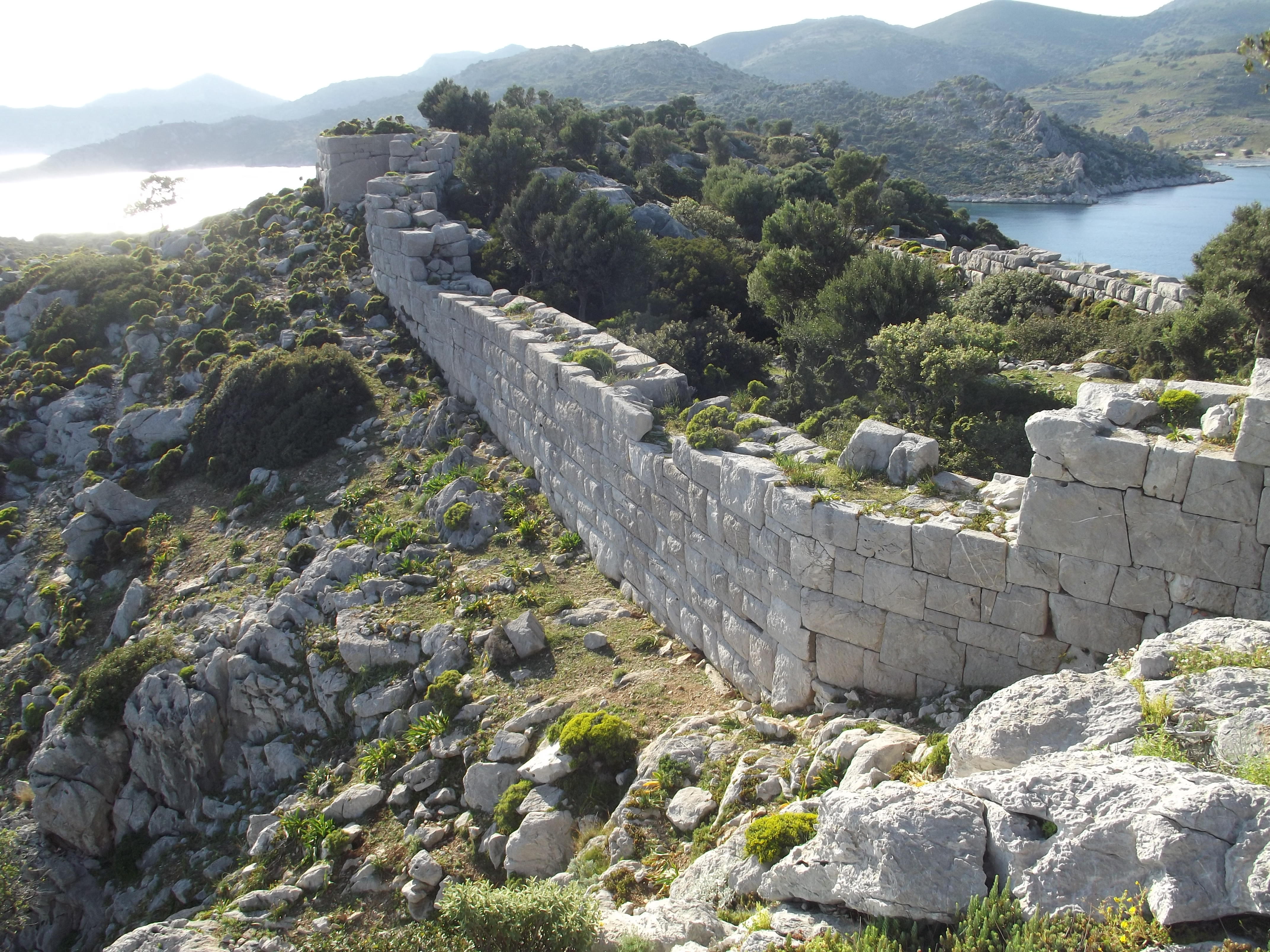
Mabel Bent in obscurity, from “The Gentlewoman”, No. 175, Vol. VII, for Saturday, November 11, 1893 (after the British Library).

And there is something about the promise in this photograph – the outlines, vague suggestions in the almost ectoplasmic patches of the blacks and the whites. Surely, this photograph of Mabel Bent and the one in The Ruined Cities of Mashonaland are the same? The Bents had commissioned the colourful society photographer Henry Van der Weyde, the David Bailey of his day, hadn’t they, whose work Theodore and Mabel would show off in Bent’s bestseller ?


“One in two” – Behold they are the same! (© Ben Heaney 2020).

At this stage, both images go to Ben Heaney at Archaeopress, Oxford, to put Photoshop through its paces. This is his report: “To compare the two images identifiable reference points were taken – these were the neckline of the dress, the position of the earring and ear, the top of the hair and the ruffles of the dress sleeve. This allowed the images to be matched in size by lining up the reference points on separate layers in Adobe Photoshop. The higher quality image was on the top layer, the darker, poorer quality, image on the bottom layer. When the top layer was ‘faded out’ by adjusting the ‘opacity’ of the top layer, the two images clearly matched up.” (Ben Heaney, pers. comm. 21/09/2020)

Thus it can be revealed, the unattributed photograph of Mabel Bent on page 61 of The Ruined Cities of Mashonaland is based on an original by Henry Van der Weyde, the leading London portrait photographer of the period.

The itch scratched, we can let the Bents continue on their way, the E. Med. and Africa behind them, towards Arabia Felix and the last cycle of their odyssey together…
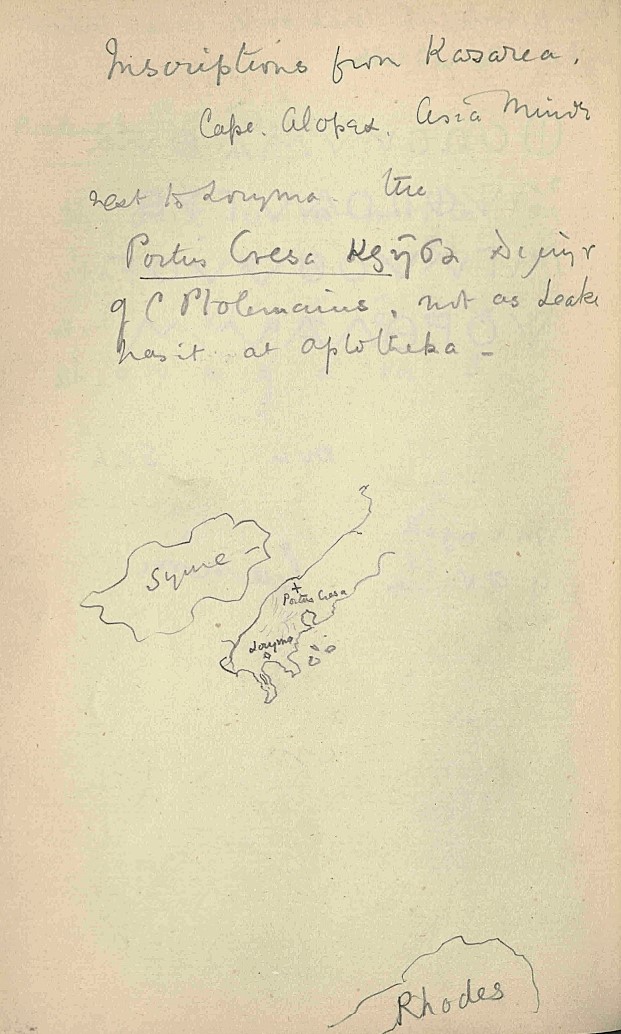
[See also the transcription of Mabel’s interview with The Gentlewoman]