
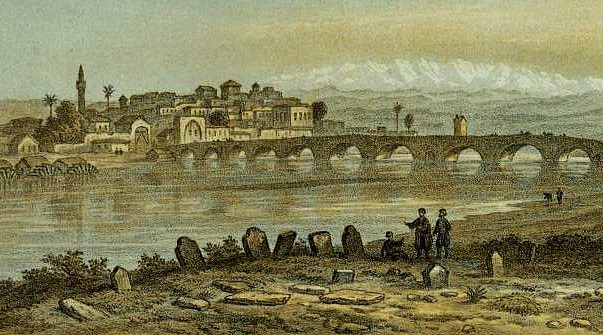
“We were at Adana 2 nights and Theodore was very busy with the arrangements for our journey into the Interior, for, like Africa, Asia Minor has an Interior.” (Mabel Bent’s Chronicle, early March 1890)
For the background to the discovery of this ‘lost’ Bent manuscript from the archive of the Royal Geographical Society, London, see below. Annotated and illustrated here, it is transcribed in full, presumably for the first time, and will be of particular interest to specialists in all fields of Anatolian studies as well as modern travellers to this still scarcely referenced region north of Adana. Some sections have appeared in other pieces by Bent, but never this complete text. We are extremely grateful to the Royal Geographical Society (RGS-IBG) for kindly allowing the first transcription and publication of this article. The transcription is by the Bent Archive.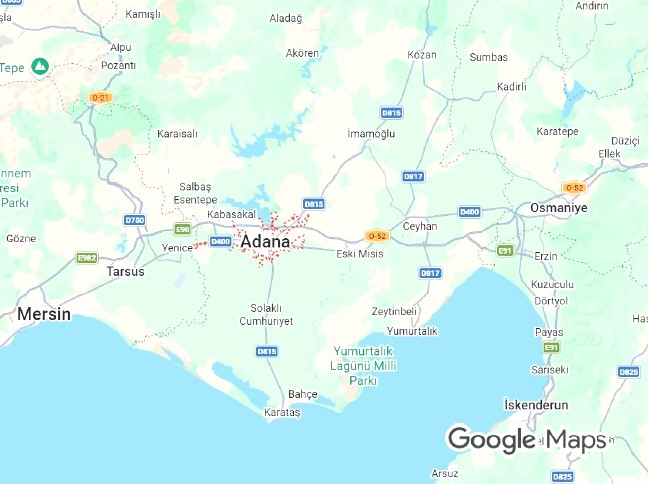
From Mabel Bent’s diary, these are the approximate travel dates for the sites in today’s south-eastern Türkiye referenced in Bent’s article, e.g., after 26 February 1890 the Bents leave Mersin, halting at Tarsus and Adana, for Sis (Kozan), reaching there on 6 March; 10 March the party rides south to Anazarba (Anavarza); 13 March to ‘Kars Bazaar’ (Kadirli); 15 March, via Hemita Kaleh (Hemite Kalesi) to Hieropolis-Castabala (‘Bodroum/Boudroum’). The couple spend four days at the latter site, leaving on 19 March and reaching Mersin again on 22 March 1890. They then revisit the Lamas Valley region (having surveyed it briefly before making for Sis) and achieve the identification of the remains of Olba… called by one scholar ‘Bent’s Pompeii’.
Bent’s unpublished RGS PAPER/article 1890
[Cite as: J. Theodore Bent, ‘Exploration in the North East of the Cilician Plain’. From a MS in the archive of the Royal Geographical Society, London (1890); transcription: Bent Archive 2026.]J. Theodore Bent, ‘Exploration in the North East of the Cilician Plain’
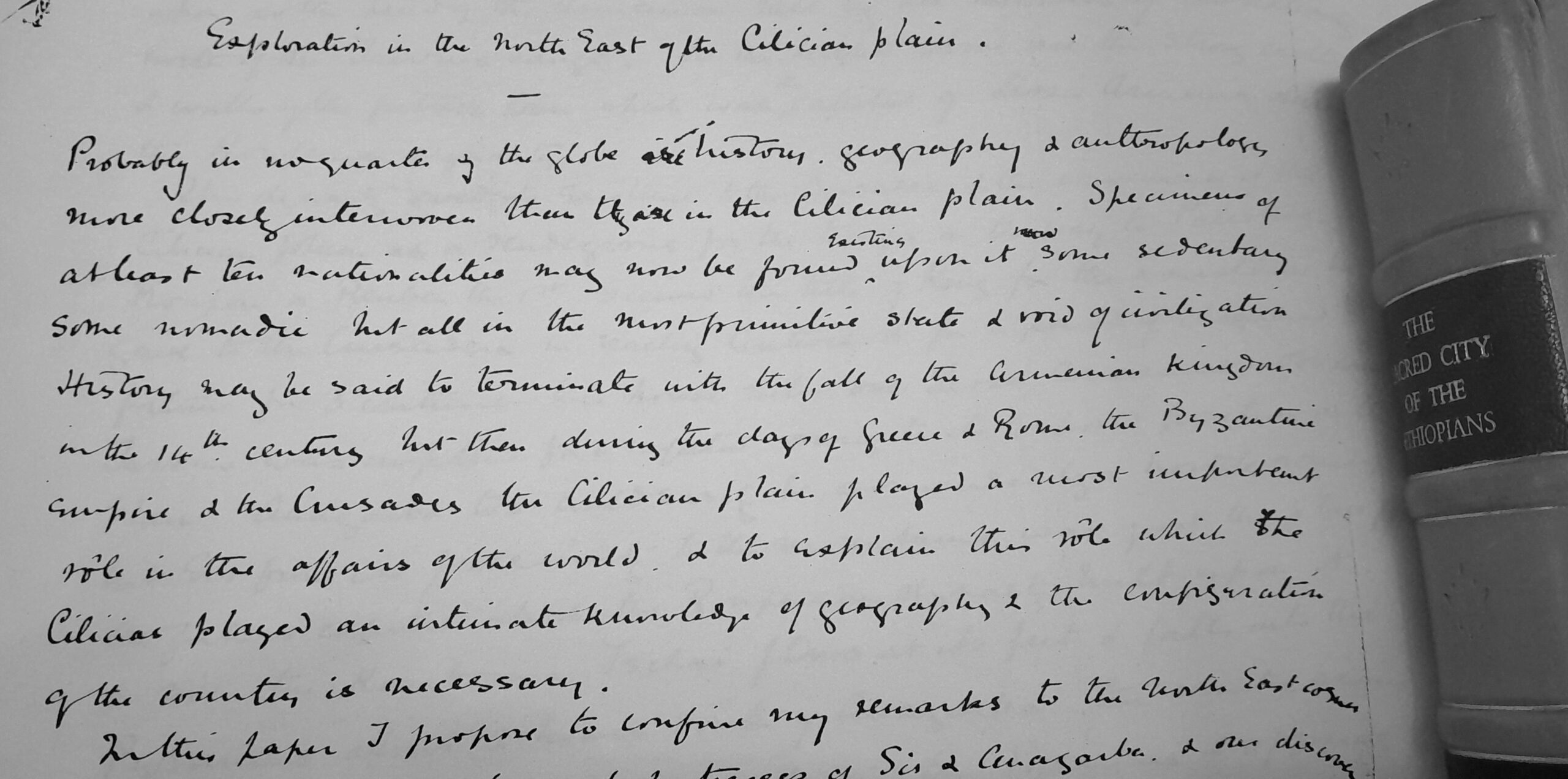
Probably in no quarter of the globe are history, geography and anthropology more closely interwoven than they are in the Cilician plain. Specimens of at least ten nationalities may now be found existing upon it, some sedentary, some nomadic, but all in the most primitive state and void of civilization. History may be said to terminate with the fall of the Armenian Kingdom in the 14th century, but then, during the days of Greece and Rome, the Byzantine Empire and the Crusades, the Cilician plain played a most important rôle in the affairs of the world, and to explain this rôle which the Cilicias played, an intimate knowledge of geography and the configuration of the country is necessary.
In this paper I propose to confine my remarks to the North East corner, describing our visit to the rock fortresses of Sis and Anazarba and our discovery of an ancient site on the Pyramus called Hieropolis-Castabala, which played an important part in the itinerary of Alexander the Great, with a description of the present condition of the country and the nomadic tribes amongst whom we lived during our stay there.
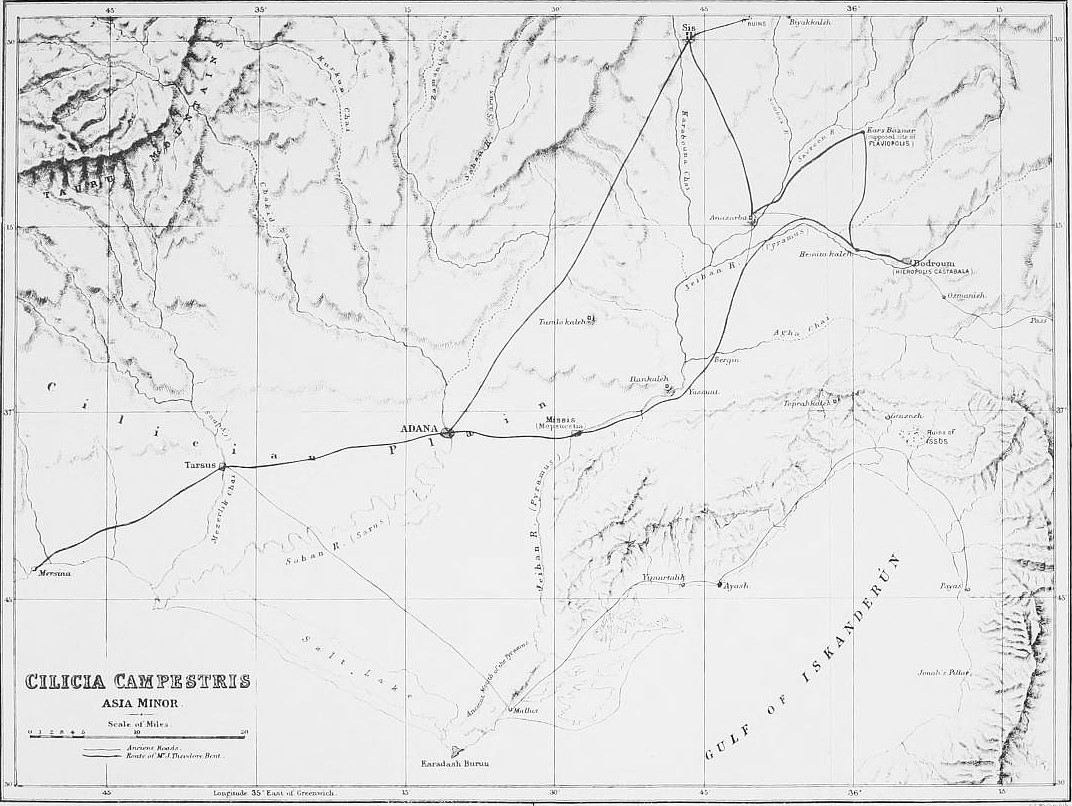
After crossing a series of low hills behind Adana of conglomerate covered with clay which divide the southern part of the plain from that portion which stretches into the heart of the Taurus Mountains, a long expanse of wild, desolate country is entered without any signs of cultivation and entirely given up to the nomad tribes who here pasture their flocks during the winter months. Certain rocks appear in the vast extent of plain crowned with old fortress cities of the Armenian Kingdom, rising like islands out of the flat expanse. Ylan Kaleh, or the serpent castle, Tumlo Kaleh, and the fortresses of Anazarba and Sis, with which we have now more especially to deal.
Sis is situated at the edge of the plain and is divided from the mountain ranges only by a narrow valley. It is a mean town now, consisting of about 200 houses inhabited by Armenians and the convent on the hillside where the patriarch or Catholicos resides, who carries on the faint tradition of upholding the Armenian Kingdom and who is in open rivalry with the Catholicos of Etchmiazen in northern Armenia, who is looked upon as the head of the Armenian race by all members of the nationality north of the Taurus range. note 1 On the height above are the strong castle and walls of the fortress town which was the capital of Lesser Armenia during the Roupenian dynasty.
This dynasty owed its existence to the Crusades and the conveniences of the Cilician plain as a rendezvous for the troops on the way to Palestine. Roupan or Reuben the 1st received the title of king for the assistance he gave to the Crusaders in reaching Antioch, and for a period of chequered fortune for three centuries this house ruled over Lesser Armenia. Obviously, Tarsus was unfitted for a capital owing to its exposed position on the plain. Anazarba, too, could easily be surrounded by a hostile army, but Sis, from its proximity to the mountains, was just the place for the fortress capital which the Roupenian dynasty built upon it. A river, the Karabouna Tschai, flows at its feet and falls into the Pyramus about two hours south of Anazarba. The country around is a network of streams all feeding the Pyramus and offering great difficulties to the traveller, especially in spring after the melting of the snows, as there are but few bridges and the fords become dangerous. In the mountains behind Sis are numerous fortresses which the Armenians could retire to when pressed by an enemy; one of these, Kirk Capon, or 40 Gates, which we visited, has the ruins of an old basilica and several heroa and tombs dating from the Roman period but Sis itself shows no earlier ruins than those of the Armenian period. note 2
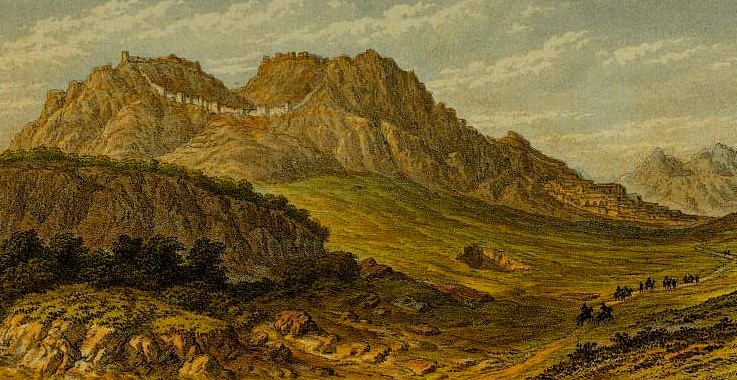
The castle of Sis is very difficult of access and the walls are preserved intact; the circle enclosed by them is oval in form. There are three gates and the space within is divided into three distinct parts by the shape of the mountains and is a mass of ruins. From an Armenian inscription we learn that Leo II in 1186 greatly increased and strengthened it. For fully a mile these ruins crown this elevated ridge looking down on the vast plain; these are ruins of forts, churches, subterranean vaults, and domestic buildings. The highest point is 1200 ft above the sea level and this area within the walls is a favourite pasturage for the nomads, for there is a pond at the top fed by a never-failing spring which is delightfully cool in summer. The views over the snow-capped peaks of the Taurus on the one hand, and the expanse of the plain on the other, with its network of streams, is exceedingly striking. Just below the fortress is what is left of the palace of the takovars or princes of the Roupenian dynasty when they held their court after removing from Tarsus, but this palace has been pulled to pieces to build the convent on the slope close by. Wilbrand, a canon of Oldenburg in Germany, who wrote an account of his travels in 1211, describes the gardens of King Leo II on this slope as passing description for beauty. note 3
The importance of the Cilician plain is illustrated by the intercourse between the Roupenians and western Europe. Three orders of chivalry, the Hospitallers, the Templars, and the Knights of the Teutonic order, were allotted forts and cities in the districts by the Armenian kings in recognition for their services in keeping the Seljukians of Iconium on the other side of the Taurus, and then the three Italian Republics had each of them golden hills from the kings which gave them a strong foothold in the district. Leo II gave Genoa her charter in 1215, by which she was accorded a street in Tarsus, land for a church, baths, and an oven and a garden. With the fall of the Crusades and the extinction of the religious mania they inspired the Roupenian dynasty to fall and Leo VI abandoned all his fortresses to the Turks and died in Paris in 1393.
There is a long stretch of plain to be crossed between Sis and Anazarba and the river Sombaz, another tributary of the Pyramus. The ground is exceedingly marshy and covered with tall reeds, perfectly uninhabitable in summer from its malarious exhalations. The unhealthiness of the Cilician plain is historical. Alexander the Great nearly fell a victim to it in Tarsus, and a Knight Templar writing to the Pope (Arch. Imp. de France) says: “This land is itself to sickly and bad that if 4000 horseman passed through it, however strong and well, it would be wonderful if at the end of the year 500 would be found”. note 4
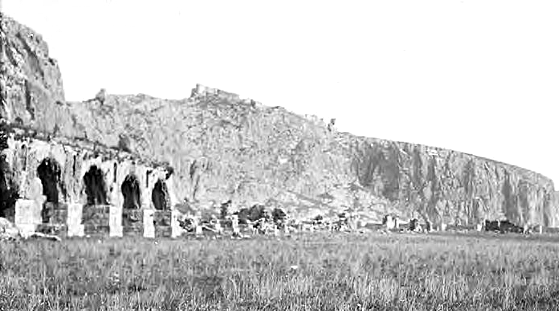
The features of this portion of the plain are the remains of the two gigantic aqueducts which supplied Anazarba with water when it was the great city of the district during the Empire, Cæsarea penes Anazarbum as Ptolemy calls it. note 5 It was very flourishing under the imperial favour and it was granted the rights of a metropolis. There is another underground aqueduct also, so the town was amply supplied with water. One of the aqueducts brings water from the source of the Sombaz where there are fine springs at the edge of the mountains.
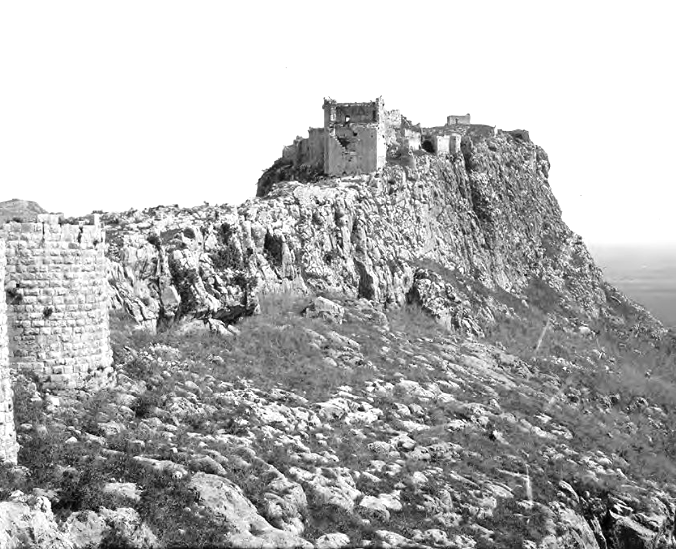
The appearance of Anazarba is most striking. The fortress crowns a high ridge about four miles long, reaching an elevation of 1000 feet, rocky, barren, and for the greater part of its extent inaccessible, arising in solitary grandeur out of the vast plain; being as it is ten miles from the mountains, its appearance of isolation is more marked than Sis and as a stronghold its importance must have been great. A few miles to the South East flows the Pyramus, the Sombaz and Savroun rivers unite just below, flowing on either side of it, therefore it is protected not only by its natural strength but by the two streams on either side of it. Wilbrand in his travels thus describes it: “A strong castle eight miles from Sis on a high mountain in the middle of the plain”. note 6 Leo II gave some fêtes here at which this canon of Oldenburg was present. The walls of the ancient town commence at the foot of the mountain and enclose a space of about one square mile; those which are now standing are of Saracen workmanship, but blocks of Roman masonry and inscriptions of the time of the Emperors are inserted into it. The sheer walls of the mountains are covered with rock cut tombs, sarcophagi and bas reliefs, none of them of a Pre-Roman period but all pointing to the importance of the place during the Empire.
The fortress which crowns the hill is entirely of Armenian structure and is still in excellent preservation, far superior to the ruins of Sis. In the centre of a large open space is a small chapel with a long Armenian inscription round it stating that it was built by Theodore or Thoros, the third king of the Roupenian dynasty. One side of this mountain is admirably protected by nature, offering a continuous line of precipitous cliffs 800 feet in height. Anazarba suffered severely from an earthquake in the reign of Justinian. He rebuilt it and the arch of triumph, which is still fairly preserved, was erected on the occasion. There is a curious rift in the mountain forming a gully or pass over to the other side, which was evidently, from inscriptions cut on the rock, used as a place of refuge in times of distress.
During our stay at Anazarba we put up in the wicker huts of a nomad tribe of Afshars who live within the ancient walls during the winter months; this gave us ample opportunity of studying their customs. When in the north of Persia, we passed a considerable time amongst this numerous tribe who inhabit the mountains anciently comprising the old kingdom of Media. note 7 Their origin and history would appear to be lost in obscurity. All that is known of them is that in 1508 this tribe, in conjunction with six others, succeeded in assisting Shah Ismael in his wars and obtained from him considerable privileges until their power became too great and Shah Abbas incorporated the Shah Sevan tribe (or friends of the Shah) to counteract their influence. The Afshars in Persia are practically independent under khans who dwell in their mountain fortresses and defy government interference. The nomads who penetrate into the Cilician plain are under the control of their aghas, who are responsible for their good conduct to the government.
Until recent years an Afshar chief called Khozan Agha ruled supreme in the district of Sis, holding the mountain passes and keeping the inhabitants in a perpetual state of terror; he was conquered after a long struggle extending over many years by the governors of Adana and the county is now comparatively safe to traverse, though certain Circassian tribes are ever on the look out to perpetuate small acts of brigandage if they can do so with impunity. In Persia the Afshars would appear to be of Kourdish origin from their names and propensities, while the Afshars to the south are much mixed up with Armenians, having old Armenian words in their dialect of Turkish and names of a distinct Armenian provenance. In Persia they talk Tatar Turkish but to the south their dialect is little different from that of the other nomads amongst whom they live. The Afshars with whom we dwelt during our stay at Anazarba were encamped just inside the ruined walls and had built themselves huts out of the reeds which crown the neighbouring marshes. Most of these miserable tenements were in a most dilapidated condition from the fact that the spring was near. When they go up to the mountains they set fire to their huts and then rebuild them the following winter, consequently they do not care to keep them in order. Most of them consist of two rooms with a partition in the middle; the floors are of mud and very moist in wet weather, which it unfortunately was during most of our stay at Anazarba, so that we had to sleep under waterproofs and umbrellas.
Large dogs, as large if not larger than St Bernards, are their only protection and are very savage. At night time they are trained to prowl around and give warning of the approach of any enemy. They cut the ears so that they may hear better. “Better shoot one of the children than one of their dogs” I was warned when threatening to shoot one if attacked.
The nights we spent in these huts were miserable and it would seem that the Afshars never sleep and all night long they are watching their cattle, driving them from their reed huts, which they were constantly trying to eat and no peace of any sort could be got. At early dawn the noise of the churning began and quiet only appeared to reign during the absence of the flocks at their pasturage.
The Afshar is quite a different individual to the Yourouk, or nomad, of the neighbouring mountains to the West. He is not so well built; he is swarthy, has a round and often hairless face and small, narrow eyes; a face which often reminds us of the Chinese type, and it would seem that he hails from very far away in the heart of Asia. At the neighbouring encampment of Hemita Kaleh the resemblance to the Chinese was even more strongly marked than at Anazarba. An Afshar without his fez, with the front part of his hair shaved close and left to grow long behind, with his yellow skin, high cheek bones and almond-shaped eyes, would pass very well for an inhabitant of the Celestial Empire. Many of the Afshars aspire to a great age. We were shown one who said he was 121 and could walk well, going up every summer to the yaelas, or mountain pasture, the only point, however, that seems certain is that this nomadic life is conducive to great old age and that longevity is common amongst them.
The women are fat and stumpy; some of them decidedly handsome. Down their backs they wear long plaits of hair to which they attach still longer additions made of cotton or silk and dyed to suit the colour of their hair, so at first sight it could appear that their plaits of hair hang down almost to their heels. note 8 On these false plaits they fasten odds and ends of silver ornaments and they call them ourmeh. Their faces are always unveiled, except a bride, who conceals her face for the space of a year and she is condemned to silence, like the custom is amongst the Armenians, until her first child is born. Most of the women have their noses bored and into the hole they put a clove, which puzzled us for a long time for it resembled a nail, the idea being, I imagine, to sweeten the breath.
They wear embroidered jackets and red drawers which come below their knees and they go about with bare legs and feet. Modesty seems to be a thing unknown amongst them, several times we saw women stark naked by a stream washing themselves and their clothes, and the presence of men in their vicinity did not appear to disconcert them in the least.
For fuel they use nothing but the reeds from the neighbouring marsh, which they put damp on to their fires and they go off like musketry, rather alarming at first in the darkness, for we never felt sure that we might not be disturbed by a band of Circassian robbers. In an adjoining encampment where reeds were not so plentiful they make tezek or dung cakes for fuel; the refuse of the stable is spread out in the sun, mixed with straw and water, and with naked feet the women, who are chiefly employed in the industry, may be seen trotting almost all day in this delightful composition until it has assumed the required consistency. It is then left to dry a little, when round cakes are made, or square blocks, and then it is stacked. New tezek is very objectionable to, from being decidedly odoriferous, but old tezek is not unlike peat.
The men of some of these tribes wear very pretty, loose blue jackets embroidered with gold and carry narrow-handled guns, beautifully chased and with the barrel decorated with six or seven bands of silver.
There are also some Bosdans or followers of Bosadan Oglou in the neighbourhood of Anazarba. This tribe would seem to be closely allied to the Afshars and come, I imagine, from the same stock. They are very like them in personal appearance. Their women wear the same costume, only that they have large gold circular ornaments at each ear and are altogether more lavish in the number of silver and other ornaments, which they contrive to fasten on to the ourmeh or false plait which hangs down their back.
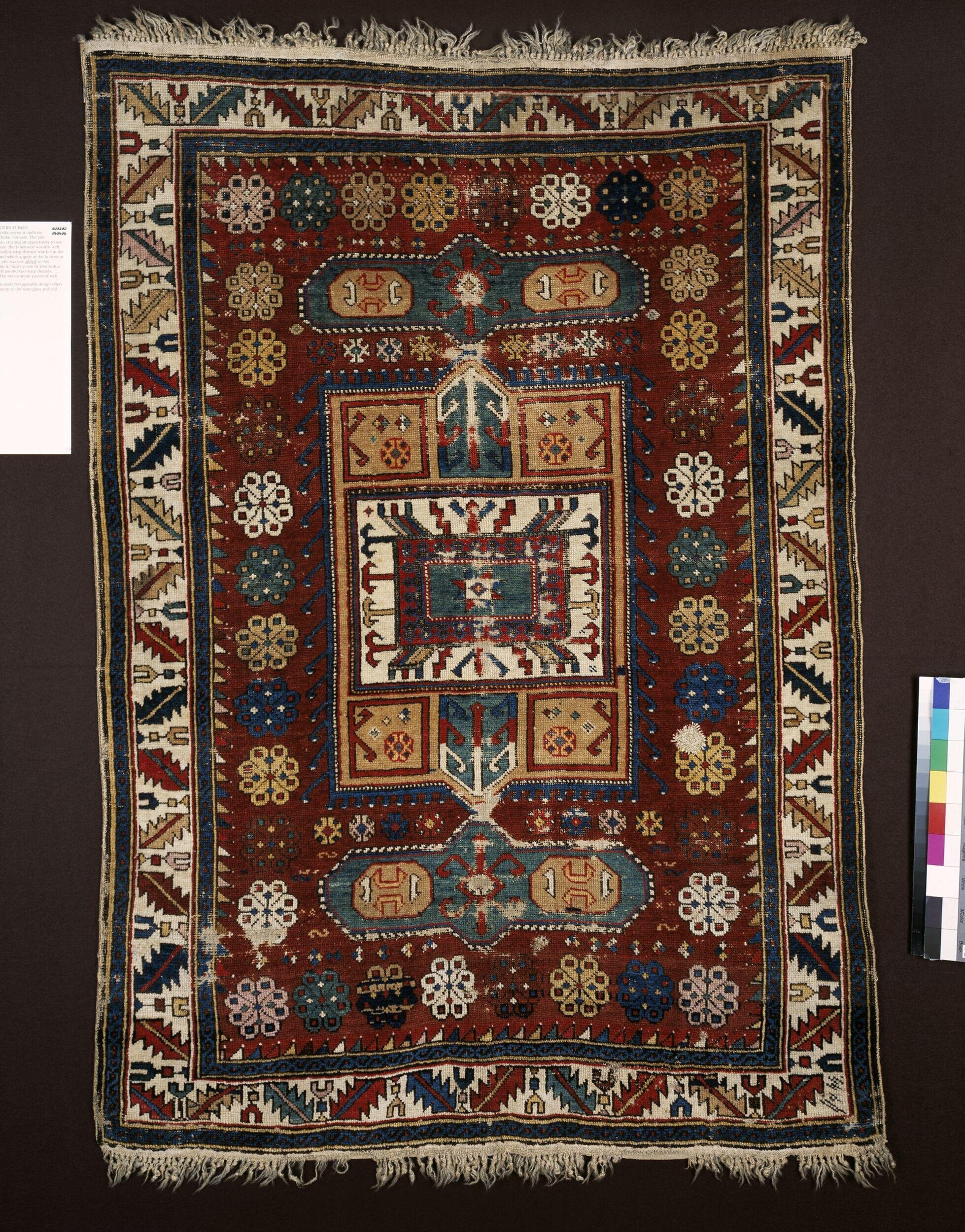
The women of these tribes are great workers and besides their milking and churning they contrive to turn out a great number of their gelims or course carpets, inferior indeed to the Karamanian carpets made by the Yourouks, but very effective when the patterns are elaborate and the colours well blended. In every wicker house is the loom and the hole in the ground where the legs of the women disappear to work the pedals of her instrument. By the Zeihan, the ancient Pyramus, which flows a few miles to the South-East of Anazarba, the tribe have great quantities of buffalos and rude carts with large round wheels made out of one piece of wood with the axle passed through. At Bodroum, where we again lived amongst Afshars for some days on the banks of the Pyramus. We found the houses a little more comfortable, being built out of wattle and bamboo and covered on the inside with pats of manure, which they whitewash and decorate with rude patterns in henna. Here the women wear a different costume, red leather shoes to keep off the snakes, red baggy trousers, blue skirt and red satin jacket, a fez bound round with lace, and splendid gold ornaments at each ear, and a frontlet of coins. Altogether, the Afshars of Bodroum appear vastly superior to those who live at Anazarba and are more stationary, only going to the neighbouring mountains for their summer pasture and not burning their houses when they go away, whilst those of Anazarba have their summer haunts far away in the interior, not far from Kaisariyeh.
The Afshars and tribes kindred to them are comparatively a peaceful race now, but the Circassians are the great robbers and dread of the neighbourhood, stealing cattle, women, and anything they can lay their hands on. They are great dealers in horse and breeders too, and ride fiery young steeds which soon distance them from any pursuit. All the marshy ground by the banks of the Pyramus is a perfect nursery for young horses and is covered with them for miles. The head bey of a neighbouring village, a settlement of Circassians, who came to pay us a visit whilst we were at Anazarba, had, I was told, 2000 horses for sale; this amount was, I have no doubt, greatly exaggerated but we saw for ourselves as we rode along the Pyramus a vast number of mares and colts.
The Circassian wedding is an interesting spectacle to witness. They are strictly exogamists and never marry amongst their own people, purchasing wives from another tribe of Circassians. The betrothal, consequently, and the arrangement of the sum to be paid by the husband is an affair of almost more importance than the wedding; it is, in fact, a sale conducted not in money but in mares or baitals as the standard of value. One camel = 5 mares and one mare = 20 sheep, and so on. As a sign that the contract is concluded a sheep is roasted whole and various other dishes prepared and the young Circassian girls play all sorts of practical jokes on the visitors before their departure. The wedding is comparatively a mild affair, the betrothal being the great matrimonial festivity amongst them.
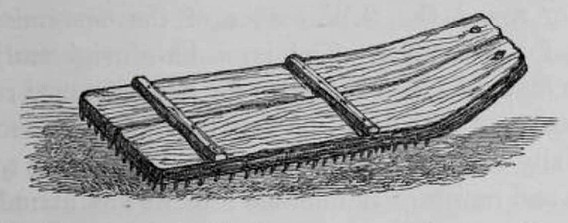
As to cultivation, there is very little of it to be seen in the North-East corner of the Cilician plain. Near Bodroum was saw some fields of wheat and the tools were primitive. The Roman bipalium with the crossbar, which is useful in helping them to drive it further into the ground, is still used by them as a spade, and the threshing board with flint stuck all over it below cannot be very different from the “new sharp threshing instrument having teeth” of Isaiah XLI. 15, note 10 and their sheep are all of the broad-tailed tribe common to the East, tails which the sheep have immense difficulty in carrying and though I never actually saw one, I quite believe the story that the shepherds sometimes make little wooden carts to assist the sheep in carrying its heavy appendage. I always looked on this as a traveller’s story till I saw the tails on the Cilician plain and heard that they often provide this convenience for their flocks. In Lev. 111. 9 the directions laid down by Moses must have referred to sheep of this description, and Herodotus Bk III, Ch. 13, where he speaks of sheep with tails “one cubit in width” was not far wrong in his calculation. Moreover, we see them depicted for us on the bas reliefs of Persepolis and doubtless the sheep of the nomads are descendants of these. The fat is very useful in cooking and is an excellent substitute in these wild parts for lard, far preferable to the rancid butter with which we were generally provided for cooking purposes.
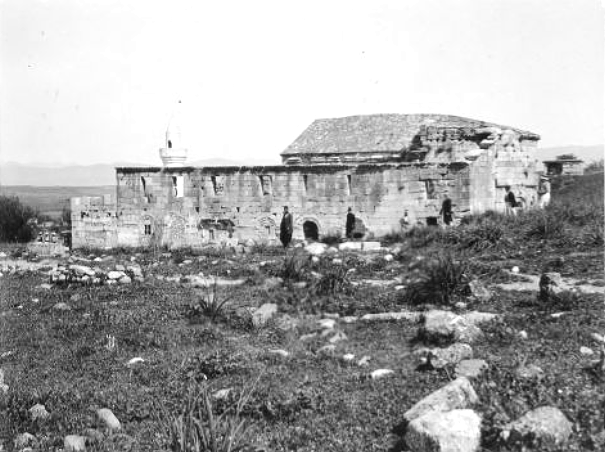
On leaving Anazarba we rode for several hours Eastward across the plain, crossing the Sombaz by a bridge and the Savroun by a ford and reached Kars Bazaar, a place full of ruins on a gentle eminence above the river at the foot of the mountains. note 11 In a cottage we found a lovely tessellated pavement with an inscription stating that it had been put down by the fullers’ guild. In early Christian times this must have been a spot of note, a monastic building, now a mosque, being of 500 A.D., but we found no inscriptions to guide us to its name, but two points lead me to believe it was Flaviopolis, firstly, from coins we learn that it was on a river, and secondly it was the first station on the road eastwards after Anazarba.
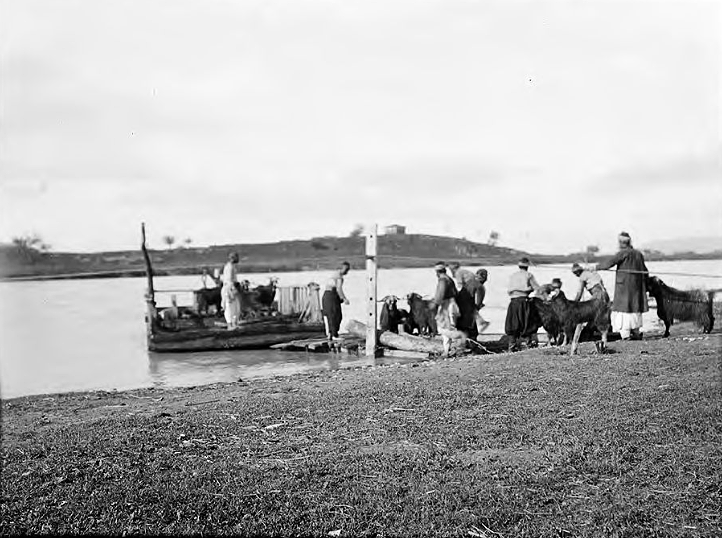
Hearing of extensive remains at a spot called Bodroum about 5 hours distant from Kars Bazaar, the name of which had not been identified, we determined on visiting them and devoting some time to the thorough exploration of the district. About four hours to the South-East of Kars we reached the banks of the Zeihan, the Pyramus of antiquity, a rapid, muddy stream which is continually altering its course and washing away the sandy banks on either side so that a ferry which connects the main road has to be moved from place to place as the necessity requires. The mountains come right down to the stream at a spot called Hemita Kaleh. note 12 On a rock is situated a medieval castle, which must have entirely commanded the right bank. Bodroum is almost three miles from this spot further up the stream and shortly after the Zeihan has emerged from the defile through which it makes its way to the Cilician plain from its sources in the Taurus range. The ruins are situated almost three-quarters of a mile from the river and cover an enormous extent of ground. The ancient acropolis crowned a rock at the extreme edge of a narrow spur of mountains projecting into the centre of the town. A cutting 40 feet deep behind the acropolis separated it from the spur, offering road communication between the East and West portions of the ancient city.
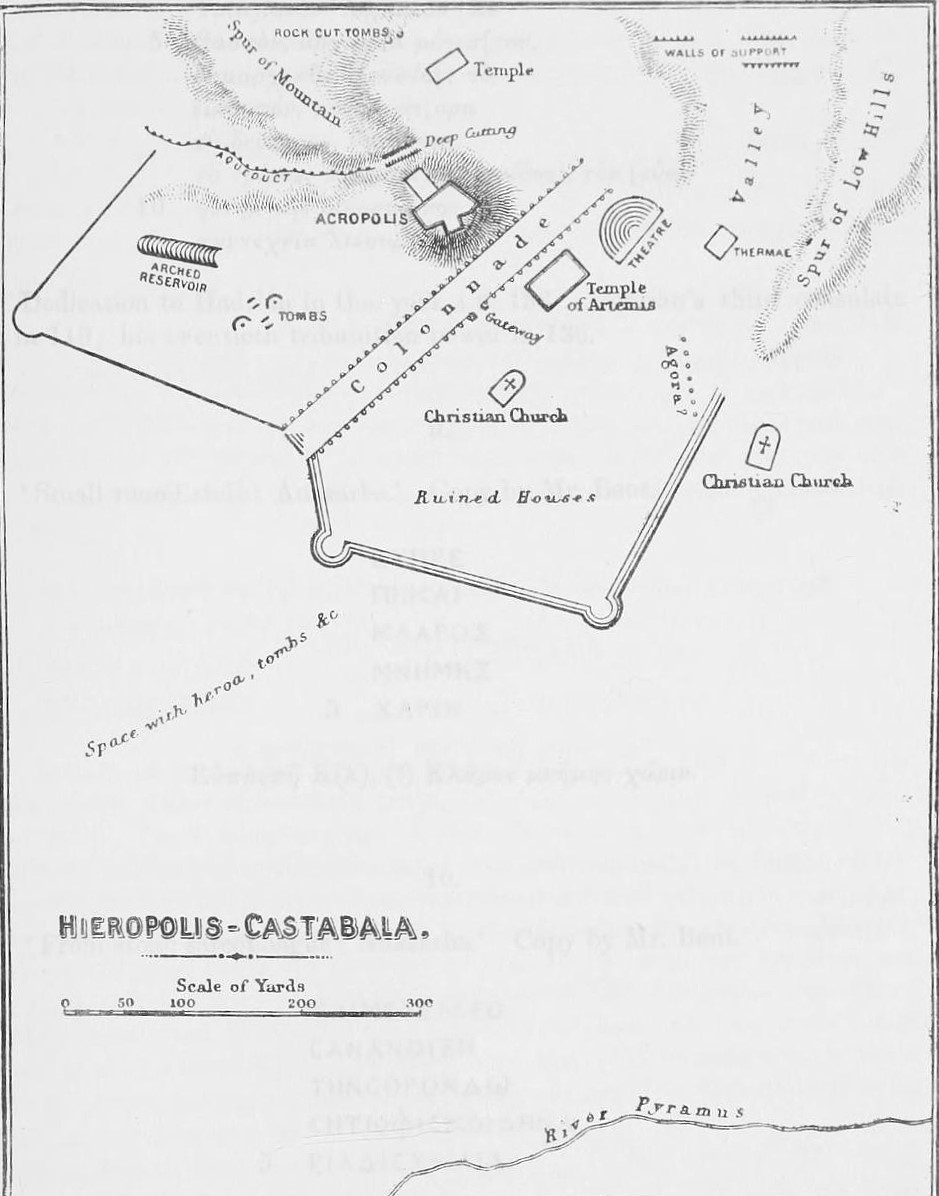
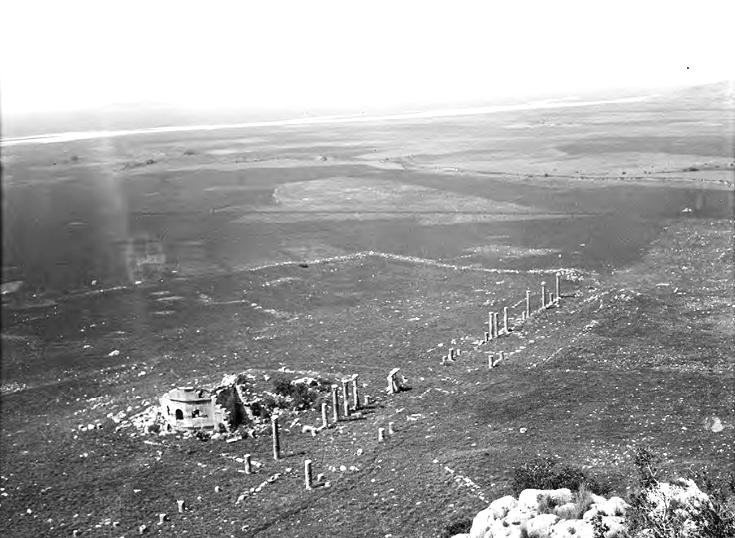
The most conspicuous feature of the place is the row of columns of red and blue conglomerate starting from the principal gateway, with Corinthian capitals and Ionic bases, similar, though less ornate, to those of the colonnade at Pompeiopolis at the coast near Mersina. There is an architectural feature about these colonnades – Pompeiopolis, Hierapolis and at Olba – which connects them with the colonnade at Palmyra leading to the Temple of the Sun, namely the bracket inserted in the drum of the column for carrying a statue and inscription which I do not know of elsewhere. note 13
The road space between these columns was 35 feet and the columns were erected at regular intervals of eight feet. This striking colonnade extended for a distance of 320 yards and apparently terminated at the back of the ancient theatre. Each row had about 78 columns as far as I could calculate, but it was difficult to arrive at the exact number as there are only 30 now left standing. The theatre is very large, the scena being 62 feet in length but it is much dilapidated. Besides these remains there are ruins of many public buildings. One apparently formed a stadium, another the agora, another the thermæ in the valley below, and not far from the colonnade are the ruins of a large temple: an aqueduct cut in the spur of rocks behind the town supplied the place with water from a source about six miles distant. Many fine tombs and heroa note 14 are dotted over the flat space sloping towards the Pyramus and there are the ruins of three Christian churches built out of the more ancient remains still left standing.
For a considerable time we were unable to come across anything to assist us in identifying the ancient name of this fine city but after devoting several days to a systematic turning over of likely stones we at last succeeded in collecting twelve inscriptions, note 15 from which we were able to restore not only the ancient name but also to establish many points of interest in connection with the place.
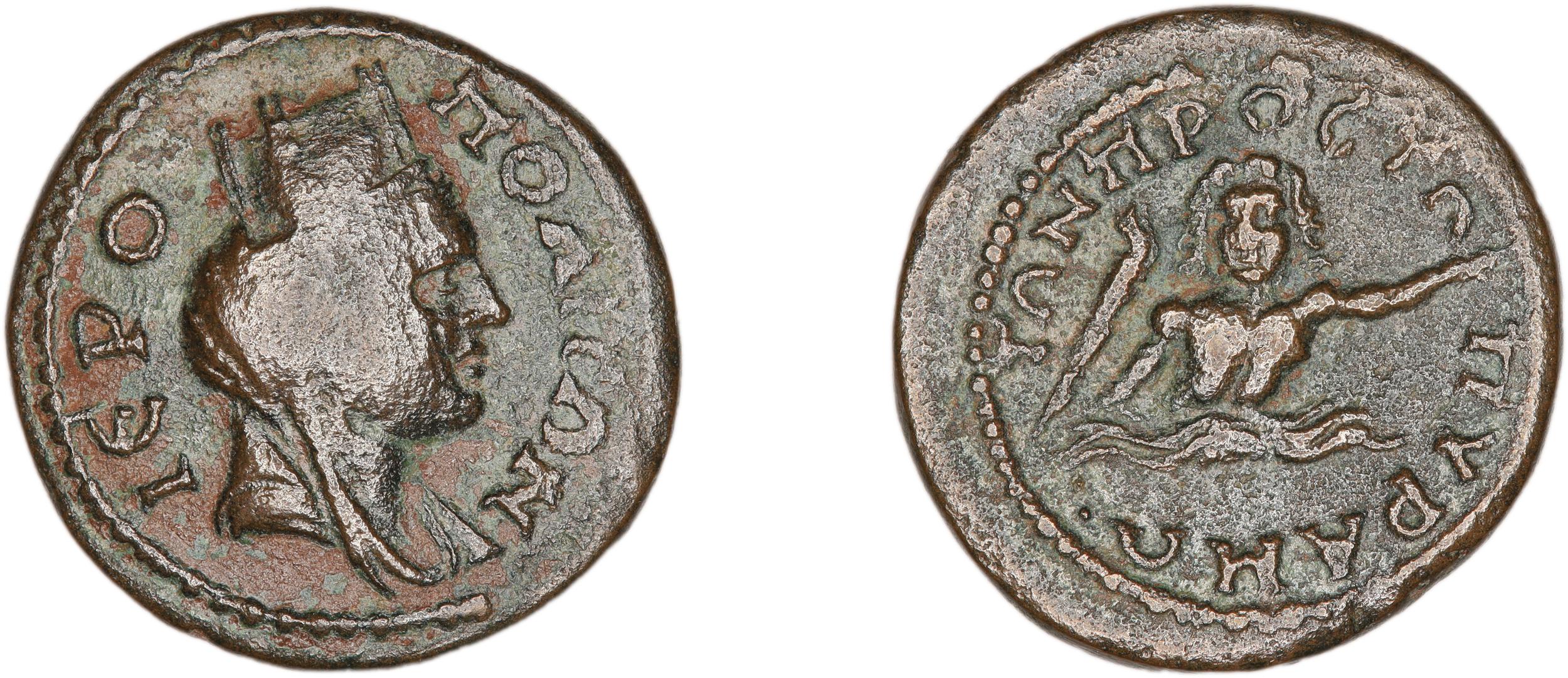
Four of these inscriptions were from dedicatory stelai and each began with the formula О ΔНМОΣ О ІEPOПОΛІТΩN, satisfactorily proving to us that this place was called Hieropolis in ancient times. On referring to numismatics we learn that this place was called by the double name of Hieropolis-Castabala, or “Hieropolis near the Pyramus”, with the river represented on them as a swimming figure with an aquatic bird swimming beside him and carrying a torch (πύρ). Other coins have the head of Artemis and the letters IEP (Imhoof-Blumer). note 16
This is what the geographer Strabo says about this place: “Two provinces only have cities. In Tyanitis is Tyana …. at a little distance from this city are Castabala and Cybistra, towns which approach still nearer to the mountain. At Castabala is a temple of Artemis Perasia where it is said the priestesses walk with naked feet unhurt upon burning coals. To this place some persons apply the story respecting Orestes and Artemis Tauropolos and say that the goddess was called Perasia because she was conveyed beyond the sea.” note 17
Two of our inscriptions conclusively prove that the Castabala which Strabo describes was here. One had on it the words ӨЕА ПЕРAΣIA, another found near the temple and the colonnade told us that an honorary statue had been put up “out of the revenue of the divine Perasia”. Furthermore, Ptolemy gives us further assistance in our identification by adding as a note to Hieropolis-Castabala “Perasia prius dicta”. note 18
Pliny’s statement that Castabala was a city of Cappadocia has led some geographers to think there were two Castabalas where Artemis Perasia was worshipped at some distance from this spot, but our evidence from epigraphy, substantiated by Strabo and Pliny, must conclusively place Hieropolis-Castabala here on the Pyramus and relegate the Cappadocia Castabala to the realms of uncertainty, and furthermore place Tyana and Cybistra in the locality also. Pliny’s geography is not nearly so reliable as that of Strabo and Ptolemy, and Cappadocia was under the Emperors a somewhat elastic term when the areas of the different eparchies were constantly being changed. Groskurd in his translation of Strabo has based an argument on an old Latin edition of Strabo that for Perasia should be read Persica, quite indeed at variance with the context; the argument in question was to maintain the Persian influence of the religion of Asia Minor but now our two inscriptions with the word Perasia upon them show that the current text is correct and rob the German scholar of one of the principal props to his argument. note 19 Several other points of interest are brought to light by our inscriptions, which I have not space to allude to here but I will name two. Out of the revenues of the temple of Artemis Perasia a complimentary stele note 20 was put up to a Roman legate Roscius Pompeius Falco governor of Cilicia, well known previously as a governor of Britain, of Lycia, Pamphylia Judæa and Asia Minor under Trajan and Hadrian, thus forming an interesting historical link between England and Cilicia in these early days. note 21 The second point of interest with regard to Hieropolis-Castabala refers to the itinerary of Alexander the Great. From Soli (Pompeiopolis) by the coast he marched to Pyramus, which he crossed at Mallus and reached Castabala on the second day and sent Parmenio forward to reconnoitre the pass (Curtius iii.7). note 22
Unfortunately, both the Antonine and Jerusalem itineraries are confused on this point, only speaking of a place Catabolo, and most travellers have sought to place Castabala on the coast between Ægæ and Issos. But without any epigraphical evidence this site was, of course, mere conjecture and I think the site of Hieropolis-Castabala may be conclusively taken to be the one Alexander visited for the following reasons. Firstly, it is not in the least likely that there would be two towns of the name Castabala within a space of 20 miles, and, secondly, Hieropolis-Castabala was a place of great strategical importance, being on the ancient main road from Anazarba to the defile behind Osmanieh, which is just across the Pyramus. It must, therefore, have been extremely important for Alexander to ascertain that no enemy from that direction was behind him and from here Parmenio could easily be sent to reconnoitre the pass through which the main road passed. From Castabala, Alexander, having made sure of the country behind him, could safely drop down to the plains at Issos from this point.
I think we may clearly say that the two problems – aliae Castabalæ [sic], the one in Cappadocia and the one by the coast, may be scratched out of the map and Hieropolis-Castabala on the Pyramus, the modern Bodroum, and certainly one of the most important towns of Eastern Cilicia in antiquity, inserted in their stead. Much of interest would doubtless be brought to light by careful exploration behind Osmanieh, a place which did not exist till 15 years ago, when the robbers who haunted the pass behind it were put down after making the borderland between Syria and Cilicia unapproachable. Years of war resulted in their being quelled and obliged to settle in Osmanieh. note 23
J. Theodore Bent, 13 Great Cumberland Place, W.
Footnotes
Return from Note 1
Return from Note 2
Return from Note 3
Return from Note 4
Return from Note 5
Return from Note 6
Return from Note 7
Return from Note 8
Return from Note 9
Return from Note 10
Return from Note 11
Return from Note 12
Return from Note 13
Return from Note 14
Return from Note 16
.
Return from Note 17
Return from Note 18
.
Return from Note 19
Return from Note 20
This sentence was one of Bent’s afterthoughts; he pinned it to page 1 of his MS on a small square of paper.
Return from Note 20
Return from Note 22
Some background to the Bents in Cilicia, Türkiye, in 1890
The RGS Manuscripts
Bent submitted manuscripts to the Royal Geographical Society, London, covering the two parts of the couple’s Cilician adventures in 1890. One ‘Explorations in Cilicia Tracheia’ was read out and published by the RGS in 1890, but the other, the topic of this present article, was not. The paper was instead read by Bent, on 8 September 1890, at the Leeds meeting of the Geographical Section of the British Association. This is referenced in the RGS Proceedings (Vol.12, 1890, p. 671), which notes that “This paper will be published in a subsequent number of the ‘Proceedings’”. This never happened – although Bent did use sections of it in some other articles that year (see the list of Bent’s writings on the region below) – one reason perhaps being that the explorer was imminently to become even busier than usual. A summons from Cecil Rhodes that Autumn made him drop everything and he and Mabel spent the last months of 1890 preparing for their campaign to Great Zimbabwe; the focus of their lives was to change radically… far from Asia Minor.
Cilicia, 1890
Having spent their 1887 season excavating on the then Turkish island of Thasos, the Bents hoped to soon return, but were thwarted by Istanbul museum director Hamdi Bey. Instead, for their 1888 explorations, they hired a fine schooner and drifted at ease from the Cyclades to Kastellorizo and back. One must add that by this time the celebrity explorers were regularly running into difficulties with the Turkish authorities (more on this later) and so for 1889 they took themselves off to Bahrain, which was under ‘British Protection’, i.e. they could dig at will, riding home part of the way, south-north, through Persia… as you do.
The cruise along the Turkish coast was so enjoyable, and promising archaeologically, that they returned for 1890. Essentially, what drove the Bents to southern Türkiye again was the challenge of certain ‘lost’ classical sites. On their way out in early 1890, in Athens, Mabel sees a “circular from the Hellenic Society requesting us to subscribe to an Expedition of exploration in Cilicia, to be headed by Mr. Ramsay [one of the regional specialists, Sir William Mitchell Ramsay] to start in June. ‘It is most desirable that the site of Olba should be discovered and identified.’ So I declared that we would look for Olba too.” (Mabel Bent 2006: 274). Typical Mabel this.
In early 1890 Ramsay was in the final stages (having it seems lost the initial draft – his ‘sketch’) of getting his great work The Historical Geography of Asia Minor (1890) to press, it being based on a series of arduous treks in the region in the mid 1880s. The work’s opening ‘General Principles’ section is still a commanding read. It seems Ramsay was holding off in part to see what the Bents might discover. He added a final note (p. 22) in his prologue after Bent had published (and some academic rivalry can perhaps be adduced): “… Mr. Bent discards Kastabala of Cappadocia entirely, and infers from Strabo that Tyana and Kybistra were in Cilicia near Kastabala. I adhere to all that I have written: my opinions were in print months before Mr. Bent travelled, and I consider them confirmed entirely by his brilliant discoveries.” Prof. Ramsay gives no source for his ‘opinions’ and neither, oddly, does Bent refer to them in his article. The site is indicated on Ramsay’s map (1890: 330) and speculated upon in his text (1890: 343-3). In May 1886, Ramsay read the first sketch of it before the RGS, and he tells us (1890: 3) “[it] was practically complete… when I read considerable extracts from it before the Aberdeen branch of the Royal Scottish Geographical Society [27 February 1888].” Neither of these presentations seem to have been published.
On 20 December 1890, Bent writes from his townhouse in Great Cumberland Place to Henry Walter Bates at the Royal Geographical Society: “Dear Mr Bates, [is] Ramsay’s book on Asia Minor out yet? I am most anxious to see an early copy for the completion of my Olba work… Our time is getting short now for other than Mashonaland work. Yours very truly, J. Theodore Bent.” (Royal Geographical Society Archive).
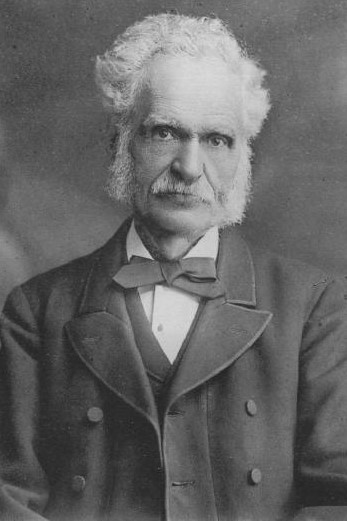
(H.W. Bates (1825-1892) was at that time in the last years of an extraordinary life and the abruptness of Bent’s letter jars somewhat – after all, this is the naturalist who spent 11 years in the Amazon region, seven as companion of Alfred Russell Wallace. Bates’ account, The Naturalist on the River Amazons (1863), is treasured. He spent his latter years as executive secretary at the Royal Geographical Society, responding to such letters as Bent’s. Wallace’s obituary of him (Nature 45(1165): 398-9), according to his Wikipedia entry, laments that “confinement and constant strain” of “mere drudgery of office work” for the Royal Geographical Society had with “little doubt… weakened his constitution and shortened a valuable life”.)
Olba was identified (discovery and identification being different achievements) in western – ‘Rough’ – Cilicia. The region inland from the south-western coast of Türkiye was divided in ancient times: to the west, Cilicia Trachea (‘rough’ or ‘rugged’), a mountainous region bounded by Mount Taurus; and to the east Cilicia Pedias (‘flat’), with its rivers and vast plains, not all fertile. Historically, the importance of Cilicia lay in its position either side of a great highway, accessing the East, which ran down from the Anatolian plateau to Tarsus and on through Syria into Asia and northwest along the coast to the Bosphorus and Europe. This highway passed through the dreadful gorge of the ‘Cilician Gate’ (and hence the region’s strategic importance when invaded by Darius, Alexander, et al.
The Bents and their considerable amount of gear, including Mabel’s cameras and image processing materials (see below), arrive at the port of Mersina/Mersin, their gateway to the region, on Monday, 3 February 1890 -“Very soon the porters bearing the 23 packages arrived. They were a wild looking lot of things, stove, table, chairs, beds, etc., and we had these to unpack and rearrange everything. I did not go out all day.” (Mabel Bent 2006: 276). Mabel Bent’s Chronicle, from which all her quotations here are taken (see references), helps us put approximate dates to the couple’s 1890 trek; it can be divided into three phases: (1) From Mersin, a first exploration of the Lamas region; (2) the journey via Sis to the site of Hieropolis-Castabala; and (3) a second attempt at the Lamas and the successful identification of Olba.
On the voyage out, the couple, arriving at Patras in the last week of January 1890, transferred to Athens, where they were joined by their regular dragoman, the Anafiot Manthaios Simos. Once ready, they then embarked from Pirea on Friday, 31 January for Smyrna, catching another boat soon afterwards which took them to Mersin, far south down the Turkish coast, arriving late Monday, 3 February. Having rested, they then rode northwards along the coast to access the Lamas Valley, and the Olba region. Following a furious and potentially dangerous contretemps with the governor of Silifka (21 February), the Bents, wisely, decide to postpone their work in the area and return to Mersin (26 February 1890).
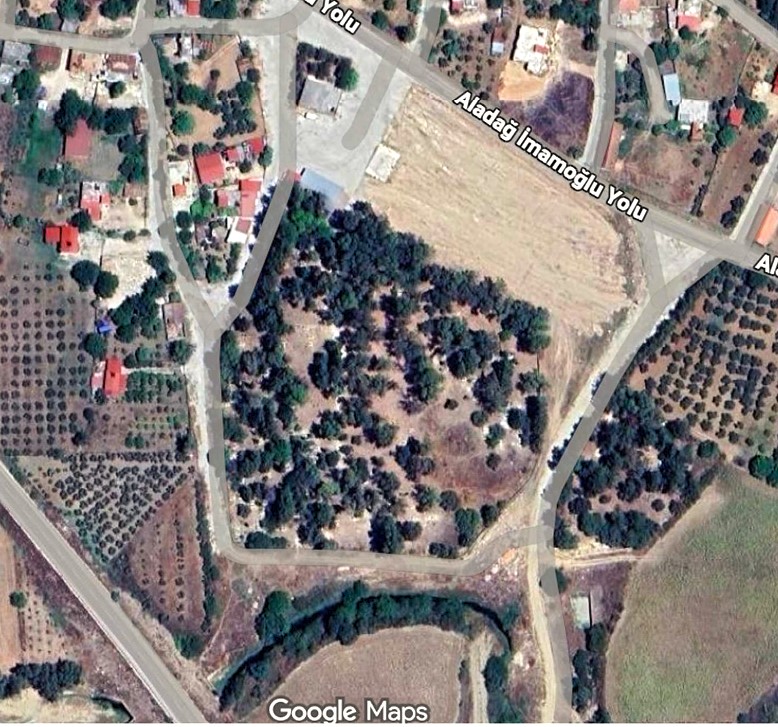
The celebrity explorers next head north-east, via Tarsus and Adana, to Sis (modern Kozan), reaching there on 6 March. They were obliged to spend a night on the road some 25 km south-west of Sis, as Mabel records (2006: 291-2): “We had to leave the road about a mile to reach a little village (Sarageshed)… We passed through a horrid cemetery… I was quite worn out and aching with fatigue. [The next day we] had to ride 6 hours to Sis… I flung myself on the ground with my head on my little camera and was very nearly asleep when Theodore’s voice, sounding very far off, invited me to eat a bit of cake with some wine, all we had, that we might not stop again.” The khan at modern Saygeçit (west of İmamoğlu) in which they camped no longer exists, but the ‘horrid cemetery’ clearly shows on Google Maps. (The occasions over almost 20 years of travel when we hear Mabel refer to exhaustion are not worth the bother of counting.) We can make allowances, therefore, when she adds: “Sis is one of those odious places which hide themselves behind mountains and round corners till the last minute…” (2006: 292).
A few days later (10 March), the party rides south some hours to the Afshar settlement at Anazarba (Anazarbus). (Nearly 20 years later Gertrude Bell is to visit the same site, but, disliking Mabel, she makes no mention in her diaries of the Bents; her photographs, however, are spectacular and several grace these pages. Mabel was never so successful with her photography, her ‘little’ camera has just been referred to. For this topic, see later.) The Bents were there three days investigating, living in a traditional reed hut, before (13 March) making their way east the short distance to ‘Kars Bazaar’ (modern Kadirli) for a two-day stay. Here, around the evocative remains of Ala Camii, Bent uncovers one of the mosaics that are now such a feature of the area, and is the first to make the suggestion that the site is ancient Flaviopolis, an identification now generally accepted. On 15 March they ride, via Hemita Kaleh (Hemite Kalesi) to their primary target, the extensive remains at ‘Bodroum/Boudroum’ (c. 2.5 km north of modern Kesmeburun), which Bent identifies as Hierapolis-Castabala. The couple spend four days here, leaving on Wednesday 19 March, reaching Mersin again, via Tarsus, on 22 March 1890. At Tarsus they make the acquaintance of eminent orientalist Dr Paul G.A. Schröder (1844-1915), en route from Beirut, and the only scholar they encounter on this trip (Mabel Bent 2006: 304).
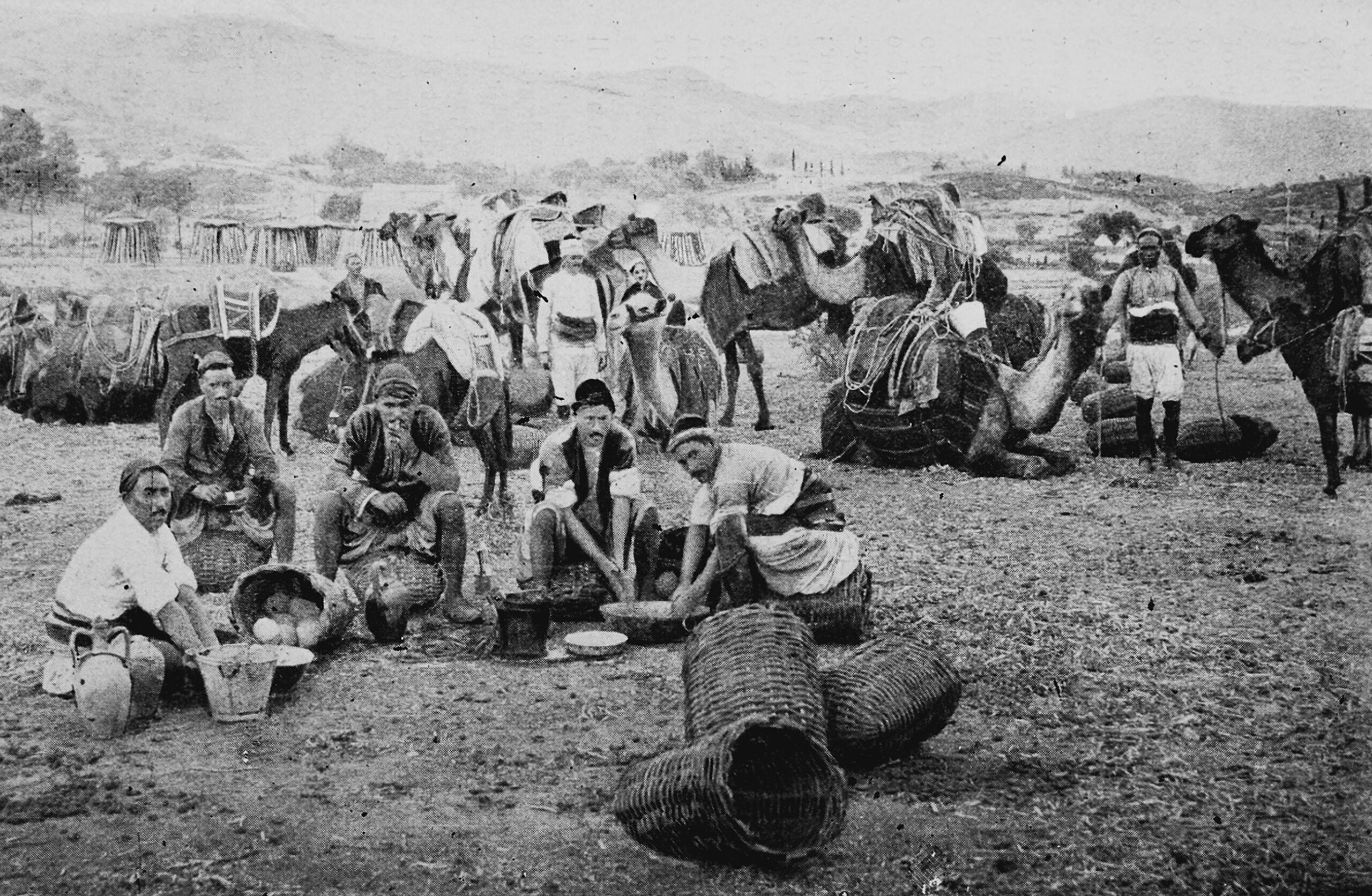
Refreshed, the group begin a second attempt at identifying the extensive remains of Olba (Uzuncaburç), with monuments spaced over several kilometres, up the Lamas Valley, arriving in the heart of the complex on 28 March; their success there obliges even the gruff David Hogarth (1893: 654) to admit that the Bent’s Olba discoveries amounted to ‘a veritable Pompeii, many miles in extent’. (Bent’s highly unscientific approach to excavating in the region has provided another occasion for critics to deplore his methods.) In all, the Bents were nearly three weeks on this important part of their 1890 expedition, rough-camping among Yoruk tribes in this remote region, not returning to Mersin until 17 April. Fully recovered, in the company of local ex-pats, Mabel writes: “on Sunday afternoon [27 April] we said farewell to our kind entertainers” (Mabel Bent 2006: 319). Various steamers then returned the Bents to England by the second week of May 1890.
Unbeknownst to the explorers, the abovementioned issue with the governor of Selefka had developed so seriously that the HBM Consular staff at Adana wrote on 9 April asking them to curtail their activities (local officers had again been monitoring their activities and reported back) (Mabel Bent 2006: 308 ff). Mabel confides to her diary at the end of April: “But on our return to Mersina we found a letter, which it had not been possible to forward to us, which would have done away with all the good of our leaving England” (Mabel Bent 2006: 320). Had this letter reached the Bents in the wilds of Uzuncaburç they would have had to abandon their mission forthwith; they were extremely lucky not to have been seized by the Turkish authorities on the spot.
Private – Adana, April 9, 1890.
Dear Mr. Bent,
The Governor General, having received information that you are revisiting the same places you had already visited some time ago on the road to Selefka, and that you are taking photos or plans of the various places, requests me to make you acquainted with the fact that the taking of photos or plans of the places is not allowed without the special permission of the government.
His Excellency therefore requests me to invite you in a very polite manner to discontinue from taking photos, etc., as above mentioned. Complying with His Excellency’s request, I ask leave to add that it would be better if you came back to Mersina in order to avoid any possible troubles with subaltern officials.
The best way to continue your scientific investigations unmolested is, in my opinion, to request His Excellency, Sir William White, to obtain for you from the ministry at Constantinople the required permission. [signed] N.J. Christmann.

By way of a ‘PS’, one might add that Bent’s problems with the Sublime Porte date from 1883, when, after visiting Chios, Bent criticised the authorities for their treatment of the islanders following a series of disastrous earthquakes – they neither forgot nor forgave. Christmann might have been more relieved had he known that of all Mabel’s photographs of the Cilicia expedition, only two prints have surfaced, only a few processed images appeared in Bent’s articles (see references below).
References and further reading
Essential for the wider region is E.J. Davis, Life in Asiatic Turkey: A Journal of Travel in Cilicia, etc…. (London, 1879), an account of his travels in 1875, and surely kept in one of the Bents’ saddlebags as they traversed the same area. A travel writer of real skill, Davis’ account is still an evocative read. See also, e.g., Michael Gough, ‘Anazarbus’, Anatolian Studies, Vol. 2 (1952), pp. 85-150 and two publications by Richard Bayliss, ‘The Alacami in Kadirli: Transformations of a Sacred Monument’, Anatolian Studies, Vol. 47 (1997), pp. 57-87 and Provincial Cilicia and the Archaeology of Temple Conversion (British Archaeological Reports International Series 1281), Oxford, 2004. Also The Bents at Olba, Spring 1890.
Mabel Bent 2006. The Travel Chronicles of Mrs J. Theodore Bent, Vol. 1 (Greece and Türkiye). Oxford: Archaeopress.
Mabel Bent, My Seventh Chronicle: Rugged Cilicia 1890 (digital scan of Mabel Bent’s original 1890 notebook in the archive of the Hellenic Society, London).
Theodore Bent 1890. ‘Recent Discoveries in Eastern Cilicia’. The Journal of Hellenic Studies, Vol. 11, 231-54 (includes E.L. Hicks, ‘Inscriptions from Eastern Cilicia’).
David George Hogarth 1893. Modern and Ancient Roads in Eastern Asia Minor, co-authored with J.A.R. Munro (Vol. 3.5, Royal Geographical Society Supplementary Papers). London: John Murray. (Hogarth was another lion of the region with a distinguished career. His relationship with the Bents was mixed. He followed them over certain routes a little later in 1890, making several references and classifying (p. 654) their Olba discoveries ‘a veritable Pompeii, many miles in extent’.)
Victor Langlois 1863. Le trésor des chartes d’Arménie, ou, Cartulaire de la chancellerie royale des Roupéniens : comprenant tous les documents relatifs aux établissements fondés en Cilicie par les ordres de chevalerie institués pendant les Croisades et par les républiques marchandes de l’Italie, etc. Venice: Typographie Arménienne de Saint-Lazare.
W.M. Ramsay 1890. The Historical Geography of Asia Minor. London: John Murray.
Ali Nadir Zeyrek, Hierapolis-Castabala: The Urban Development in A.D. 1st to 3rd Centuries (unpublished PhD dissertation, University of Bologna, Italy. A relatively recent synthesis and analysis).
N.M. Yar and C. Küçük 2025. Kadirli Ala Mosque Mosaics and Museum, in R.A. Castanho, T. Pivac and A. Mandić (eds) Legacy and Innovation (CST 2023. Advances in Science, Technology & Innovation). Cham: Springer. https://doi.org/10.1007/978-3-031-59325-3_4
Related articles by Theodore Bent:
1883
1888
- ‘A Piratical F.S.A.’. [the Turkish coast] Cornhill Magazine, Vol. 58 (11), 620-35.
- ‘Discoveries in Asia Minor’. The Journal of Hellenic Studies, Vol. 9, 82-7.
- ‘Hamdi Bey’. Contemporary Review, Vol. 54 (July/Dec), 724-33. [Reprinted in Littell’s Living Age, Vol. 179 (1888), 613ff]
- ‘Three Ancient Cities on the Coast of Asia Minor’. Athenæum, Issue 3161 (May), 671 (Kasarea, Lydae, Lissa).
1889
- ‘Inscriptions from Theangela’. [near Etrim, Türkiye] The Classical Review, Vol. 3, No. 5 (May, 1889), 234-237 [E.L. Hicks, lead author].
- ‘Inscriptions from Casarea, Lydae, Patara, Myra’. The Journal of Hellenic Studies, Vol. 10, 46-85. [With E.L. Hicks]
1890
- ‘Cilician Symbols’. The Classical Review, Vol. 4 (7) (Jul), 321-2.
- ‘Explorations in Cilicia Tracheia’. Proceedings of the Royal Geographical Society and Monthly Record of Geography, Vol. 12 (8) (Aug), 445-63.
- ‘Notes from Cilicia’. Athenæum, Issue 3258 (Apr), 443.
- ‘Recent Discoveries in Eastern Cilicia’. The Journal of Hellenic Studies, Vol. 11, 231-54 (includes E.L. Hicks ‘Inscriptions from Eastern Cilicia’).
- ‘Tarsus Past and Present’. Blackwood’s Magazine, Vol. 148 (Nov), 616-25. [Reprinted in Littell’s Living Age, Vol. 187 (1890), 569ff]
- ‘The Site of Hieropolis-Castabala’. Athenæum, Issue 3273 (Jul), 104-6.
- ‘The Topography of Olba’. Athenæum, Issue 3267 (Jun), 742-4.
- ‘Notes on the Armenians in Asia Minor’. The Journal of the Manchester Geographical Society, Vol. 6, 220-22.
1891
- ‘A Journey in Cilicia Tracheia’. The Journal of Hellenic Studies, Vol. 12, 206-24.
- ‘Amongst the Cage-Dwellers’. Murray’s Magazine, Vol. 10 (57) (Sep), 348-61. [Reprinted in Littell’s Living Age, Vol. 191 (1891), 297ff] (S/E Türkiye, the Afshahs/Afshars of ‘Anazarba’, ‘Kars Bazaar’, ‘Boudroum’, etc.)
- ‘Inscriptions from Western Cilicia’. The Journal of Hellenic Studies, Vol. 12, 225-73 [by E.L. Hicks, based on Bent and others]
- ‘Archæological Nomads in Rugged Cilicia’. Blackwood’s Edinburgh Magazine, Vol. 149 (Mar), 377-91. [Reprinted in Littell’s Living Age, Vol. 189 (1891), 298ff]
- ‘A Secret Religion’. [Tarsus, Türkiye] Cornhill Magazine, Vol. 63 (16) (Jan), 65-74.
- ‘The Ansairee of Asia Minor’. The Journal of the Anthropological Institute of Great Britain and Ireland, Vol. 20, 225-6.
- ‘The Yourouks of Asia Minor’. The Journal of the Anthropological Institute of Great Britain and Ireland, Vol. 20, 269-76.
1892
- ‘The Two Capitals of Armenia: I – The Patriarch of Sis’. The Eastern and Western Review, Vol. 1(4), May, pp. 137-140 [in double-column, large format, with Arabic version also].
- ‘The Two Capitals of Armenia: II – The Patriarchate of Etchmiazin’. The Eastern and Western Review, Vol. 2(1), June: pp. 6-13 [in single-column, small format, no Arabic version].
1896
The Bents’ acquisitions from Cicilica (1890) in the Pitt Rivers Museum, Oxford
Bent read History at Wadham College Oxford in the early 1870s and was happy to donate (or sell) to the Pitt Rivers Museum (now only a few hundred metres up the road from Wadham) certain items the couple collected on their travels. Broadly speaking, traditional artefacts they collected in the 1880s were offered to the PRM, whereas the majority of all acquisitions from the 1890s went to the British Museum (e.g. the Great Zimbabwe material, 1891), apart from a couple of objects from the couple’s last trip (Socotra 1897) that found their way to the PRM after Bent’s death in May 1897.
From the Bents’ explorations within Cilicia (Türkiye) in 1890, the PRM has the following objects (not often on display), some can be given a possible provenance. (The items are not illustrated here, but may be seen via their site):
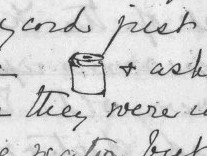
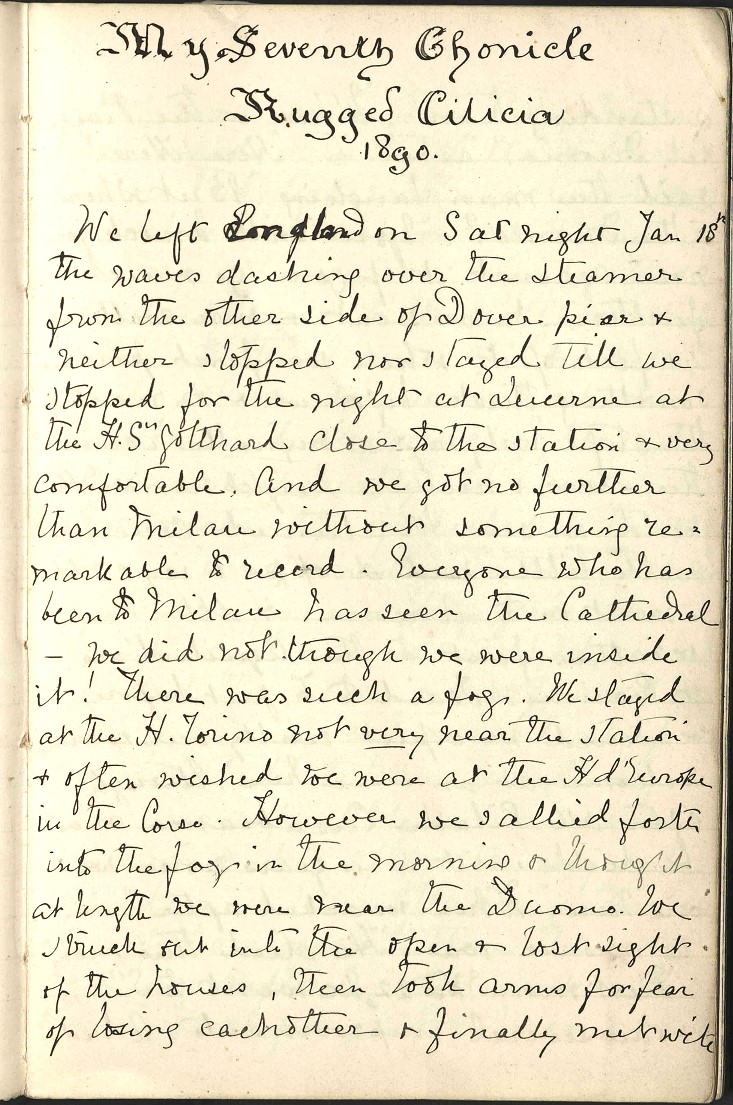
PRM1891.4.2.1: Wooden mortar/vessel decorated with concentric and incised swirls. A vertical carved flange runs down one side and is perforated. Shown on the same page is its large, leather stopper (PRM1891.4.2.2). (Such objects are mentioned by both the Bents in their writings; Mabel makes a doodle of one in her diary (illustrated above), perhaps the very pot now in the PRM, and thus from Sis.)
PRM1891.4.1.1. End flute and carved wood case (PRM1891.4.12), ornamented with woolen tassels and sling. (The Bents were fascinated by flutes of all kinds and returned from most of their trips with examples in all shapes and sizes.)
PRM1891.4.5: Coffee ladle or spoon. Coffee-roaster of iron with incised ornament and double folding handle. Copper alloy bands decorate the handle. (On the Silifka road Mabel Bent writes in her diary (10 April 1890): “While our tent was being prepared I was sitting in another where the mistress made the greatest haste to get coffee for me. She took a basket to the fire in which she had all the implements. There were a bag of coffee-beans, a folding pan in which she roasted them, a pretty wooden tray, with a spout in which she put them to cool, and a carved wooden mortar, very thick and with little space inside. It was closed with a leather lid with a great blob of leather inside to keep dust out…” (Mabel Bent 2006: 314-4). These may well be the items in the PRM today, i.e. with the ‘mortar’ and ‘lid’ (PRM1891.4.2.1 and 2 above) and ‘cooler’ (PRM1891.4.7 below).
PRM1891.4.7: Wooden coffee cooler, consisting of circular vessel, with handle on one side and protruding rectangular hole on the other. Decorated with incised patterning on inside and outside of vessel.
PRM1891.4.6: Youruk spindle of wood with curved cross pieces for a whorl.
PRM2007.6.1: Horn spoon or scoop.
PRM1891.4.4: Set of three finger caps or reaping gloves of wood. Davis (1879: 173) also notes these at Adana: “When engaged in cutting the grain the reaper wears a wooden defence, like a finger-stall, on several fingers of the left hand. When not in use, it is usually hung by a thong to his belt.”
PRM1891.4.3: Sickle with very long metal blade set into a cylindrical wooden handle. The blade has incised decoration on one face.
Mabel Bent’s photography in Cilicia 1890
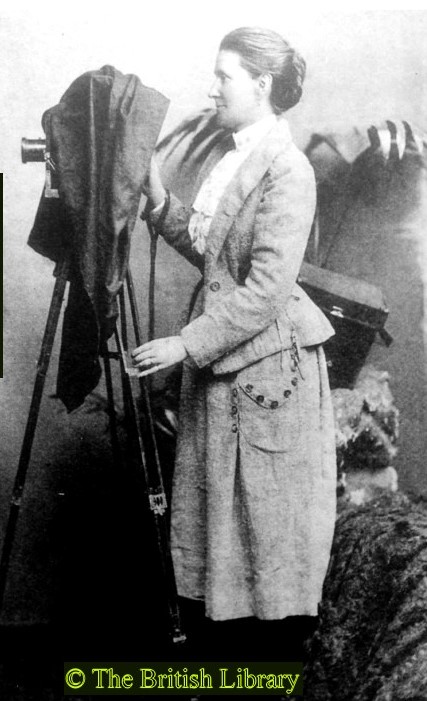
Some 15 years after the Bents visited Cilicia (spring 1890), Gertrude Bell followed in some of their footsteps (spring 1905); she had with her her camera, and the results are a unique resource. Mabel Bent had been delegated expedition photographer in 1885 (for the Dodecanese programme) but it has to be admitted that the task was a struggle for her – although, as with everything she did, she applied herself tirelessly (see elsewhere on this site).
For Cilicia 1890, despite all her efforts (with two cameras – a ‘small’ Luzo and a large stand apparatus), today we have only two (paper) prints and a few images in Theodore Bent’s articles that were adapted from his wife’s original material. (There was a set of 20 lantern slides held by the Royal Geographical Society but, very unfortunately, “[this] collection was destroyed on 9th February 1951 as it had faded.” Today, they could perhaps have been salvaged in some way.)
The best we can do, therefore, is compile a ‘virtual’ album from the many references to Anatolian photography Mabel Bent has left us in her 1890 Chronicle. You are asked to imagine late 19th-century Asia Minor in black and white (the dates are approximate; for the page numbers, see Mabel Bent 2006):
- Patras, 24 January 1890. Mabel’s photographic anxieties begin directly the Bents arrive at the Patras customshouse at the start of their onward journeys to distant Mersin, southern Türkiye: “At last I said, ‘I will not allow these things to be opened except in a place with red light, such as you no doubt have to open photographic things in, like in all large European stations’. ‘Red light!’ was exclaimed by all, and they all departed still saying, ‘Kokino phos!’ and presently returned and the officer begged our pardon humbly…” (p. 270)
- Mersin, 5 February 1890. The Bents are residing with the Dillon family, head of the regional railway: “I photographed the drawing room” (p. 276)
- Lamas Valley, 10 February 1890. The Bents are looking for the unidentified site of Olba: “High up we saw traces of an aqueduct cut. How they got up there we could not imagine and on a rock we saw a bas-relief which I tried to photograph with my little camera in the rain. Very luckily as it turned out it was too dull to take out the big one…” (p. 278)
- Lamas Valley, 10 February 1890. The Bents continue looking for the unidentified site of Olba: “When the acrobatic work of the epigraphist was over, that of the photographer began. Only a goat could photograph comfortably. Theodore leant hard against a tree, once he moved and it knocked me down… The legs of the camera were held on little cairns and I positively ached when it was over. Another photo I did kneeling with my legs over the edge of a rock about 4 feet high…” (p. 282)
- Lamas Valley, 18 February 1890. The Bents continue looking for the unidentified site of Olba: “We went more eastward this time, also down one valley and up another. I rode the little donkey nearly all the way. The place we went to was very pretty and filled with tombs, towers, temples of polygonal masonry. We found from a very tremendously large and puzzling inscription that the name of the place must have been Sabbatia. We were very busy with measurements, squeezes and photography and had a most pleasant day…” (p. 284)
- Lamas Valley, 19 February 1890. The Bents continue looking for the unidentified site of Olba. Mabel displays due diligence: “’How can I eat till I have taken my photographs?’ I responded. ‘The sun will be off by the time we have done.’ Of course, I cannot photograph unattended as I have to be held…” (p. 285)
- Lamas Valley, a Yoruk encampment, 19 February 1890. The Bents continue looking for the unidentified site of Olba. Never work with small children or animals: “When we passed in the morning I took the portrait of a tiny camel, 24 hours old. It looked so funny tied up in a coat; a handkerchief was put over his nose, crossed under his chin and tied round his neck. The first question, ‘Why?’ only received the answer, ‘It is the custom’. The second, to prevent the cold getting down its throat into its inside…” (p. 285)
- A café on the Silifke road, 21 February 1890. The Bents (in the wrong) have a close encounter with the local chief official (mutesarrif): “‘Very well,’ I said. ‘You will inform yourself better before you take English prisoners next time.’ So I whisked round my horse and turned my back on him and without goodbye we rode off, visibly laughing at him. I took his photograph…” (p. 288)
- Tarsus, 26 February 1890. The Bents are socializing along the coast from Mersin, to Tarsus, to Adana. In Tarsus, Mabel’s parea reveal an old stand camera and ask her to help resurrect it: “I superintended the unpacking of a beautiful camera which for 2 years has been suffering from the ravages of mice and damp; great ruin was the result. I put it together, explained the various parts, and today there is to be a little practice…” (p. 290)
- Mersin, 1 March 1890. Every photographer’s nightmare – unwanted daylight. Mabel’s assistant spoils all their plates from their first venture into the Lamas Valley: “Alas! I believe that all my photographs taken hitherto are spoilt. I gave them to be held in safety in the dark room by my pupil, but when I asked for them he had changed them to a safer place outside!” (p. 290)
- Sis, 9 March 1890. It appears the unidentified ‘pupil’ above was dismissed and Elias, another member of the team fresh from Adana, would assist: “I believe Elias has been brought and as he understands attending on the photography… I am glad.” (p. 295)
- Sis, 9 March 1890. Mabel repays her hosts’ hospitality by taking a group portrait: “The Family was very desirous of being photographed, so next morning I did a group of 11. Great were the preparations. Loose gowns were put off by the men and European trousers put on. Best gaudy clothes were put on by the ladies instead of their stockings, and more was thought of necklaces than of washing the legs.” (p. 295)
- Hieropolis-Castabala, 18 March 1890. The Bents have been on the move from Sis, exploring Anazarba and Kars Bazaar (Kadirli). Presumably Mabel took photographs but none are recorded in her diary. Later, camped at their goal, Bodroum (Hieropolis-Castabala), the photographer is again busy: “We only worked half today, finishing up with photography and measurements…” (p. 303)
- The Olba region, 30 March 1890. The Bents are again high up and westwards of the Lamas Valley. They succeed where others failed in identifying the site of Olba (Bent’s ‘Pompeii’ according to David Hogarth). Mabel is back working: “I took some photos and some measurements were done…” (p. 306)
- Silifke region, 16 April 1890. ‘Rough Cilicia’ lived up to its name in many places, frequently asking difficult questions of the photographer. Here Mabel is at the great sinkholes of Cennet and Cehennem near Silifke: “It is a truly awful place, quite terrifying in fact. It is quite inaccessible… It is surrounded by stalactites. I did not see the bottom. I was six feet from the edge… I feel as if I should like to have my camera tied before I try to photograph it.” (p. 318)
- Tarsus, 17 April 1890. The Bents are preparing to return to England and call in on their friends in Tarsus to say goodbye. It is an opportunity for a last (and lost) portrait: “I tried to start Mrs. Jennanyan with photography and we had very bad luck with the weather so cloudy and even rainy. Once I had got the whole of the Jennanyan family placed, 8 grownups and a baby, it rained. I was nearly wild! But it was hard to get them all together, so I ventured and did 2 and both were good, but that in one the babe and mother were blurs, but all our efforts were successful.” (p. 319)
 Leave a comment or contact us about this article
Mabel Bent, Isabella Bird, and Hadji Abdullah the dragoman – Persia, 1889/90
Alas, far safer then than now…
19th-century explorers in Persia, or anywhere else come to that, needed someone local – part Sancho Panza, part Passepartout – to ease things along: a translator, fixer, door-opener, guard, chaperone, cook, medic, accommodation officer, transport manager, therapist, whatever was required. The best could expect generous remuneration, the worst, summary dismissal!
Good or bad, these men (women dragomans please make yourselves known), would base themselves around ports of entry, where they might expect foreigners (themselves, of course, good or bad) in need of their services.

One such port at the time of interest to us was Bushire, Persia (Iran, eastern shores of the Persian Gulf), administered by British officials – and let’s single out in particular (until 1891) the affable and highly respected Resident, Irishman Edward Charles Ross (1836-1913), who would open the Residency (with its tennis court, billiard room, and other facilities) to explorers (he was a keen antiquarian himself), arrange sight-seeing, lend his private yacht, and generally, with his wife and family, entertain.
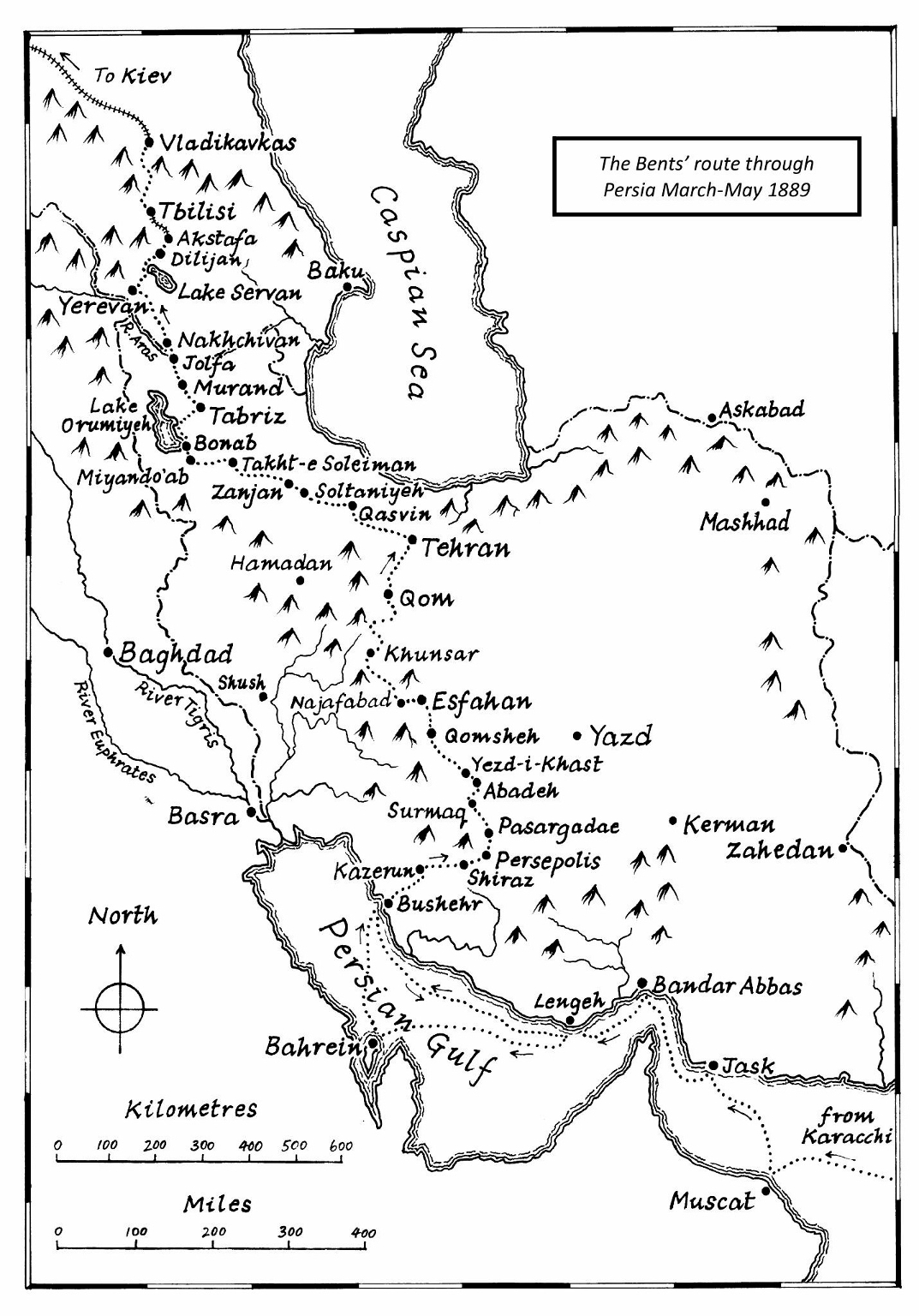
Naturally enough, when celebrity explorers Theodore and Mabel Bent, after excavating the ‘Mounds of Ali‘ in Bahrain in early 1889, decided ‘then and there‘ to ride south-north through Persia as the first leg of their return to London, they promptly crossed the Gulf to Bushire and the ‘hospitable roof’ of the Ross family, arriving early February 1889. Mabel, as ever, surprised her hosts: “They were all amazed indeed when they heard of our resolution to ride those 1300 miles or more ‘with a lady’, for not more than 3 ladies have done this before, and 2, Mme. Dieulafoy and Mrs. Phelps, a very fat American, in man’s attire, and as the days go on they are still more amazed at seeing me sitting serenely wondering what saddle I shall have.” (Travel Chronicles of Mrs Theodore Bent, Vol. 3, 2010, pp.28-9) note 1
Ross was also able to provide a dragoman, of sorts, for the Bents: “We had as our personal servant and interpreter combined … Hadji Abdullah, half Persian, half Arab. He was the best to be obtained, and his English was decidedly faulty… He had been a great deal on our men-of-war; he also took a present of horses from the Sultan of Maskat to the Queen [Victoria, in 1886], so that he could boast ‘I been to Home,’ and alluded to his stay in England as ‘when I was in Home’.” (Mabel Bent, Southern Arabia, 1900, p.2)

Serendipitously, this dragoman, Hadji Abdullah, whom the Bents employed to guide them on their way through Persia, leaving him over 1000 km away in Tabriz, was also hired (almost exactly a year later, early 1890) by that other great lady explorer Isabella Bishop (née Bird, 1831-1904), whom the Bents will have met frequently at the Royal Geographical Society and other gatherings of worthies. (Isabella was famously elected a Fellow in the first pick of lady travellers; Mabel was put forward for the second pick in 1893/4, just when the RGS voted to accept no more.)

The formidable Isabella Bird writes: “I lost no time in interviewing Hadji, — a Gulf Arab, who has served various travellers, has been ten times to Mecca, went to Windsor with the horses presented to the Queen by the Sultan of Muscat, speaks more or less of six languages, knows English fairly, has some recommendations, and professes that he is ‘up to’ all the requirements of camp life. The next morning I engaged him as ‘man of all work’, and though a big, wild-looking Arab in a rough abba and a big turban, with a long knife and a revolver in his girdle, scarcely looks like a lady’s servant, I hope he may suit me, though with these antecedents he is more likely to be a scamp than a treasure.” (Journeys in Persia and Kurdistan, Vol. 1, 1891, p. 5)
Bird, it seems, dispensed with Hadji’s services near Hamadan (August 1890), 200 km south of Tabriz, so his journey home to Bushire, assuming that was where he was based, was a good deal shorter than his trip back the previous year after his ride with the Bents! Interestingly, Bird makes no reference to the Bents in the letters home she eventually turned into her Persian book. It seems unlikely that Hadji made no mention at all of the British husband and wife explorers.

Return from Note 1
A compilation of the Bents’ Persian tales will appear in 2026.
“DWELLERS IN TENTS – Every man, says a philosopher, is a wanderer at heart. Alas! I fear the axiom would be truer if he had confined himself to stating that every man loves to fancy himself a wanderer, for when it comes to the point there is not one in a thousand who can throw off the ties of civilized existence – the ties and the comforts of habits which have become easy to him by long use, of the life whose security is ample compensation for its monotony. Yet there are moments when the cabined spirit longs for liberty.” (Gertrude Bell, Safar Nameh. Persian Pictures – A Book of Travel, London, 1894, p. 83)
‘Ya Mabel’ and the Duchess (Southern Oman) – by Marielle Risse
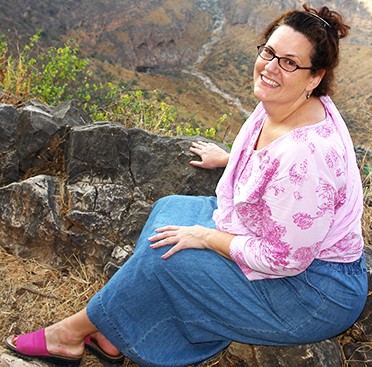 Dr Marielle Risse now lives in Cambridge, MA. She taught cultural studies, literature and pedagogy for 21 years on the Arabian Peninsula at the American University of Sharjah (UAE), the University of Sharjah-Woman’s (UAE) and Dhofar University (Oman). Her research areas are Arabian Peninsula cultures and intercultural communication. Her previous books are Community and Autonomy in Southern Oman (Palgrave Macmillan, 2019), Foodways in Southern Oman (Routledge, 2021) and Houseways in Southern Oman (Routledge, 2023). Her most recent book is Researching and Working on the Arabian Peninsula: Creating Effective Interactions (2025, Palgrave Macmillan).
Theodore and Mabel Bent journeyed to Oman in the winter of 1894/5, and, having seen many references to the explorers in Marielle’s work, we asked her if she would care to write something for us, of her choice, weaving the Bents into the landscape she loves…
Cite from this article, please, as: Marielle Risse, ‘Ya Mabel’ and the Duchess: A Victorian but Modern, Female Traveller and a Modern but Victorian, Female Traveller in Southern Oman. An article in The Bent Archive website, August 2025 [http://tambent.com/2025/08/07/ya-mabel-and-the-duchess-by-marielle-risse/]

‘Ya Mabel’ and the Duchess: A Victorian but Modern, Female Traveller and a Modern but Victorian, Female Traveller in Southern Oman
By Marielle Risse, August 2025
Abstract
Has travel writing moved with the times, shedding racism, colonialism, ‘othering,’ and metro-centric points of view? What are the conditions in which ‘imagination and humility necessary to climb into the head of people who live by a very different set of assumptions’ is created? Later travellers to southern Oman have seen and reported only what was most unusual, most foreign and more recent books about the Dhofar region show less understanding of the culture than articles and books written in the 1800s. We will discuss two specific examples of this odd juxtaposition: a Victorian, female traveller who is more accurate about Dhofaris than a modern, female traveller.
Keywords: Dhofar, Mabel Bent, Oman, Qara Mountains, Theodore Bent, travel writing; Jan Morris, Suzanna St. Albans, Wilfred Thesiger
Introduction
My starting question for this research is: has travel writing moved with the times, shedding racism, colonialism, ‘othering,’ and metro-centric points of view? Thinking specifically about southern Arabia, why would Thesiger, now described as ‘a fond old blimp in cavalry-twills’ write about inhabitants of the southern Dhofar region with understanding and respect while writers from the late 20th and early 21st centuries stay stuck in the ‘exoticizing’ mode? note 1
Thesiger’s Arabian Sands is widely acclaimed as a great travel book; it is also an accurate travel book. note 2 He not only wrote what he observed, he wrote the explanations for the actions and attitudes he observed. He had the rare advantage of time, but even if his work is set aside, the earlier explorers/surveyors of the Dhofar had, within the blinkers of their ‘imperial gaze’, an ability to observe and report accurately. note 3
Many later travellers to southern Oman saw and reported only what was most unusual, most foreign. These more recent books about the Dhofar region show less understanding of the culture than articles and books written in the 1800s. I will discuss two specific examples of this odd juxtaposition: a Victorian, female traveller who is more accurate about Dhofaris than a modern, female traveller.
Theodore (1852-1897) and Mabel (1847-1929) Bent, quintessential Victorians, explored the coast and the mountains of southern Oman in 1894. A few years later, Theodore having died four days after their return to England from Aden in 1897, an account of their travels in the wider region feature in Southern Arabia (1900), compiled by Mabel. note 4 With reference to Oman, although there are plenty of acidic comments [‘Merbat [Mirbat] is uncongenial’ with ‘no points of interest’], Mabel also includes careful documentation of the tribespeople living in the Qara Mountains (232). She was not pleased that the Qara men addressed her only as ‘Ya Mabel’ instead of ‘Mrs. Bent’ but she was capable of insights such as ‘Travelers like ourselves must be a great nuisance drinking up the scanty supply of water’.
I will compare her work to another Western woman who has written about the same area, including the Qara mountains, the Duchess of St. Albans, who was, surprisingly, less perceptive. In Where Time Stood Still: A Portrait of Oman (1980) St. Albans writes of the ‘primitive’ tribespeople who ‘have never worked with their hands’. How would ‘primitive’ people living in caves and herding flocks have survived if they had ‘never worked with their hands’?
The Bents
Theodore and Mabel had already explored in Italy, Greece, Bahrain, South Africa, Ethiopia, Sudan, and Yemen when they arrived in Oman. Their trip to Dhofar began when they left ‘Maskat’ (Muscat) 17 December 1894 and travelled by ship south along the coast, arriving in Mirbat on 20 December. After travelling along the coast and up into the mountains, they left the Dhofar region from Al Hafa (part of modern-day Salalah) on 23 January 1894. I believe they are the first Westerners to visit the Dhofar mountains to write a description of it.
Although the Bents were not in the employ of the British government, they were quintessential Victorian-age travellers who, in their writing, specifically support British imperialism in their Southern Arabia (1900/2005). The book, as mentioned above, written by Mabel after Theodore died soon after returning to England from Yemen in 1897, viewed all landscapes through the perspective of how the land might be useful to the Empire:
‘If this tract of country comes into the hands of a civilizing nation, it will be capable of great and useful development… and a health resort for the inhabitants [i.e. British inhabitants] of the burnt-up centres of Arabian commerce, Aden and Maskat (274).
Southern Arabia is a book with plenty of spleen – it’s impossible to say how much is caused by Mabel Bent’s mourning for her dead spouse or her natural disposition. In either case, it is amusing to come across her acid opinions: Mirbat has a ‘malarious-looking swamp’ and ‘Our boat was one of the dirtiest I have ever travelled on’ (232). She is clearly a forerunner to the Theroux/Naipaul/Granta/ ‘I hate the natives’ school of travel writing: ‘The Bedouin are rather clever at impromptu verses, and when we were in Wadi Ser they made night hideous by dancing in our camp’; ‘There is no law, order, authority, honor, honesty, or hospitality, and as to the people, I can only describe them as hateful and hating each other’; ‘it appears that a very wicked branch of the Hamoumi tribe hold a portion of this valley’; and she refers to one of the men she travelled with as ‘that horrid little Saleh Hassan’ (128, 175, 177, 217).
The Qara men she travelled with always addressed her, to her anger, only as ‘Mabel’ (258), with the local prefix when calling a person ‘ya’ – as in ‘Ya Mabel!’ They informed the Bents that ‘they did not wish us to give them orders of any kind as they were sheikhs’ and ‘We are gentlemen’ (258, 266). The mountain people of Dhofar, Mabel Bent writes, are:
‘… endowed with a spirit of independence which makes him resent the slightest approach to legal supervision… They would not march longer than they liked; they would only take us where they wished… and if we asked them not to sing at night and disturb our rest, they always set to work with greater vigour (248).
But she always includes a fair amount of real information, taking the time, for example, to explain how indigo is used to dye clothes (145). She also kindly gives hints to future travellers, i.e. warning future geologists that they must tell the camel men ahead of time they will carry rocks and that anthropologists should investigate the religion of the mountains (212, 261). She describes the scenery with careful attention to plants, rock formations, distances, etc. (e.g. Wadi Ghersid, 256; Wadi Nahast, 265) and, noticing that the language spoken in the ‘Gara’ [Qara] mountains was not a dialect, she includes a few words (275). Some of her information is still current. She mentions, for example, that oaths ‘to divorce a favourite wife, are really good’ (180) and the technique of cooking on stones (250), which I have seen practised several times.
The Bents eventually stop struggling to control and ‘we gave up any attempt to guide our own footsteps, but left ourselves entirely in his [Sheik Sehel] hands, to take us whether he would and spend as long about it as he liked’ (257).
Her summation is typical of British Victorian-era travellers: ‘We had discovered a real Paradise in the wilderness, which will be a rich prize for the civilized nation which is enterprising enough to appropriate it’ (276). Within the limited, imperialistic, point-of-view, a reader gets a clear sense of the place and the people. The Bents have a diamond-hard sense of self self-assurance, but they are able to describe accurately and write in a way which effectively gives you the information you need: as you understand the author’s prejudices, you can understand the places and people described and you can thus make your own judgment about both.
Morris
It is rather a surprise, after the gradually lowering racist/condescending tone seen in the arc from the Bents through Thesiger, to read Jan Morris’ Sultan in Oman (2008/1957) a smug, complacent, and judgmental book. note 5 She begins by widely overstating her achievement, declaring that she undertook the ‘… last classic journeys of the Arabian peninsula’, as if being driven in a jeep from Salalah to Muscat in 1956 was on par with Dougherty or Philby (1). To drive home the (moribund) English tradition, she notes that ‘Curzon and Gertrude Bell rose with us approvingly’ (2).
The descriptions illuminate more about Morris’ travels than Oman, i.e. Risut is like ‘… a bay in Cornwall or northern California’ (20); ‘The deeper we penetrated into these Qara foothills, the more lifeless and unearthly the country seemed… It was like an empty Lebanon’; the ‘abyss of Dahaq’ is compared to ‘Boulder or Grand Coulee’; and the Qara mountains ‘felt like England without the churches, or Kentucky without the white palings’ (27, 27, 38). A small lake is ‘“Better than the Backs”, said my companion, “not so many undergraduates”’, which only makes sense if the reader knows this is a term referring to the place where several Cambridge colleges back onto the River Cam (30).
The people have ‘obscure rituals, taboos, and prejudices’ (31). In keeping with the general tone of relegating the inhabitants to prehistoric times, there is no mention of guns. The people ‘hurl in the general direction of their neighbours the heavy throwing sticks (less scientific than boomerangs) with which they were sometimes quaintly armed’ (40). It is clear even in Thesiger’s texts that the men of this region had access to and knowledge of guns. In fact, the cover of one edition is one of Thesiger’s photos showing Bin Ghabaisha holding a rifle.
The Dhofar War
I need to segue to briefly describe the war, from 1965-1975, in order to make my critique of St. Albans. The Dhofar War began as a result of widespread dissatisfaction with the rule of Said bin Taimur, which has been ‘characterized as a desperate attempt to keep the Fifteenth century from being contaminated by the Twentieth’. note 6
Various groups of Dhofaris, primarily from the mountains, and angry at the lack of schools, clinics, electricity, etc., began to attack Oman’s small military forces, the Sultan’s Armed Forces (SAF). These groups coalesced into the Dhofar Liberation Front in 1964, which was then re-named, in 1968, People’s Front for the Liberation of Oman and the Arabian Gulf, and ‘a Marxist-Leninist revolutionary program was adopted for the rebellion’. note 7 Its goals included: ‘the liberation of slaves’; ‘the equality of women’ (which included the elimination of polygamy); ‘demolition of the tribal system’; and ‘the unity of all revolutionary forces in the Gulf’. note 8
The SAF did not have enough men or equipment to cope with the insurgency, but the Sultan refused to spend money for the army, nor did he show any understanding or mercy towards the rebels’ demands. The result was that by 1970, the rebels controlled almost all of the Dhofar region. In the same year, in a bloodless coup d’etat, Sultan Qaboos took over control of his father’s government and immediately started a two-front counterattack. He increased the military presence and initiated a hearts and minds campaign to assure the rebels that he intended to meet their demands for modernization.
Soldiers who left the rebels were treated as ‘returning sons’; they were interviewed and immediately released, not jailed. note 9 Sultan Qaboos also ‘emphasized that the past practices of indiscriminate reprisals against civilians on the Jebel had to end.’ note 10
The military who fought the rebels held them in respect as fighters; the enemy was ‘extremely good at seizing the initiative and had a wonderful eye for ground… once outflanked, they tended to melt away’. note 11 Their praise of the rebels is all the clearer when comparing the rebels to fighters from other countries who fought for the Sultan; Iranian and Jordanian soldiers are not accorded the same respect.
As firqat (civil militia) units were created, British soldiers then had the experience of fighting with men who had previously fought with the rebels. Although Jeapes, who wrote one of the first books about the war, often shows his impatience with Dhofaris, he and the other foreign writers have an overall positive impression. Gardiner writes: ‘Omanis were wonderful people to live with. They were superbly honest… They were generous to a fault and… they didn’t take themselves too seriously… [they] wished to be at peace with any man who was ready to be at peace with them.’ note 12
St. Albans
St. Albans’ travel book recounts her extended visit to Oman in the late 1970s. She was clearly no average tourist; her first ‘thank you’ in her Acknowledgements section is to Brigadier Peter Thwaites. The second is ‘The Sultan’s Armed Forces provided transport where I wanted to go’ (ix). Most of the other people mentioned are also British and military. She has done some reading about the history of Oman, but her opinions reflect no ability to understand the reality of the people. One example, of many, is her assertion that:
‘There is a company in England which manufactures florescent braces to make camels visible in the dark, but no Bedu in his right mind will go to the expense and trouble of importing this equipment for his animals. It is very much to his advantage anyway to get them killed on the roads, as the compensation for such a casualty is £500 each.’ (146)
How would desert-dwellers in Oman in the late 1970s have access to information about companies in England? How would they have access to things such as post-office boxes and credit cards to enable such a transaction? It is not to a camel owner’s ‘advantage’ to have his livestock killed by a car, the meat cannot be eaten, and as camels wander far afield, the owner may never know which vehicle killed the camel, not to mention the fact that camel owners grow attached to their animals.
When she arrives in Salalah, her statements become quite difficult to understand. She states that there are ‘nine illiterate tribes of primitive aborigines in the Qara [Mountains]’ (152). note 13 These ‘primitive aborigines’ had just waged a ten-year war with the Omani government in which they had close contact with not only the People’s Democratic Republic of Yemen, but Russia, China, Cuba, and various Arab countries.
Musallim bin Nafl, the first leader of this revolution, is dismissed by the Duchess as ‘a useless loafer’ and a ‘shiftless, bitter, dissatisfied layabout’, but when she visits mountain villages she is appalled at the conditions (155, 156).
She never connects the revolution encouraged by Musallim and the desperate poverty endured by his people. She writes that the ‘entire population of the Jebel were forced to co-operate’ in the war (157), without understanding that the disease and lack of food she sees in the late 1970s would have been worse in the late 1960s. The difficulties of daily life she herself witnessed encouraged the mountain people to fight against their government – which denied them the basic amenities of modern life such as schools and electricity. note 14
In reading her autobiography Mango and Mimosa (2000), which recounts her work for the British military in World War Two, you might explain that her apathy towards the mountain fighters was generated (maybe sub-consciously) because they fought the British – but even the British who fought the Dhofaris were more realistic/understanding of their situation.
St. Albans describes the Bait Kathiri tribe as ‘nimble as goats’ and says that ‘like our own distant ancestors, they frequently paint themselves blue all over’ (168). Comparing men to animals is grossly insulting in Dhofar and the men do not paint themselves blue. Men and women traditionally wore indigo-dyed fabric which turned the skin blue, an important difference.
These small mistakes create a vision of an ancient, primitive people which erases the reality of the Dhofar region in the late 1970s. St. Albans only carefully describes the life of a small percentage of the inhabitants, living in caves and rough dwellings in the mountains. She discusses ‘witch doctors’ but not the many mosques or daily religious practices of Dhofaris (154). In Salalah at this time there was an airport, Holiday Inn, ‘shops and offices and ultra-modern television centre’, and a hospital (180), but she never shows Omanis interacting in/working in these modern surroundings. The ‘comfortable seaside bungalow’ she stays in is owned by British ex-pats, who are described, but when visiting the ‘model farm’, there is no reference to Omanis who work there (163, 164).
Discussion
In the modern books, the emphasis is firmly placed on the ‘exotic’; where both the Bents and Haines (1845) are able to discern that the people’s ‘skins are discoloured by the dye from their dress, which is composed of blue cotton’ (112), St. Albans sees people who paint themselves.
Evelyn Waugh wrote, ‘It was fun thirty-five years ago to travel far and in great discomfort to meet people whose entire conception of life and manner of expression were alien. Now one has only to leave one’s gate. All fates are worse than death.’ note 15 I think that ‘leaving one’s gate’ is no longer ‘alien’ enough – modern travel writers have an up-hill battle trying to show that they are doing/discovering something new, hence the emphasis on the unusual.
Mabel Bent and her husband were looking for land that would be of benefit for their country; St. Albans was looking for bizarre stories to tell. It is striking how the more recent writers show less understanding and less respect than British writers for the imperialistic era, given the modern emphasis on equality and multi-cultural education. note 16 Gardiner writes that:
‘The patience and tolerance to live harmoniously in an unfamiliar culture; the fortitude to be content with less than comfortable circumstances for prolonged periods; an understanding of and sympathy with a foreign history and religion; a willingness to learn a new language; the flexibility, imagination and humility necessary to climb into the head of people who live by a very different set of assumptions; none of these are found automatically in our modern developed Euro-Atlantic culture.’ note 17
The question remains: What are the conditions in which ‘imagination and humility necessary to climb into the head of people who live by a very different set of assumptions’ is created?
References
Belanger, Kelly 1997. ‘James Theodore Bent and Mabel Virginia Anna Bent’. British Travel Writers: 1876-1909: 31-40. Detroit: Gale Research.
Bent, James Theodore 1895. ‘Exploration of the Frankincense Country, Southern Arabia’. The Geographical Journal 6.2: 109-33.
Bent, James Thedore and Mabel Bent 2005 [1900]. Southern Arabia. London: Elibron.
Bent, Mabel 2010. The Travel Chronicles of Mrs. J. Theodore Bent, Volume III: Deserts of Vast Eternity, Southern Arabia and Persia. Gerald Brisch (ed.). Oxford: Archaeopress.
Haines, Stafford 1845. ‘Memoir of the South and East Coasts of Arabia: Part II’. Journal of the Royal Geographical Society of London 15: 104-160.
Morris, Jan 2008 [1957]. Sultan in Oman. London: Eland.
St. Albans, Suzanne (Duchess) 2000. Mango and Mimosa. London: Virago.
— 1980. Where Time Stood Still: A Portrait of Oman. London: Quartet Books Ltd.
Thesiger, Wilfred 1991 [1959]. Arabian Sands. New York: Penguin.
— 1950. ‘The Badu of Southern Arabia’. Journal of the Royal Central Asian Society 37: 53-61.
— 1950. ‘Desert Borderlands of Oman’. Geographical Journal 116: 137-171.
— 1949. ‘A Further Journey across the Empty Quarter’. Geographical Journal 113: 21-46.
— 1948. ‘Across the Empty Quarter’. Geographical Journal 111: 1-21.
— 1946. ‘A New Journey in Southern Arabia’. Geographical Journal 108: 129-145.
Endnotes
Return from Note 1
Return from Note 2
Return from Note 3
Return from Note 4
Return from Note 5
Return from Note 6
Return from Note 7
Return from Note 8
Return from Note 9
Return from Note 10
Return from Note 11
Return from Note 12
Return from Note 13
This attitude is not shared by any of the soldiers who fought in the war, or other researchers. The alternate view can be seen in Trabulsi: ‘He [Sultan Said] introduced oil companies into the Sultanate and he wanted to obliterate any social, political, or cultural effect they might incur. Furthermore, he wanted to monopolize the oil revenue and retain the old economic basis of his system: extortion of the economic surplus through taxation and levies. He was determined not to share a penny with a hungry, undernourished and unemployed population what was discovering, through emigration, the fabulous economic possibilities of the oil economy.’ ‘The Liberation of Dhofar’, 8.
Return from Note 14
Return from Note 15
Return from Note 16
Return from Note 17
Rosita Forbes
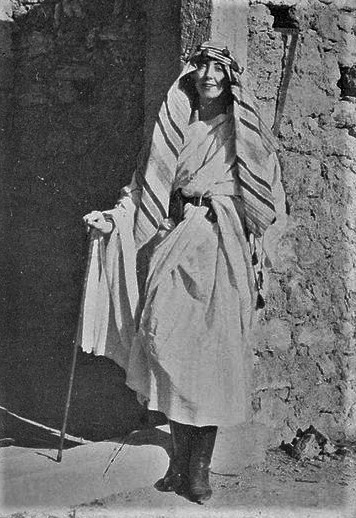
It’s always a pleasure on these pages to present a great lady traveller and writer from the era of Mabel Bent… so, here we introduce Rosita Forbes, F.R.G.S. (16 January 1890 – 30 June 1967), a wonderful character, controversial at times – easily springing from between the covers of Virginia Woolf, Ernest Hemingway, even Agatha Christie – and, by huge coincidence, for a time she was also a close neighbour of Mrs Theodore Bent,
Her story, of course, is on too grand a scale to go into in any detail here, and no better introduction to recommend is Duncan Smith’s pacey and wonderfully illustrated essay.

What interests us are Rosita’s links to the Bents. On the day of her birth, Thursday, 16 January 1890, at swanky Riseholme Hall, near Lincoln, the Bents were sitting on their packed trunks to get them closed before embarking that Saturday for the western shores of Turkey and their imminent discovery of Olba. Here is Mabel’s diary at the time: “We left England on Saturday night, January 18th [1890], the waves dashing over the steamer from the other side of Dover pier, and neither stopped not stayed, till we stopped for the night at Lucerne at the Hôtel St. Gothard, close to the station and very comfortable…” (The Travel Chronicles of Mrs. J. Theodore Bent, vol 1, Oxford, 2006, p.269).
After driving ambulances (Hemingway again) in the Great War the rural lanes of Lincolnshire were too solitary for Rosita and she began an extensive sequence of travels in Asia and Africa culminating in her first book Unconducted Wanderers (1919).
We don’t know, but in her reading and preparation for her travels it is very likely that she hit upon the Bents (although Theodore was dead by the time she was eight). Her great 1925 book From Red Sea to Blue Nile – Abyssinian Adventure opens in Aden, a base the Bents used frequently for their expeditions in the area. (Both pioneers, Mabel was the first European woman to venture voluntarily into the Wadi Hadramaut, and Rosita the first to the Kufra Oasis in Libya.) It is hard to believe that the latter did not pack Mabel’s Southern Arabia in her saddlebags to read in Aden – the scene, of course, of Theodore’s final adventure.
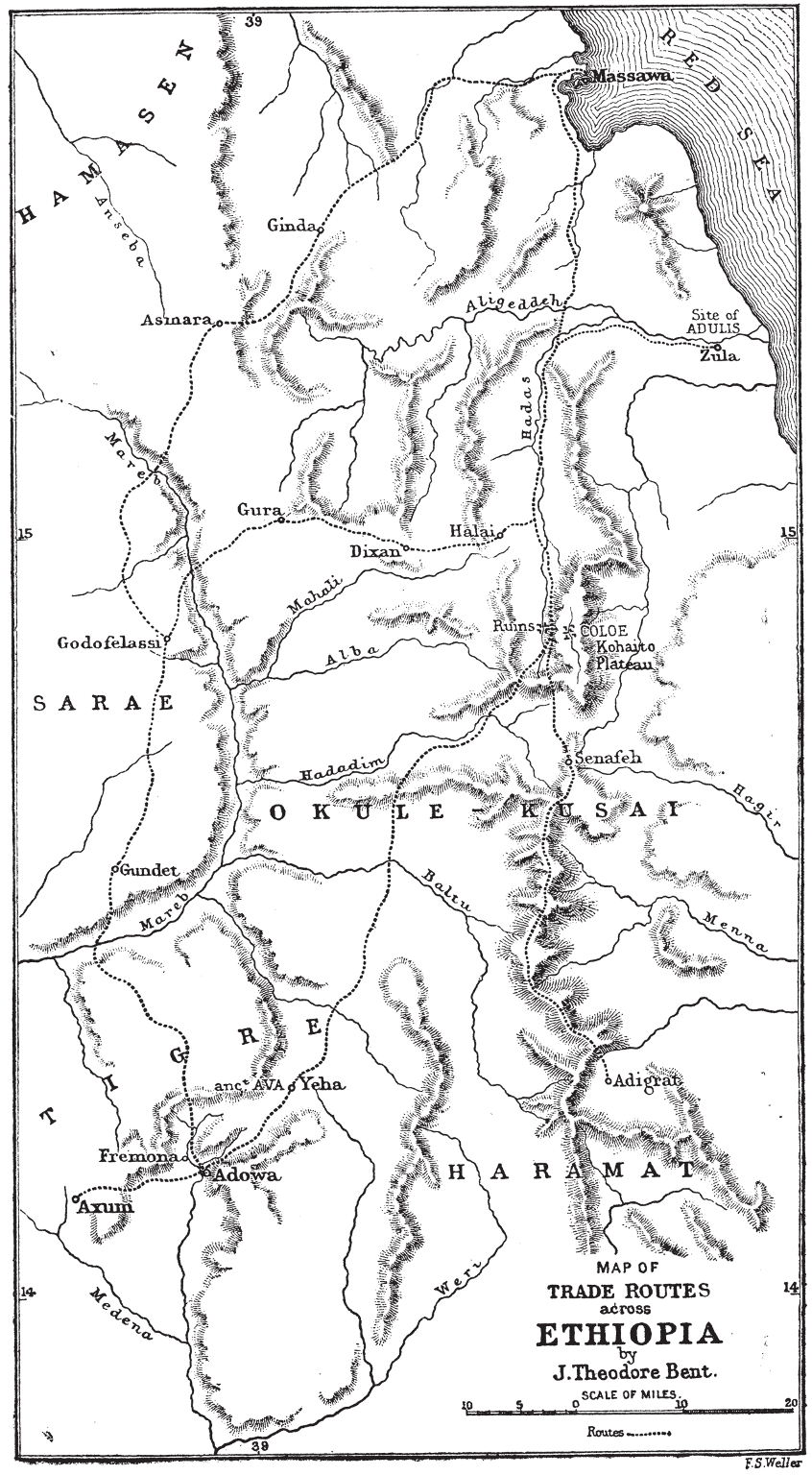
And more directly, in From Red Sea to Blue Nile (opening with its wonderful dedication, ‘To Abyssinia And Her Heir-Apparent, H.I.H., Ras Tafari’, we get specific references to the Bents’ trek to fabled Aksum in Ethiopia in 1893, writing, page 348, that Theodore ‘commemorated his journey in a most interesting book, The Sacred City of the Ethiopians‘. Again, it seems most unlikely that she would not have had a copy with her as she sailed across the Red Sea to Somalia to begin her ride north, and write, this from her Foreword, ‘the record of three months on muleback, the story of what happened… during an eleven hundred mile trek through mountains and forests, rivers and deserts in search of photographic material. It is a tale of adventures, serious and frivolous, of what we saw and heard and did between the Red Sea and the Blue Nile, but it is only an impression of Abyssinia as she appeared from tent and saddle.’ And during her time in Ethiopia she was never far from the routes followed by the Bents.
In any event was born at Riseholme Hall, near Lincoln, England, th . Even if not before 1925, we know the adventuress consulted Bent in the course of her trip to Ethiopia in … and there a several references to Theodore’s classic… in her own account….1923/4
Dedicated “i”
And then there is the serendipitous role of Great Cumberland Place – the thoroughfare in London linking Marble Arch to
she would know south arabia for her Aden etc stuff
other famous residents nelli melba
Dedicated “To Abyssinia And Her Heir-Apparent, H.I.H., Ras Tafari”
She was married again in 1921, to Col. Arthur Thomas McGrath.
Starting from aden
map?
Mabel’s museum
Rosita and her husband moved in to ?? in late ???? and immediately began a renovation project…
Meanwhile, down (or up) the road at No. 13, the by then long-widowed Mabel Bent had been renting her London townhouse (her country residence was Sutton Hall, outside Macclesfield, Cheshire) since ????, prior to that the couple rented No. ?? No. 13 very soon became a cross between a depository and a museum, acting as the point of arrival for most of the Bents’ acquisitions – wonderful things from Aksum to Zimbabwe.
But did Rosita and Mabel ever meet? The two travellers only overlapped as it were in Great Cumberland Place for half a year or so, the latter months of 192? and the Spring and Summer of 1929, and by then Mabel was elderly and perhaps not receiving callers – she died on ???, with her nieces in attendance (in 1926 they had already begun the process of clearing out and selling off the more precious things – the British Museum being the major benefactor).
Rosita, well aware of the Bents and their twenty years of incredible travel, must have known that Mabel was living a few metres from her. Firm evidence of a meeting might one day surface, but for now we can image the two formidable explorers, taking no nonsense from men, sharing tea (or a whiskey) in one of Mabel’s drawing-room and discussing the contents of it, perhaps the Ethiopian chair Mabel returned with in 1893, the style of which Rosita was familiar with from her own ???? adventure.
One topic Mabel might not have raised, or not without a good few Irish curses, was Rosita’s Fellowship of London’s Royal Geographical Society. Mabel was on the list for the second tranche of women Fellows in the early 1890s, until the Admirals who ran the show scuppered the rights of women to join. The process was not reopened for them until ???, with Rosita getting her Fellowship in ???
Some …. would make a diverting and curious documentary … h both women travelled many thousands of miles, but that mere 100 metres or so that separated them may well have been steps too far… down Great Cumberland Place, W1.
In the wake of Ida Laura Pfeiffer (1797-1858)

No list of indomitable women travellers would be complete without a reference to the incredible Ida Laura Pfeiffer, in whose footprints Mabel occasionally followed. Although the latter never refers directly to the Austrian globetrotter in her diaries, Mabel would certainly have known of her, and probably read Ida’s travel accounts, several of which were already translated into English in her time. Ida died when Mabel Hall-Dare was just a girl of ten or so in the south of Ireland.
One among many of the locations they both were to visit was the island of Rhodes (then a Turkish province for both Ida and Mabel). Here is Pfeiffer on Rhodes’ famous main harbour in late May 1842 (trans from the German by H.W. Dulcken):

“This morning, shortly after five o’clock, we ran into the superb harbour of Rhodes. Here, for the first time, I obtained a correct notion of a harbour. That of Rhodes is shut in on all sides by walls and masses of rock, leaving only a gap of a hundred and fifty to two hundred paces in width for the ships to enter. Here every vessel can lie in perfect safety, be the sea outside the bar as stormy as it may; the only drawback is, that the entering of this harbour, a task of some difficulty in calm weather, becomes totally impracticable during a storm. A round tower stands as a protection on either side of the entrance to the harbour.” (Visit to the Holy Land, Egypt, and Italy, London, 1853, p.86)
And here is Mabel Bent (she married Theodore in 1877) putting up with some tricky February weather in the same harbour region some thirty years later, in 1885, endorsing Ida’s observation about bad weather:

“The day seems quite over, it is half past six, and a most anxious day we have passed with the yellow flag waving us. We got to Rhodes about 3 but did not settle till 5 and the health officers did not come till 7. The Captain asked leave to go to a bay to shelter if storm came on, or the open sea, but they said no, if we wanted pratigue he must remain there. But the Captain told us that sooner than lose or damage the ship he would go off with us and the two guardians to Smyrna. Great therefore was our horror at 3.30 p.m. to hear all the noises of a start, after having observed that it was getting rougher, but we only went round the corner of the island to shelter on the eastern side and hope to be returned to the capital tomorrow morning. In the mean time no one has been able to communicate in any way with the shore. It has been pouring most of the day.” (The Travel Chronicles of Mrs J Theodore Bent, vol 1, Oxford, 2006, p.68)
For the Bents on Rhodes and in the Dodecanese, see The Dodecanese: Further Travels Among the Insular Greeks (Oxford, 2015).
Mrs Theodore Bent – The Queen of Explorers
“Like most travellers, this lady has found that the less she and her nomad husband see of spirits and wine the better, and so with the exception of a little brandy for medicinal purposes, the whole party travel on tea, beef essence, and condensed milk…”
To mark Mabel Bent’s birthday (28 January 1847) this year (2022), let’s read more from a rare article on her from an arcane newspaper – The Newry Telegraph, 3rd January 1895, published by an unknown publisher in Newry, Co. Down, Northern Ireland. It seems that it is an original editorial by an unknown author and not a piece syndicated from any other contemporary English source. There is every chance that it was written, or co-written, by Mabel’s sister Frances Maria Hobson, wife of the Rector of Portadown (a corner of that devout triangle, Newry, Portadown, Armagh. The wagging finger to the intemperate above is a clue perhaps, ironic rather as Theodore’s fortunes derived in part from brewing!).
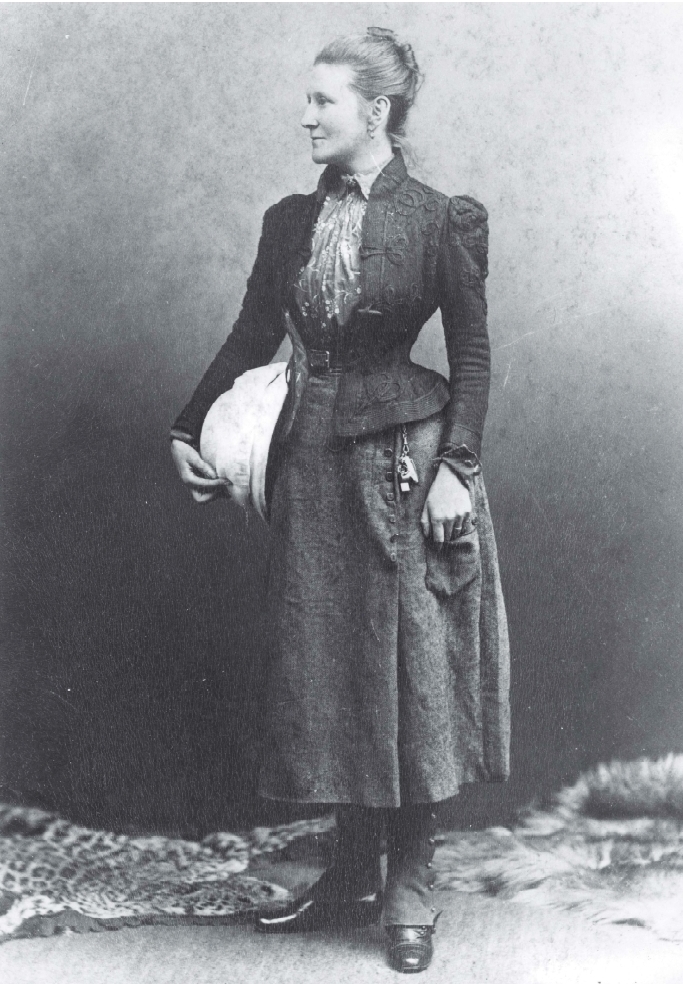
The featured photo, probably from Cape Town in 1891, shows Mabel in her prime and on her way to explore the ruins of Great Zimbabwe for Cecil Rhodes. Mabel’s confident air presages the Bents’ imminent fame as they join the cadre of the nation’s most popular and best-known adventurers. Their work in the Eastern Mediterranean is behind them, their celebrated Arabian expeditions ahead. Thus this article in The Newry Telegraph that follows reflects this prestige awaiting Mabel in 1895 perfectly, as well, of course, as the attitudes and jingoism of the day. And no excuse is ever needed for an oblique reference to another extraordinary traveller, Raymonde Bonnetain.
So, without further exposition, we join parlour-readers, heads and arms on their antimacassars, of The Newry Telegraph for Thursday, 3rd January 1895:
“Mrs Theodore Bent – The Queen of Explorers: Curious as it may seem, foreign exploration is one of the paths where the most feminine women have followed the example set them by their husbands and brothers. Of course, this has been especially the case in every kind of missionary enterprise, and one has only to recall the achievements of Lady Baker, Lady Burdon, Mme Dieu la Loy [sic], Mrs Peary, and more recently Mme Bonnetain note 1 , to prove that even great explorers have not hesitated to take with them on their perilous journeys those whom they had chosen for their life companions.
The subject of our sketch, Mrs. Theodore Bent, is a striking example of all a woman can do in the way of cheerful endurance and intelligent observation. Her name is less well-known than that of her husband, one of the most distinguished Fellows of the Royal Geographical Society, for, as she sometimes observes, ‘There is not ink enough in a family for two’, but the valuable additions to exploration literature published by Mr Bent owe not a little of their interest to his wife, for she keeps careful notes of everything that occurs during their journeys note 2 , and, when any excavations are to be done, generally takes charge of one party whilst her husband looks after another.
Mrs Bent, who is a light, graceful-looking woman, well-known in the cultured portion of London Society, belongs to an Irish family, famous in the annals of County Wexford, the Hall-Dares of Newton-Barry; she rode almost before she could walk, and early displayed remarkable pedestrian powers.
During the last ten years Mr and Mrs Bent have together achieved twelve exploration expeditions in some of the roughest and least known corners of Southern Asia, that vast and mysterious domain of which the world even now knows little. They began their travels by an expedition to the less well-known islands of Greece, and while there made some interesting archaeological discoveries; this first attempt taught them a great deal, and now Mr H M Stanley himself could not rival Mrs Bent as organiser and manger of an exploration party, for long experience has shown her what to avoid, and narrowed down her list of absolutely indispensable necessaries to a small compass.
It is interesting to note that Mr Bent’s book on Mashonaland was one of the first works published on that now much-debated portion of our Colonial Empire.
Of late years Arabia has become to both husband and wife the most interesting portion of the universe. There is probably no place in the world of which so little is known, and which is more full of practical dangers to exploring Europeans, for the native population, though civilised after a fashion, are extremely cunning and dishonest, and have a great hatred and contempt for anything they don’t understand.
Nowadays so much is talked about rational dress, cycling costumes, and the relative value of a divided skirt and knickerbockers, that it is interesting to know that Mrs Bent’s ideas on the subject are simple and the result of long experience. Her costume never varies, for she has found the same kind of dress equally useful in South Africa, Arabia, and the Isles of Greece. Her outfit, which is very pretty and even conventional, consists of a tweed coat and skirt coming down below the knees, breeches, gaiters, and stout shoes. The skirt is full, being pleated; and by a clever arrangement invented by the wearer herself it can be altered accordingly as to whether it is wanted for riding or walking. With this costume is worn a pith hat and gause veil.
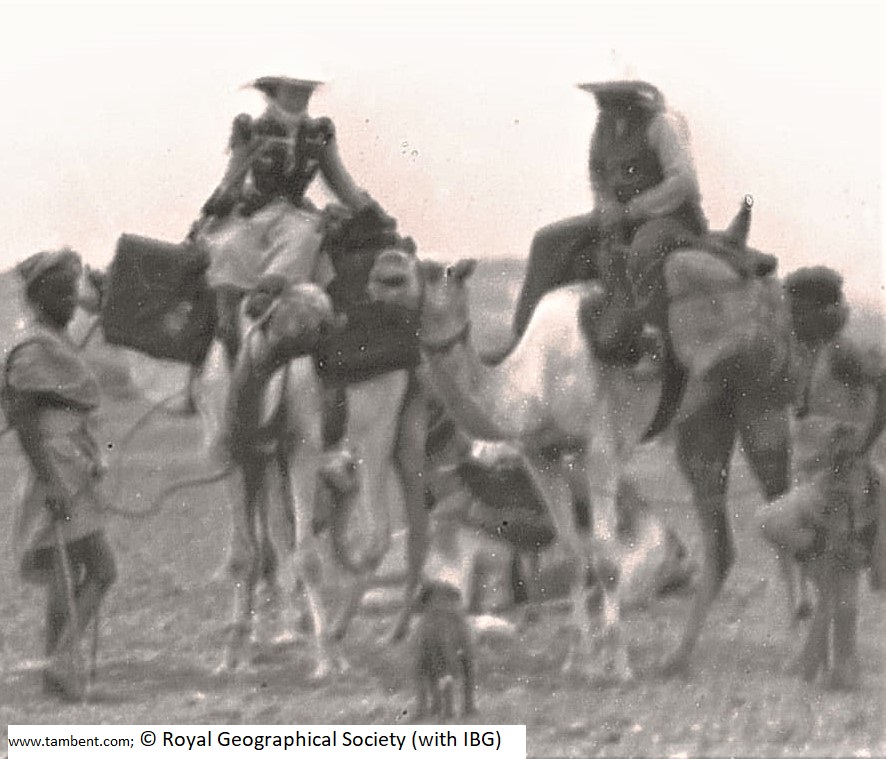
Mrs Bent, whenever it is possible, rides on horseback, and she cannot speak too highly of the intelligence and faithfulness of the horse as compared to that of a camel or mule.
Every detail concerning the outfit and internal economy of their expeditions is left by Mr Theodore Bent to his wife, and so on her hangs the heavy responsibility of keeping in health and making comfortable a larger or smaller party, which often includes guides and servants belonging to the country which is to be explored.
Like most travellers, this lady has found that the less she and her nomad husband see of spirits and wine the better, and so with the exception of a little brandy for medicinal purposes, the whole party travel on tea, beef essence, and condensed milk, while quinine is the most important item of the medicine chest.
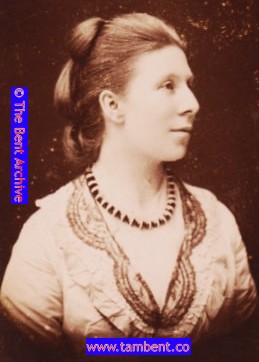
It should not, however, be thought that Mr and Mrs Bent spend their whole life in travelling through wild and inaccessible regions; they generally pass the season in their delightful London home, which is a veritable museum, full of curious and beautiful things gathered together during the course of their owners’ many expeditions. Mr Theodore Bent has generously presented many of his most precious archaeological finds to the British Museum, but his own store is extremely valuable and curious. Mrs Bent makes a point of collecting anything specially feminine in the way of ornaments or habilaments, and some of the shawls and face veils presented to her by Arabian magnates throw a strange light on the manners and customs of the East.
The subject of our sketch was at one time proposed for election to the Royal Geographical Society, but she little values official recognition of dignities, and the matter has remained in abeyance note 3 .”
Notes
Return from Note 1
Return from Note 2
Return from Note 3
In exalted female company – Mabel Bent, other women travellers, and the RGS women Fellows scandal of 1893
Mabel Bent in exalted, not to say exhausted, company…
“Taking the sphere alone of travel in unknown regions of the world, the history of British adventure can shew several pairs of the kind who rank as enthusiastic explorers of the highest type. We might single out from the number of these a few such as Sir Richard and Lady Burton, Mr. and Mrs. Theodore Bent, and Mr. and Mrs. St. George Littledale, where the wife has been entitled equally with the husband to the fame which is won by an arduous journey in barbarous lands.” (Graham Sandberg, The Exploration of Tibet, London, 1904, p. 236)
A little research the other day (May 2020) turned up a fascinating, pre-Great War travel article in the Tatler for Wednesday, 30 November 1910 (no. 242, page 270) – and many thanks to the Illustrated London News/Mary Evans Picture Library, whose copyright it is, for allowing us to reproduce it here. It’s a tremendous, rare read. The author is one Joseph Heighton; forgive its title – ‘Pioneers in Petticoats’.
Twenty years or so either side of 1900, the journeys of Western women travellers were headline news – emancipatory, they very much reflected the times these women voyaged in, times every bit as challenging and frustrating for women as the tough terrain and hardships they fought through.
Mabel’s fortitude and abilities over the twenty years of explorations she undertook with Theodore Bent were indeed often written about, frequently on pages intended for women readers (some feature elsewhere in this archive).
The Tatler article is typical in its obvious admiration for Mabel, who has reached the age of 63, and has been travelling since she was a girl – most summers on the continent with her family, and then really taking metaphorical wing once she married (August 1877).
Here is what the Tatler has to say about Mabel:
“Asia Minor, Persia, Mashonaland, Abyssinia, Eastern Soudan, and South Arabia. These are some of the out-of-the-way corners of the globe which Mrs. Theodore Bent has penetrated when she accompanied her late husband on his archaeological expeditions. She has had several narrow escapes from death. In South Arabia she was nearly shot by bandits, while on another occasion she was ordered to dismount ‘in order that her throat might be cut’. Luckily better counsel prevailed with the would be murderers.”

Mabel would not be overshadowed by the company she keeps. And what exalted company it is – very much the great and the good of Western, or adopted Western, women travellers. Of course on one small page there must be notable omissions, e.g. the ubiquitous, already mentioned, Isabella Bird Bishop (1831-1904), the Nile travellers Amelia Edwards (1831-1892) and Florence Baker (1841-1916), or fellow Egyptologists Marianne Brocklehurst and Mary Booth, both of whom Mabel knew. And the women featured are all English speakers: ‘Europeans’, such as Mabel’s nemesis, Jane Dieulafoy, are not included.
Also absent is the mysterious American Mabel refers to unkindly just as ‘Mrs. Phelps, a very fat American, in man’s attire’. The reference comes in Mabel’s diary entries for the couple’s amazing ride, south-north, the length of Persia in 1889: “They were all amazed indeed when they heard of our resolution to ride those 1300 miles or more ‘with a lady’, for not more than 3 ladies have done this before, and 2, Mme. Dieulafoy and Mrs. Phelps, a very fat American, in man’s attire. And as the days go on they are still more amazed at seeing me sitting serenely wondering what saddle I shall have.” (The Travel Chronicles of Mabel Bent, Vol 3, pages 27-8)
If anyone knows who this intrepid, if large, traveller is, then we would be fascinated to hear and give her recognition on this.
How well known to you are these ‘Pioneers in Petticoats’? Corona lockdown hours may well give you world enough and time to read up on them. A few notes are added here, courtesy of Wikipedia, to get you in the mood for travel…

The article begins with Mary Eliza Bakewell Gaunt (20 February 1861 – 19 January 1942), an Australian novelist with a taste for Africa.
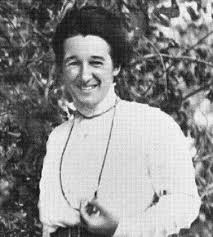
Next to arrive is Barbara Freire-Marreco (1879–1967), an English anthropologist and folklorist. She was a member of the first class of anthropology students to graduate from Oxford in 1908.
Academically the most gifted, coming into focus now are Agnes Smith Lewis (1843–1926) and Margaret Dunlop Gibson (1843–1920), nées Agnes and Margaret Smith (sometimes referred to as the Westminster Sisters), were Semitic scholars. Born the twin daughters of John Smith of Irvine, Ayrshire, Scotland, they learned more than 12 languages between them, and became pioneers in their academic work, and benefactors to the Presbyterian Church of England, especially to Westminster College, Cambridge. Without our access to Wikipedia, Joseph Heighton gets it wrong in his line where he says Margaret Gibson is a friend, she is the twin sister; the girls were born four years or so before Mabel Bent.

Also high in academic esteem is Mary Henrietta Kingsley (13 October 1862 – 3 June 1900), English ethnographer, scientific writer, and explorer whose travels throughout West Africa and resulting work helped shape European perceptions of African cultures and British imperialism.
Again, it seems that Joseph Heighton was not quite right in saying that Charlotte Mansfield (1881-1936), English novelist, poet, and traveller, completed Rhodes’ dream tour of the Cape to Cairo; she made it as far as Lake Tanganyika, good going nevertheless (see Mary Hall a little later).
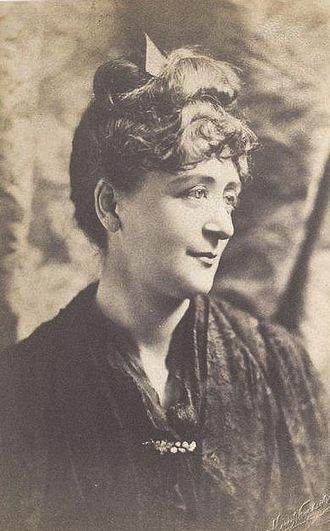
Mary French Sheldon (May 10, 1847 – 1936), as author May French Sheldon, was an American author and explorer. Born the same year as Mabel Bent (and they, indeed, knew each other, see below), she was made a fellow of the Royal Geographical Society, among the first fifteen women to receive this honour, in November 1892. (Mabel Bent was in line for the next group of women Fellows, but the privilege was shamefully withdrawn and women Fellows were not elected again until 1913.)

Mary Hall (1857-1912) really did make the trip from Cape to Cairo (see Charlotte Mansfield above). Her book A Woman’s Trek from the Cape to Cairo (1907) is available online. After Africa, Mary switched to Australia and the Far East; it seems her adventures there were published posthumously (A Woman in the Antipodes and in the Far East, c. 1914).
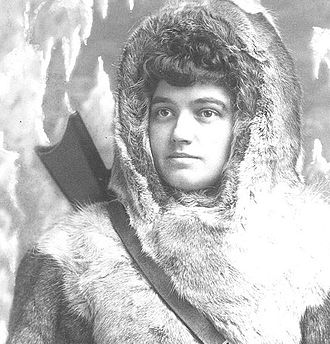
Our caravan of great women travellers continues, after the heat of Australia, in the ice of the Arctic with Josephine Cecilia Diebitsch Peary (May 22, 1863 – December 19, 1955), an American author and Arctic explorer of renown.
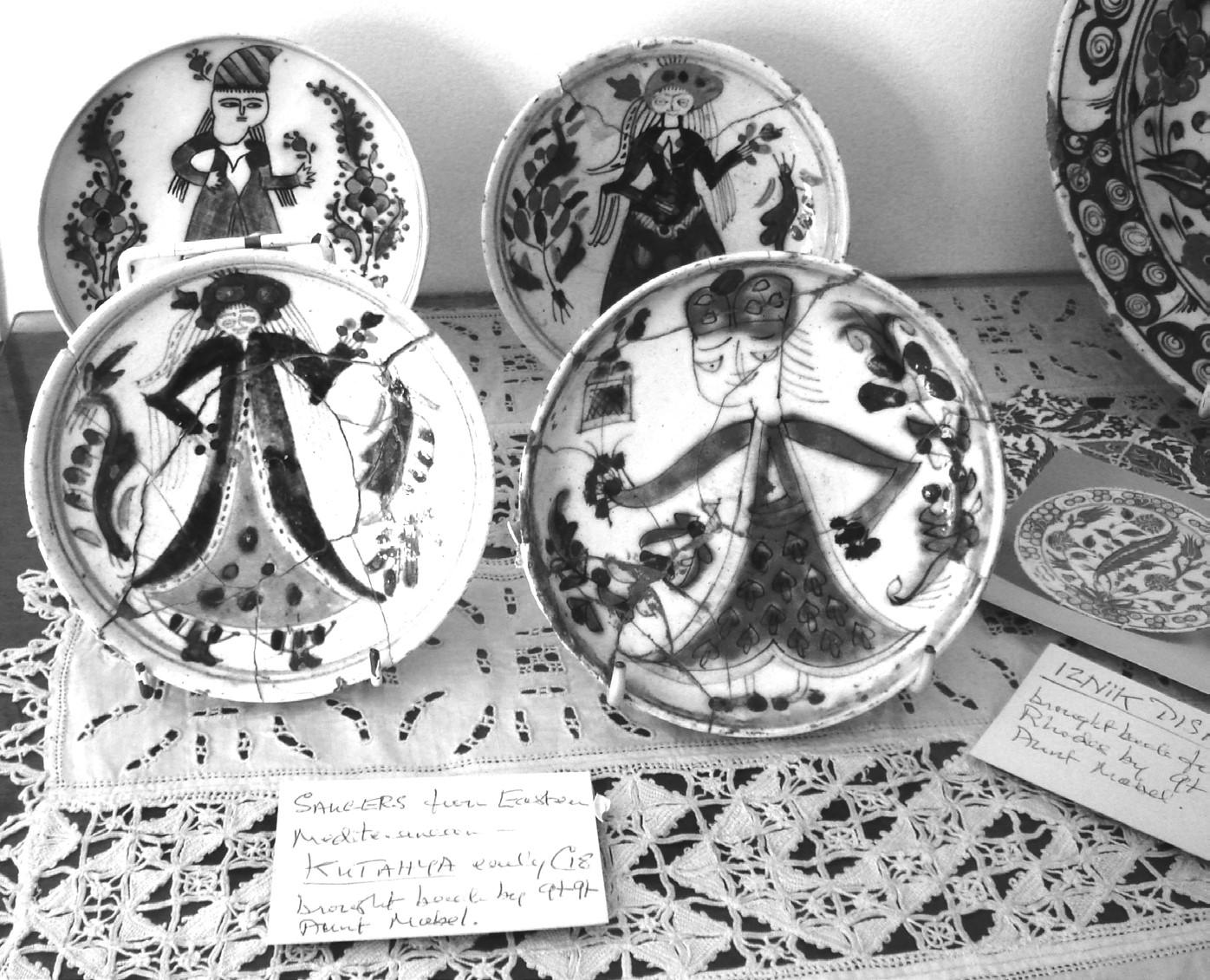
We know, at least, that Mabel and May French Sheldon (see above) were acquaintances, if not friends. The Belfast Telegraph of Saturday, 27 June 1908 informs us that “Mrs Theodore Bent was ‘at home’ recently to some 200 of her friends, when a very enjoyable evening was spent in the beautiful suite of rooms in her house in Great Cumberland Place, that are much more interesting than many museums, as they are full of the most wonderful curios brought back by Mrs Bent from Persia, Russia, Norway, the Soudan, the Holy Land, and the many other parts of the world in which she has travelled and explored. The hostess, handsomely dressed in mauve, with white lace and many diamonds, received her guests at the entrance to the principal drawing-room, and near her stood her sister, Mrs Bagenal, dressed in black and silver, who had come over from her place in Co. Carlow for this and other functions of the season; and amongst other invited guests were …. Mrs French Seldon, etc., etc.”
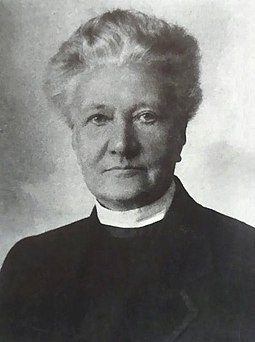
Another acquaintance was Mary Brodrick (1858-1933), one of the first female excavators in Egypt. Wikipedia mentions a description from the Daily Mail (1906) noting her as ‘perhaps the greatest lady Egyptologist of the day’. From Mabel’s diaries we have two direct references to her:
- December 1895: “We have been to the museum twice, and to lunch with Professor Sayce on the ‘dahabeya’, which is his charming home, and have been asked by Miss Brodrick, an Egyptologist lady, to tea on hers on Thursday…” [Travel Chronicles of Mrs J Theodore Bent, Vol 2, Oxford, 2012, p.225]
- Sunday 6th, February 1898: “I walked by land to church in the hotel with a funny old American woman, Mrs. Austin. Professor Sayce preached a beautiful sermon. The chaplain is Mr. [left blank]. Coming out I was hailed by Miss Brodrick, who edited ‘Murray’, and she asked me to tea on the ‘Alma’. Her chum, Miss Morton, was with her – also 2 others, Miss Dickson and Miss Kilburn. I also dined with them. We rowed round Elephantine. Professor Sayce had taken me over it. His dahabeya was off to Luxor…” [Travel Chronicles of Mrs J Theodore Bent, Vol 2, Oxford, 2012, p.270]
Of course, there is a library of literature now available on women travellers. A workable summary is provided by Tracey Jean Boisseau for her contribution under the heading ‘Explorers and Exploration’ in The Oxford Encyclopedia of Women in World History, Volume 1, 2008, pages 227-231.
Click for descriptions of Mabel’s travel attire.
Now and then in the pages below we will add notable references to Mabel which appeared in other contemporary magazines of a more general nature.
An article in The Liverpool Weekly Courier, for Saturday, 9 December, 1893. The Courier picked it up from Hearth and Home of 2 November 1893 (Bent being a well-known name in Liverpool – Theodore’s uncle being Lord Mayor in the 1850s). The Bents had been circulating a press release announcing their forthcoming expedition to ‘South Arabia’ and, as ever, Mabel’s participation aroused interest:
“One of the most interesting collections in the British Museum is that contributed by Mr. and Mrs. Theodore Bent, who, after having explored almost every known portion of the globe, are still, like Alexander, sighing for fresh regions to conquer. Of recent years, women have shown much intrepidity as travellers, as witness the peregrinations of Lady Baker [See above: Barbara Maria Szasz, 1841-1916, Hungarian-born British explorer], the indomitable fortitude of Lady Burton [Isabel Burton, née Arundell, 1831-1896, English writer, explorer and adventurer], and the wonderful resourcefulness of Mrs. French Sheldon [See above: Mary French Sheldon, 1847-1936, American explorer], who, capable authoress as she is, abandoned the field of literature temporarily for a lonely wander through the Dark Continent, and who came out smiling with such staggering, yet solid, stories that incredulity retired baffled and only admiration remained. In the same way Mrs. Theodore Bent has penetrated unknown and barbarous regions until to hear her tales of adventures is like listening to one of Ballantyne’s [R. M. Ballantyne, 1825-1894, Scottish author] or Henty’s [G. A. Henty, 1832-1902, English novelist and war correspondent] delightful books. Next week we see her depart, accompanied by her husband, to explore South Arabia, whence they will return, all being well, in March or April. There must be a great deal to see and write about in this little travelled part of the earth’s surface, and one may depend on it that whatever is interesting will be retailed to their countrymen on their return by this remarkable couple. An exhaustive medicine chest will be a feature of the impedimenta, and it may be interesting to ladies to know that Mrs. Bent’s only wear is serviceable serge.”
[This little sketch of Mabel Bent accompanied the “Courier” article of 9 December 1893. It is based on a image of Mabel that appeared in the 2 November edition of “Hearth and Home”.]An account of Mabel at Great Zimbabwe features in Sarah Tooley’s long article on famous women travellers that appeared in Lady’s Realm (Vol. 1, Nov. 1896 – April 1897, pp. 480 ff). It makes poignant reading in that the article was being compiled and published as the Bents were desperately ill in Aden. The journal’s end date is April 1897, a few weeks later and Theodore is dead:
“In Mrs. Theodore Bent we have a traveller who has made South Africa a special field for exploration. Mrs. Bent had, with her husband, already done considerable travel in Persia, Asia Minor, and the Greek Islands, when, in 1891, she started for a still more adventurous journey in Africa. Although doubt was expressed as the advisability of her accompanying the expedition, she proved to be the only one of the party who escaped fever; she did not, indeed, have a day’s illness throughout the whole of the year spent in African travel.
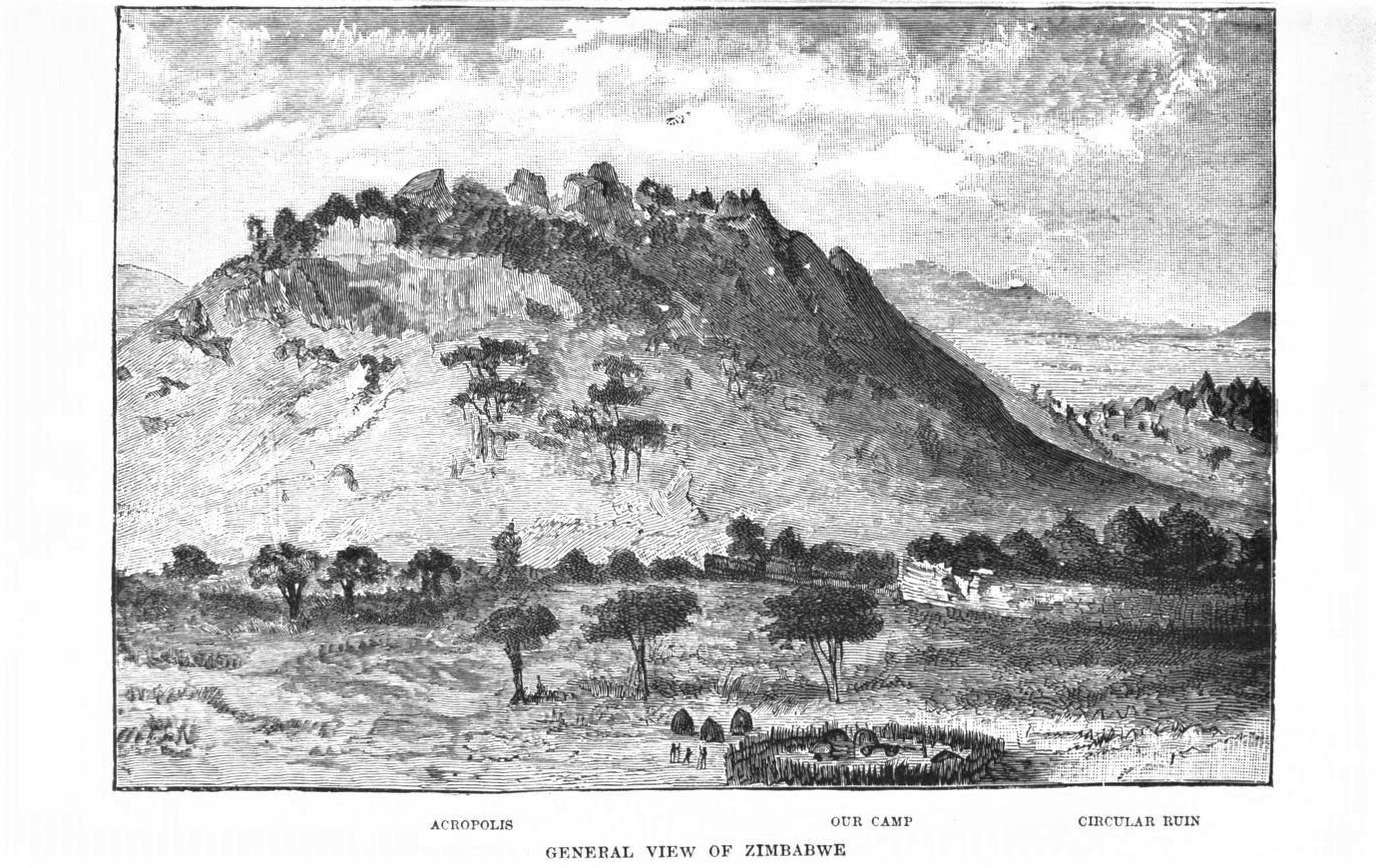
“Mrs. Bent is a lady of great learning and knowledge, as well as being a distinguished traveller, and has rendered valuable assistance to her husband in the preparation of his various books; and she is also a skilled photographer. The expedition to South Africa, which was taken under the auspices of the Royal Geographical Society, the Chartered Company, and the British Association, was for the purpose of the exploration and excavation of those ancient massive and mysterious ruins which exist in Mashonaland and which point to a time when the country of Lobengula and his indunas was a centre of wealth and civilization, with cities, palaces, and temples.
“Mrs. Bent had quite a romantic camp life when working amongst the ruins of Zimbabwe. Two waggons served the expedition as bedrooms; an Indian terrace, constructed of grass and sticks, made a novel and charming dining-room; a tent formed the drawing-room; and the suite were decorated by Mrs. Bent with a wealth of brilliant flowers which no conservatory at home could have supplied. She also had a dark tent for photography, and improvised kitchen, and a poultry-house. A hedge of grass surrounded the whole, and gave a picturesque finish to the camp. Outside this royal domain were the huts for the native workmen. Alas! however, for the delights of gypsy life. One day the long grass of the veldt started into flames, which, lashed to fury by the wind, came within a few yards of the camp, and were only beaten back by frantic efforts on the part of the little colony; the small huts were, indeed, burnt to ashes.
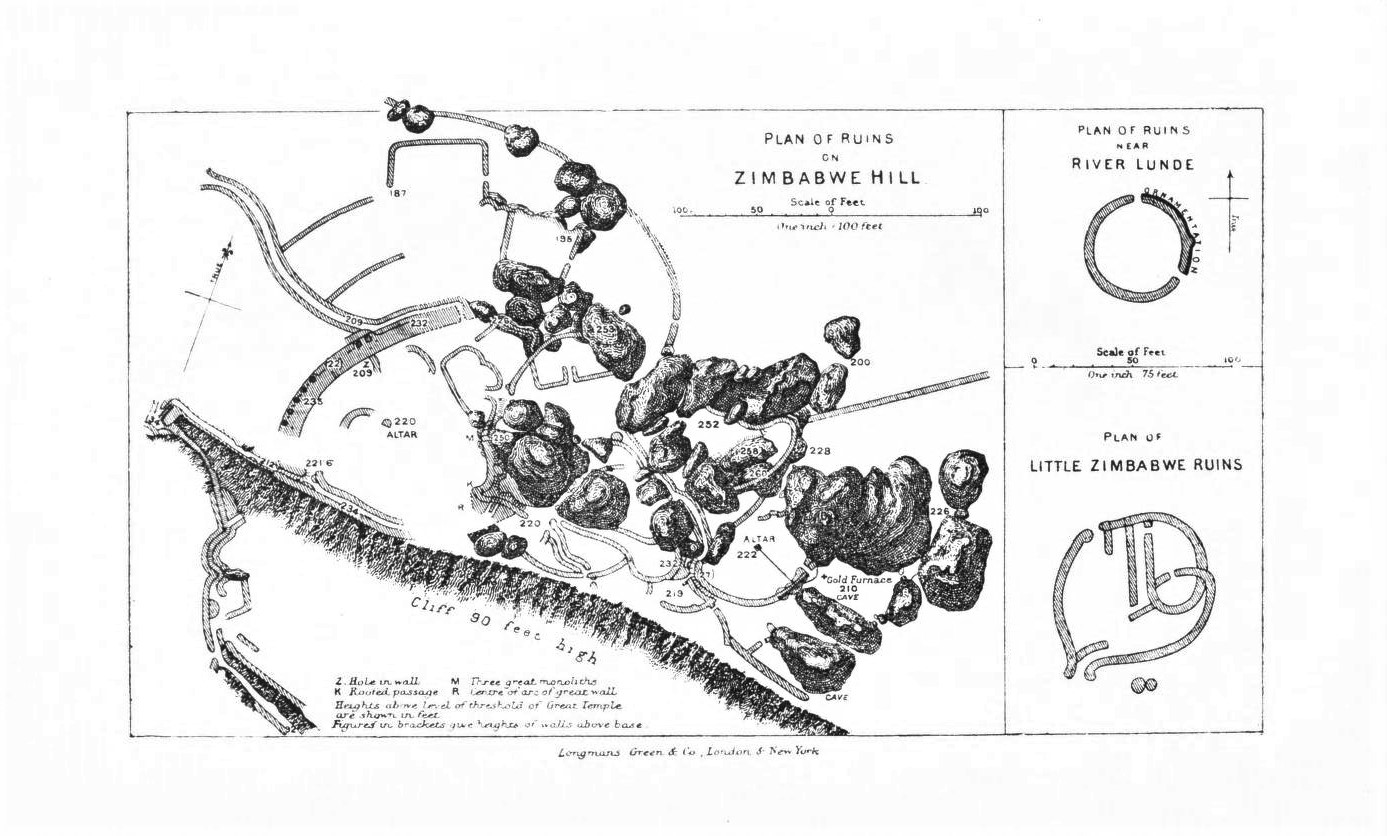
“A year was spent by Mr. and Mrs. Bent in South Africa studying the ruins and the people, the result of their investigations, in which they were assisted by Mr. R.M.W. Swan, being told in that delightful book, “The Ruined Cities of Mashonaland”. They come to the conclusion that the land, since rendered famous by the Jameson expedition, may revive the glories of the ancient ruins under British occupation and development. Mr. and Mrs. Bent are systematic travellers, and each year sees them set out for some distant land, although they usually spend the season in town, where their house in Upper Cumberland Place [sic], which is filed with mementoes of their journeys, is the resort of many famous and learned people.”
A further good example of Mabel’s abilities can be found in her very last adventure with Theodore, on Sokotra in early 1897. When their guides tried to persuade them to take a boat to avoid a particularly treacherous path (to the locals’ financial benefit), the adventurer writes: “We assured them that we had landed in Sokotra… to see the island, and not to circumnavigate it. Others could pass, so we could. Their last hope was in my hoped-for faintheartedness. They watched till I was alone in the tent, and, having recounted all the perils over again, said: ‘Let the men go over the mountain, but you, Bibi! will go in a boat, safely. You cannot climb, you cannot ride the camel, no one can hold you; the path is too narrow, and you will be afraid.’” The guides, obviously, did not know Mabel Bent. (Extract from Southern Arabia, 1900, p.368)
Interestingly, just down the road at number 28 Great Cumberland Place (Mabel rented no. 13) lived, from 1928, the equally, if not more so, adventurous traveller in Arabia and elsewhere, Joan ‘Rosita’ Forbes (1890-1967). Her 1925 book (New York, pp. 348-9), From Red Sea To Blue Nile – Abyssinian Adventure contains some references to the Bents at Axum, Ethiopia, but we don’t know whether Rosita ever made contact with the elderly Mabel Bent in the few months they were near neighbours; both women travelled many thousands of miles, but that mere 100 metres or so that separated them may well have been steps too far…

A little space must be dedicated also to Amice Calverley (1896–1959), the English-born Canadian Egyptologist who was instrumental in the recording and publication of the decoration scheme within the temple of King Sethos I at Abydos. As an associate of the Egyptian Exploration Society in 1927, there is a chance that she was known to Mabel Bent, who was in the final years of her life. Mabel celebrated her 38th birthday (1885) atop one of the Gizeh pyramids. The Bents visited Egypt several times; Mabel travelled there alone in 1898, the year after Theodore’s death.
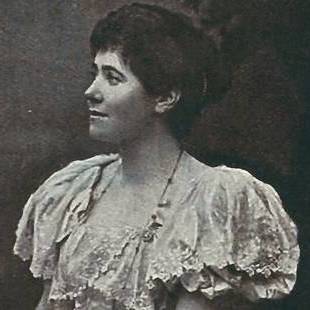
Ella Constance Sykes (1863-1939) would certainly have been among Mabel Bent’s acquaintances in London. She made two extensive journeys east – to Baluchistan via Persia (1894), and Turkestan (1915) – accompanying her diplomat brother. Mabel would probably have owned, or at last seen, Ella’s two books, Through Persia on a Side-Saddle (1898) and Through Deserts and Oases of Central Asia (1920), although she makes only a passing reference to the Bents (their work in Bahrain in 1889) in the former (page 303), and makes a point of lauding “Mrs. [Isabella Bird] Bishop, the well-known lady traveller [who] had come out to Persia some five years before… the lady for whose pluck and talent I have such an admiration” (page 302). As well as being attracted to her writings, Mabel would have enjoyed discussing field photography with Ella – who was also a keen practitioner of that tricky art.

The American writer and traveller Mabel Loomis Todd (1856-1932) is also impossible to resist. Following her marriage to the astronomer David Todd, she accompanied him to Japan in 1887, becoming, it is said, the first Western woman to walk up Mount Fuji. She went back to Japan in 1896, to Tripoli in 1900 and 1905, to the Dutch East Indies in 1901, to Chile in 1907, and to Russia in 1914. In all, she visited more than 30 countries on five continents, writes the Wiki contributor. Writing often of her travels, and lecturing on them, she became one of only a few female intellectuals in the public eye in the late 19th century. In an article on her steamer voyage to the Dutch East Indies (1901) she refers to the Bents (and her namesake, another Mabel) : “[We] are to-day skirting Sokotra, that strange island under British control, about which so little is known… In 1896 Mr. Theodore Bent induced a steamer bound for Bombay to land him there as a favor, with Mrs. Bent and a friend, and he spent some months exploring and hunting. An article descriptive of those experiences, and of the flora and fauna, the native and mountain-peaks, is perhaps the only one ever written of an island passed yearly by countless steamers. The method of return to more frequented regions was problematic, but ultimately he reached Aden in the dhow of the local Sultan, at an exorbitant rate of passage, that potentate having ordered all other dhows to refuse him transit that there might be no competition with royalty… And now the placid Indian Ocean, with its gentle remnant of northeast monsoon, its exquisite climate, and enchanting moonlight nights, beckons us onward to the Far Orient” (in the Evening Post, reprinted in Scientific American, Supplement 52, 1901, p.21365) (The article referred to is ‘Sokotra’. Journal of the Manchester Geographical Society, Vol. 14, 315-16).
No list of indomitable women travellers would be complete without a reference to the incredible Ida Laura Pfeiffer, in whose footprints Mabel occasionally followed. Although the latter never refers directly to the Austrian globetrotter in her diaries, Mabel would certainly have known of her, and probably read Ida’s travel accounts, several of which were already translated into English in her time. Ida died when Mabel Hall-Dare was just a girl of ten or so in the south of Ireland.
Any bibliography on notable women travellers would include ‘The Women Who Did’, Chapter 3, in Archaeologists in Print by Amara Thornton, UCL press, 2018, pp. 48-74, and see, e.g., See Billie Melman, Women’s orients: English women and the Middle East, 1718-1918: sexuality, religion and work (London, 1992, pp. 8, 21, 35, 280, 376, ).
“DWELLERS IN TENTS – Every man, says a philosopher, is a wanderer at heart. Alas! I fear the axiom would be truer if he had confined himself to stating that every man loves to fancy himself a wanderer, for when it comes to the point there is not one in a thousand who can throw off the ties of civilized existence – the ties and the comforts of habits which have become easy to him by long use, of the life whose security is ample compensation for its monotony. Yet there are moments when the cabined spirit longs for liberty.” (Gertrude Bell, Safar Nameh. Persian Pictures – A Book of Travel, London, 1894, p. 83)
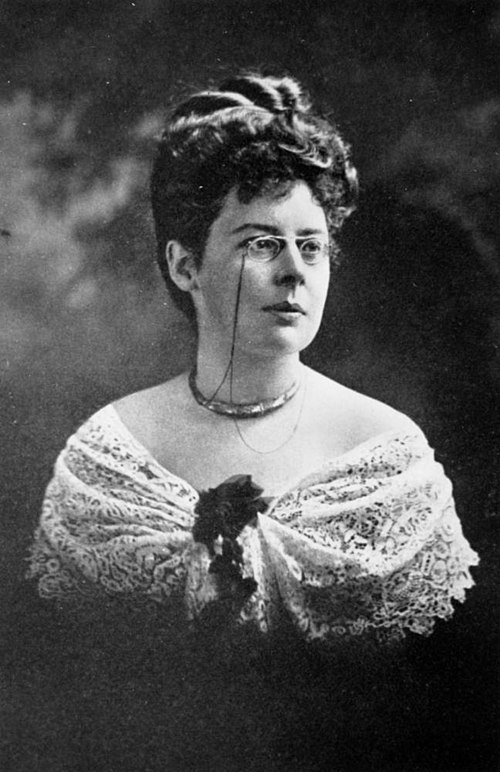
Other contemporaries of Mabel’s, any of whom have big travellers’ tales to tell, from all points of the compass. Mabel would have known of the exploits of most of them and met many: Matilda Betham-Edwards (1836-1919); Lady Anne Isabella Blunt (1837-1917); Margaret Brooke (1849-1936); Constance Gordon Cumming (1837-1924); Florence Douglas Dixie (1857-1905); Margaret Dunlop Gibson (1843-1930); Beatrice Ethel Grimshaw (1871-1953); Elizabeth Hawkins-Whitshed (Mrs Aubrey Le Blond) (1861-1934); Agnes Herbert (c. 1880-1960); Elinor Mordaunt (1872?-1942); Agnes Smith Lewis (1843-1926); Ethel Brilliana Tweedie (c. 1860-1940), Sarah Belzoni (1783-1870), Sophia Poole (1804-1891), Lucie Duff Gordon (1821-1869).
For further references, see:
Morag Bell and Cheryl McEwan, ‘The Admission of Women Fellows to the Royal Geographical Society, 1892-1914; the Controversy and the Outcome’, The Geographical Journal, Vol. 162, No. 3 (Nov., 1996), pp. 295-312 (for the background to the scandal note 1 of RGS women Fellows).
Shirley Foster and Sarah Mills, Anthology of Women’s Travel Writings, Manchester University Press, 2002. Although published over 20 years ago (and not including Mabel Bent as her diaries were then not published), still an excellent, academic, study of all the angles of women travellers and travel writing. The availability now of free online editions of most of the mid 19th century travelogues referenced adds another dimension to the study.
CarrieAnne DeLoach, Exploring Transient Identities: Deconstructing Depictions Of Gender And Imperial Ideology In The Oriental Travel Narratives Of Englishwomen, 1831-1915. Unpublished dissertation, University of Central Florida, 2006. Using many quotes from Mabel Bent’s Southern Arabia (1900) to illustrate her arguments.
Avril Maddrell, Complex locations: women’s geographical work in the UK 1850–1970, Oxford: Wiley/Blackwell, 2009 (the link is to a review, retrieved Sept. 2025).
Manley, D. 2013. Women Travellers in Egypt: From the Eighteenth to the Twenty-first Century. Cairo: The American University in Cairo Press.
Searight, S. (ed.) 2005. Women Travellers in the Near East. Oxford: Oxbow Books.
“Yet women are under a sex disqualification when a poor little squabble among men arises, whether or not one of them, like Mrs. Theodore Bent, the wife of the distinguished traveller of Mashonaland, who has done the work of a dozen explorers, has friends who expect that her additions to the scientific knowledge of the day will be acknowledged as they would be if she were of the other sex.” (Paddington Times – Friday, 2 August 1895)
‘Our London Letter – Two of the most interesting topics which have come into the week’s talk are on feminine matters, though of very widespread concern. “Shall the Royal British Nurses’ Association be incorporated or not?”… The other question relates to the “Lady Fellows” of the Royal Geographical Society, over whose admission that reputable and scientific body are so seriously exercised. The election of twenty-two ladies, among whom are Mrs. Bishop, Miss Gordon Cumming, Mrs. Theodore Bent, who accompanied her husband through his explorations in Mashonaland, and his dangerous recent travels through Abyssinia, Mrs. George Littledale, who was her husband’s companion all across the inhospitable heights of the Pamirs, and Mrs. Archibald Little, lately returned from the frontier of Thibet, gave offence to a small but energetic section of the members upon the technical ground that the innovation had been made by the Council (who, by the way, were fortified in their action by the opinion expressed by eminent counsel) without first obtaining the sanction for their proceeding from a general meeting of the Fellows. There are some three thousand five hundred Fellow, about three hundred of whom attended a gathering convened by the dissentients, who declared that the Council had acted illegally, the result being that it was decided to admit no more ladies. Now, however, the difficult problem arises as to what is to be done with the present twenty-two female fellows? Upon this point may run the election of a new Council, for the “No Women” party are prepared to endeavour to upset the present board, upon which are Sir John Lubbock, General Strachey, Mr. Clements Markham, and many other well-known names, as they have refused to politely tell the ladies their election was invalid.”
Return from Note 1
‘In the Footsteps of Theodore and Mabel’ – Jennifer Barclay, May 2020
‘In the Footsteps of Theodore and Mabel’
Jennifer Barclay muses for us on the ‘blessed’ Bents, May 2020…
“And then, by chance, I met Theodore and Mabel Bent. They came into my life as a blessing because they told me, through their diaries, what these places were like a century and a half ago in the 1880s.”
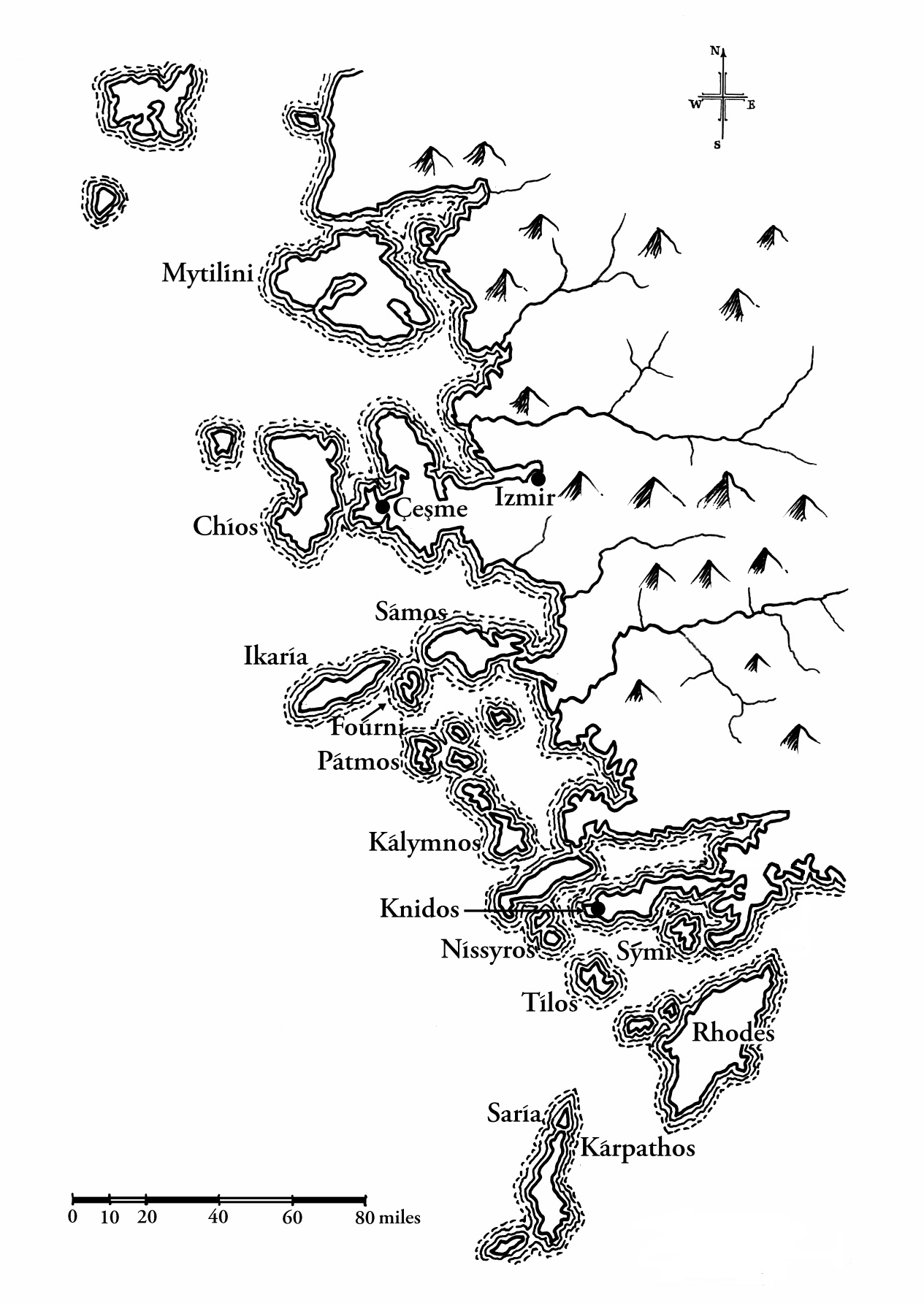
For the last few years, I had been exploring the deserted places of the Dodecanese, a group of islands at the southeast edge of Greece where it almost touches Turkey. Starting with Tilos, where I live, heading north, south, east and west, I was going to the abandoned farms and harbours, the semi-abandoned villages and islands.
Many of these places had been well populated, self-sufficient and thriving for centuries, even during the Ottoman occupation. I was trying to understand better what happened over the last century or two, when their populations plummeted from thousands to hundreds. The stories differ from island to island, but a combination of hardships at home and opportunities elsewhere caused mass emigration.
And then, by chance, I met Theodore and Mabel Bent. They came into my life as a blessing because they told me, through their diaries, what these places were like a century and a half ago in the 1880s.
These diaries were compiled into a book called The Dodecanese: Further Travels Among the Insular Greeks – the Selected Writings of J. Theodore & Mabel V.A. Bent, 1885–1888 edited by Gerald Brisch, and I believe I found it on the shelves of Akadimias Bookshop in Rhodes town. Through it, I was able to travel in their footsteps and see through their eyes a few of the islands I was exploring for my own book – Wild Abandon: A Journey to the Deserted Places of the Dodecanese – before the dramatic changes began.
Theodore came from the north of England, studied history at Oxford, was headed for the Bar, but gave it up to pursue his love of travel, social history and archaeology. When he married the tall, confident, Irish redhead Mabel Hall-Dare in August 1877, they set out on a life of travel and adventure.
But I must hold up my hands and say that, at first, I didn’t much like the Bents. The aim of their trip around the Dodecanese, it soon became clear, was to excavate and remove items of archaeological interest, usually without permission or with Ottoman officials turning a blind eye in return for baksheesh.
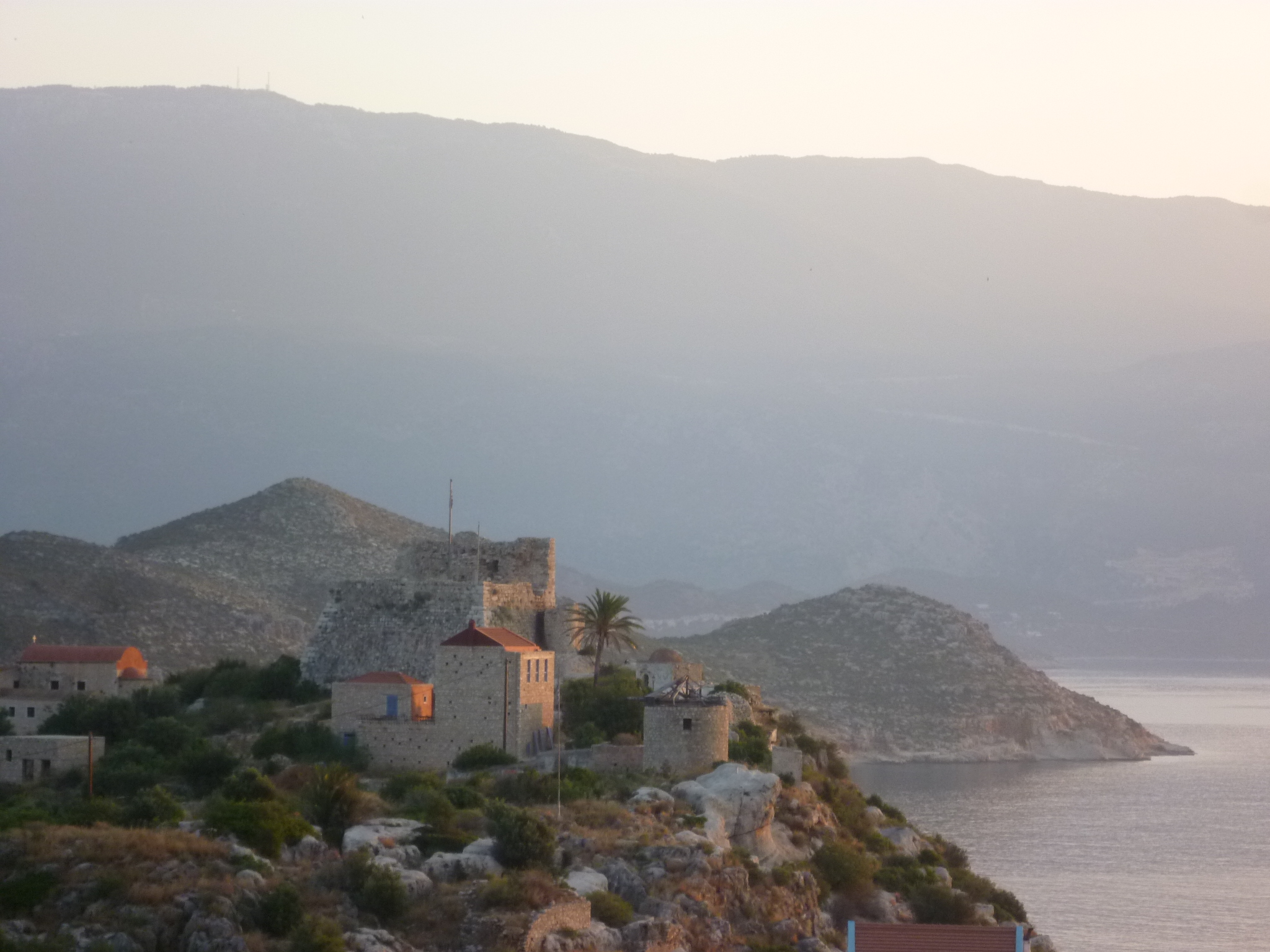
They weren’t here to get all touchy-feely with the locals; they were here to take stuff from under their noses, and they got exasperated when they found nothing of value. When in 1888, they arrived on the Turkish shores near Kastellorizo in search of antiquities in the temples and rock-cut tombs, they lamented that some lucky Austrians had got there first and taken all the good pieces. They travelled to Kastellorizo only to register with its Greek consul that they had come from Turkey, so that on their return journey the Greeks elsewhere could not touch the items they had collected. You can’t help thinking of a certain Lord Elgin who had carted off the sculptures from the Parthenon earlier in the nineteenth century.
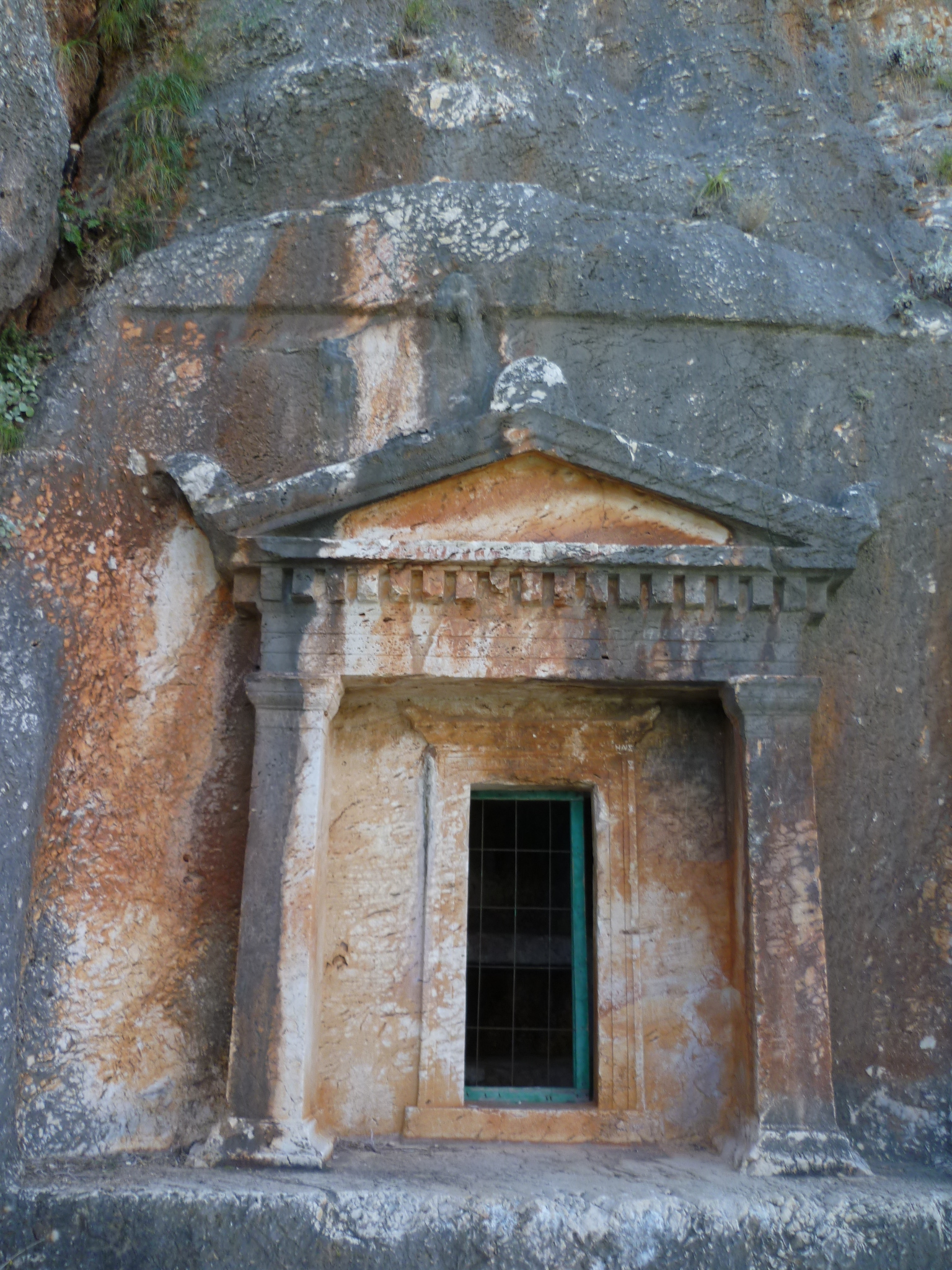
Not only that, but they were shocked by the islanders’ ‘ignorance and superstition’, in a way that reads today as a little condescending. Could Theodore and Mabel, I wondered, have built a house or made their own clothes and sustenance, survived in such a rugged, isolated place on what they could find and grow, as the islanders were doing then? It reminded me of how native Americans were being treated around that time for their supposed ignorance and superstition.
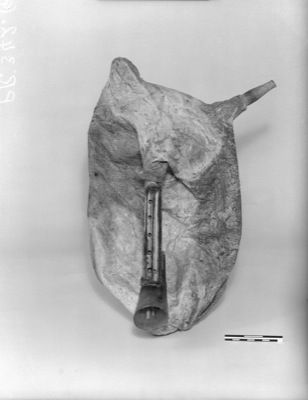
But that was the spirit of the times, and it’s easy to poke fun now. The goatskin bagpipe or tsambouna that the Bents took back from Tilos to England 150 years ago for safekeeping in the Pitt Rivers Museum, still there on display in Oxford, might be one of very few Tilos tsambouna still in existence. In the books, and on the Bent Archive website Gerry Brisch co-edits, there’s plenty of evidence that the Bents were extraordinary people who travelled far further into the unknown than I’d first realised. And the fact is that what Theodore and Mabel encountered in the Dodecanese back then took them well out of their comfort zone, and their diaries are finely detailed and often exquisitely phrased.
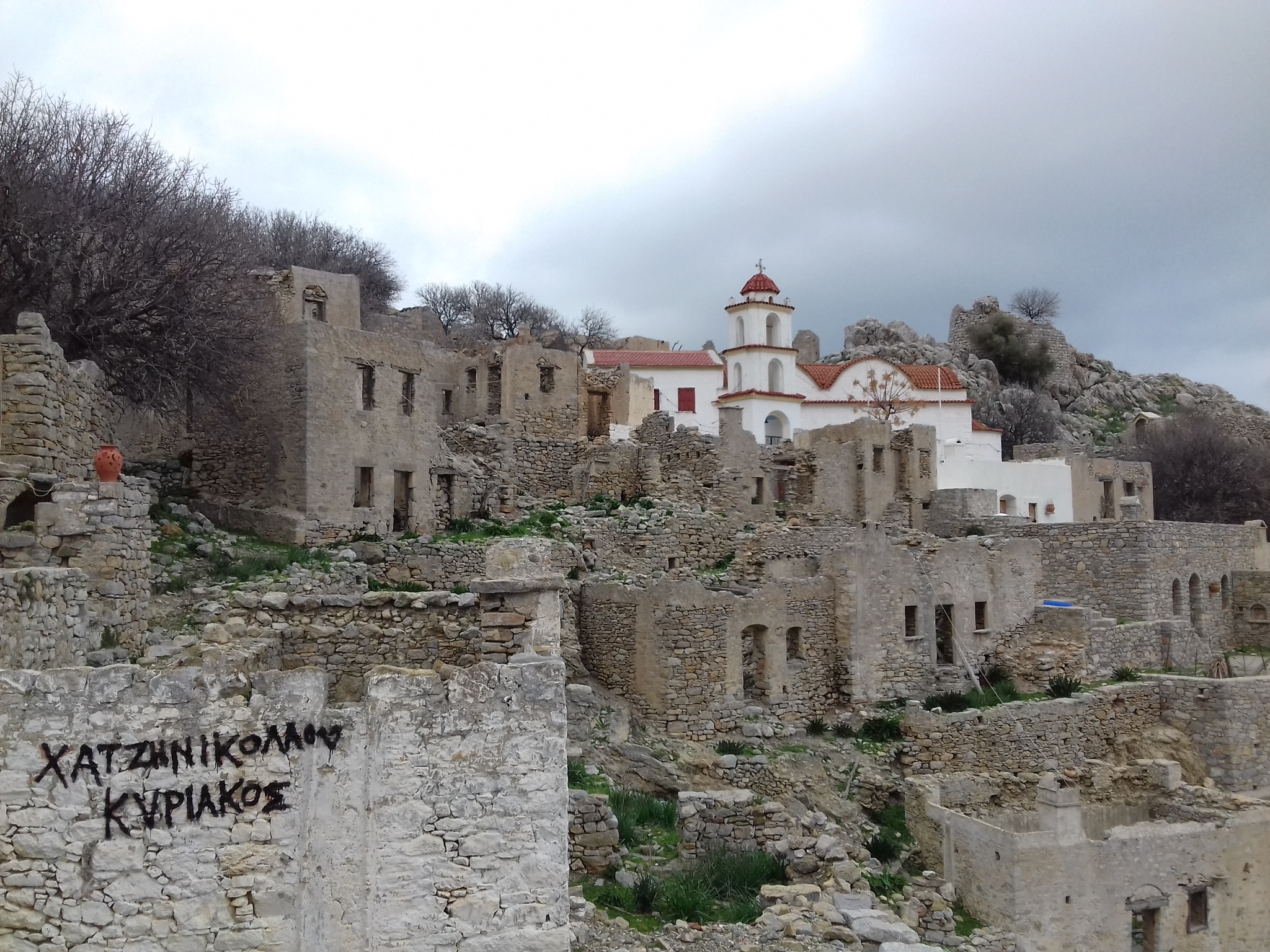
In their brief visit to Tilos they stayed with the priest, who also cured hides for making shoes. The village houses were dark, they wrote, and women sat spinning on their roofs. Tilos was ‘thinly populated, and as remote a spot as well could be found from any centre of civilisation’, rarely visited by steamer or sailing boats. Women wore coats of homespun material, and pointed leather shoes; they had wild, gypsy looks and wore earrings so big they deformed their ears. There was no doctor; the local people would ‘live and die as birds of the air’.
The Bents provide a rare record of the way the ‘decayed men’ suffering from leprosy hid in dark corners of the homes so that they wouldn’t be taken away from their families to some faraway hospital.
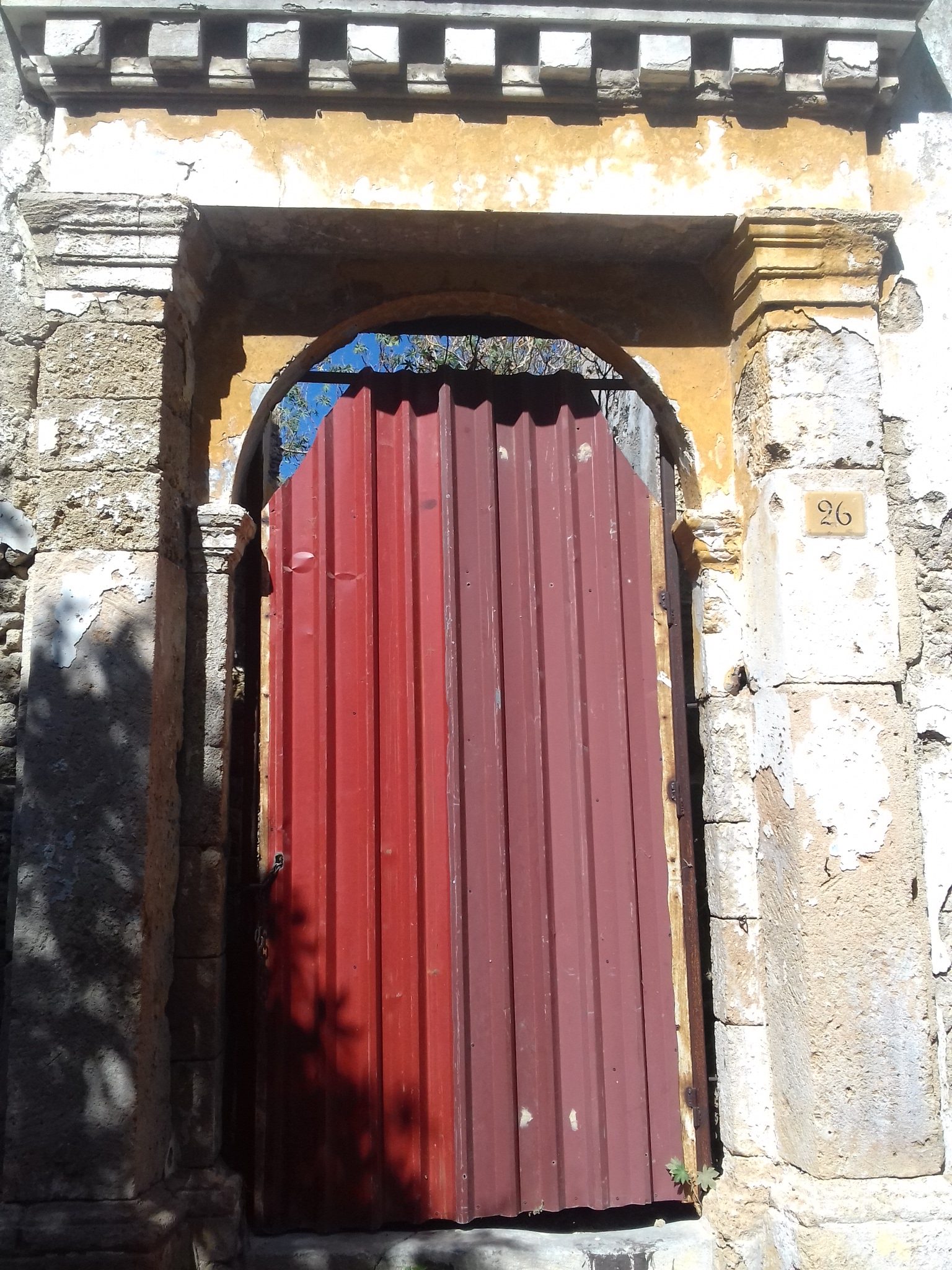
We also see a poignant picture of Rhodes town in the late 1880s, a multi-cultural society of peoples from around the Mediterranean, with the Old Town exclusively inhabited by Muslim Turks and Spanish Jews. The latter had ‘managed to secure for themselves the best quarter’, their houses tastefully decorated and their children well educated. Some sixty years later, there would be no more than a handful of Jewish people left in Rhodes.
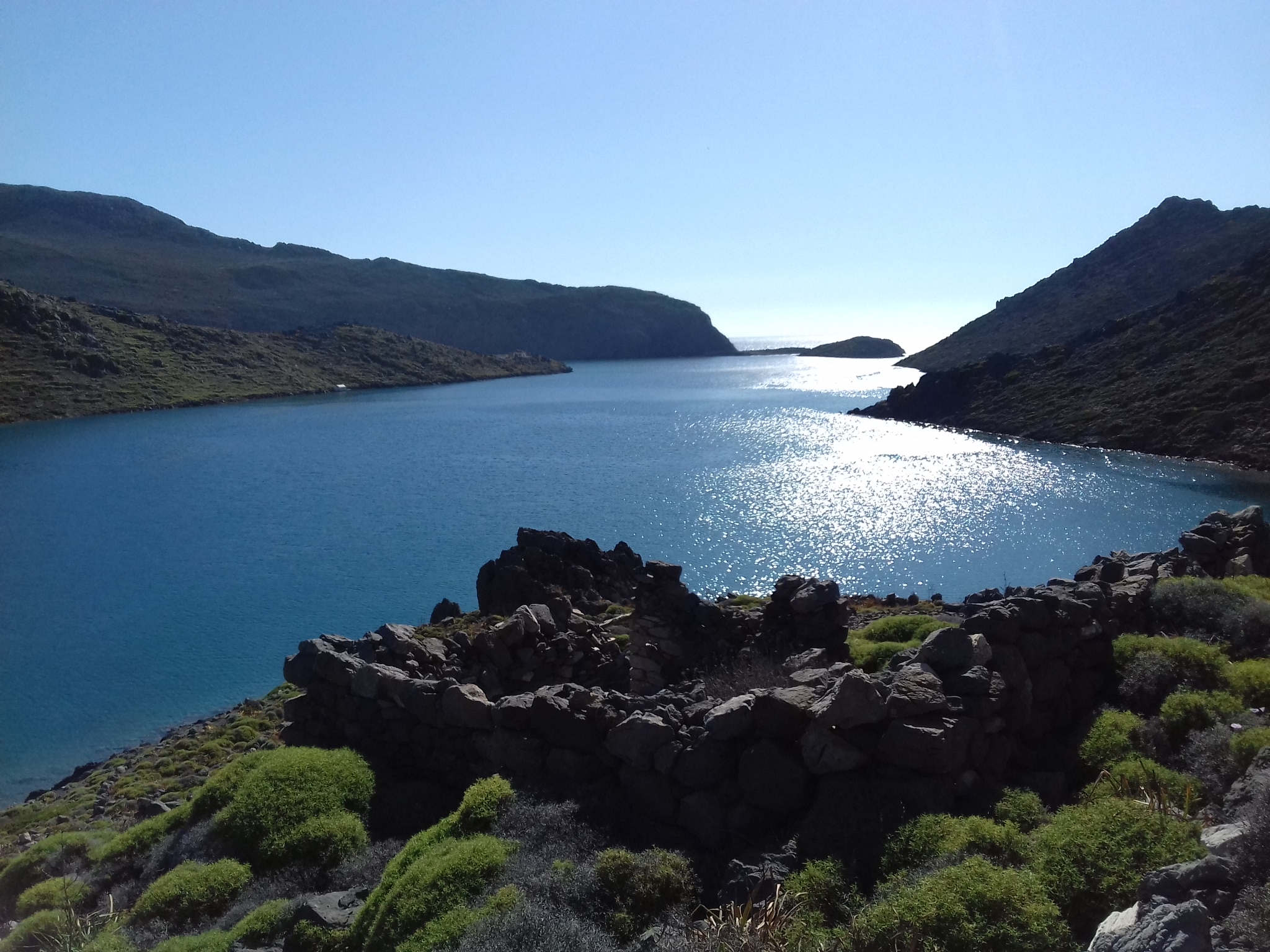
Theodore and Mabel Bent travelled direct from Tilos to Karpathos in February 1885 in their private boat. Rains had washed away the track to Olympos, and violent gusts of wind damaged the vessel. They wrote that both islands were ‘very difficult of access and rarely visited by foreigners’, and that they had therefore retained ancient customs and myths. Karpathos, wrote Theodore, was ‘one of the most lost islands of the Aegean Sea’. In some ways it still is, and it continues to retain customs and knowledge that has vanished elsewhere.
These islands are no longer lost. Whatever the challenges of travel currently, we can usually visit the islands much more easily today, and thanks to this intrepid couple, we have rare glimpses into their past.
 Wild Abandon: A Journey to the Deserted Places of the Dodecanese is published by Bradt Travel Guides and is available in e-book from Amazon and other retailers from May 2020.
 July 2025 – now available as an Italian edition as Incanto remoto. (The Bents were great lovers of Italy by the way too, Theodore have read Italian history at Oxford in the 1870s and publishing three monographs on Italian history.)
Jennifer Barclay grew up in a village in the Pennines in the north of England and studied Ancient Greek at grammar school; after studying English at Oxford she spent a year in Athens and has travelled widely in the Greek islands. She settled on Tilos in the Dodecanese in 2011, where she lives surrounded by hills and sea with her dog and works from home as an editor and literary agent. She has written a book about Korea, Meeting Mr Kim, and two books about Greek island life, Falling in Honey and An Octopus in my Ouzo. A contributor to publications including The Times, Metro, The Guardian, Daily Mail, Food and Travel and Psychologies, she has appeared on BBC Radio 4 and on Greek television.
Mabel Bent and Gertrude Bell – two B’s in a pod

A fascinating profile of Gertrude Bell (1868-1926) in Baghdad the other night (December 2019)* on BBC 4 (a re-showing of a progamme from 2017) –unquestionably an important and extraordinary figure – Arabist, archaeologist, diplomat, agent provocatrice: and no match for Mabel Bent (1847-1929), the latter, it seems, giving her short shrift the few occasions they met in the early 1900s, in Palestine and around. Bell, in the bully spectrum, of course took an instant dislike to Mrs Theodore Bent – as much no-nonsense as she was herself.
Bell writes to her stepmother Dame Florence Bell, 6 February 1900: ‘I met Mrs. Theodore Bent, but having thrown the Salaam, as we say in my tongue, I rapidly fled, for I do not like her. She is the sort of woman the refrain of whose conversation is: “You see, I have seen things so much more interesting” or “I have seen so many of these, only bigger and older”… I wonder if Theodore Bent liked her.’ He did; very much.
* Randomly repeated it seems; a VPN may help outside the UK.
“DWELLERS IN TENTS – Every man, says a philosopher, is a wanderer at heart. Alas! I fear the axiom would be truer if he had confined himself to stating that every man loves to fancy himself a wanderer, for when it comes to the point there is not one in a thousand who can throw off the ties of civilized existence – the ties and the comforts of habits which have become easy to him by long use, of the life whose security is ample compensation for its monotony. Yet there are moments when the cabined spirit longs for liberty.” (Gertrude Bell, Safar Nameh. Persian Pictures – A Book of Travel, London, 1894, p. 83)
Bell on Bent: The online ‘Bell Archive’ produces some other fascinating insights:
“[Thursday, 25 January 1900]: Fine morning and wet afternoon. Shopped after lunch. Still slack and miserable. Called on Mrs Dickson and met Mrs Theodore Bent…”
“[Tuesday, 6 February 1900]: Rained a little in the morning but cleared after lunch and I went out shopping, and through the town to the Valley of Hinnom. Met Mrs Th. Bent, horrid woman. Found the last of the starch hyacinths, cyclamen, anemones, and a blue and a yellow flower in the ‘adas fields. Also branches of almond. Met my friend who greeted me kindly and asked me what I was going to do with all that grass.”
“[Friday, 13 April 1900]: Went down to Christ Church at 11 and found the service not nearly over, so I went in and waited. Then Mrs Dickson, Mr Dunn, Baby, Mr Green and I set out to Gethsemane to see the Nebi Musa pilgrims. (I saw Mrs Th. Bent outside the church, she has only been to Mashetta and Bozrah.)”
“[Wednesday, 1 February 1905]: Mr Dunn dined and we talked all the evening. Mrs Bent seems to be making mischief.”
Mabel Bent’s travel Chronicles are available from Archaeopress, Oxford.
Incidentally, the American historian, archaeologist and scholar. Charles Cutler Torrey (1863–1956) also remembers sitting next to Mabel one night at a dinner-party in Jerusalem (Mabel visited Palestine almost annually in the first two decades of the 20th century) – he records finding her “a terror” (B.R. Foster, From New Haven to Nineveh and Beyond; Lockwoood Press, Columbus, GA, 2023, p.151).