A list of Theodore Bent’s ‘Middle East’ articles/publications.

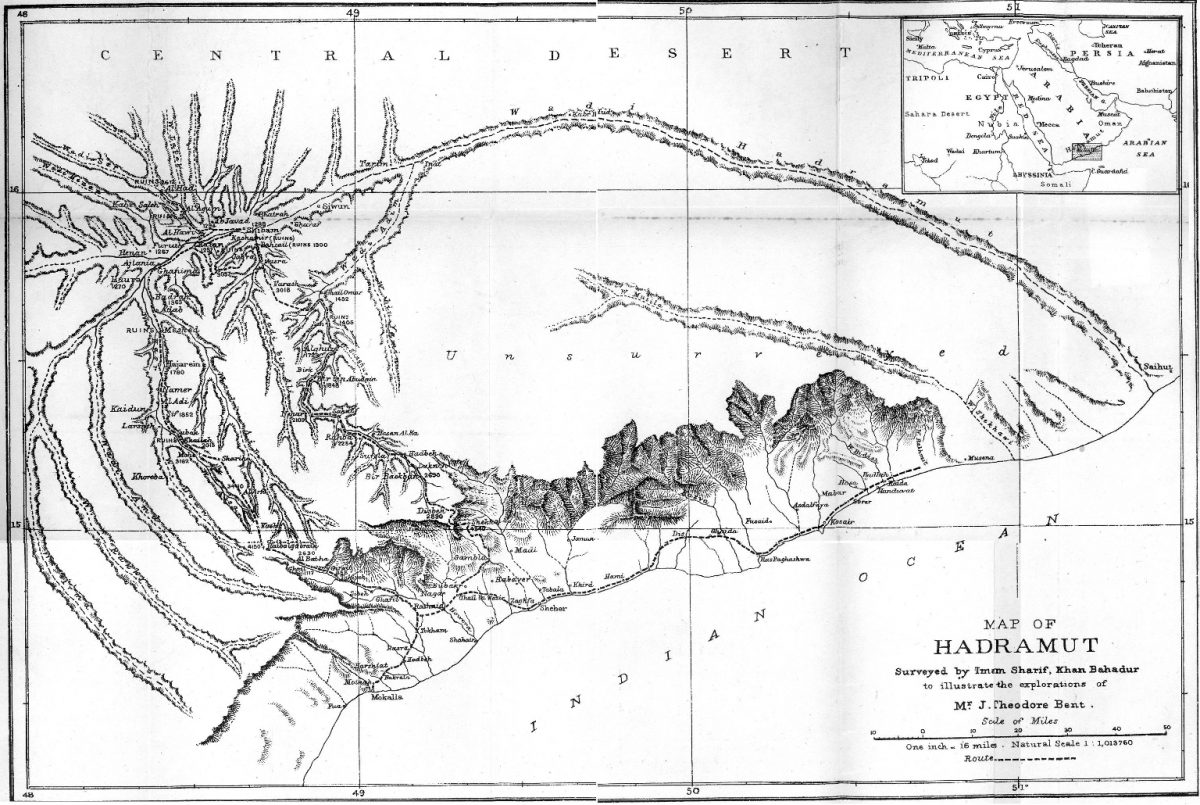
The region of the ‘Wadi Hadramut’, Yemen, the setting for three explorations by the Bents in the 1890s (archive.org).

The Bents’ third significant field of studies was the Middle East, beginning with an expedition to the ‘Mounds of Ali’, Bahrain (1889), followed weeks later by an historic horseback journey, south-north, through Persia. Bent’s interest in the ‘Phoenicians’ piqued, the celebrity explorers embarked on three adventures between 1894-7, to the Yemen (specifically the inhospitable ‘Wadi Hadramut‘, including stays in Muscat, Oman, and Sokotra). These tours generated an extensive corpus of popular and more ‘academic’ articles (historical, ‘archaeological’ and ‘ethnographic’ in content). Along the way they acquired artefacts, ancient and modern, that they would seek to sell or retain for their private London collection. The British Museum, for example, has a large collection of their material. The rigours of travel finally took their toll on Theodore Bent; he died, aged just 45, shortly after returning from Aden (5 May 1897). Had he lived, he would certainly have written a book or two encompassing these adventures, as it transpired, it was left to his widow, Mabel, to assemble the comprehensive monograph that remains the great tribute to their work in Southern Arabia (1900).

Bent’s writings on the Middle East by year of publication:

1889

1890

1891

1893

1894

1895

1897


For Bent’s overall bibliography click here.

A list of Theodore Bent’s ‘Africa’ articles/publications (based on today’s borders).

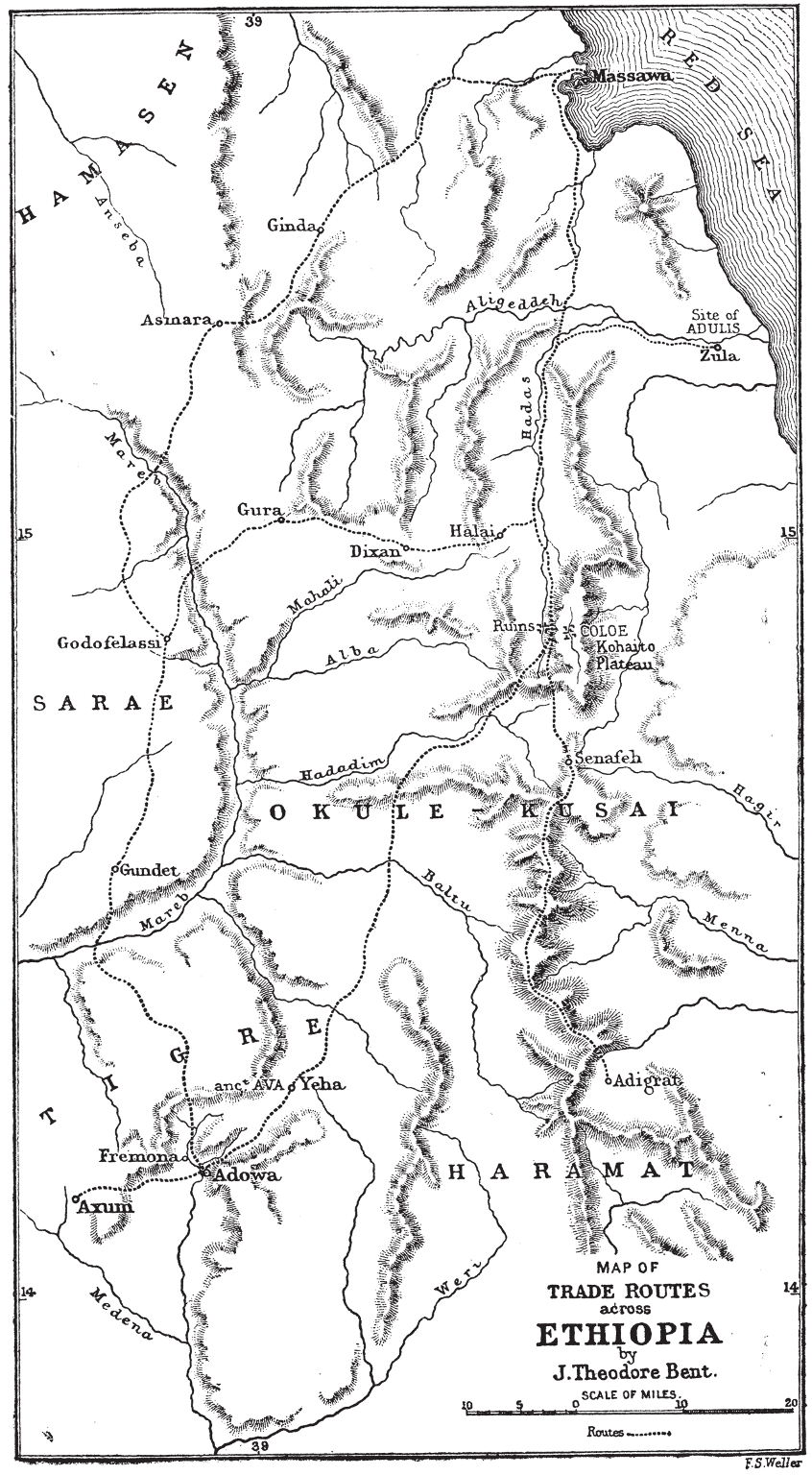
Theodore's map of Ethiopia (photo: The Bent Archive)
Bent’s map of Ethiopia (1893) (The Bent Archive).

The Bents’ second significant field of studies (after the Turkish littoral and the Aegean) was the African continent, beginning with a ‘tourist’ visit in early 1885 to Egypt, taking in such sine qua nons as the Pyramids. The great breakthrough for the celebrity explorers was a commission from Cecil Rhodes to investigate in 1891 the ruins of Great Zimbabwe (in today’s Zimbabwe), followed by adventures in Ethiopia (Aksum, 1893), and the Sudan (1896), generating an extensive corpus of popular and more ‘academic’ articles (historical, ‘archaeological’ and ‘ethnographic’ in content). Along the way they acquired artefacts, ancient and modern, that they would seek to sell or retain for their private London collection. The British Museum, for example, has a large collection of their material. Two best-selling monographs resulted from these expeditions to Africa: The Ruined Cities of Mashonaland (1892) and The Sacred City of the Ethiopians (1893).

Bent’s writings on Africa (today’s boundaries) by year of publication:

1892

1893

1896

For a consolidated Bent bibliography click here.

A list of Theodore Bent’s ‘Turkey and Asia Minor’ articles/publications (based on today’s borders).

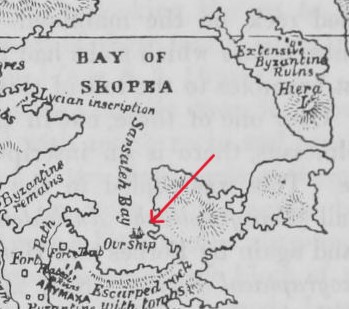
“Our ship” The Bents anchor their sloop, “Evangelistria”, off the Turkish coast in 1888, not far from modern Fethiye. Bent has drawn in their ship on an Admiralty chart of the time.

The Bents’ first significant field of studies was the Turkish littoral and Aegean, beginning with a ‘tourist’ visit in early 1883, taking in such sites as Delphi and Mycenae. This trip inspired a decade-long passion for these celebrity explorers (with a tour more or less every year), generating an extensive corpus of popular and more ‘academic’ articles (historical, ‘archaeological’ and ‘ethnographic’ in content). Along the way they acquired artefacts, ancient and modern, that they would seek to sell or retain for their private London collection. The British Museum, for example, has a large collection of their material.

Bent’s writings on Turkey and Asia Minor (today’s boundaries) by year of publication:

1883

1885

1887

1888

1889

1890

1891

1892

  • ‘The Two Capitals of Armenia (Sis and Etchmiadz՝m)’. Eastern and Western Review (not seen; page numbers n/a).

1896


For a consolidated Bent bibliography click here.

A list of Theodore Bent’s ‘Greece’ articles/publications (based on today’s borders).

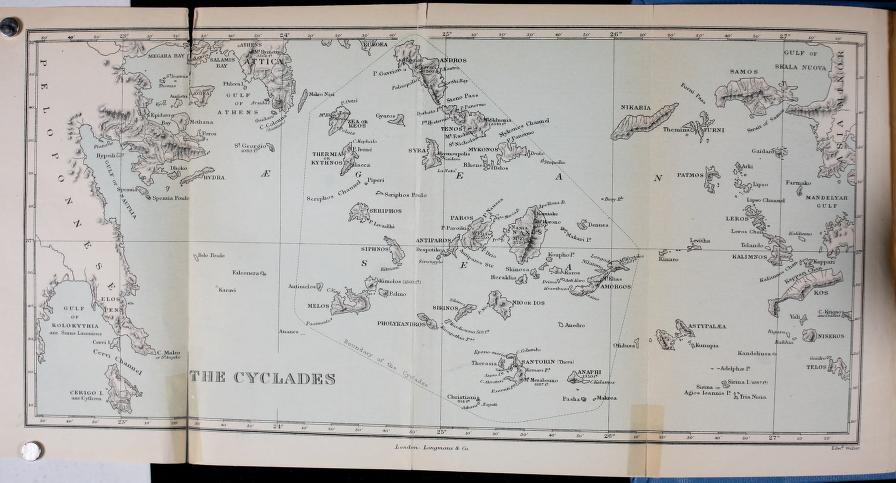
Bent’s map from the first edition of his 1885 book, “The Cyclades, or Life Among the Insular Greeks”  (archive.org)

The Bents’ first significant field of studies was the Aegean, beginning with a ‘tourist’ visit in early 1883, taking in such sites as Delphi and Mycenae. This trip inspired a decade-long passion for these celebrity explorers (with a tour more or less every year), generating Bent’s classic guide to the Cyclades (perhaps he is partly to blame for the islands’ current over-tourism in the summer months today), and a substantial corpus of popular and more ‘academic’ articles (historical, ‘archaeological’ and ‘ethnographic’ in content). Along the way they acquired artefacts, ancient and modern, that they would seek to sell or retain for their private London collection. The British Museum, for example, has a large collection of their material.

Bent’s writings on Greece (today’s boundaries) by year of publication:

1883

1884

1885

1886

1887

1888

1889

1891

For Bent’s overall bibliography click here.

Bent/Carnarvon correspondence – October 1889

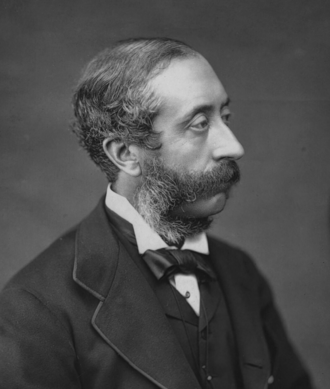
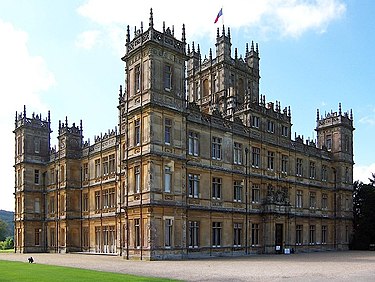
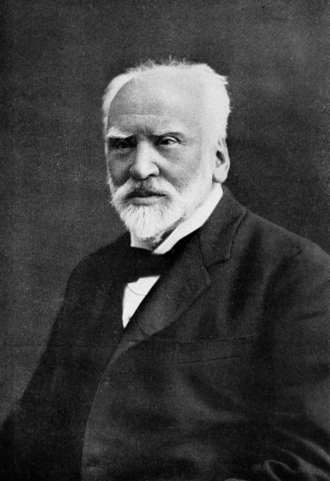
Henry Howard Molyneux Herbert, 4th Earl of Carnarvon, KP, PC, DL, FRS, FSA (1831-1890) (Wikipedia).

Two letters, October 1889, from Theodore Bent to Henry Howard Molyneux Herbert, 4th Earl of Carnarvon, KP, PC, DL, FRS, FSA (24 June 1831 – 29 June 1890), Highclere Castle, Hampshire, UK. The original letters are now in the Hampshire County Archives (75m91/R13/40-41). Carnarvon’s original letters to Bent have not surfaced; the latter would have had a fascinating correspondence archive but it is presumed lost. The reply to Bent’s first letter must have been exceedingly positive, as can be deduced by the speed in which the meeting was arranged and the much less formal style of Bent’s  second communication.

Highclere Castle (Hampshire, UK), seat of the Earls of Carnarvon (Wikipedia).

Background: The Bents spent early 1889 in the Middle East, with a few weeks excavating at the ‘Mounds of Ali‘, Bahrain, and then riding south-north the length of Persia before returning to London via Kiev. The couple’s explorations for the following season (1890) were clearly unfixed (and time was pressing) when Bent sought to make contact with Henry Herbert, 4th Earl of Carnarvon at Highclere, hopefully to smooth (and perhaps co-finance) his passage to the Bulgarian region of Burgas on the Black Sea.

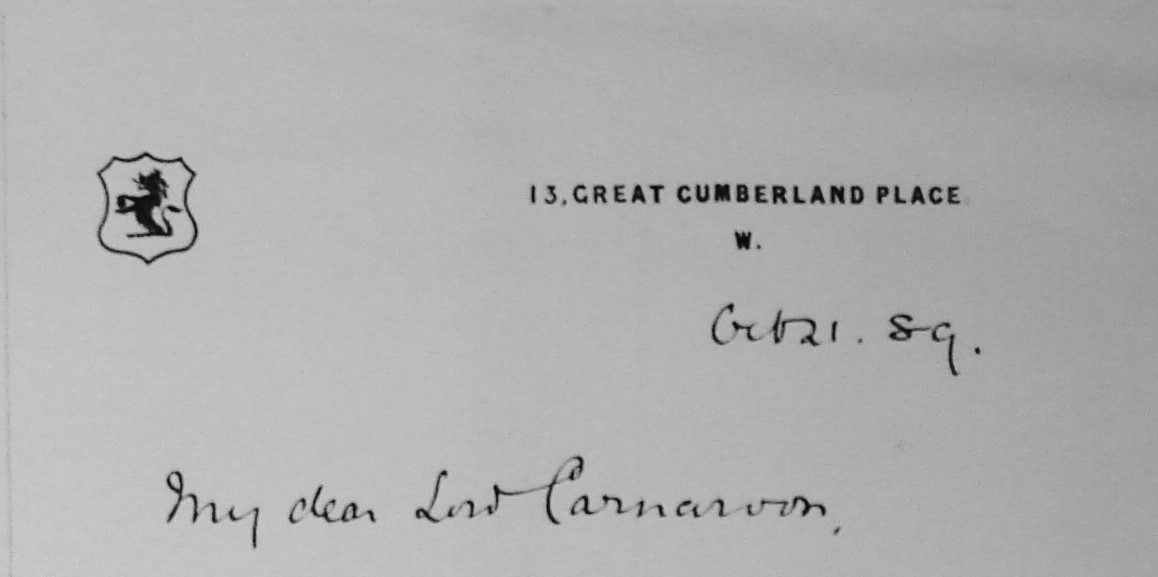
The opening of Bent’s second letter to Earl Carnarvon. The original letters are in the Hampshire County Archives (75m91/R13/40-41).

Why especially Bent had his sights set on this area is still to be researched and answers might be found in extant communications between Bent and Cecil Smith (see Letter 1). One factor would have been that the sites (and any discoveries there) were unlikely to have the levels of official scrutiny he was exposed to in Greece and Turkey – but some of the material culture from there would, of course, reflect the lives of ancient Greek colonies. In the end, for whatever reason, the Bents opted in 1890 for the Turkish littoral, settling for squeezes of early inscriptions and determined to find ancient Olba (which they did). Sadly, Bent’s affable correspondent was to die relatively young in that same year (1890), being succeeded by the 5th Earl, ‘Tutankhamen’ Carnarvon.

Letter 1 – Bent to Carnarvon

13, Great Cumberland Place, W. [London]

Oct. 16 [1889].

My Lord,

Mr Cecil Smith tells me you have kindly promised to help me with regard to certain excavations I hope to undertake near Bourgas at the beginning of the year [1890].

My object is to get a personal introduction to Mr. [Stefan] Stambolov but if I might speak to you on this matter at any hour you like to name I think I could explain matters more definitely.

I am your Lordship’s obedient servant,

J. Theodore Bent

Notes:

Bent’s friend Cecil Harcourt Smith, 1859-1944, of the British Museum and later the V & A.

Burgas (Bulgaria), ancient port on the Black Sea.

Stefan Stambolov, 1854-1895, Bulgarian politician, journalist, revolutionary, and poet who served as Prime Minister and regent. He was assassinated in Sofia in 1895.

Letter 2 – Bent to Carnarvon


13, Great Cumberland Place, W. [London]

Oct. 21 [1889].

My dear Lord Carnarvon,

It will give me great pleasure to accept your kind invitation to visit you at Highclere, and I will come down to Newbury on Saturday next [26th] by the train you name.

I remain my Lord,

Yours faithfully,

J. Theodore Bent

Amorgos amigos

Bent’s friend, Sir Edwin Pears (wikipedia).

Theodore Bent had a good friend in Sir Edwin Pears (1835-1919), a British barrister, author and historian, whom the Bents met in Constantinople (although here our interest is on the Cycladic island of Amorgos).

Neither in his book The Cyclades, nor in his Easter article, does Bent make it clear whether his wife Mabel was with him on Amorgos in the Spring of 1883 or not. Indeed, in his 1884 article he ends: “Next day the relentless steamer called and carried me [our italics] off to other scenes.” It is rather a mystery.

We do know, however, that Bent did travel on his own for his second visit to the island in early 1884, Mabel deciding to stay on Paros/Antiparos, feeling below par (see The Travel Chronicles of Mabel Bent, Vol. 1, 2006, p. 46, and our earlier article on Amorgos at Easter 1893).

Now, interestingly, a section in Edwin Pears’ (1835-1919) book on Turkey (1911) seems to suggest that Mabel was with Theodore on Amorgos in 1883 (their first visit to the Cyclades). Pears, a good friend of the Bents, recalls a folkloric episode from the island told him by the explorer, which, it seems, was never published; it is therefore a noteworthy addition to Bent’s adventures on Amorgos and should be included with Bent’s publications on that Cycladic place (and, of course, within his collected writings on customs and traditions generally).

Here is what Bent’s Amorgos amigo has to say:

“I conclude this notice of surviving paganism by telling a story for which my authority is the late Theodore Bent. In his interesting book on the Cyclades, his last chapter, full of good matter, is about the island of Amorgos at the south-east end of the group he has been describing. The following story is not in it, but was told me by him shortly after the incident occurred; and Mrs Bent, who nearly always accompanied her husband, has kindly informed me recently that it was on Amorgos where the incident happened. Mr Bent had so often found that the customs mentioned by Herodotus were continued to the present time, that he incautiously asked the priest of St Nicholas, the successor of Poseidon as the protector of sailors, whether the old practice of divination by tossing up knucklebones and learning by the way in which they fell on the altar what the direction of the wind would be, still continued. The answer was in the negative. When the priest turned away, an old woman who had overheard the conversation said to Mr Bent, ‘All the same, Chilibé [sic], no ship goes to sea without the crew coming here to learn how the wind will blow.’ Mr Bent said nothing, but having learned that two or three days later a vessel had arranged to leave, watched her crew, and having seen them start on their way to the church, followed them at a distance, taking care to keep out of sight. They entered the church, and five minutes later were followed by Mr Bent, who arrived just in time to see, through the holy gate, candles lighted upon the altar, the priest with his hat off, and his long hair down, and in the very act of tossing the knucklebones.”

Pears also makes a glowing reference to his friend Bent in his The destruction of the Greek empire and the story of the capture of Constantinople by the Turks (1903, p. 449, fn. 1): “Mr. Theodore Bent, who had paid greater attention to the archaeology of the Greek Islands and to their present condition than any other Englishman…”

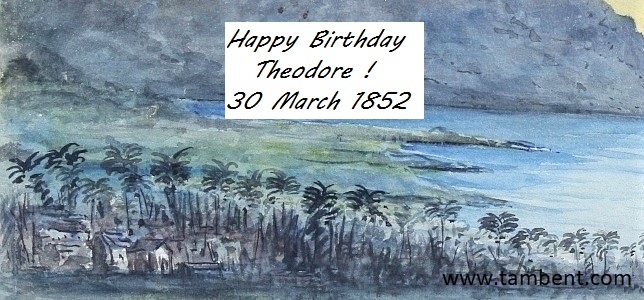
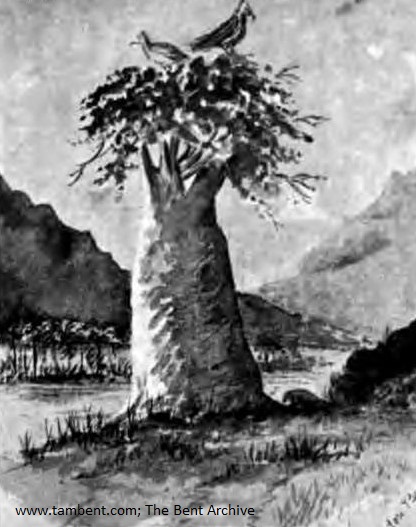
Birthday greetings from ‘Kalenzia, on the Isle of Sokotra, 1897’. A ‘lost’ watercolour by Theodore Bent

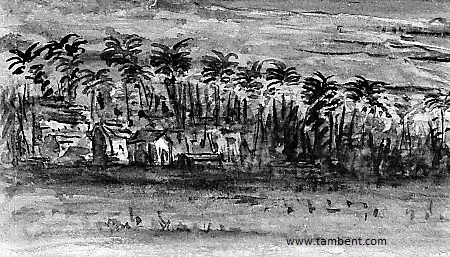
‘Kalenzia, Isle of Socotra, 1897’. Watercolour (detail; private collection, reproduced with permission).


“Mr. Theodore Bent, the famous archaeologist is going to explore the island of Sokotra, on the West Coast [sic] of Africa, this winter. Sokotra is said to contain some important ruins, and if Mr. Bent can discover anything as interesting as the buried cities of Mashonaland he will have again achieved fame.” (‘The Morning Leader’ – Tuesday 08 December 1896)


Poor Theodore Bent spent his 45th, and last, birthday (30 March 1897) in hospital in Aden, malaria stricken. Just a few weeks beforehand, however, he and his wife Mabel were happily wandering on camels through the plains and mountains of Socotra – a speck a centimetre west of the Horn of Africa on most maps – looking for archaeological remains and enjoying the fantastical scenery; Mabel took photographs while Theodore sketched in watercolour in his naïve way. How far back did he work at this style? As a Yorkshire Baildon boy? Or at Repton and Wadham? In any event he obviously took pleasure in the art and his illustrations later assisted his studies in the field (reminiscences, maps, plans, inscriptions, etc.); he felt assured enough to have his views published in all his books and, editors permitting, in many of his articles that had to do with the couple’s adventures in the Eastern Mediterranean, Ethiopia, Great Zimbabwe, Southern Arabia, Persia…

Heading from Mabel Bent’s Socotran diary 1896/7.

Mabel’s diaries often refer to her husband’s drawing materials and sketches, calling the latter ‘pretty’. Theodore was sketching on his last trip, in 1897, to Socotra and Aden, as his wife records: “[Thursday] February 4th [1897]. The mountains of the Haghier range [Socotra] are most beautifully peaked and needled, and here look red, not being smothered by the smooth, grey lichen. We were, though sorry to quit the mountains, glad to reach the plain, cross a river on stones and mount our camels and reach Suk… We encamped by a lagoon and had a pleasant afternoon and evening walking by the sea, and also choosing places for photography on the morrow and Theodore sketching. We had to keep the tent open at night it was so warm and still.’ [‘Travel Chronicles of Mabel Bent’, Vol. 3, Southern Arabia, 2010, page 303]

Socotra Cucumber Tree (Dendrosicyos socotrana), watercolour by Theodore  Bent (1897). [See Derdriu Marriner’s article (March 2024) on this rare tree, which the author has kindly dedicated to the Bents: “with appreciation for their pioneer research via a 15-year expedition to eastern Mediterranean, Africa and Arabia and for the artistry of Theodore’s sketches and Mabel’s photographs.”]
Several of Bent’s watercolours of Socotra are illustrated in the couple’s great work ‘Southern Arabia’. His sketch book (17.5 x 25 cm) obviously survived the rigours and maladies of the hard journey and return home from Aden at the end of April 1887. Although Theodore and Mabel were still terribly ill, once out of hospital, and barely fit for travel, they embarked immediately for Marseilles. There Theodore had a relapse and although rushed back to their London home, he died a few days later in early May (1897). His sketch book remained unopened until Mabel felt strong enough psychologically to have the watercolours photographed and prepared as plates for ‘Southern Arabia’, the anthology of their years spent in the region.

‘Kalenzia, Isle of Socotra, 1897’. Watercolour (detail), by Theodore Bent (private collection, reproduced with permission; see colour version at top of this post).

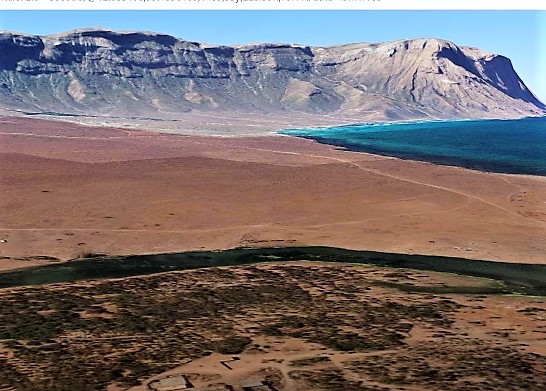
As for the original watercolours now, who knows? But by a miracle, one has survived in a private collection – it probably never travelled back to Marble Arch with the invalid couple in the spring of 1897: it is a scene of ‘Kalenzia’ (Qalansiyah), a coastal village at the extreme east of Socotra (a Google image of the area is also shown here below); we are looking west, it is sunset, the mountains above the village sombre; in the foreground, among palm trees, are a few simple huts and what looks like a mosque with its minaret. Theodore has signed his name bottom right, with the inscription ‘Kalenzia, I[sle] of Socotra, 1897’.

The DNB of 1901 adds to Bent’s entry that “[his] notebooks and numerous drawings and sketches remain in the possession of Mrs. Bent.” A few of his notebooks are in the Joint Library of the Hellenic and Roman Societies, London, but where are his “numerous drawings and sketches”? Do please let us know if you have any information on Theodore’s unpublished ones!

Let’s be clear, although Theodore made hundreds of them, surviving original watercolours by him are as rare as evidence of the elusive Queen of Sheba he spent his last years looking for. A portfolio of watercolours of Great Zimbabwe and its surroundings is thought to be in Harare… and that’s it, apart from the aforementioned scene of ‘Kalenzia’, a detail of which is appropriately used for Theodore’s last birthday card (heading this post). This mesmeric scene is not reproduced in the Bents’ ‘Southern Arabia’, but it would surely have if Mabel had been in possession of it as she worked assembling her book in London in 1900. As mentioned previously, the chances are the picture never reached Marble Arch with the rest of their travel gear in the early summer of 1897. Did Theodore give or sell it in Aden, or on the long journey home by steamer, through Suez, to Marseilles. Did someone say, ‘That’s nice’, and Theodore present it with a bow – perhaps to Henry Watts Russell de Coëtlogon (1839–1908), with whom the Bents dined in Aden on their last, sad, journey? It surely could not just have been lost (or stolen) before the Bents reached England? The happy coda is that, whatever happened to it since it materialised in Qalansiyah some 120 years ago, it appeared at auction in Germany in 2013, and is now being privately and luckily enjoyed. Happy birthday Theodore.

       Modern-day Qalansiyah, Socotra (Google).
This article is dedicated to the UNESCO-Friends of Socotra campaign entitled Connect 2 Socotra (#connect2socotra), promoting scientific research and awareness of the unique natural and cultural heritage of the Socotra UNESCO Natural World Heritage Site and the importance of protecting Socotra Archipelago’s unique species and ecosystems for the future.

Socotra is of universal importance with a biodiversity of rich and distinct flora and fauna, much of which does not occur anywhere else in the world. It also has globally significant populations of land and sea birds, including a number of threatened species and an extremely diverse marine life

In order to raise awareness of the rich and distinct heritage of Socotra, UNESCO is collaborating with the Friends of Socotra in organising a campaign of awareness events and publicity around the world. Using the hashtag #connect2socotra, the purpose of the Connect 2 Socotra Campaign is to connect the world to Socotra, and connect Socotra to the world. Search Google for campaign news and events.

December 2022 – a new discovery: A further unpublished watercolour sketch by Bent made on Sokotra in early 1897, showing two camels and distant mountains, appears in Alice Norton: ‘Mabel Virginia Anna Bent – Explorer’, appearing in Carloviana 2023, the Journal of the Carlow Historical and Archaeological Society (Dec. 2022, pp.117-123).

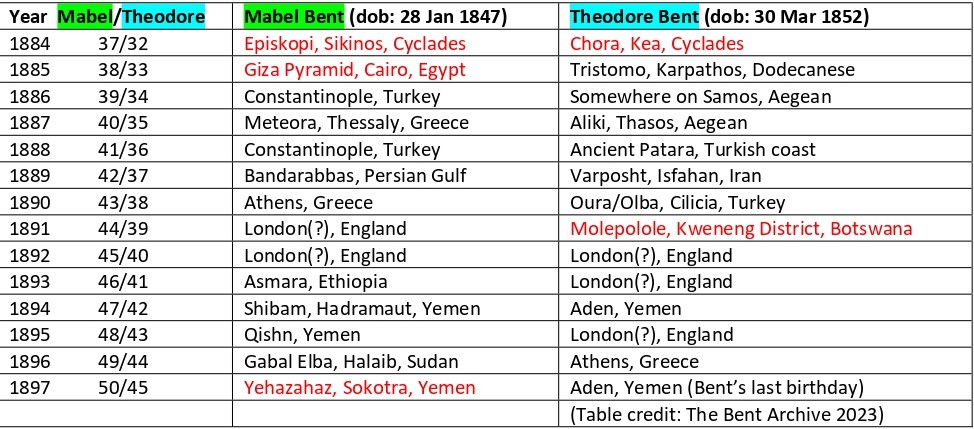
A review of Bent birthdays based on Mabel Bent’s Chronicles, 1884-1897

The accompanying interactive map below plots these birthdays: Mabel in green, Theodore in blue. (NB: London [13 Great Cumberland Place] stands in for unknown locations in Great Britain; the couple could have been away visiting family and friends in Ireland or England, including at their property ‘Sutton Hall’, outside of Macclesfield.)


There were 28 Bent birthday events (2 x 14) between 1884–1897 (the years covered by Mabel Bent’s diaries). Of these 28, only 5 (18%) were not spent in the field, and only 7 times (25%) does Mabel refer to a birthday in her notebooks directly. In the above Table, column 1 gives the year and ages of the Bents on their birthdays; columns 2 and 3 give their birthday locations. Events in red are when Mabel refers directly to their birthdays. ‘London’ is standing in for unknown locations in Great Britain. If not at their main residence (13 Great Cumberland Place), the couple could have been visiting family and friends in Ireland and England, including at their property Sutton Hall, outside of Macclesfield.

An announcement in the Colorado Catholic, Saturday, 6 February 1897, well illustrating the celebrity status of the Bents by this time at home and abroad: “Explorations in the East. Mr. Theodore Bent will this winter undertake another of his archaeological explorations in the East. Last year he made the eastern Sudan the scene of his investigations, and he has just left England for Aden, whence he will proceed either inland through Arabia, working our unexplored ground, or visit the island of Sokotra, off the coast of Africa. This island is believed to contain the ruins of great antiquarian interest, and has never been explored by an archaeologist.”

The Bents’ musical instruments in the Pitt Rivers Museum, Oxford

Interior of the Pitt Rivers Museum, Oxford (wikipedia).

The Pitt Rivers Museum in Oxford has over 50 artefacts acquired by Theodore and Mabel Bent on their 20 years of exploration, including 12 musical instruments (pipes [askomandoura] and flutes [floghera] in particular attracted them).

Some items from the Bent collection are regularly on display in the museum, including their musical instruments. In the early 1890s, the Journal of the Anthropological Institute of Great Britain and Ireland (Vol. 20, 1890-1891, 153 ff) included a paper by Henry Balfour on “The Old British ‘Pibcorn’ or ‘Hornpipe’ and its affinities”, which was part inspired by two ‘Greek’ instruments acquired at different times by the Pitt Rivers from the Bents, and “which seem to throw great light upon the true origin of the pibcorn” (see also A. Baines, Bagpipes, Oxford 1979, p.45).

Bent describes a musical episode on Tinos in 1884 (‘The Cyclades, or Life among the Insular Greeks’, 1885 – archive.org).

One instrument is a curious double-pipe (1903.130.21) from a small cluster of villages on Tinos (Tenos) in the Cyclades. Theodore Bent bought this pipe (on the couple’s second visit to the island in early March 1884), which he calls monosampilos, in the area of ‘Dio Choria’ (Δύο Χωριά), misread by Balfour or his editor as ‘Dio Maria’). The visit was a short one – just a few days (their first tour being in the spring of 1883). In her diary, Mabel recalls that the villagers “were dancing on the roofs and we went up to see them and bought a musical instrument” (The Travel Chronicles of Mabel Bent, Vol. 1, Oxford, 2006, p. 47); Theodore also describes the event – page 262 of his classic monograph on the Cyclades.

The sambouna and double-pipe from the Bent collection of musical instruments in the Pitt Rivers Museum, Oxford (detail from a line-drawing in Henry Balfour’s paper on “The Old British ‘Pibcorn’ or ‘Hornpipe’ and its affinities”,  in ‘The Journal of the Anthropological Institute of Great Britain and Ireland’, Vol. 20 (1890-1891, 153 ff; archive.org).

The second instrument that attracts Balfour’s interest is the famous bagpipe/sambouna (1903.130.23) that the Bents brought back from Karpathos (now in the Greek Dodecanese, then a Turkish possession) in 1885.

Both instruments appear in a rare line-drawing that accompanies Balfour’s paper.


The other instruments collected by the Bents and in the Pitt Rivers:

1903.130.7: Double flageolet, carved from single piece of wood. From Belgrade, Serbia (1887).

1891.4.1.1 and 1891.4.1 .2. End flute and case. From the Taurus Mountains (Turkey) (1890).

1888.37.5: End blown trumpet. From Karpathos, Dodecanese (1885). In his 1886 article,’ On a far-off island‘ for Blackwood’s Magazine (Vol. 139, Feb 1886, 240), Bent describes, perhaps, this very instrument, although his name for it is eccentric, perhaps dialect, a variant of the sourali (σουραύλι): “Amusements in Karpathos certainly are not numerous, and may be summed up as consisting of music and dancing in a variety of forms… sometimes… a man will come and play the lyre, — just one of those lyres which their ancestors played, a pretty little instrument about half a yard long, with silver beads which jangle attached to the bow. Besides this they have the syravlion, a sort of pan-pipe made of two reeds hollowed out, with blow-holes and straws up the middle, and placed side by side in a larger reed.”

1903.130.27: End blown trumpet of buffalo horn. From ‘Asia’ (date and findspot uncertain).

1903.130.18: End-flute made from a crane’s wing bone. The flute has been etched with various details, including the Anglicised word ‘syravlion’ (which the PR reads as ‘Syralion’, see above, perhaps dialect, a variant of the sourali (σουραύλι)). From Samos island (1886).

1903.130.16: End-flute of reed. Labelled by the PR as ‘pinavlion’ (dialect perhaps, today pinavli/πιναύλι). From Paros island, Cyclades (1883/4). Bent does not seem to have referred to this flute type in connection with Paros in his Cyclades (p. 379), but he does name again the ‘syravlion’ (see above): “Once, says a legend, a young man challenged the Lady of the Hundred Gates to a playing contest on the syravlion, and went accordingly to the church to play; but the Madonna took no notice of his challenge. Just as he was getting up to go he accidentally knocked over the candlestick, and broke his flute; in this way did the Madonna prove her superiority and humbled the man…”

1903.130.17: Flute made from eagle’s wing bone. From Samos island (1886)

1888.37.6: End flute. From Samos island (1886).

1903.131.18.2 and 1903.131.18.1: Lyra and bow. From Karpathos, Dodecanese (1885).

Bent’s map of the Cyclades from the first edition of his classic 1885 book (archive.org).

Bent’s classic book The Cyclades, or Life Among the Insular Greeks, has several references to the lyre and sambouna, examples of which he donated to the Pitt Rivers. Of interest too are the many mentions of the flute he calls ‘syravlion’, a word unexplained and not found elsewhere perhaps a local variant of the romantic sourali (σουραύλι) or syrinx (Σύριγξ). Bent writes from Naxos: “We came to a halt at a dirty house, where we had to sit for hours… They constantly plied us with coffee, raki, and sweets as we waited… they played persistently for our benefit on the syravlion, or panpipe, and the drum. When shepherds play the panpipe on the hillside it is romantic enough: the instrument is a simple one, just two reeds hollowed out and placed side by side…” (p. 347). There are also recollections of the instrument from the Bents’ time on the islands of Ios (p. 162) and Santorini (p. 134).

How do these instruments sound?

Museum of Popular Music, Athens (wikipedia).

The Museum of Greek Folk Musical Instruments in Athens curates over 1000 items, and many of the displays feature recordings of the instruments playing.

Click for an article on the great sambouna player of Anafi.

Click for eagle bone flute (YouTube).

Click for Karpathos lyra and sambouna (YouTube). Karpathos is where Bent’s instruments in the Pitt Rivers come from (and were presumably made).

Click for the pinavli flute (YouTube).

Other musical instruments collected by the Bents

The major repository for artefacts brought back to England by the Bents between c. 1880 and 1900 is the British Museum, London. The collection is huge, but includes only a small number of musical instruments, not often on display; we list them below for reference. Some of the artefacts entered the Museum in 1926, just a few years before Mabel Bent’s death, indicating her fondness for them; perhaps the rooms of her London home would occasionally echo with sad notes from far away…

From Ethiopia (1893) (click (YouTube) for some of these instruments playing):

Flute (left) and trumpet (right) (archive.org).

(1) Two trumpets (Af1926,0410.63 & Af1893,0715.27). The inventory number for the former indicates that this object remained in Mabel Bent’s personal collection until 1926 – when she was putting her affairs in order in her final years; she died in 1929. We may assume that the object was of sentimental value, giving her happy memories of the couple’s (perilous) journey to Ethiopia in 1893. We should note however that the findspot was not mentioned by Mabel and Bent only refers to one trumpet in his monograph of this trip: “As Digsa was one of the last Abyssinian villages of importance which we should visit, we took care here to annex an Abyssinian umbrella and a malakat [elsewhere malaket] or trumpet…” (J.T. Bent, The Sacred City of the Ethiopians, London, 1893, p. 212).

Ethiopian lyre (archive.org).

(2) Lyre (Af1893,0715.25). In his Sacred City of the Ethiopians (1896 edn, p. 25), Bent writes in Asmara: “Here for the first time we saw the Abyssinian lyre or harp, a specimen of which I coveted for six long weeks afterwards, until I was able to acquire one at Aksum…”.

Ethiopian ‘fiddle’ (archive.org).

(3) Fiddle (Af1893,0715.24). In Bent’s Sacred City of the Ethiopians (1896 edn, p. 26), he writes “… another favourite Abyssinian instrument [is] called the chera masanko. This I also got. It is a sort of violin with a square sounding board, tightly made of skin, and played with a little bow. The asmari or wandering minstrels, also play it, and it is heard at every feast, whether religious or secular.”

4) Flute (Af1893,0715.26), made of cane and leather. In Bent’s Sacred City of the Ethiopians (1896 edn, pp. 28-9), we read: “As the trumpet has only one note, so has the Abyssinian flute, the imbilta. To make an Abyssinian band suitable to escort a great man or perform at a religious festival, you require four trumpets and three flutes, each player sounding a note in turn. The imbilta is nearly a yard long, and is as great a mark of personal distinction as the umbrella.” We may assume that Bent acquired one in Aksum, however, he says they are nearly 90 cm in length and the BM item is 58 cm.

For a contemporary angle on Ethiopian music and instruments, refer to Gabriella Ghermandi (b. 1965), Italo-Ethiopian writer and performer, focusing ‘on the intersection of African (specifically Ethiopian) and Italian identity’.

From Mashonaland (Zimbabwe) (1891):

The ‘sansa’ from Zimbabwe (J.T. Bent, The Ruined Cities of Mashonaland, 1892: 81-82; archive,org).

(1) A sansa/’Makalanga piano’ (Af1892A0714/Af1979,01.4538). Described by Bent as “… very interesting specimens of primitive musical art; they have thirty or more iron keys, arranged to scale, fixed on to a piece of wood about half a foot square, which is decorated with carving behind.

This instrument they generally put into a gourd, with pieces of bone round the edge to increase the sound, which is decidedly melodious and recalls a spinet.” (J.T. Bent, The Ruined Cities of Mashonaland, London, 1892, pp. 81-82).

[Also known as the mbira or ‘thumb-piano’, click (YouTube) to hear it play]

(2) A rattle (Af1892,0714.24). Such a rattle may be referred to in this extract from Bent’s Ruined Cities of Mashonaland (1892, p. 330): “Evidence of festivities was also present in the shape of drums and long chains of grass cases for beads, which they hang round their calves to rattle at the dances…”

(3) Musical bow (Af1892,0714.146). On page 20 of Bent’s Ruined Cities of Mashonaland (1892), such a bow is referenced: “A man stood near, playing on an instrument like a bow with one string, with a gourd attached to bring out the sound. He played it with a bit of wood, and the strains were plaintive, if not sweet…”

From the Middle East (1889-1897):

1) and 2) Two flutes (As1926,0410.56 and As1926,0410.55) from Bahrain (1889), when the Bents spent some time excavating at the so-called ‘Mounds of Ali’.

3) Flute (As1926,0410.61). Acquired on the Bents’ remarkable journey on horseback, south-north, through Persia in 1889 on their way home from Bahrain. “We saw a wedding at Savandi… The women in red, with gold ornaments and uncovered faces, looked highly picturesque, and each carried in her hand a red handkerchief, which she flourished as she went round to the music of the flute and drum.” (From J.T. Bent, ‘In the Mountains of Medea’, Littell’s Living Age, Vol. 189 (1891), p.51).

How does it sound? Click to hear the Persian ney (YouTube).

4) Flute (As1926,0410.48) from the Wadi Hadramaut (Yemen). Collected by the Bents on one of their trips into the Yemeni interior between 1894-1897. “The Bedouin are rather clever at impromptu verses, and when we were in Wadi Ser they made night hideous by dancing in our camp… Bedouin women also take part in these dances… it was very weird by the light of the moon and the camp-fire, but wearisome when we wanted to sleep, particularly as they kept it up till after we were all astir in the morning, yelling, bawling, singing, and screeching… The ground was shaken as if horses were galloping about. A Bedou was playing a flute made of two leg-bones of a crane bound together with iron.” (Mabel and Theodore Bent, Southern Arabia (1900), p.128-9)

How does it sound? Click to hear the mizmar, or Yemeni flute (YouTube).

From London to Oxford?

Flute players in the Wadi Koukout, Sudan (1896), heard by the Bents (‘Southern Arabia’, p.337).

It would make such sense for the Bents’ above-mentioned musical instruments, in store in the British Museum, to be loaned for display, on a long-term basis, to the Pitt Rivers in Oxford, Bent’s alma mater:  after all, he read history at Wadham College (in the early 1870s), just a few hundred metres from the Pitt Rivers today, and how pleasant to think of the great traveller’s legacy freely visible to all there, a great collection from only 20 years or so of exploration, and always with his tireless wife – in the Levant, Africa, and Arabia.

[All websites accessed 02/02/2024]


Spring 2024. Here is a recent article (Καθαρά Δευτέρα του 1884 στα Δυο Χωριά με Τσαμπούνες) by Theodoros  Chiou on the Bents’ visit to Cycladic Tinos in 1884, focusing on their fascination for traditional music and musical instruments. (The automatic English translation is of variable quality – αλλά δεν πειράζει !)

Mabel’s two interviews for ‘Lady of the House’ (September 1893 and July 1894)

“For what daughter of Eve could forego ‘the cup that cheers’. ‘And although we often suffered terribly from want of water’, said Mrs. Bent as we chatted about her last journey, ‘I usually managed to have a cup of tea every morning’.”

“Mrs. Theodore Bent might claim, was she not a very modest woman, to be the champion lady explorer of modern times. Together with her husband, the late Mr. Theodore Bent, she has undertaken successfully 13 voyages of exploration, and probably few women are as familiar with the little known islands of Greece as is Mrs. Bent; she was also one of the first to traverse Arabia.” (Southampton Observer and Hampshire News – Saturday, 3 July 1897)

For Mabel Bent’s birthday, 28 January (she was born in 1847), we reprint below two interview-based articles about her that appeared in Lady of  the House on 15 September 1893 and 14 July 1894. It is unlikely that they have seen the light of day since then. In their way, they are remarkable.

Lady of the House

Now viewed by some as Ireland’s first magazine for women, Lady of the House was launched in 1890 in Dublin. This refined Irish magazine regularly, and unsurprisingly, published news of the activities of Mabel Bent, associated, as the latter was, with two eminent Irish families – the Lambarts of Co. Meath, and the Hall-Dares of Co. Wexford.

Mrs J Theodore Bent, Society Portraits feature, “Lady of the House”, Friday, 15 September 1893 (The Bent Archive).

The magazine’s features team clearly recognised that news of Mabel was exactly the right fit for its modern readership. The relationship began, it seems, back in September 1893, when Mabel was the subject of a 500-word piece for the magazine’s ‘Society Portraits’ page: it may well have been based on an interview, and it’s great highlight is a photograph of Mabel in profile that has been much reproduced. As might be expected, the tone of the piece is more than a little hyperbolic, and there are some strange references, i.e. that the couple undertook ‘some successful “digging”’ in Egypt (this they did not, other than bury some picnic rubbish near the Sphinx!), and their work on the island of Thasos, northern Aegean, is relocated to ‘an Egyptian town near Thrace’. The concluding sentence is accurate however: ‘… and last winter [1892/93] they went to Abyssinia, where they made several valuable discoveries, and returned with a collection of curiosities for the British Museum’. The oblique reference to Mabel’s possible election to join the Fellows of the Royal Geographical Society is noteworthy – she was on the shortlist for the second tranche of women Fellows that year, but the RGS executive decided to stop the practice. Mabel is trying not to show disappointment (Theodore, of course, was a Fellow).

The same photograph of Mabel is used the following summer (14 July 1894) to trumpet the Bents’ epic foray into the remote and hazardous Wadi Hadramaut (Yemen) – Mabel is still thought to be the first ‘European’ woman to have (voluntarily) travelled there. The revelation of the piece is that they returned with “very valuable parchments, illuminated on almost every page, which are supposed to date from the time of Mahomed” [sic]. This is the first and only reference to such acquisitions, and where they might be now is anyone’s guess.

The journal continued to report on Mabel’s comings and goings after her widowhood (1897) and into the decades that followed – it may well be that it was supplied with ‘press releases’ direct from 13 Great Cumberland Place, Mrs. Bent’s London headquarters.

Lady of  the House, 15 September 1893, page 19, ‘Society Portraits’ (c. 500 words):

The expeditions
The expeditions of Theodore & Mabel Bent, 1883-1897 (© Glyn Griffiths).

“In the present day travelling has been made so easy that under the auspices of Messrs. Cook & Son it is possible to make oneself acquainted with all parts of the civilised world at a cost which is – comparatively speaking – trifling, and one can go to India, for instance, in a shorter time than it took our ancestors at the beginning of this century to make ‘the grand tour of Europe’, without which no young man of position was supposed to be educated!

“But all travellers now-a-days are not content with the stereotyped tours ‘personally conducted’ (excellent and convenient as these undoubtedly are), and of late years we have heard of journeys which involved considerable risk and privation, and resulted in most important antiquarian discoveries. That an Irish lady should be the most distinguished member of her sex in this respect is distinctly gratifying to our patriotic feelings, and her countrymen and women may be justly proud of Mrs. Theodore Bent, who has shared with her husband all the dangers of exploring remote districts, and assisting in his geographical research.

“Mrs. Bent is a daughter of the late Mr. Hall-Dare, of Newtownbarry, Co. Wexford, and her mother was Miss Lambart, of Beau Park, Co. Meath.

“Although Mrs. Bent’s travels usually occupy a considerable portion of each year, and her home is now in England, she always manages time for an annual visit to Ireland; and the lace industry established by her family at Newtownbarry for the benefit of the tenancy and cottagers in the vicinity has still a staunch supporter in the subject of this sketch.

Mabel Bent’s birthplace, Beauparc, Co. Meath (copyright JP and licensed for reuse under Creative Commons).

“As to the journeys accomplished by Mr. and Mrs. Bent, it is, unfortunately, only possible to give a brief outline, but doubtless most readers are aware that the recent discussion at the Royal Geographical Society arose by the reason of the wish of several members to confer on Mrs. Bent the distinction of being a ‘Fellow’ of that body of notable travellers. Those who were against the admission of ladies have – temporarily at least – gained the day, but Mrs. Bent has not experienced the slightest disappointment about the matter, as she never sought a ‘Fellowship’, and is quite content with the privileges she already enjoys.

“It is about nine years since Mr. and Mrs. Bent started for Athens, and made themselves acquainted with the most interesting portions of Greece, returning next year to the Cyclades Isles, and bringing back to the British Museum many valuable relics dug out of the ruins at Antiparos. In Egypt, too, some successful ‘digging’ was accomplished, and also at an Egyptian town near Thrace, while at Celecia this adventurous couple discovered Olba and the famous ‘Korycian Cave’. A long tour through Persia and over the Caucasus preceded their celebrated expedition to Mashonaland, and last winter they went to Abyssinia, where they made several discoveries, and returned with a collection of curiosities for the British Museum.”

Lady of  the House, 14 July 1894, page 4, ‘In a Sultan’s Harem’ (c. 1000 words):

Bent’s iconic likeness from the studio of James Russell & Sons, around 1895 (The Bent Archive).

“Mrs. Theodore Bent’s name is so familiar to all who are versed in the events of the day, it is hardly necessary to remind our readers that this distinguished member of her sex is an Irishwoman, and therefore a brief account of her last journey cannot fail to have a special interest for her countrywomen. That Mrs. Bent is endowed with unusual courage and fortitude goes without saying, for perhaps no other woman has undertaken such arduous and dangerous journeys, nor assisted so indefatigably in the antiquarian research which is the raison d’être for Mr. Bent’s travels.

“After the unpleasant experiences in Abyssinia during the winter and spring of 1893, many of Mrs. Bent’s friends thought she would not be inclined to seek fresh dangers, but undeterred by what she had gone through, Mrs. Bent commenced preparations last autumn for the South Arabian expedition, as she invariably sees after the necessary camp furniture and provisions, the latter consisting principally of tinned meats, milk, etc., and, of course, tea. For what daughter of Eve could forego ‘the cup that cheers’. ‘And although we often suffered terribly from want of water’, said Mrs. Bent as we chatted about her last journey, ‘I usually managed to have a cup of tea every morning’.

Imam Sharif’s map of the Bents’ expedition to the Wadi Hadramaut, 1894. From Theodore Bent’s 1894 paper for the Royal Geographical Society. Image © The Bent Archive

“Mr. and Mrs. Bent left England on the 24th November, accompanied by an Arab zoologist, a botanist (sent from Kew), a surveyor from the Indian Government, an archaeologist, and last, but certainly not least, by the faithful Greek servant who had attended the travellers throughout their former journeys, and an interpreter joined them on landing. Starting from Aden, the little party wended their steps towards the interior of South Arabia, camping out at night and by day riding on camels, with the exception of Mrs. Bent, to whom a horse had been presented by a friendly Sultan. Being extremely fond of animals (and of horses in particular), a warm friendship soon sprung up between owner and steed.

Manthaios Simos, the Bents’ long-suffering assistant from Anafi in the Cyclades, thought to be in his nineties in Athens in the 1930s (© Andreas Michalopoulos).

“To give in detail the story of Mr. and Mrs. Bent’s wanderings would be impossible in a necessarily limited space. Suffice it to say that often their path was rough and difficult, and dangers beset them on every side as they got further and further into the country, at length reaching a district where no European had ever entered. The natives – a very strict set of Mahommedans – were determined ‘the unbelievers’ should not pass though, and attacked the little party with their primitive, but dangerous, firearms, and on one occasion the travellers seemed to have slight chance of saving their lives. Yet in the midst of an unknown country, surrounded by foes, Mrs. Bent never once showed fear, though all the members of the expedition, save Mr. Bent and the Indian surveyor, completely lost hope, and gave vent to their terror unreservedly. Mrs. Bent kindly endeavoured to cheer the Greek servant, but he refused to be comforted, ‘although’, she added with a smile, ‘I reminded him we were the first Europeans who had entered the district, hoping he would consider this some compensation. But he replied sadly, “Yes, and probably we shall never leave it!”’ Unfortunately, the poor fellow was so terrified he refuses to accompany his master and mistress on their next visit to Arabia, a resolution which they much regret.

“But there were many pleasant incidents too connected with the months passed in that remote country, and I was greatly amused and interested in Mrs. Bent’s graphic account of a visit to the Palace of Shibam, where she was allowed to enter the harem and spend some time with its inmates. The Sultan of Shibam is the husband of thirteen wives, whose principal occupation seems to consist in painting their faces yellow, and decorating themselves with innumerable gold chains and ear-rings. One of these ladies has considerable influence with his dusky Majesty, and at her instigation he is now building another palace. But the other wives are decidedly stupid and uninteresting. The harem is hung with looking glasses, and furnished with the usual large and rather hard cushions and rugs, while the thirteen ladies wore the long shapeless dress of the country, made of indigo-dyed fine cotton, richly embroidered, in pale grey thread, and further ornamented with pieces of bright-coloured cottons, ingeniously arranged and set off by beads of several hues.

Mabel’s doodle of a face-mask (December 1894, in Muscat/Oman; see ‘The Travel Chronicles of Mabel Bent’, Vol.3, 2010, p.249 ).

“Mrs. Bent showed me a facsimile of the Royal ladies’ apparel she was lucky enough to secure, and also the face mask worn by all the Southern Arabian women except in the privacy of the harem. It is indigo-dyed cotton, with two slits for the eyes, and an embroidered band which ties round the head. They also wear a heavy leather and brass girdle and brass anklets, which are well displayed in front, as the dress I have already described barely reaches to the knees, although hanging in a train at the back. The Sultan’s wives, Mrs. Bent told me, burn quantities of incense in the harem, and brought out boxes of gold chains for her edification. They glanced pityingly at her single pair of ear-rings, for with them this would be a mark of extreme poverty, and when they discovered she was Mr. Bent’s only wife, no doubt of his financial condition was entertained by them!

Mabel Bent’s own photograph of the Sultan of Makalla’s castle, Shibam, Wadi Hadramaut (Jan 1894). It appears in the Bents’ ‘Southern Arabia’ (1900), p.125 (archive.org).

“But the Sultan, who saw Mrs. Bent doing embroidery (work in which she excels) and busying herself about household matters in the camp, came to the conclusion that one wife like her was of more value than his thirteen put together; and when he found how delightfully she can converse, this opinion was strengthened, for, as he candidly acknowledged, his wives were stupid and lazy! As Mrs. Bent hopes to return to Shibam next winter, let us hope the fair inhabitants of the palace have not heard their lord and master’s sentiments. By the bye, Mrs. Bent took a number of photographs in Arabia, including one of the Sultan, who looks as though he was thoroughly pleased with the attention, while a view of the palace gives one a good idea of that genial monarch’s home. Mr. Bent also has souvenirs of the journey in the form of admirable water-colour sketches, and the travellers’ collection of Arabian things embrace specimens of native workmanship and clothing, in addition to wonderful and very valuable parchments, illuminated on almost every page, which are supposed to date from the time of Mahomed.

“If all goes well, Mr. and Mrs. Bent intend starting about November for South Arabia, and penetrating further into the country than they have already done, when it is likely the records of the Royal Geographical Society may be further enriched by Mr. Bent’s explorations, and our charming countrywoman will have again proved what Irish ‘pluck’ can accomplish.”

[You might also enjoy other interviews with the Bents, see the Irish weekly The Hearth and Home  (2 November, 1894) and  The Album (8 July, 1895), as well as the feature in The Gentlewoman, 11 November, 1893]

Coincidental bedfellows most strange – Balfour, Bent, and Blouet (November 1895)

Jabez Balfour as caricatured by “Spy” in Vanity Fair, March 1892 (wikipedia).

Mabel Bent, of course, was a Hall-Dare: a very wealthy Essex (London) family with connections to large tracts of land and grand properties. One of these was Ilford Lodge, Barking, which had been carved from the much larger adjoining estate of Valentines; it had passed into the hands of Mabel’s great-grandfather Robert Hall, who was previously a tenant there, before 1810. It remained within the various Hall-Dare families until 1883, before its acquisition by the larger-than-life character, and crook, Jabez Balfour, and his Liberator Building Society – which collapsed in 1892, and saw Balfour imprisoned for embezzlement.

Our great coincidence occurs at Balfour’s second trial: “In the Queen’s Bench yesterday [Thursday, 21 November 1895], before Mr. Justice Bruce and a Special Jury, the second prosecution of Jabez Balfour was commenced. The indictment charged that he, being a Director of the House and Land Investment Trust (Limited), fraudulently applied to uses and purposes other than the uses and purposes of the Company, divers large sums of money, between February 4, 1886, and October 15, 1887.”

Ilford Lodge, Barking, Essex (London), one of the country properties of the Hall-Dares. It was sold to Jabez Balfour in 1883 (from Edward Tuck, ‘A sketch of ancient Barking, its abbey, and Ilford’, Barking, 1899?, pp.52-53).

And who should appear now but Theodore Bent – husband of Mabel, née Hall-Dare, and one, no doubt, acquainted with Balfour’s Barking mansion, the erstwhile family demesne! In court that day an application was made “that no Juryman, interested in any of the Balfour group of Companies should be permitted to serve… Only one Juryman, however, was interested, he being a shareholder in the London and General Bank, and, accordingly, he was excused. Another Juryman was excused because he was a manager of a bicycle Company, and he was the only person to look after the interests of the Company at the Cycle Show.” And, now for our surprise, “Mr. J.T. Bent was also excused in consequence of being about to start upon an expedition to Africa on behalf of the Geographical Society…”

What Balfour’s legal team would have made of it had they discovered that juryman Bent was the husband of a Hall-Dare, whose relatives had sold their client his Ilford estate in 1883, we will never know!

Mr. Paul Blouet, aka Max O’Rell (wikipedia).

The above newspaper quotations are from the London Standard of Friday, 22 November 1895. The Westminster Gazette of the same day was slightly less po-faced:  “The number of jurors who claimed exemption at the commencement of the second Balfour trial yesterday [Thursday, 21 November 1895] were far less than on the previous occasion. ‘B’ was the fatal letter from which the panel was drawn. Amidst the private individuals came two celebrities, Mr. Paul Blouet [aka Max O’Rell] and Mr. Theodore Bent. The genial Max O’Rell did not appear, as an Irishman would say, to offer any explanation for his absence. Mr. Theodore Bent, however, had more respect for the majesty which Mr. Justice Bruce represents, and expressed his willingness to attend, subject to the necessity imposed upon him of going to Africa on a delimitation commission. In this journey, as in many another, he will be accompanied by his wife. They are sailing in a day or two [The Bents left from Charing Cross station for the Red Sea on 2 December 1895].”

It’s very gratifying to see the Bents labelled ‘celebrities’. The couple are now at the height of their fame – having explored Great Zimbabwe (1891) and regions of Ethiopia (1893) and Yemen (1894-).

Θαυμαστὸν μὲν ἴσως οὐκ ἔστιν, ἐν ἀπείρῳ τῷ χρόνῳ τῆς τύχης ἄλλοτε ἄλλως ῥεούσης, ἐπὶ ταὐτὰ συμπτώματα πολλάκις καταφέρεσθαι τὸ αὐτόματον…  (Plutarch, Life of Sertorius, 1)