
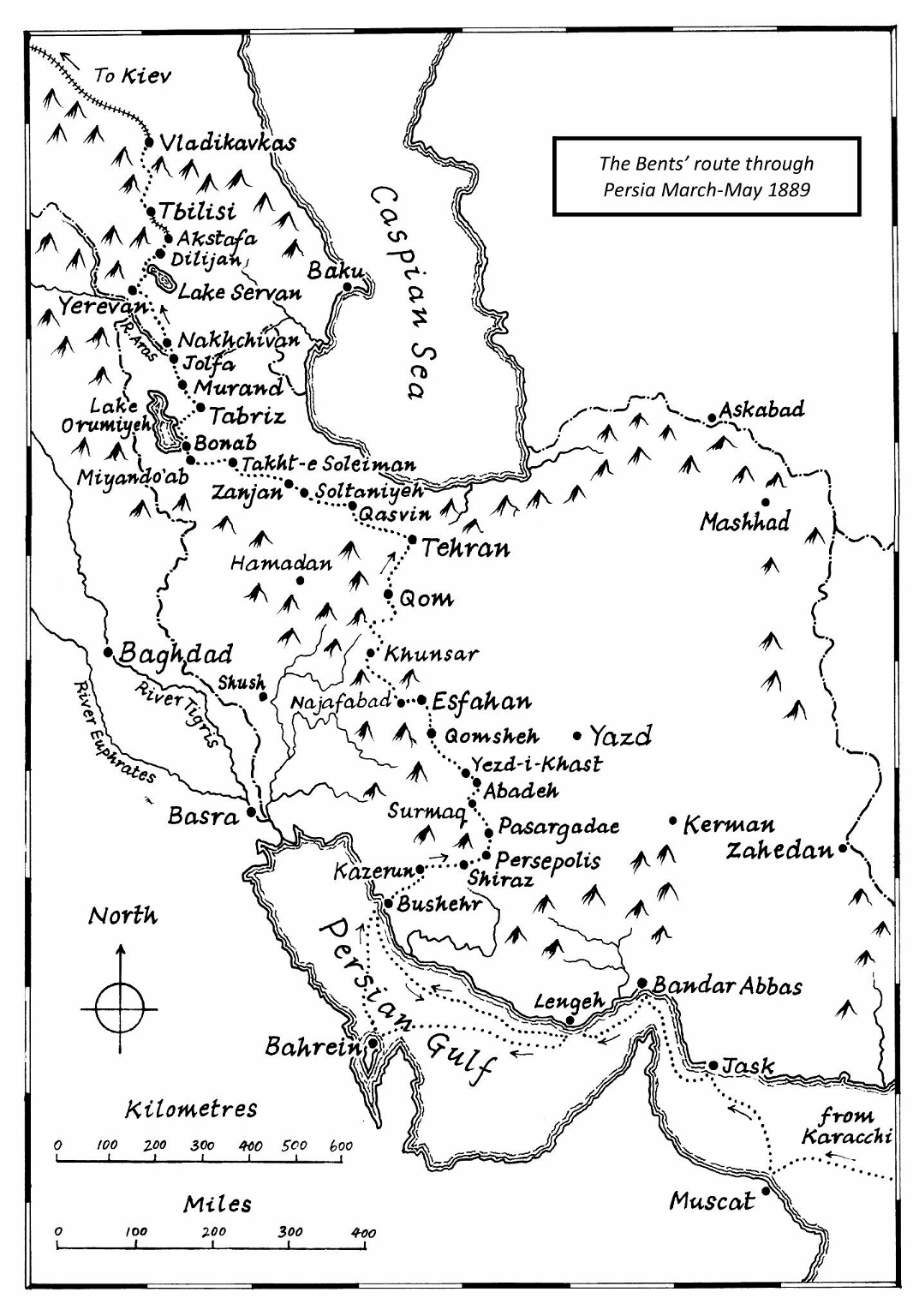
On 27 January 1889, celebrity explorers Theodore and Mabel Bent safely navigated the Strait of Hormuz to enter the Persian Gulf. Some weeks later, incredibly, they began their way home to London with a ride, south-north, through Persia – Bushehr to Jolfar. Mabel Bent’s personal diaries (Chronicles she called them) of this great ride are in the archives of the Hellenic Society, London. Scanned and freely accessible, their significance – among the largish corpus of late 19th-century ‘European’ and colonialist-tinted travelogues – of course, is thrown into stark relief at the time of this present disastrous crisis (April 2026).
Theodore Bent’s interests were primarily archaeological and we can follow the couple as they ride via Shiraz, Persepolis, Esfahan, Qom, Tehran, Takht-e Soleiman, Lake Orumiyeh, and Tabriz – sites all at potential risk from aerial attacks (what would Alexander have made of all this as he embarked on his sack of Xerxes’ capital in 330 BCE?).
Bent had written in advance to the Shah’s representative for permission to excavate in the area of Persepolis; his request is granted, but he changes his mind (see below) and the couple instead head north in search of fabled Ecbatana (Hamadan), an objective they don’t achieve. “Our great desire now”, writes Mabel, “is to inform ourselves where Ecbatana was; no one knows and some think Isfahan, some Hamadan, and we hope it may be Takht i Sulieman.”)
Mabel Bent’s account of their extraordinary journey is told in her three Persian notebooks, readable online via the Hellenic Society/London University (the pdf files are quite large, allow time for downloading; for annotated transcriptions, see The Travel Chronicles of Mrs. J. Theodore Bent, Vol. 3, 2010, Oxford, pp. 26-127).
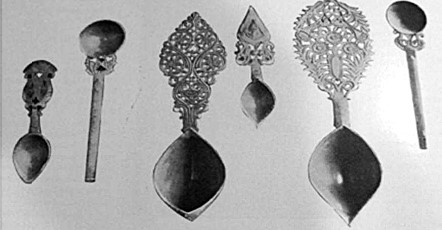
Notebook 1 begins with the Bents making for Bahrain (late January 1889) via Karachi, Theodore intending to investigate the curious burial mounds of ’Ali there. This done, the couple decide on a whim to return to London overland, on horseback, through Persia. Notebook 1 ends (c. 18 March 1889) at Abadeh in the Central District of Abadeh County, Fars province, Iran, famed for its carpets and carved fruitwood (Mabel acquires a set of wooden sherbet spoons there).
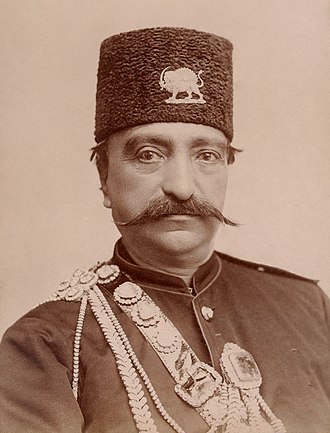
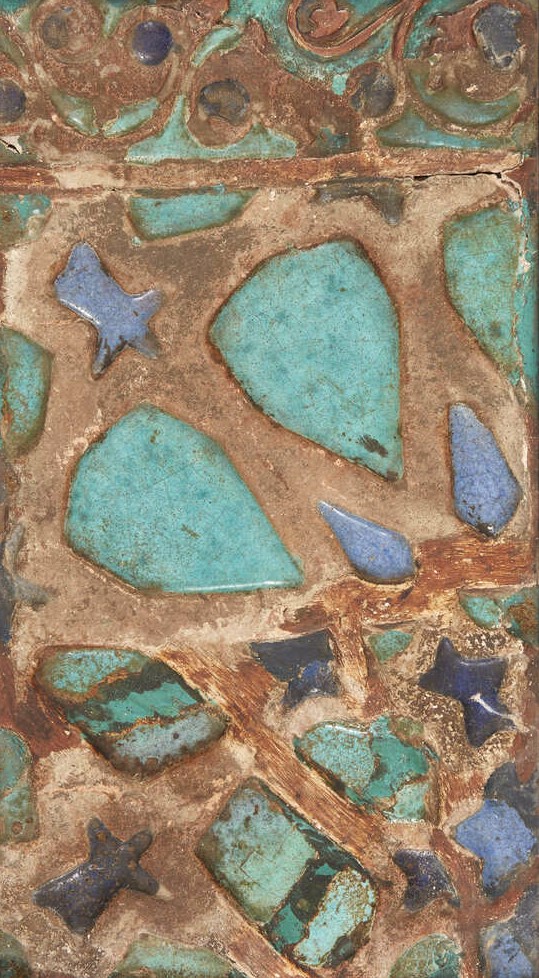
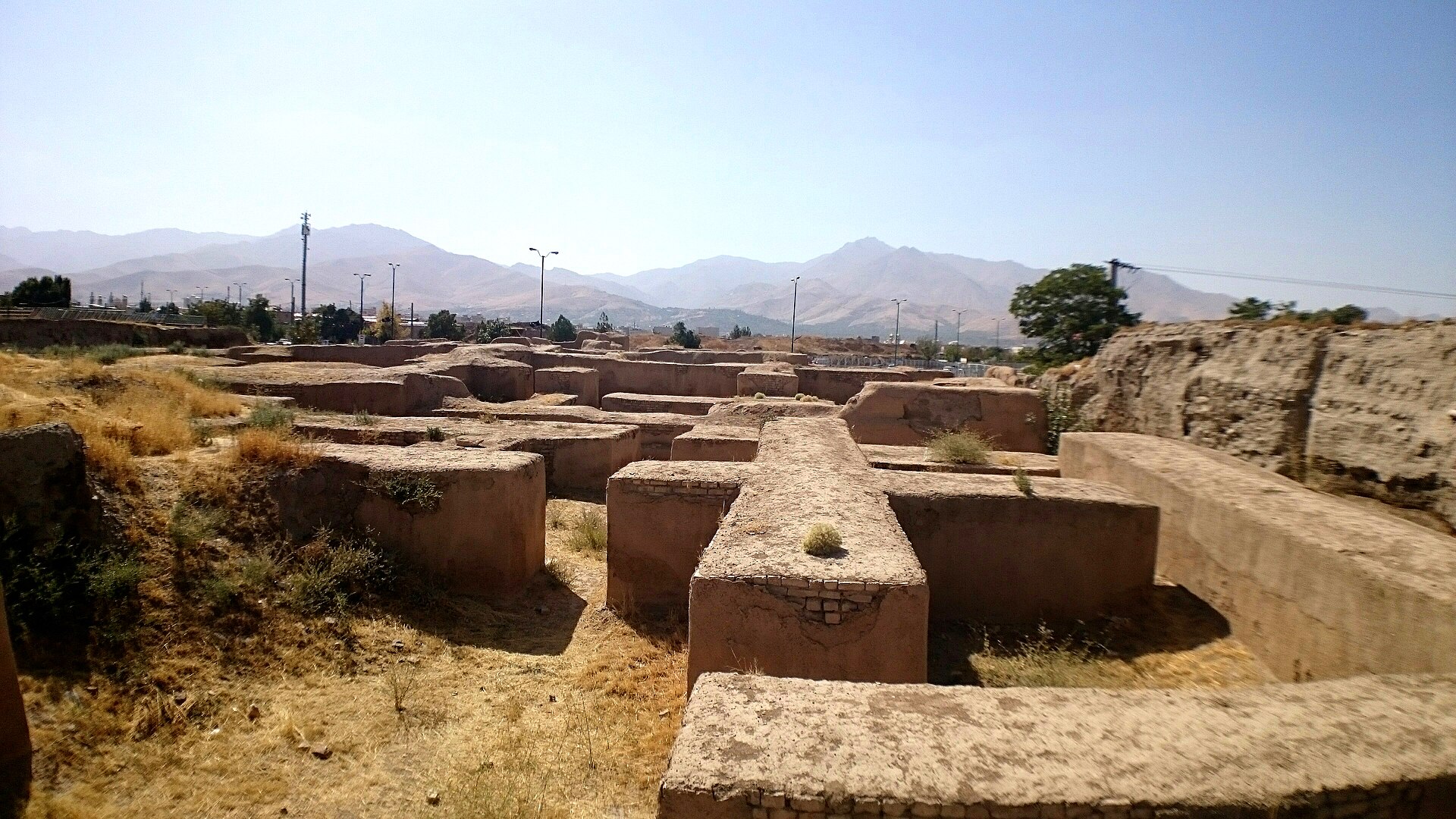
Notebook 2 continues the ride as far as Tabriz, northern Iran, which they reach c. 16 May 1889, having indefatigably toured, inter alia, Esfahan, Qom, Tehran, the Takht-e Soleiman area, and the shores of Lake Orumiyeh. The Bents’ dreams of finding and excavating Ecbatana somewhere near the bizarre mountain site of Takht-e Soleiman (c. 4 May 1889) come to nothing (they return to England with just a fragment of tile they removed). The stand-out moment of this leg was an audience with Shah Naser al-Din Shah Qajar, near Zanjan, c. 27 April 1889: “… then he beckoned to us… and when we reached H.M. we made another bow and curtsey and Theodore took care not to expose his naked head.” Notebook 2 ends at Tabriz, where Mabel is obliged to purchase a journal of inferior quality for the completion of her Chronicle (“…I am sorry to have to write in such a nasty book, but as it was never bought for me I must be thankful we have it…”).
Notebook 3 concludes Mabel’s Persian memoires, the ‘nasty book’ recording the short distance from Tabriz to the Aras River (c. 25 May 1889) at the Jolfa crossing, and then the long return (rail) journey to England, via Kiev, Warsaw, and Berlin. The Bents reach their comfortable London townhouse near Marble Arch on 11 June 1889 – the grey-greens of the English Channel not featuring on any palette prepared for the Strait of Hormuz…
Gallery
Further reading
Bahrain and ‘Persia’ – December 1888 to March 1889
The Travel Chronicles of Mrs J. Theodore Bent. Volume III: Southern Arabia and Persia (2010, Oxford: Archaeopress)
Southern Arabia, Mabel Bent (1900, London)
Theodore Bent’s articles on Persia and the Persian Gulf region:
1889
- ‘How H.M. The Shah Travels When at Home’. The Fortnightly Review, Vol. 52 (46) (Jul), 71-6. [Reprinted in Littell’s Living Age, 1889. Vol. 182 (1889), 457 ff.]
- ‘The Ancient Home of the Phoenicians’. The Classical Review, Vol. 3 (9) (Nov), 420-1. [Bahrain]
- ‘The Mounds of Bahrein’. Athenæum, Issue 3219 (Jul), 38.
1890
- ‘New Year’s Day in a Persian Village’. English Illustrated Magazine, Vol. 76 (Jan), 326-31.
- ‘The Bahrein Islands, in the Persian Gulf’. Proceedings of the Royal Geographical Society and Monthly Record of Geography, Vol. 12 (1) (Jan), 1-19.
1891
- ‘In the Mountains of Media’. The Gentleman’s Magazine, Vol. 270 (Feb), 124-39. [Reprinted in Littell’s Living Age, Vol. 189 (1891), 49ff]
- ‘Village Life in Persia’. The National Review, Vol. 5 (Oct), 355-66. [Reprinted in Littell’s Living Age, Vol. 191 (1891), 747ff]
1893
1895
More on the Bents and Ecbatana
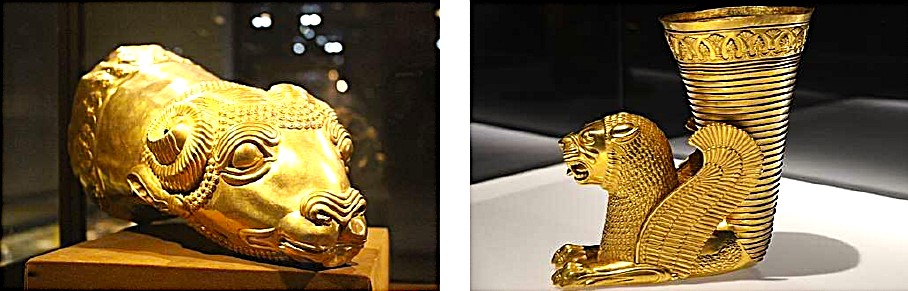
There is scant coverage in the main media (April 2026) of possible damage to Iran’s archaeology in the current conflict; searches online, however, reveal indications that Theodore and Mabel Bent will read with dismay. In early 1889, our celebrity explorers had permission from the offices of the Shah to dig near Persepolis (they didn’t); then they thought they would contribute to the search for fabled Ecbatana. Mabel Bent writes in her diary (c. 21 April 1889): “Our first intention was to go and dig at Hamadan, S.W. of Teheran, and Theodore wrote to Sir H. Drummond Wolff [H.M. Ambassador] beforehand to obtain permission to dig… T got a good map from the chancery, brought it up, and we found we should prefer to go to a place much more north… Sir H.D.W. most kindly asked Amin es Sultan and got leave for ‘anywhere’, to the fear of the French minister, M. de Balloy, who dreaded that we should wish to poach on the Dieulafoy preserve at Susa. He was assured we should not think of anything so mean. Let as many people dig in as many places as they can that we may all be the wiser. Our great desire now is to inform ourselves where Ecbatana was; no one knows and some think Isfahan, some Hamadan, and we hope it may be Takht i Sulieman.” (‘Travel Chronicles of Mabel Bent’, Vol.3, 2010, Oxford, pp.78-9). And off the Bents arduously rode up into the mountains to the latter and found nothing. They really should have tried Hamadan, where archaeologists (e.g. Charles Fossey, as late as 1913) made astonishing discoveries associated with Ecbatana. Had the Bents made the right choice, the gleaming golden rhyta and other finds from this erstwhile capital of the Medes (overlooked it seems in 330 BCE when Alexander looted the treasury) might now be in the British Museum. There’s a thought as the missiles fly…
 Leave a comment or contact us about this article