Incidentally V: Margaret Kenna, and the Bents on Anáfi in 1884 – ‘Kalamiotissa’

The fifth in Professor Margaret Kenna’s Theodore and Mabel Bent-related series of ‘incidentals’ covering the Cycladic island of Anáfi is all to do with the great monastery site at the western end of the island; that celebrated monument built on the foundations of an ancient temple that perhaps sanctified the locale where Jason and Medea sported – having landed safely in a terrible storm from Crete. But Prof Kenna will fill you in… Margaret is a retired social anthropologist from Swansea University who has been carrying out research on Anáfi, and among Anáfiot migrants in Athens, since 1966. She has written two books and many articles in English about her research: Greek Island Life: Fieldwork on Anafi (2nd edition 2017, Sean Kingston Publishing), and The Social Organisation of Exile: Greek Political Dissidents in the 1930s (2001, Routledge). A Greek translation of the second book was published in 2004 by Alexandreia Press. Many of her articles, in English and in Greek translation, can be found on the websites: academia.edu and ResearchGate. She has also written several booklets which can be found in tourist shops on the island: Anafi: a Brief Guide; Anafi: Island of Exile; The Folklore and Traditions of Anafi, and The Traditional Embroideries of Anafi. She was made an Honorary Citizen of the island in 2006.

This fifth ‘talk’ in Professor Kenna’s thyme-scented series happily coincides with one of Margaret’s regular trips to the island (early June 2018). Go search her out if you are there!

We very much hope you enjoy it and will look out for forthcoming Anáfi ‘talks’ soon on our site; by all means send in your comments to the Bent Archive!

ανάφηανάφηανάφηανάφη

The Bents visit the Lower Monastery/ Temple of Apollo: earlier, and later, visitors

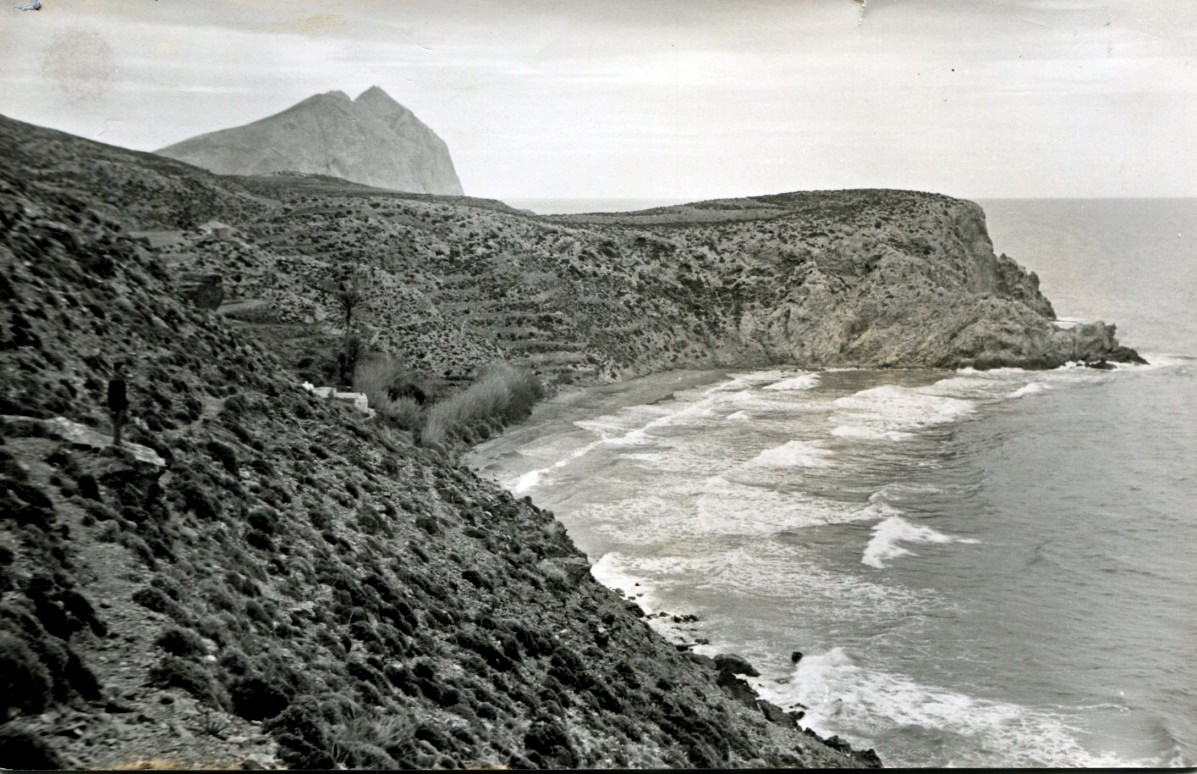
“On January 10th 1884, the Bents went by boat along the south coast of the island with their host, the ‘demarch’ Chalaris, and their guide Matthaios, to the Lower Monastery ‘of Kalamiotissa, on a promontory’, as Mabel writes. She does not mention the huge peak (1476 feet/ 459 metres) of Mount Kalamos above it, although Theodore does: ‘a gigantic mountain rock’ (1885: 50).

Fig. 1: Mount Kalamos, in the distance, at the eastern end of the south coast of Anafi (M. Kenna).

“A bit of dynamite fishing from rocks along the south coast took place during the boat trip. Mabel writes the initial of the person involved, Theodore tactfully says ‘one of our men’, for then, as now, dynamite fishing is illegal and extremely dangerous. In the 1960s many male villagers had missing fingers or limbs (dynamite was not mentioned to me in the explanations I was given for these injuries), and in the 1980s, two Anafiot men, a father and son, were killed while using it.

“All that Mabel says of their visit at the monastery is this: ‘The Monastery is a very curious place, built on the site and with the stones, and using much of the old building of a temple of Apollo’ (for the diary references, see Bent, M. 2006: 32-34).

“The church of the Lower Monastery and the monks’ cells are indeed built inside the ruins of an ancient temple of Apollo. The myth is that Jason and the Argonauts were caught in a storm and saved by a flash of light thrown by Apollo, revealing the island to them (one derivation of the island’s name is ‘Revelation’, a parallel to another island sacred to Apollo, Delos, a name which also means ‘to reveal’). Anafi was later a place of pilgrimage to the temple of Apollo, and to other temples built on the site, and became rich enough to have its own coinage.

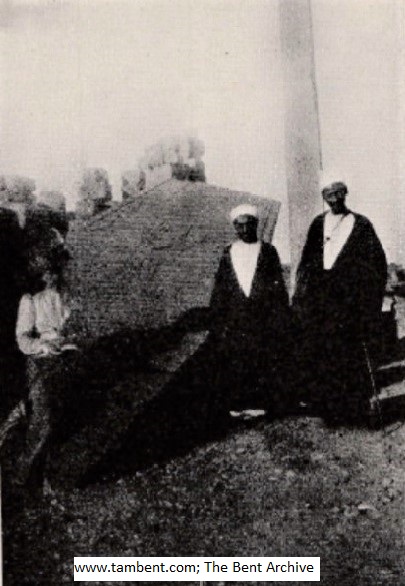
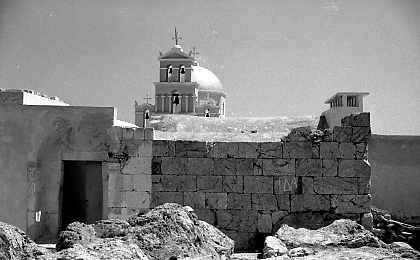
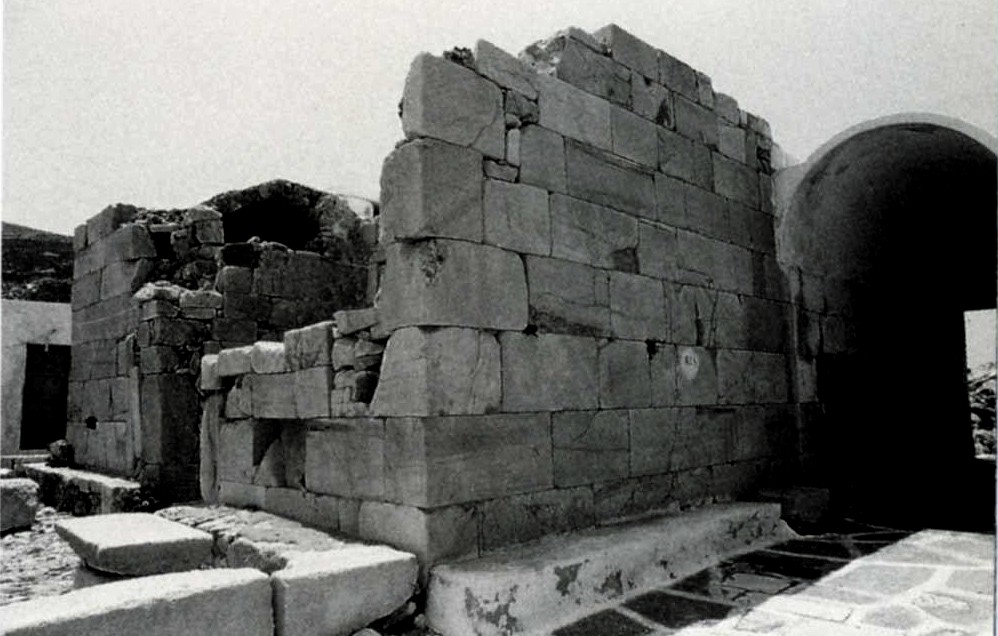
Fig 2: The Lower Monastery church visible over the wall of Apollo’s temple, summer 1966 (M. Kenna).

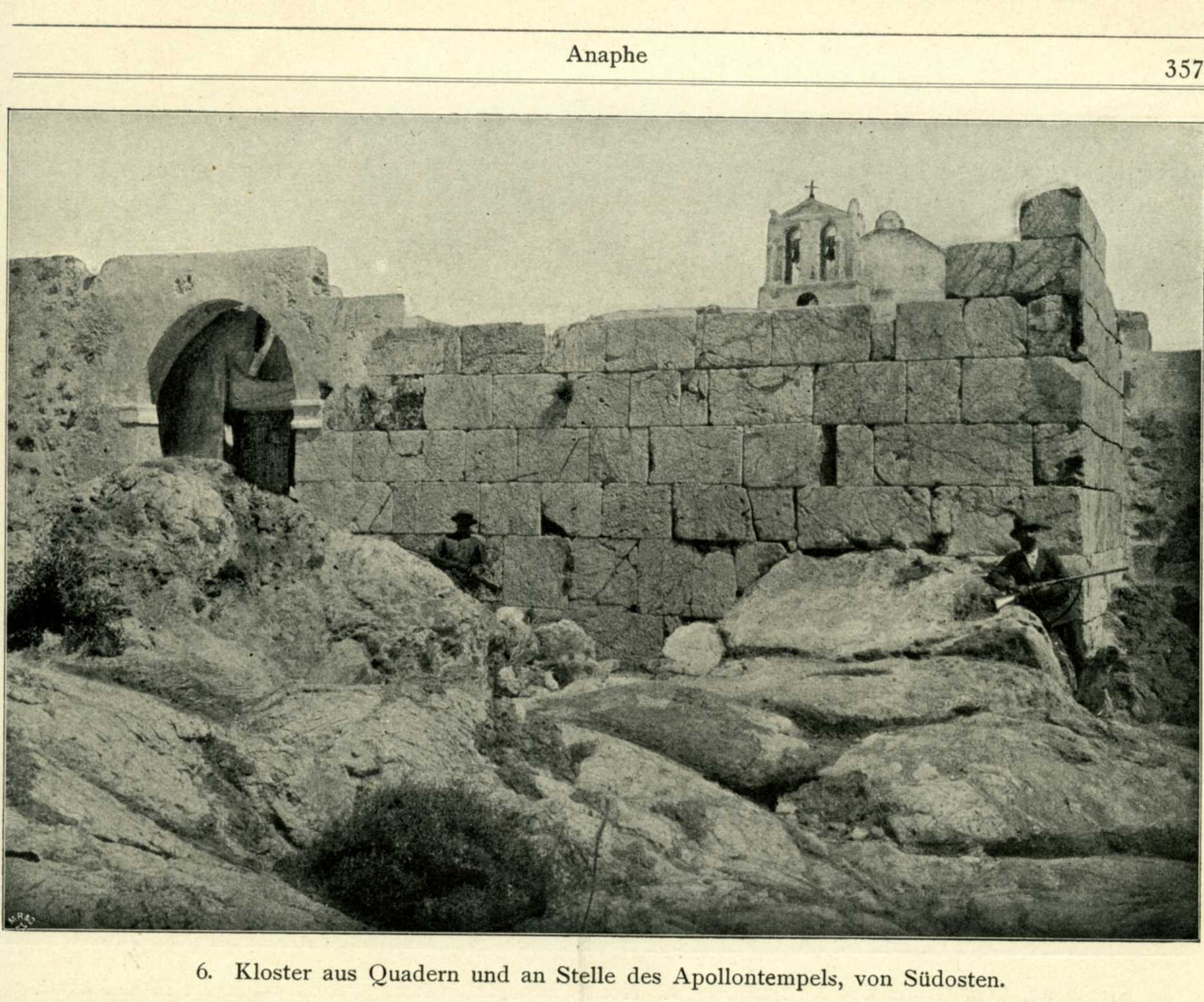
“The Monastery is called ‘Lower’ because there is another very small one, founded in 1715, on the peak of Mount Kalamos. Until 1887 the ikon of the island’s patron saint, Panayia Kalamiotissa (the Virgin of the Reed), was housed in the Upper Monastery chapel, and it was then brought down to the Lower Monastery. The Lower Monastery had been visited by Ludwig Ross in the 1830s (probably on the same visit as the one on which he sketched the sarcophagus described in another blog entry) and a decade later the archaeologist and epigrapher Hiller von Gaertringen would not only visit the Lower Monastery (because of his interest in the temple) but also photograph it, and the Upper Monastery chapel as well. He published the Anafi inscriptions in Inscriptiones Graecae Vol XII, 3: 54-68, numbers 247-319 (referred to here as I.G.). A photocopy can be found in the museum in the village.

Fig. 3: Hiller von Gaertringen’s photo of the Lower Monastery during his visit, c. 1898.

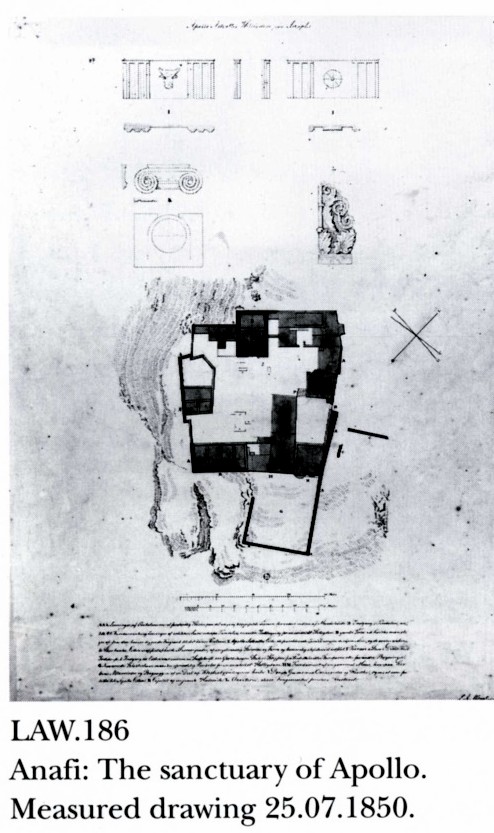
Fig. 4: A ‘measured drawing’ by Laurits Winstrup, Danish architect, of the layout of the temple and monastery buildings. The wall in the photo above is at the top of this drawing (from Margit Bendtsen ‘Sketches and Measurings: Danish Architects in Greece, 1818:1862’. Copenhagen, 1993: 361).

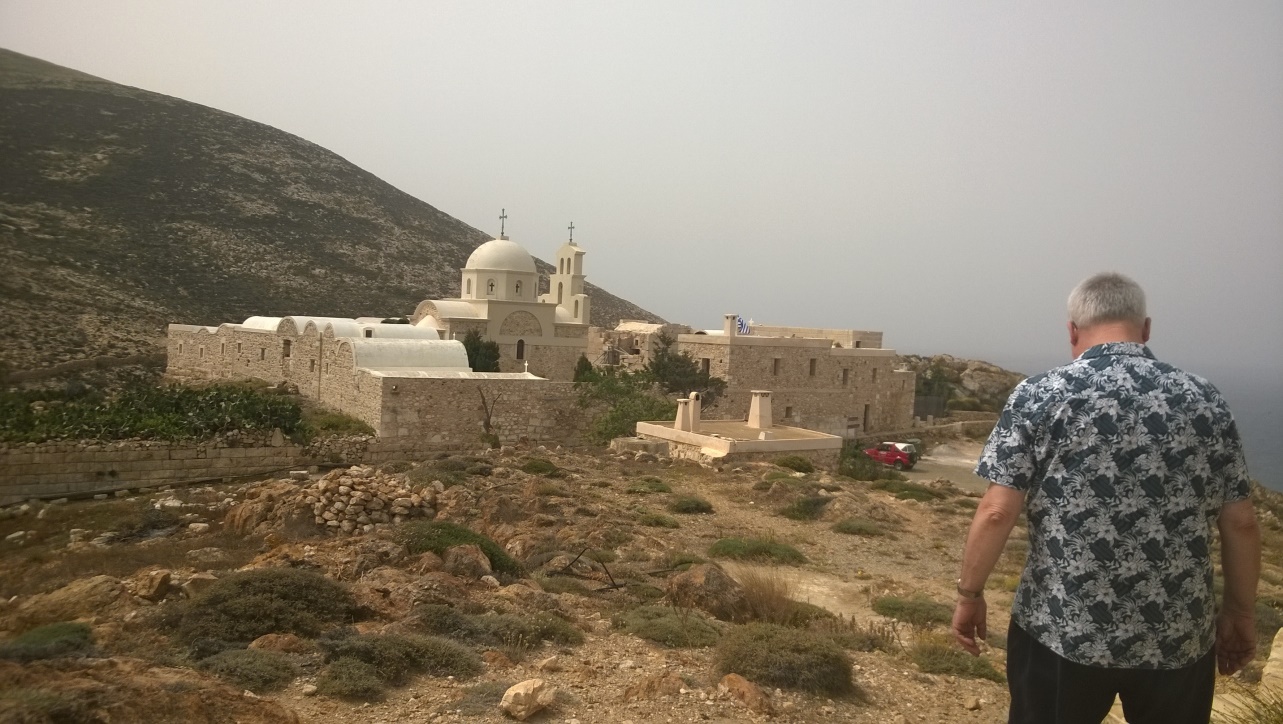
“At the time of the Bents’ visit, the three monks there were mourning the death of their Abbot the previous day (how Chalaris had not heard of this is not mentioned), so the Bents did not stay long. Theodore does however mention that ‘the monastery now belongs to one at Santorin’ (1885: 50). Later events make it clear that another Abbot was appointed, and, indeed, there was one during my own time on the island (when there no monks at the Lower Monastery) who also acted as village priest. It was only after this Abbot’s death in the 1990s that the Lower and Upper Monasteries became ‘holdings’ of the Monastery of Profitis Ilias on Santorini, and renovations were carried out and other changes made.

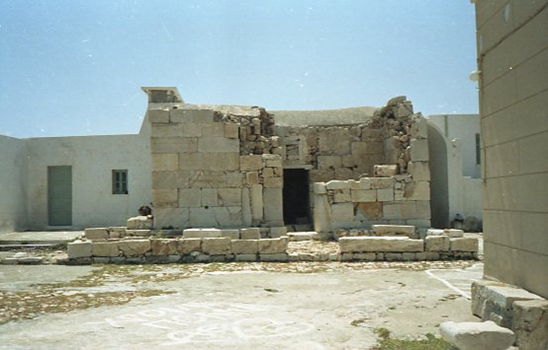
Fig. 5: The Lower Monastery in 2016. Part of the ancient wall can just be seen bottom left (M. Kenna).

Fig. 6: Inside the Lower Monastery, showing the wall of one of the temple buildings, summer 1966 (M. Kenna).

Fig. 7: The temple building in the photo above, summer 1988 (M. Kenna).

Fig. 8: The temple building ‘secured’ by the regional archaeological service (21st Ephorate), 2015 (M. Kenna).

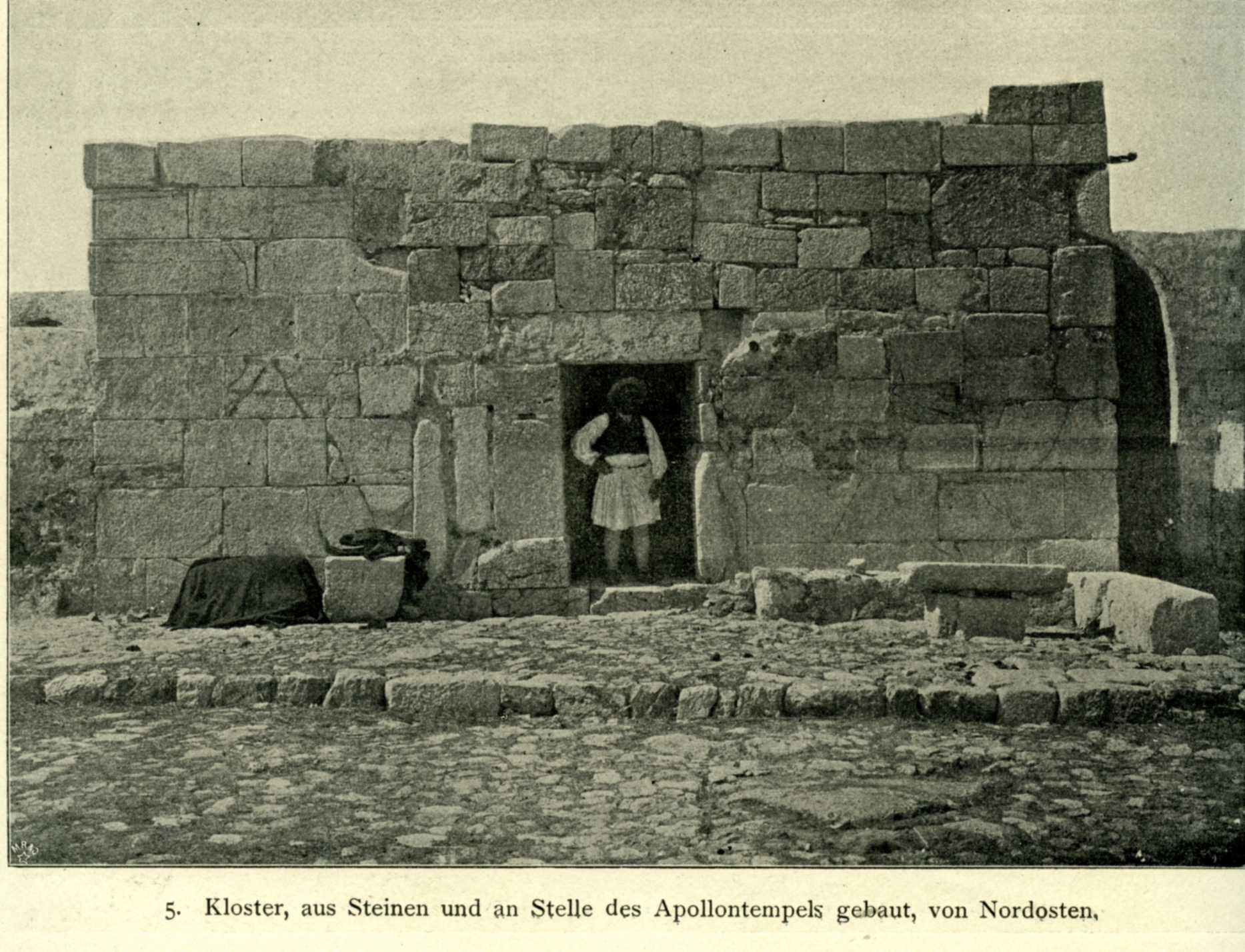
Fig. 9: Hiller von Gaertringen’s Greek foreman (Angelos Kosmopoulos from the Peloponnese, wearing a fustanella), in the doorway of the remaining temple building, 1898.

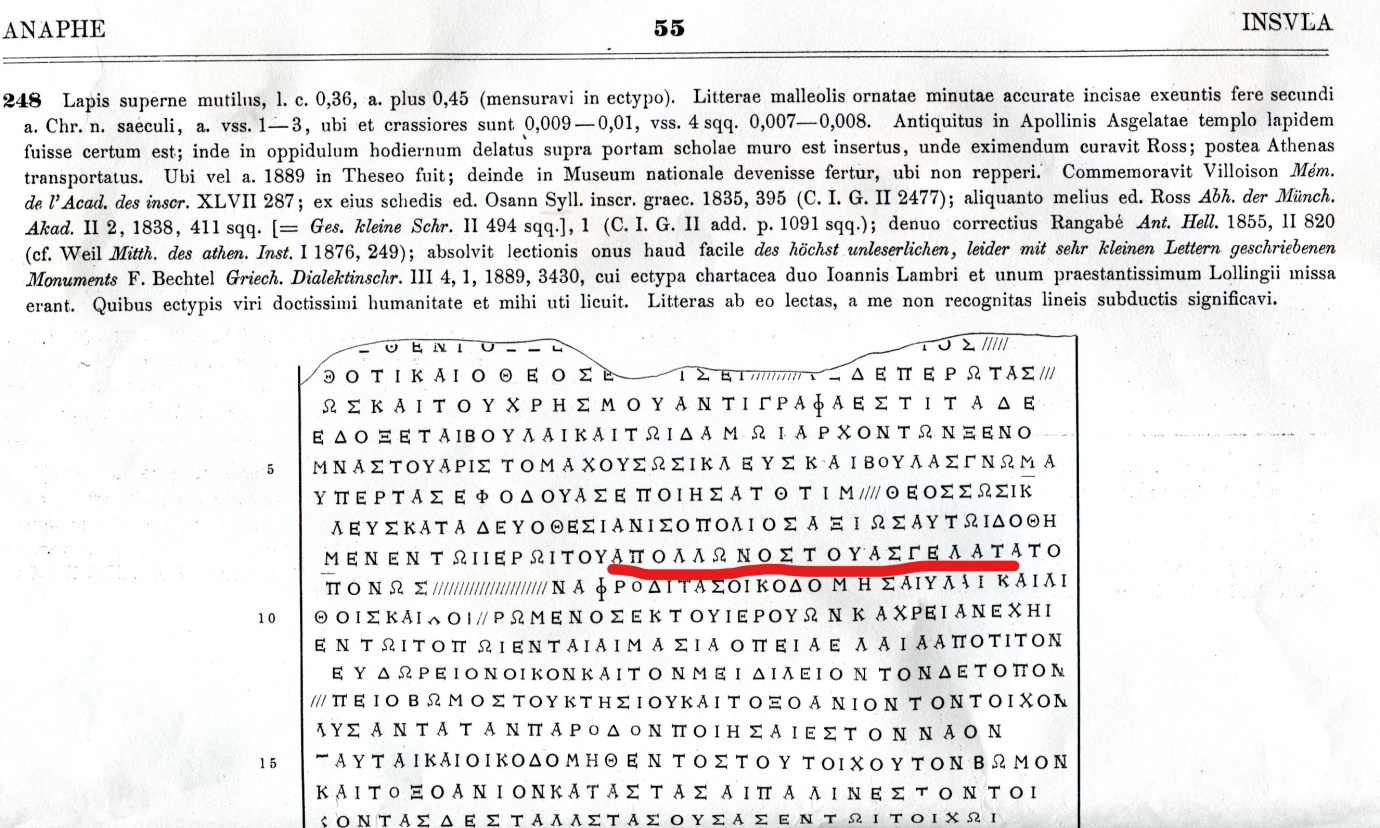
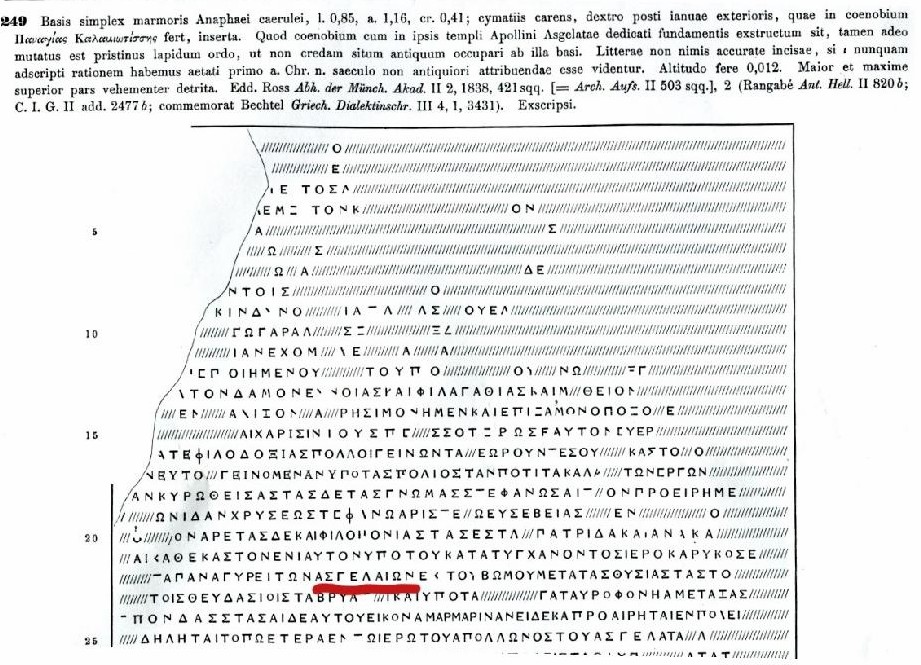
“Theodore refers to Apollo in the god’s manifestation as ‘Aeglites’ (‘radiant’ ‘shining’). However, Apollo on Anafi had an epithet that is unique to that location, which appears in some of inscriptions which Hiller recorded. This epithet is ‘Asgelatas’. Some scholars say this is a variant of ‘aigletes’, radiant, and others relate it to Asclepios/ Aesculapius, god of healing, son of Apollo – so would the epithet mean ‘father of Asclepios’? There are other more controversial interpretations, see ‘Apollo and the Virgin’ in History and Anthropology 2009, available on the websites: academia.edu and ResearchGate. Theodore would surely have known about this epithet as Ludwig Ross had described it (see line 3 of the text in I.G. XII, 248, below).

Fig. 10: One of the inscriptions referring to Apollo as ‘Asgelatas’ (I.G. 248, line 8).

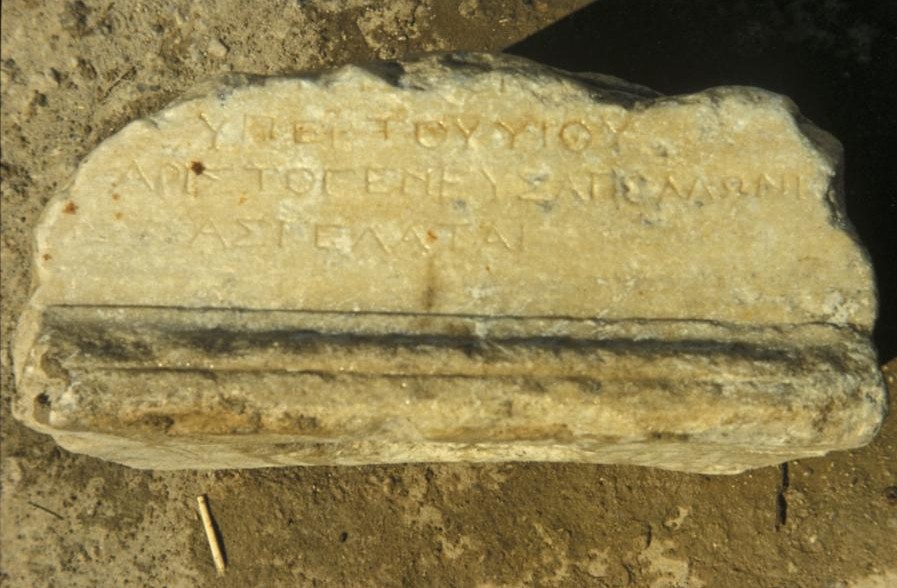
“In the summer of 1966, Richard McNeal visited the island and discovered another such inscription, not recorded by Hiller. It is a dedication of an altar and reads, in translation, ‘To Apollo Asgelatas, on behalf of (my) son Aristogenes’. He asked me to take a photograph of it and to make a ‘squeeze’ (papier-maché impression). The Greek word ‘Asgelatas’ is in the third (last) line.

Fig. 11: The ‘Asgelatas’ altar, summer 1966 (M. Kenna).

“Another of the inscriptions recorded by Hiller refers to celebrating the rituals of the ‘Asgelaia’

Fig. 12: An inscription recorded by Hiller, mentioning the ‘Asgelaia’. I.G. 249, line 22.

“And what they were, we don’t really know – although they could be an occasion at which men and women traded insults, repeating what is said to have taken place on Anafi when Jason and the Argonauts were insulted by Medea and her women. The women derided the men for only having water (instead of wine or oil) to pour on the sacrificial fire offered to Apollo in thanks for their safe arrival on the island (as reported by Apollonios Rhodios in Argonuatica Book IV, line 1730).

“Theodore notes that at the Lower Monastery, ‘In every direction are to be seen inscriptions let into the walls…. It would appear from the inscriptions that this ground was once covered with temples, the principal one being dedicated to Apollo Aeglites, another to Aphrodite, another to Aesculapius, etc.’ (Bent 1885: 50). His work on the inscriptions appears in another ‘blog’ entry (‘Incidentally II’) .

“Of course, and as ever, far the best thing to do is go see for yourselves! The road there is excellent – you can hire a car, scooter, or bike, but the joy is in the walking – there is a coastal path – and in front of you all the way is the tempting and high Kalamiotissa church in the distance. Go on, you can do it!

References

* Bent, Mabel and Brisch, Gerald (ed.) 2006. The Travel Chronicles of Mrs. J. Theodore Bent, Vol I: Greece and the Levantine Littoral. Oxford, Archaeopress.
* Bent, Theodore 1885 (2002). The Cyclades, or Life Among the Insular Greeks. Oxford, Archaeopress.
* Ross, Ludwig 1840-1852. Reisen auf den griechischen Inseln des ägäischen Meeres (1840-45). Stuttgart, Tübingen, Cotta [https://archive.org/details/reisenundreiser00rossgoog].

Websites
For the Greek Epigraphical Society, see https://greekepigraphicsociety.org.gr/august-2011/#more-440 (accessed 17/03/2018).

Incidentally IV: Margaret Kenna, and the Bents on Anáfi in 1884 – ‘Kastelli’

The fourth in Professor Margaret Kenna’s Theodore and Mabel Bent-related series of ‘incidentals’ covering the Cycladic island of Anáfi, centres around a well-known landmark you can easily find on the way to Kastelli, the hill on which the Hellenistic city ruins can be found. Thus Margaret’s third short ‘talk’ in her thyme-scented series is called: ‘“The sarcophagus” at the Bents’ time, earlier, and more recently’.

Margaret is a retired social anthropologist from Swansea University who has been carrying out research on Anáfi, and among Anáfiot migrants in Athens, since 1966. She has written two books and many articles in English about her research: Greek Island Life: Fieldwork on Anafi (2nd edition 2017, Sean Kingston Publishing), and The Social Organisation of Exile: Greek Political Dissidents in the 1930s (2001, Routledge). A Greek translation of the second book was published in 2004 by Alexandreia Press. Many of her articles, in English and in Greek translation, can be found on the websites: academia.edu and ResearchGate. She has also written several booklets which can be found in tourist shops on the island: Anafi: a Brief Guide; Anafi: Island of Exile; The Folklore and Traditions of Anafi, and The Traditional Embroideries of Anafi. She was made an Honorary Citizen of the island in 2006.

ανάφηανάφηανάφηανάφη

“The sarcophagus” at the Bents’ time, earlier, and more recently

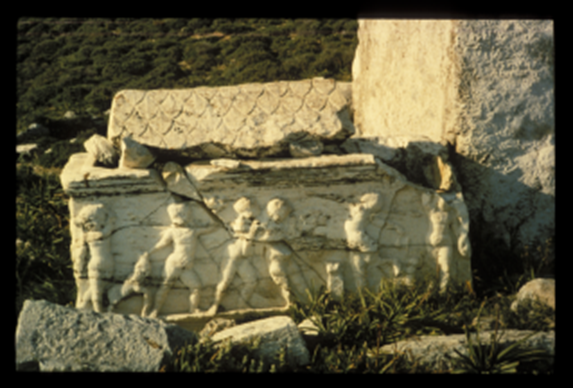
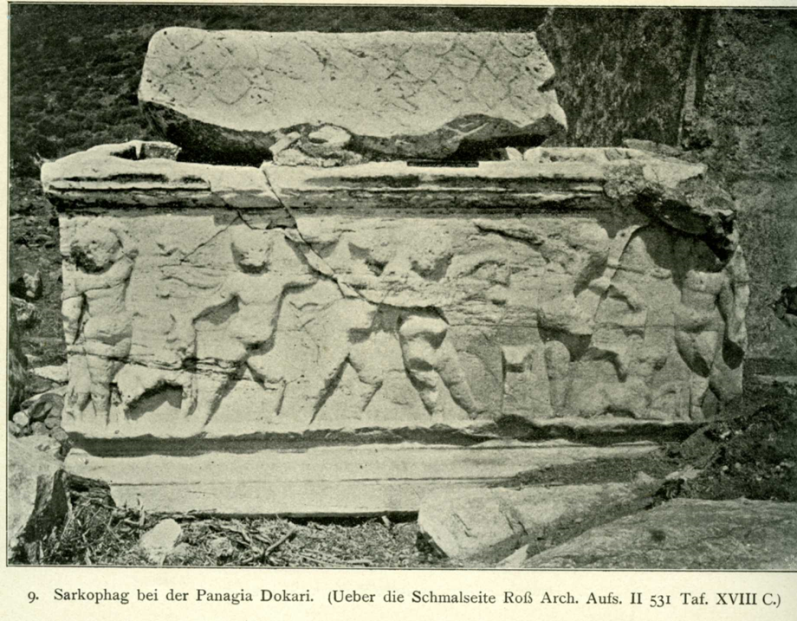
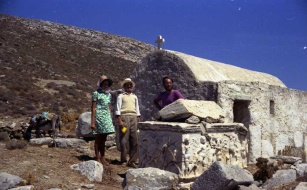
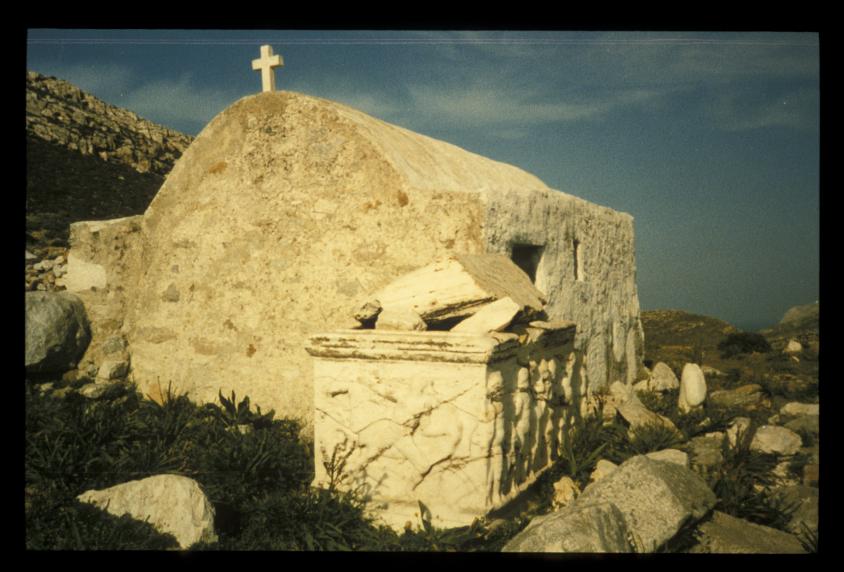
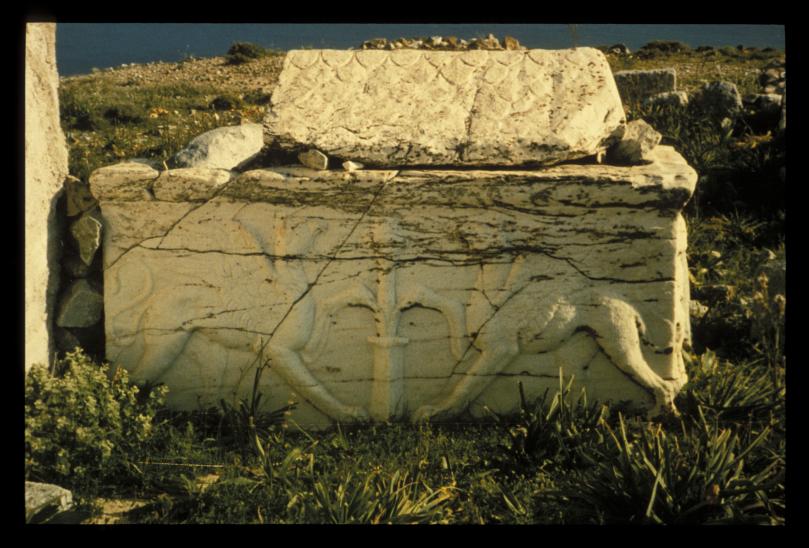
“On the way to Kastelli, the hill on which the Hellenistic city ruins can be found, the Bents came to ‘a little church’ (the chapel of Panayia tou Dokari), next to which is a marble sarcophagus. As Bent records, there is on one side, ‘a beautifully executed representation of children bringing sacrifices to Bacchus…. On the other side are Bellerophon and Pegasus, and on the two narrow sides are Sphinxes.’ (Bent 1885: 47). Actually, not quite correct, as these photos will show…..

Figure 1: The sarcophagus outside the chapel of Panayia tou Dokari in summer 1967 – Sphinx on short side (east-facing), jolly cherubs on long side (south-facing) (M. Kenna).

Figure 2: The jolly cherubs in late afternoon sunshine (M. Kenna).

Figure 3: Hiller von Gaertringen’s photo of the jolly cherubs, 1898 (IG XII/3).

Figure 4: In summer 1973, Bellerophon and Pegasus on short side (west-facing), jolly cherubs still jolly (M. Kenna).

Figure 5: Bellerophon and Pegasus in late afternoon sunshine (M. Kenna).

Figure 6:…easier to see in Ross’s early C19 drawing of the west-facing side of the sarcophagus (Ross 1840-1852).

Figure 7: Not a sphinx, but winged griffins either side of a pillar, on the north-facing side (M. Kenna).

“Oh, well, the Bents were walking in the January rain, so maybe Theodore can be forgiven for confusing sphinxes and griffins…

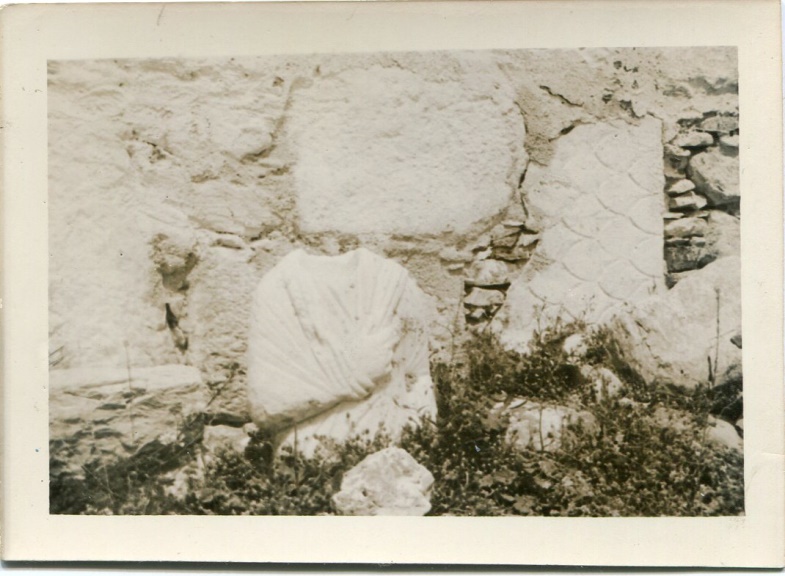
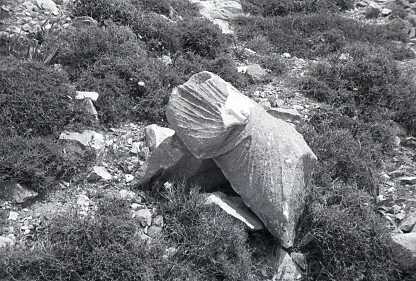
“Another sarcophagus was probably in the same location, as fragments of the decorated ‘roof’ can be found built into the wall of the chapel. Bent writes that this other one ‘appears to have been even richer in execution’ (Bent 1885:47).

Figure 8: Fragment of the roof of ‘the other sarcophagus’ (to the right of the headless statue), built into the chapel wall, spring 1967 (M. Kenna).

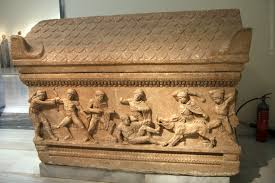
“There is a sarcophagus (Figure 8) of a similar type in the National Archaeological Museum found in Patras in the Peloponnese, dated around 150 A.D./ C.E., which gives an idea of what the Anafi sarcophagus might have looked like. The scene depicted is a boar hunt.

Figure 9: Item 1186, National Archaeological Museum, Athens (M. Kenna).

“But go see for yourself! Let’s hope all this tempts you to get out from underneath the tamarisks of Roúkouna this summer and stroll Kastelli-wards to snap it. Wear your hat tho!”

References
Bent, Mabel and Brisch, Gerald (ed.) 2006. The Travel Chronicles of Mrs. J. Theodore Bent, Vol I: Greece and the Levantine Littoral. Oxford, Archaeopress.

Bent, Theodore 1885 (2002). The Cyclades, or Life Among the Insular Greeks. Oxford, Archaeopress.

Hiller von Gaertringen, F. 1898. Inscriptiones: IG XII/3.

Ross, Ludwig 1840-1852. Reisen auf den griechischen Inseln des ägäischen Meeres (1840-45). Stuttgart, Tübingen, Cotta.


Incidentally III: Margaret Kenna, and the Bents on Anáfi in 1884 – Some costumes

We are delighted to post the third in Professor Margaret Kenna’s Theodore and Mabel Bent-related series of ‘incidentals’ covering the Cycladic island of Anáfi. Margaret is a retired social anthropologist from Swansea University who has been carrying out research on Anáfi, and among Anáfiot migrants in Athens, since 1966. She has written two books and many articles in English about her research: Greek Island Life: Fieldwork on Anafi (2nd edition 2017, Sean Kingston Publishing), and The Social Organisation of Exile: Greek Political Dissidents in the 1930s (2001, Routledge). A Greek translation of the second book was published in 2004 by Alexandreia Press. Many of her articles, in English and in Greek translation, can be found on the websites: academia.edu and ResearchGate. She has also written several booklets which can be found in tourist shops on the island: Anafi: a Brief Guide; Anafi: Island of Exile; The Folklore and Traditions of Anafi, and The Traditional Embroideries of Anafi. She was made an Honorary Citizen of the island in 2006.

This third short ‘talk’ in Professor Kenna’s thyme-scented series involves an island dress: ‘Mabel’s notes; Theodore’s published text; BUT what did Efthimia’s costume look like?’. During the time the Bents were on Anafi in early January 1884, they were fancily entertained by ‘the demarch’, surnamed Chalaris. On the first evening, they asked his daughter ‘Eutimia’, also the niece of their guide Matthaios Simos, an Anafiot, to show them ‘one of the old Anaphiote costumes’….

ανάφηανάφηανάφηανάφη

Mabel’s notes; Theodore’s published text; BUT what did Efthimia’s costume look like?

“During the time they were on Anafi in early January 1884, the Bents were entertained by ‘the demarch’, surnamed Chalaris. On the first evening, they asked his daughter ‘Eutimia’, also the niece of their guide Matthaios Simos, an Anafiot, to show them ‘one of the old Anaphiote costumes’. (Nowadays the name is more likely to be spelt Efthimia, as that is how it is pronounced).

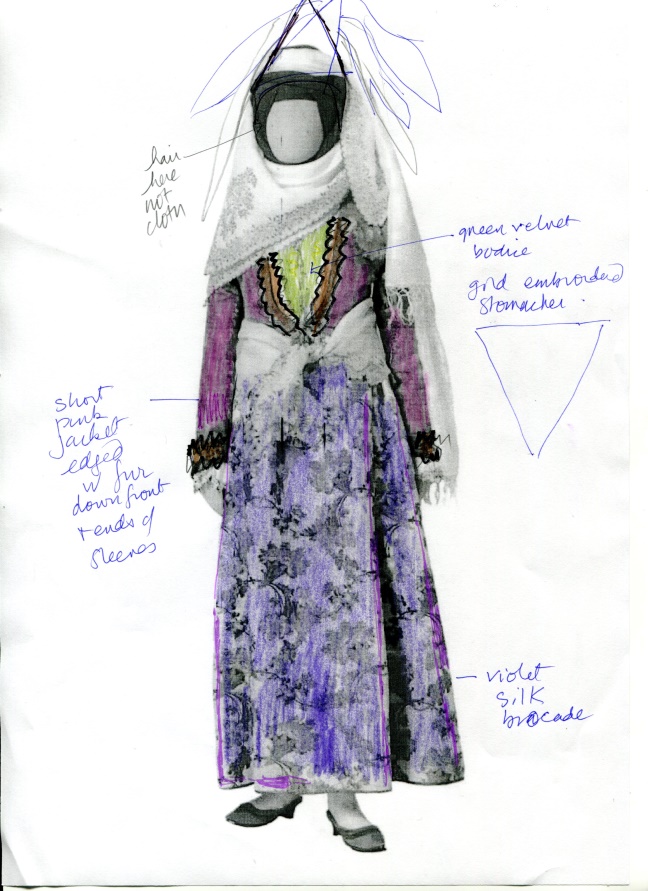
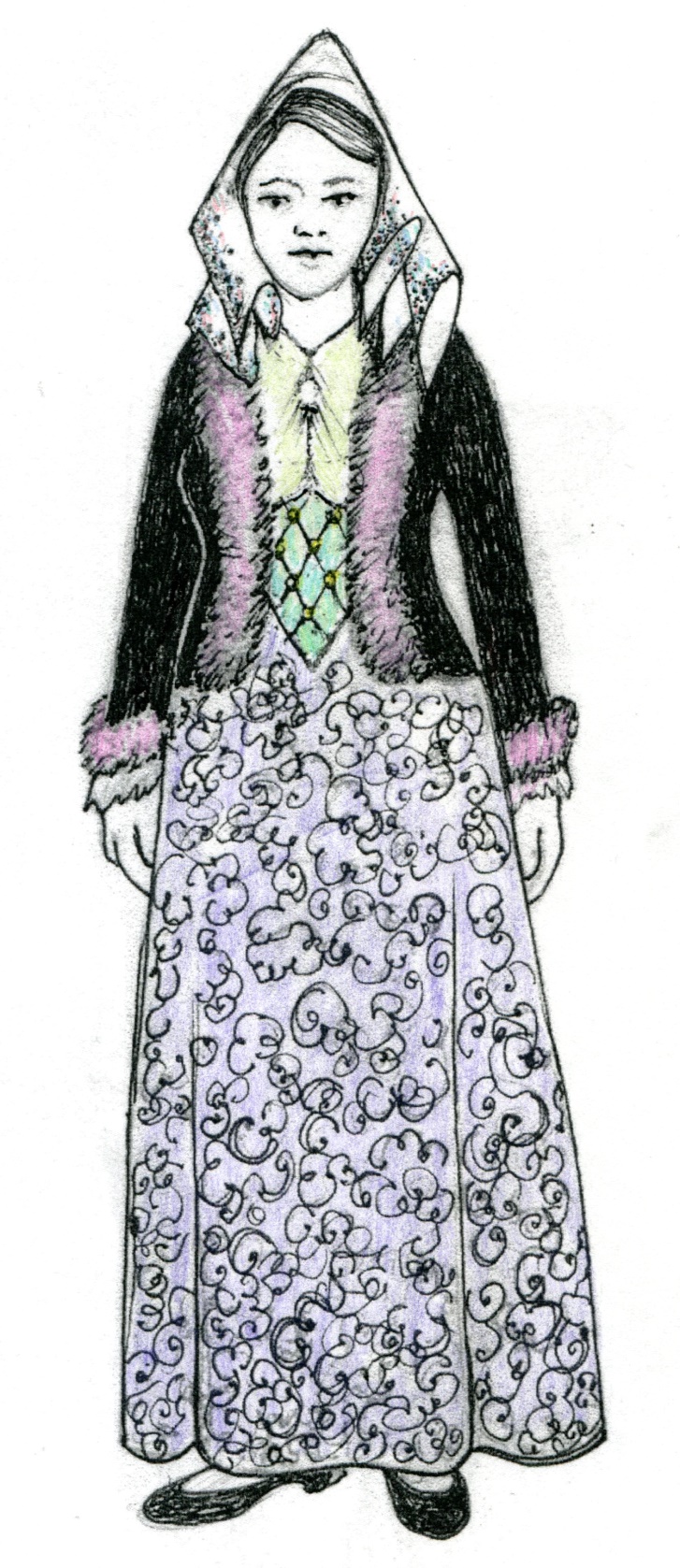
“Theodore Bent describes her appearance as ‘magnificent’. In his description of the costume he borrows almost word for word from his wife’s account in her diary: ‘[the costume] consisted of a violet silk brocade skirt, green velvet bodice, gold embroidered stomacher [(a ‘stomacher’ is a V-shaped piece of decorative cloth filling the opening of a bodice], and a short pink satin jacket, edged round the cuffs and down the front with pink fur. The headdress somewhat resembled the pina of Siphnos, but is here called ‘the circle’ (ό κύκλος): it consists of a tall wedge of cotton inside, over which Oriental handkerchiefs are gracefully arranged, so that the ends hang down over the shoulders.’ [Mabel’s diary (kindly supplied by Gerry Brisch; 2006) does not mention the pina, but says ‘Her head was very prettily arranged with 2 of the little embroidered towels we use for antimacassars’.] ‘During the last few years this style of dress has been entirely abandoned; those who wore it were laughed at; and Eutimia that evening came in for a good share of ridicule,…’ (Bent 1885: 45).

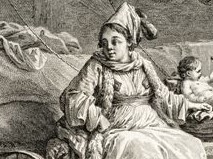
“So – what did the ‘old Anaphiote dress’ look like? If we look at old engravings of the costume of the women of Sifnos, we can get some idea of how the pina (rather like a dunce’s cap) looked, and the fur-trimmed jacket:

Fig.1: Detail of old engraving of woman of Sifnos wearing the pina, and a fur-trimmed long coat. M-G-F-A de Choiseul-Gouffier, 1782 Voyage Pittoresque de la Grèce. © Benaki Museum Athens.

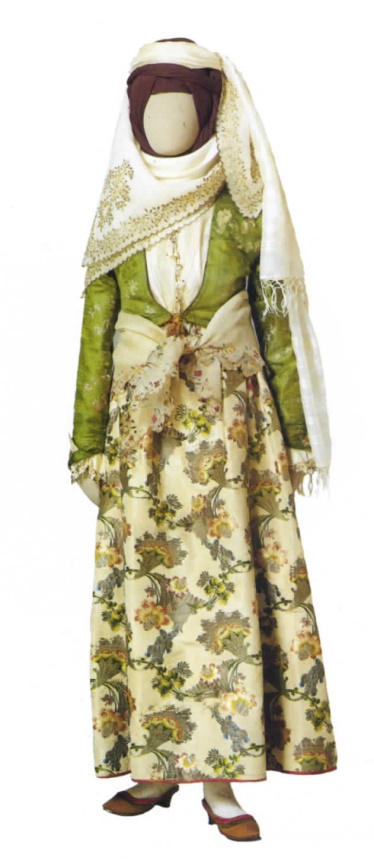
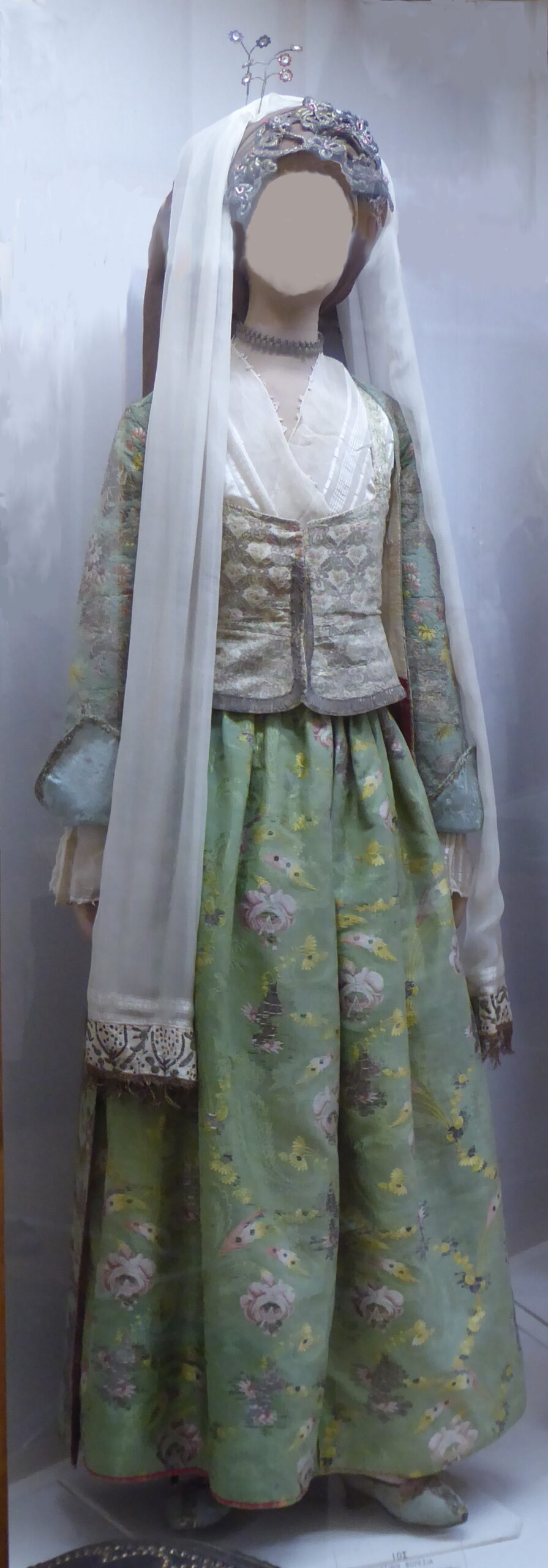
“A traditional woman’s costume (in the National Historical Museum in Athens) from the island of Amorgos (roughly 32 miles/ 50 kilometres north-north-east of Anafi) possibly helps with what the skirt and bodice looked like.

Fig. 2: Traditional costume from Amorgos (image from National Historical Museum, Athens).

“If we combine elements from the two images, and re-colour according to Mabel’s and Theodore’s description, something like this might be what Efthimia looked like on that January evening…

Fig. 3: Hypothetical reconstruction of the ‘old Anaphiote costume’…. (M. Kenna).

Fig. 4: …. Or, maybe like this? Drawing © Judith Stroud.

“Anyway, perhaps you would like to visit the island this summer and try and find out for yourselves and let us know!…Of course with your copies of the Bents’ jottings in your hands!”

References

Bent, Mabel and Brisch, Gerald (ed.) 2006. The Travel Chronicles of Mrs. J. Theodore Bent, Vol I: Greece and the Levantine Littoral. Oxford, Archaeopress.

Bent, Theodore 1885 (2002). The Cyclades, or Life Among the Insular Greeks. Oxford, Archaeopress.

The costume worn by Ekaterina Lorenziades of Ios in the Cyclades to impress the Bents during their stay, now in the National Historical Museum, Athens (photo = Alan King).

See also the blog ‘Folk Costume and Embroidery‘ and Alan King’s post elsewhere on the costume worn by Ekaterina Lorenziades to impress the Bents during their stay on Ios, now in the National Historical Museum, Athens.

ανάφηανάφηανάφηανάφη

Incidentally II: Margaret Kenna, and the Bents on Anáfi in 1884 – Antiquities and Inscriptions

We are delighted to post the second in Professor Margaret Kenna’s Theodore and Mabel Bent-related series of ‘incidentals’ covering the Cycladic island of Anáfi. Margaret is a retired social anthropologist from Swansea University who has been carrying out research on Anáfi, and among Anáfiot migrants in Athens, since 1966. She has written two books and many articles in English about her research: Greek Island Life: Fieldwork on Anafi (2nd edition 2017, Sean Kingston Publishing), and The Social Organisation of Exile: Greek Political Dissidents in the 1930s (2001, Routledge). A Greek translation of the second book was published in 2004 by Alexandreia Press. Many of her articles, in English and in Greek translation, can be found on the websites: academia.edu and ResearchGate. She has also written several booklets which can be found in tourist shops on the island: Anafi: a Brief Guide; Anafi: Island of Exile; The Folklore and Traditions of Anafi, and The Traditional Embroideries of Anafi. She was made an Honorary Citizen of the island in 2006.

This second ‘talk’ in Professor Kenna’s thyme-scented series involves ‘Antiquities and Inscriptions of Anafi in the Bents’ time, later, and more recently’, presenting, perhaps for the first time, a fascinating introductory synthesis of the antiquities and inscriptions touching on the Bents, through a lens of 100 years. We very much hope you enjoy it and will look out for forthcoming Anáfi ‘talks’ soon on our site; by all means send in your comments to the Bent Archive!

ανάφηανάφηανάφηανάφη

Antiquities and Inscriptions of Anafi in the Bents’ time, later, and more recently

“During their stay on Anafi in early January 1884, the Bents visited some of the antiquities of the island and noted some of the inscriptions. These were to be recorded later in detail by Hiller von Gaertringen, the famous archaeologist and epigrapher, who visited Anafi in 1898 when he was excavating on Santorini.

“The inscriptions can be found (with details in Latin as to their location and condition) in Inscriptiones Graecae vol XII, fascicle iii (referred to here as I.G.). A photocopy of the section on Anafi was given by me to the island Museum, where headless statues from the Hellenistic city, known locally as Kastelli, are stored.

Figure 1: Headless statue on Kastelli, summer 1967 (photo: M. Kenna).

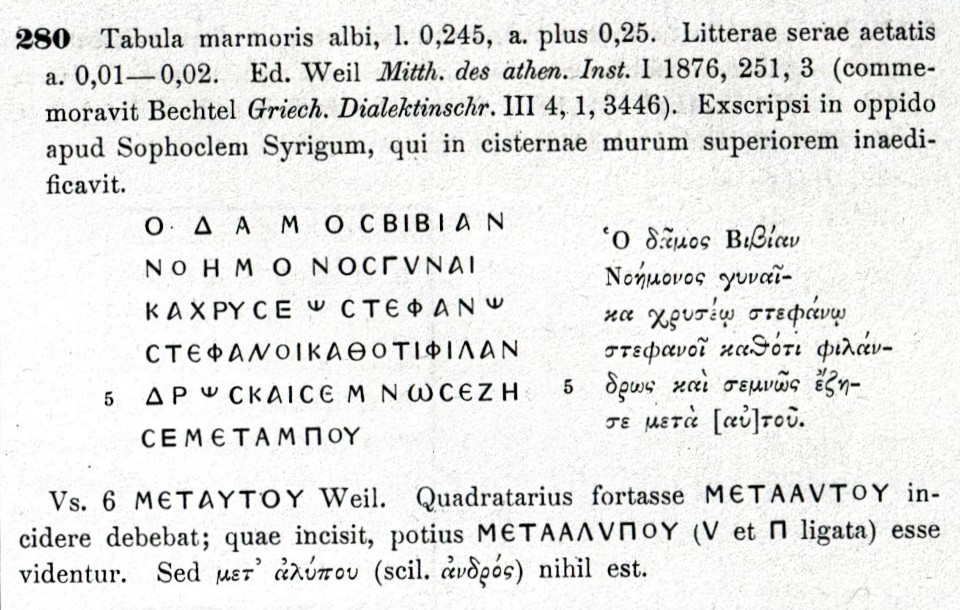
“Theodore reports visiting the house of an elderly man, surnamed Chalaris (the same surname as the ‘demarch’) who had assisted in the excavations of Ludwig Ross on the island in 1836 (nearly fifty years earlier). The house of this ninety-year old consisted of one room (like most of the village’s barrel-vaulted houses) and had ‘endless archaeological trophies scattered around. With pride he pointed out the various objects he had collected – the torso of a statue let in over his door, an inscription let into his well before the house’ (Bent 1885:45). This must surely be I.G. 280, which is described as being located in ‘the back wall of a cistern in the village house of Sophocles Syrigus’.

Figure 2: Excerpt from I.G.XII, iii: page 64, recording what is probably the inscription at the back of Chalaris’s well (source: I.G.XII, iii: 64).

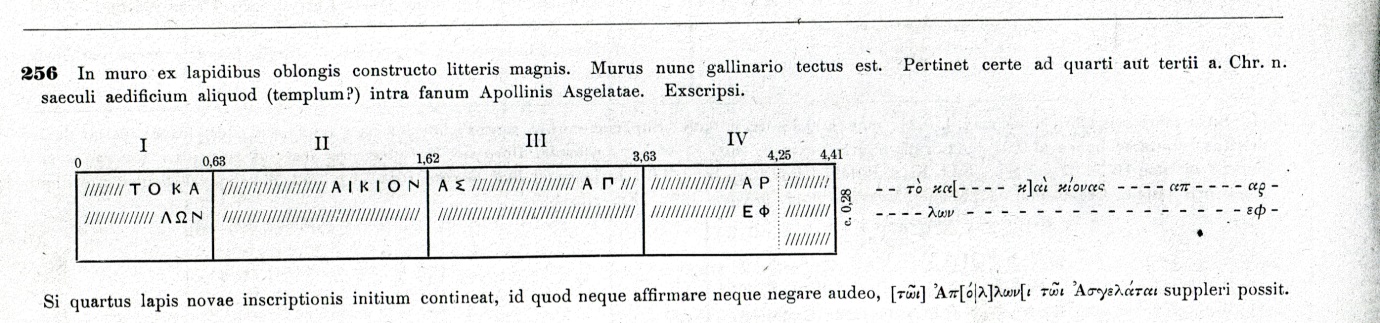
“Another inscription recorded by Hiller (I.G. 256) is described in Latin as ‘murus gallinario tectus est’ (‘now the wall of a hen-house’).

Figure 3: Excerpt from I.G.XII, iii, page 60. The whereabouts of the henhouse have not been discovered! (source: I.G.XII, iii, 60).

Twentieth-century finds

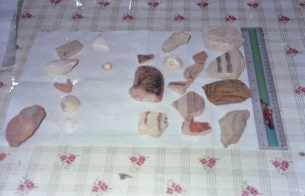
“Some of the school-teachers posted to the island when a secondary school and high-school were created in the 1980s and 1990s were interested in archaeology and the history of the island. One of them showed us some finds.

Figure 4: Summer 1988: pottery shards found in the village (photo: M. Kenna).

“He showed us the places in the village where he had found the pottery pieces (usually on top of the heaps of soil from the lower levels when cisterns were being dug. The fact that some of the pieces were of geometric pottery – pottery that can be dated to 900-700 BCE – indicates that the village site has been occupied for much longer than various sources state – some of them say it dates from ‘medieval times’). As we looked, one of the villagers ran up and said ‘If you’re interested in that kind of thing, I’ve got something in my shed you might like to see’. And…

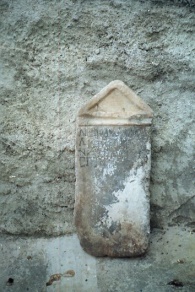
Figure 5: Summer 1988 ‘in a shed at the house of…’ (photo: M. Kenna).

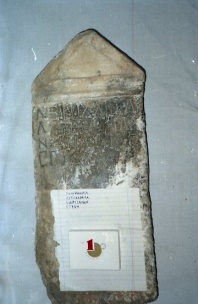
“In case it had not been recorded before, we not only photographed it, and tried to copy the inscription, but also improvised a way of indicating its measurements – a Papastratos #1 cigarette packet!

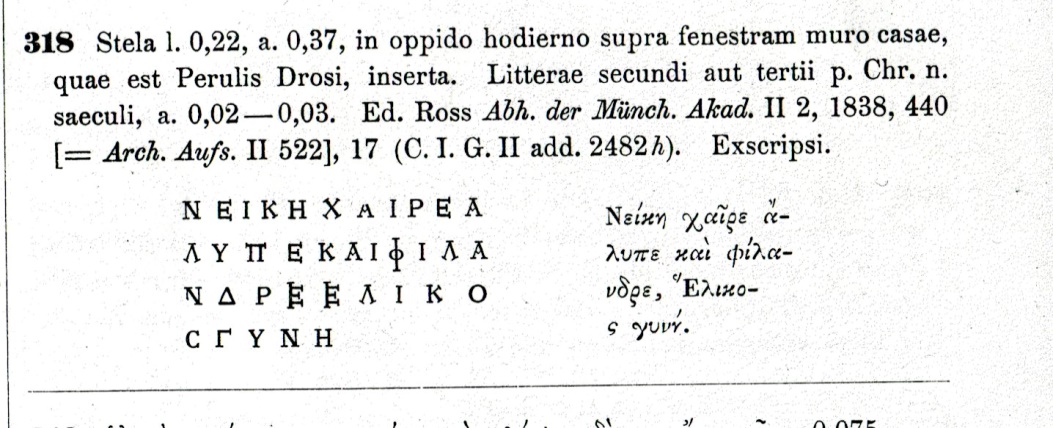
Figure 6: Summer 1988: maybe an unrecorded inscription? – but no…. (photo: M. Kenna).

“It was later identified by an epigrapher who has worked on the island, Angelos Matthaiou, as I.G. XII, iii, 318, page 68 (see the Greek Epigraphical Society website). Angelos and his colleagues have discovered, or re-discovered, many of the inscriptions recorded in I.G. One he found was at the Lower Monastery’s former grape-treading building (patitiri). His discoveries can be found in Supplementum Epigraphicum Graecum (SEG) and in the journal Horos. Hiller notes that this stele is ‘in today’s village, in the wall below the window of the house of Perulis Drossos’.

Figure 7: I.G XII, 3, number 318.

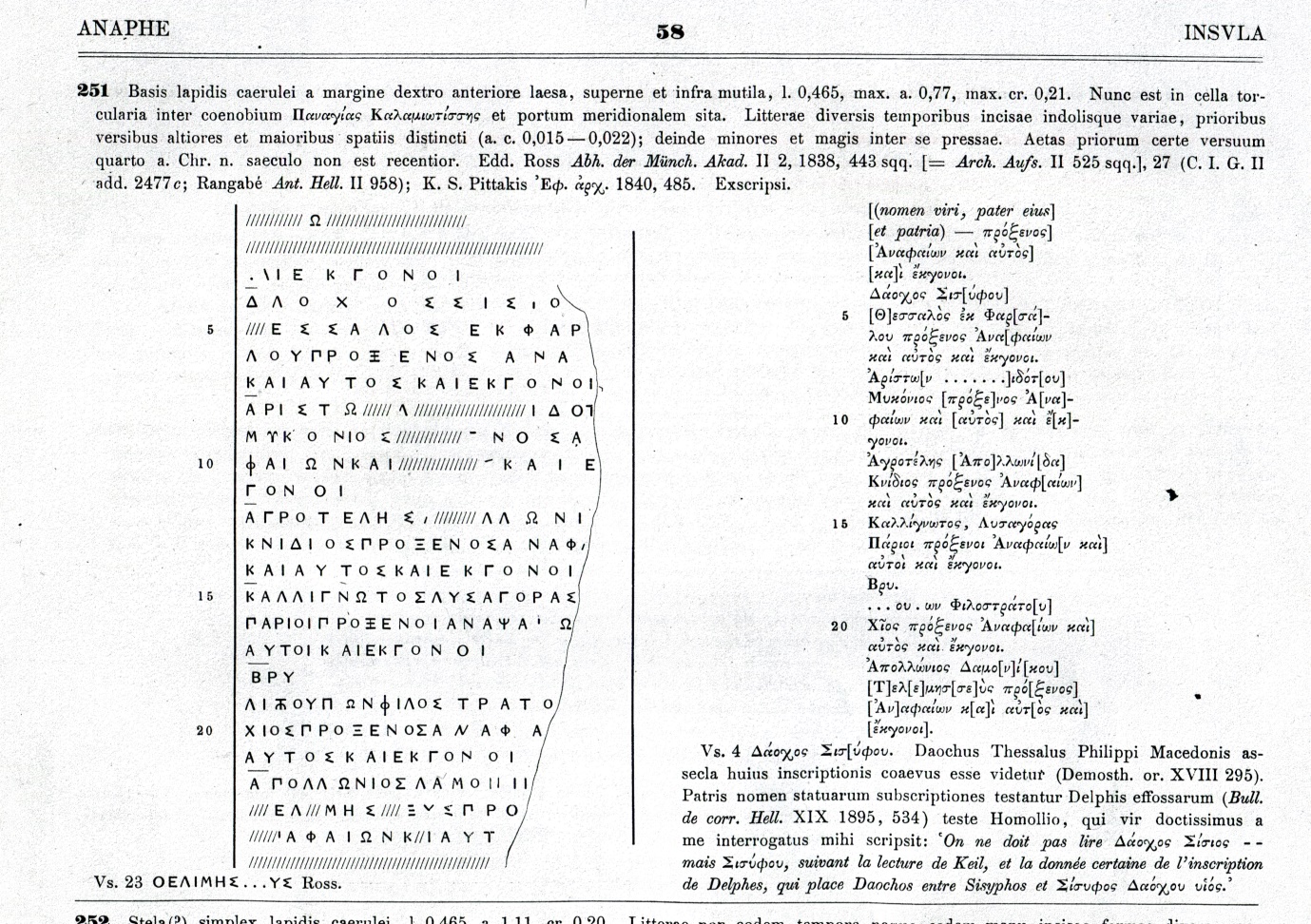
“Theodore recorded some inscriptions in the village and at the Lower Monastery (knowing that most of them had already been collected by Ross). One of these, which must have been near the Lower Monastery (because he writes ‘before returning to our boat’) was at ‘a ruined house’ and gave a list of ‘seven consuls from different parts of Greece, resident at Anaphi – one from Thessaly, others from Mykonos, Cnidos, Paros, Chios, Lacedaemon, and Siphnos’ (Bent 1885: 50). This must be I.G. 251. Hiller’s entry for it states that it is in the Monastery ‘in cella torcularia’ (in the pressing room, either an olive press or a wine press – in this case, wine-press).

Figure 8: I.G XII, 3: 251, the seven ‘consuls’.

“Theodore also took some ‘squeezes’ (papier-maché impressions) of inscriptions he thought might be unknown; one of them was published in the The Journal of Hellenic Studies (1888), and also referred to by Hiller.

Figure 9: Reference to Bent’s ‘find’ in an article by E. L. Hicks in The Journal of Hellenic Studies 1888 (9): 90-90.

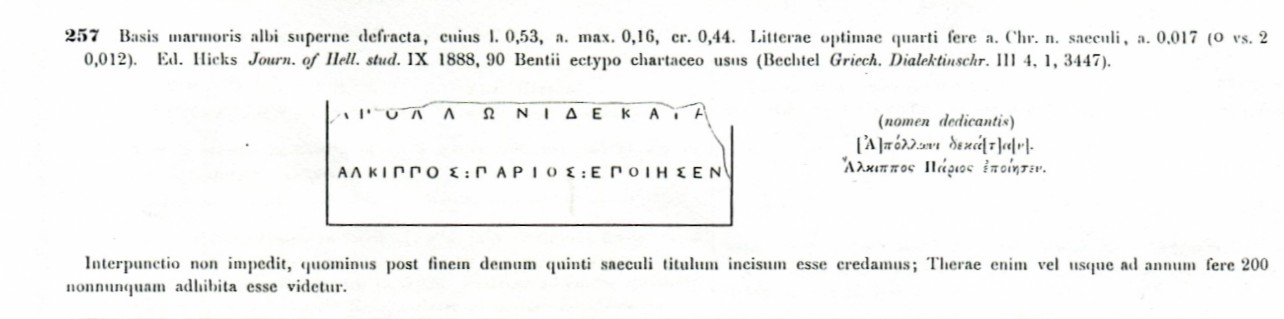
“A decade later, this inscription was published by Hiller, with acknowledgement of Bent’s ‘ectypo’ (squeeze) and Hick’s recording of it in JHS:

Figure 10: I.G. XII, 3: 257, Bent’s work on an inscription is acknowledged (source: I.G. XII, 3: 257).


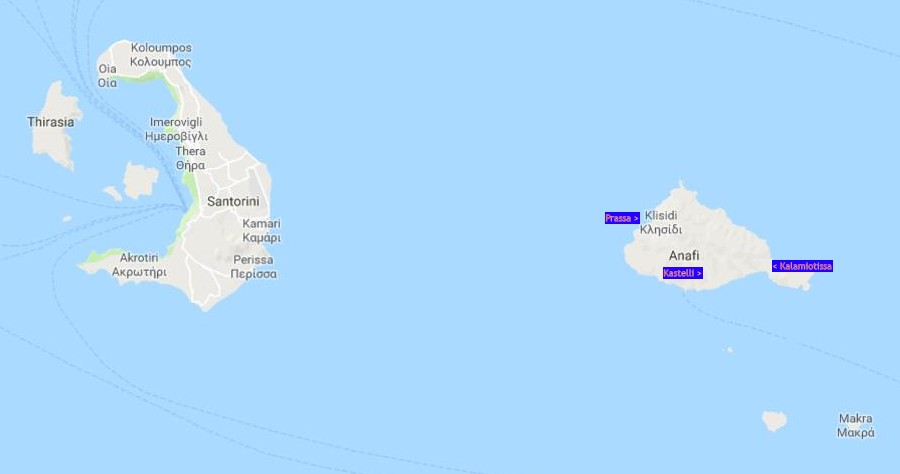
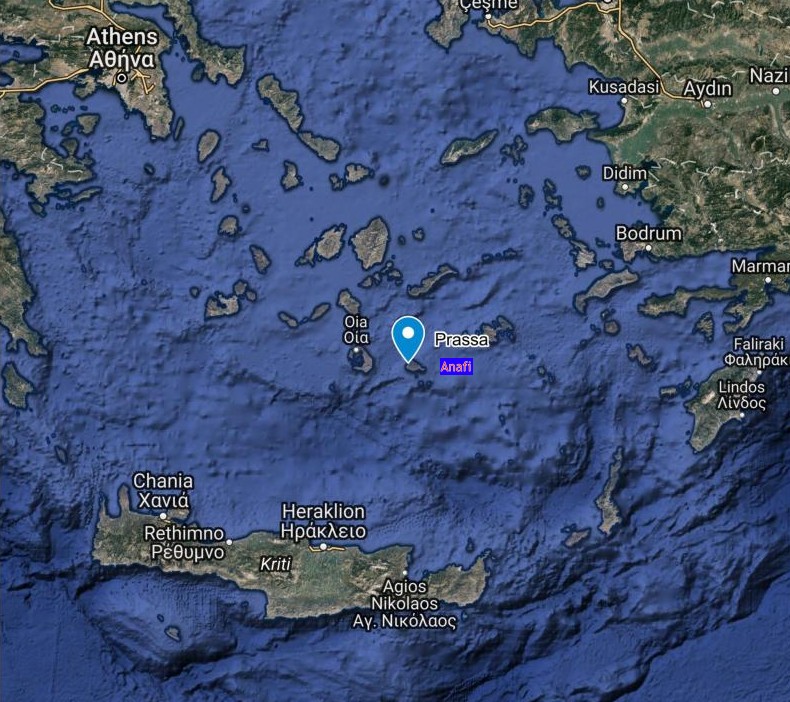
Figure 11: In context. A Google Map showing the tiny island of Anafi in the Cyclades. Sites shown are Prassa on the north-west, where the Bents landed in January 1884, the Classical and Medieval site of Kastelli, and the Kalamiotissa Monastery to the east of the island.

“I really hope this has inspired you to go search out your own Cycladic inscriptions this summer! See you again soon for the third in my series of Incidentals!”

References:
* Bent, Mabel and Brisch, Gerald (ed.) 2006. The Travel Chronicles of Mrs. J. Theodore Bent, Vol I: Greece and the Levantine Littoral. Oxford, Archaeopress.
* Bent, Theodore 1885 (2002). The Cyclades, or Life Among the Insular Greeks. Oxford, Archaeopress.
* Ross, Ludwig 1840-1852. Reisen auf den griechischen Inseln des ägäischen Meeres (1840-45). Stuttgart, Tübingen, Cotta [https://archive.org/details/reisenundreiser00rossgoog].

Websites
For the Greek Epigraphical Society, see https://greekepigraphicsociety.org.gr/august-2011/#more-440 (accessed 17/03/2018).

Incidentally I: Margaret Kenna, and the Bents on Anáfi in 1884 – Adventures getting to, and leaving

We are delighted to announce for our site over the coming months a short, Theodore and Mabel Bent-related series of ‘incidentals’ covering the Cycladic island of Anáfi, presented by anthropologist and Anáfi expert Professor Margaret Kenna. Margaret is a retired social anthropologist from Swansea University who has been carrying out research on Anáfi, and among Anáfiot migrants in Athens, since 1966. She has written two books and many articles in English about her research: Greek Island Life: Fieldwork on Anafi (2nd edition 2017, Sean Kingston Publishing), and The Social Organisation of Exile: Greek Political Dissidents in the 1930s (2001, Routledge). A Greek translation of the second book was published in 2004 by Alexandreia Press. Many of her articles, in English and in Greek translation, can be found on the websites: academia.edu and ResearchGate. She has also written several booklets which can be found in tourist shops on the island: Anafi: a Brief Guide; Anafi: Island of Exile; The Folklore and Traditions of Anafi, and The Traditional Embroideries of Anafi. She was made an Honorary Citizen of the island in 2006.

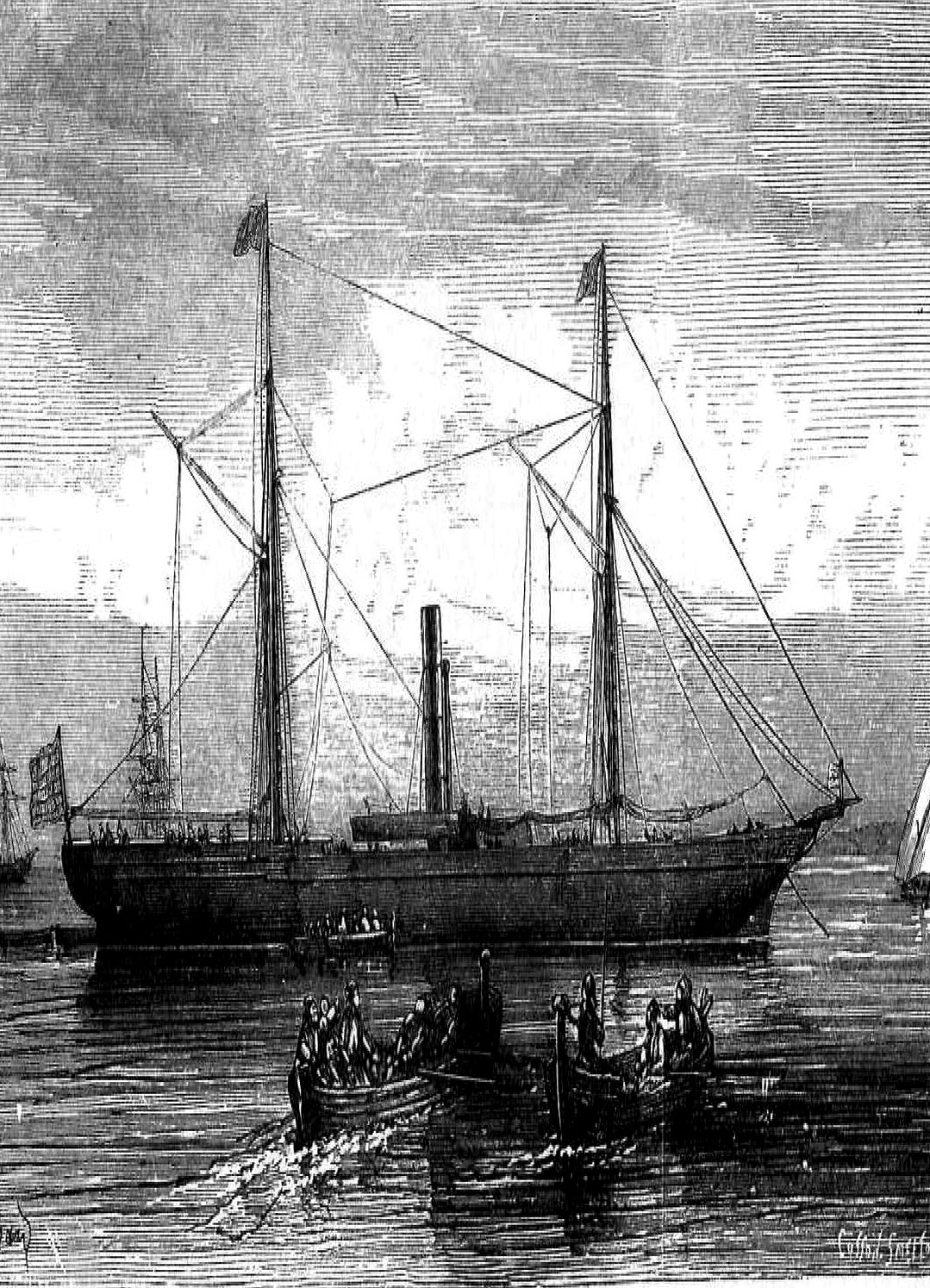
We begin Professor Kenna’s thyme-scented series with ‘Adventures getting to, and leaving, Anafi: 1884 and 1983’, comparing Margaret’s own reminiscences on the island’s (in)accessibility with those of Theodore and Mabel, through a lens of 100 years. We very much hope you enjoy what follows and decide to look out for forthcoming Anáfi ‘talks’ soon on our site; by all means send in your comments to the Bent Archive!

ανάφηανάφηανάφηανάφη

Adventures getting to, and leaving, Anafi: 1884 and 1983

by Margaret Kenna

“In early January 1884, Theodore and Mabel Bent spent sixteen hours on a caïque travelling from Santorini to Anafi. They landed at around two o’clock in the morning, at a little inlet about two hours away from the village (Theodore describes it as on ‘the north side of the island’, but it is, more accurately, on the north-west coast, north of the fertile western area known as Vayia). This inlet, identified as Prassa, was until a few decades ago used whenever adverse winds and bad weather prevented vessels from getting to the main harbour of Ayios Nikolaos on the south coast of the island.

“Being opposite Santorini, and thus likely to have received stones, rocks and lava from its volcanic eruptions, the inlet has some very striking rock formations:

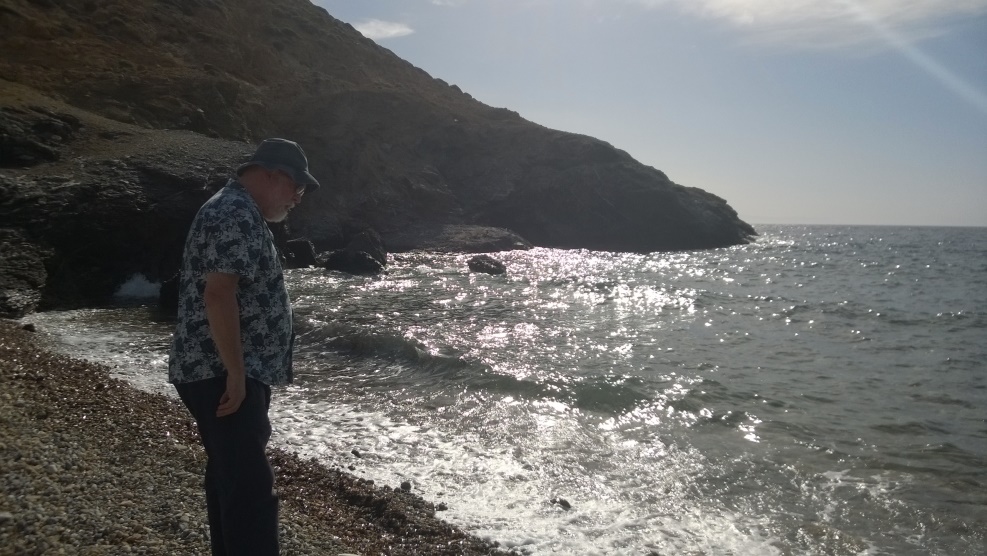
Pebble from Prassa, commemorating the Bents’ arrival there (art-work by Lito Apostolakou, inklinks.etsy.com)

“While Mabel’s diary (courtesy of Gerry Brisch (Bent 2006: 33)) notes that, once landed, they scrambled over ‘thorns, stones, rocks, and streams’ for an hour before they found a chapel where they could take shelter and spend the rest of the night, Theodore omits all the scrambling and notes his appreciation of ‘those churches, which are dotted everywhere over the islands for benighted wayfarers like ourselves’ (Bent 1885: 44). After this very ethnocentric observation, he comments on the small size of the chapel and its mud floor on which they slept with stones for pillows and their travelling rugs as blankets (also noted by Mabel). No mention at all is made by Theodore of the ‘old man whose son-in-law had died on Anaphe’ who was on the caïque with them, according to Mabel, and had come over ‘to fetch his daughter’. This human interest story is omitted by Theodore, who simply tells us that in the morning they sent their ‘manservant’ (and guide and translator), identified by Gerry Brisch as Matthaios Simos (himself from Anafi), to the village to get mules. While waiting for him to return, they breakfasted on some bacon they had with them, cooked over a brushwood fire. They set off for the village, taking with them mail for the villagers, for which the island had been waiting for two months.

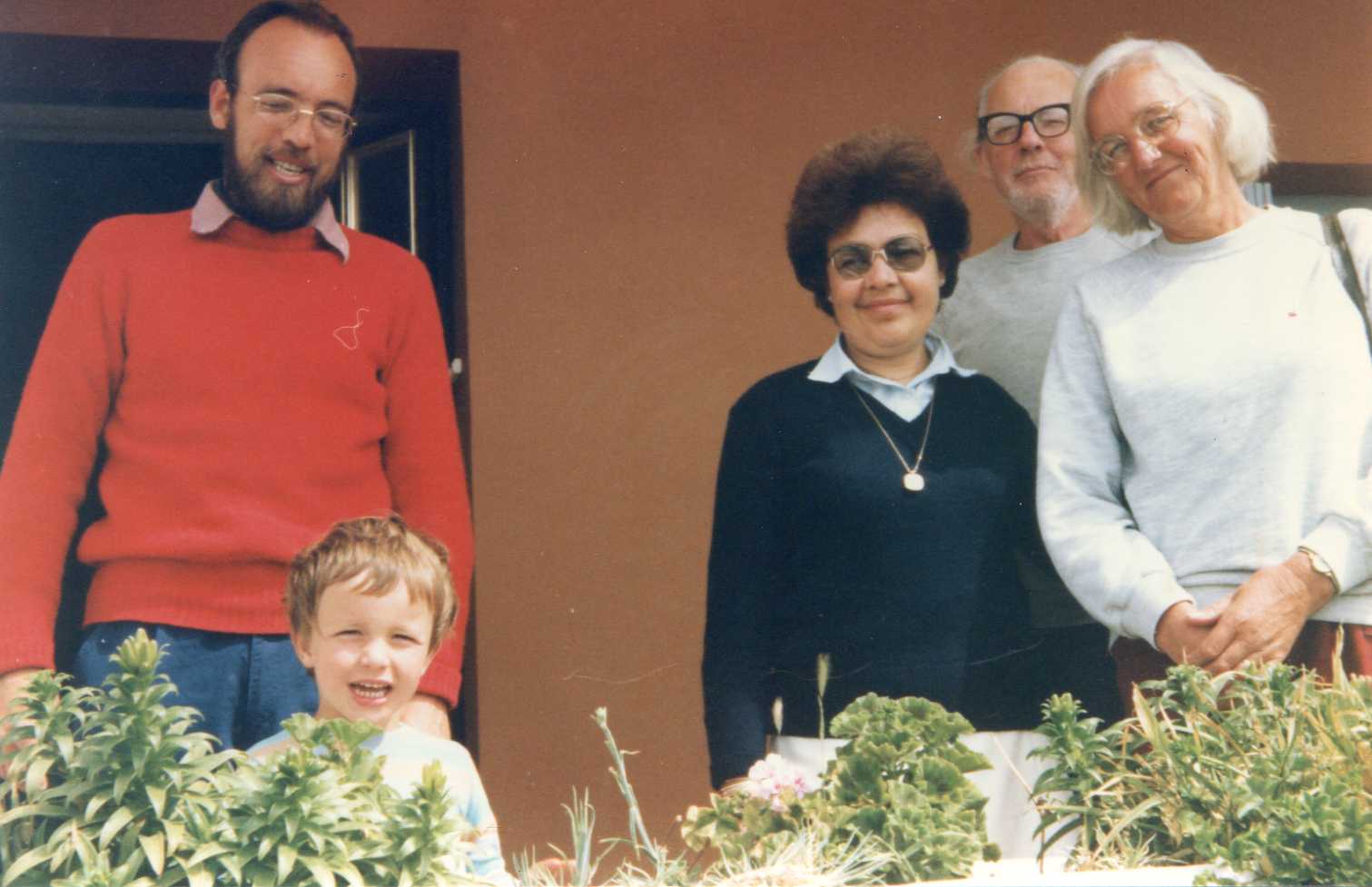
“Almost one hundred years after the Bents arrived at Prassa, when bad weather in April 1983 prevented the steamer from approaching Ayios Nikolaos, five of us, four adults and a four-year old child, had to cross the island on foot to Prassa. Our luggage was on donkeys, for in those days, as in the Bents’ time, there were no roads and no wheeled vehicles (although there was electricity in the village, and a few telephones). Having hurried along rocky paths and across country for several hours, we arrived at Prassa. There, while the steamer waited out at sea, we jumped from a flat rock, which served as a landing stage, into a dinghy, which rowed us out to the steamer, and then collected supplies and a mail bag. Luckily, not an adventure to be repeated as now there is a more-or-less wind-and-weather-withstanding jetty at Ayios Nikolaos harbour.

Prassa in May 2016: the ‘landing stage/embarkation’ platform is the large, sunlit, pale grey, rock sticking out from the cliff in the centre of the picture (photo: Margaret Kenna)

Spring 1983: on Anafi, some of the party, with local friend (in black) just before the cross-country trek to Prassa (photo: Margaret Kenna)

“The Bents had to cut short their stay as the weather was fine and the caïque was waiting, so they were only on the island for two days (9th to 11th January). They collected mail to take to Santorini, and Mabel reports that they were accompanied by the old man, his widowed daughter and her baby (so we do know a little bit more about that human interest story), and Matthaios Simos’s cousin, Margarita.”

The harbour of Ayios Nikolaos in summer 1966. It is likely that only the very short jetty would have existed when the Bents left the island on 11 January 1884 (photo: Margaret Kenna)

An isle in context. Map showing the tiny island of Anafi in the Cyclades. Prassa is on the north-west (map: Google)

See also:

Incidentally II

Incidentally III

Incidentally IV  

Incidentally V

References

Bent, Mabel and Brisch, Gerald (ed.) 2006. The Travel Chronicles of Mrs. J. Theodore Bent, Vol I: Greece and the Levantine Littoral. Oxford, Archaeopress.

Bent, Theodore 1885 (2002). The Cyclades, or Life Among the Insular Greeks. Oxford, Archaeopress.

‘A traveller without a map……’

New interactive maps just posted on our site!

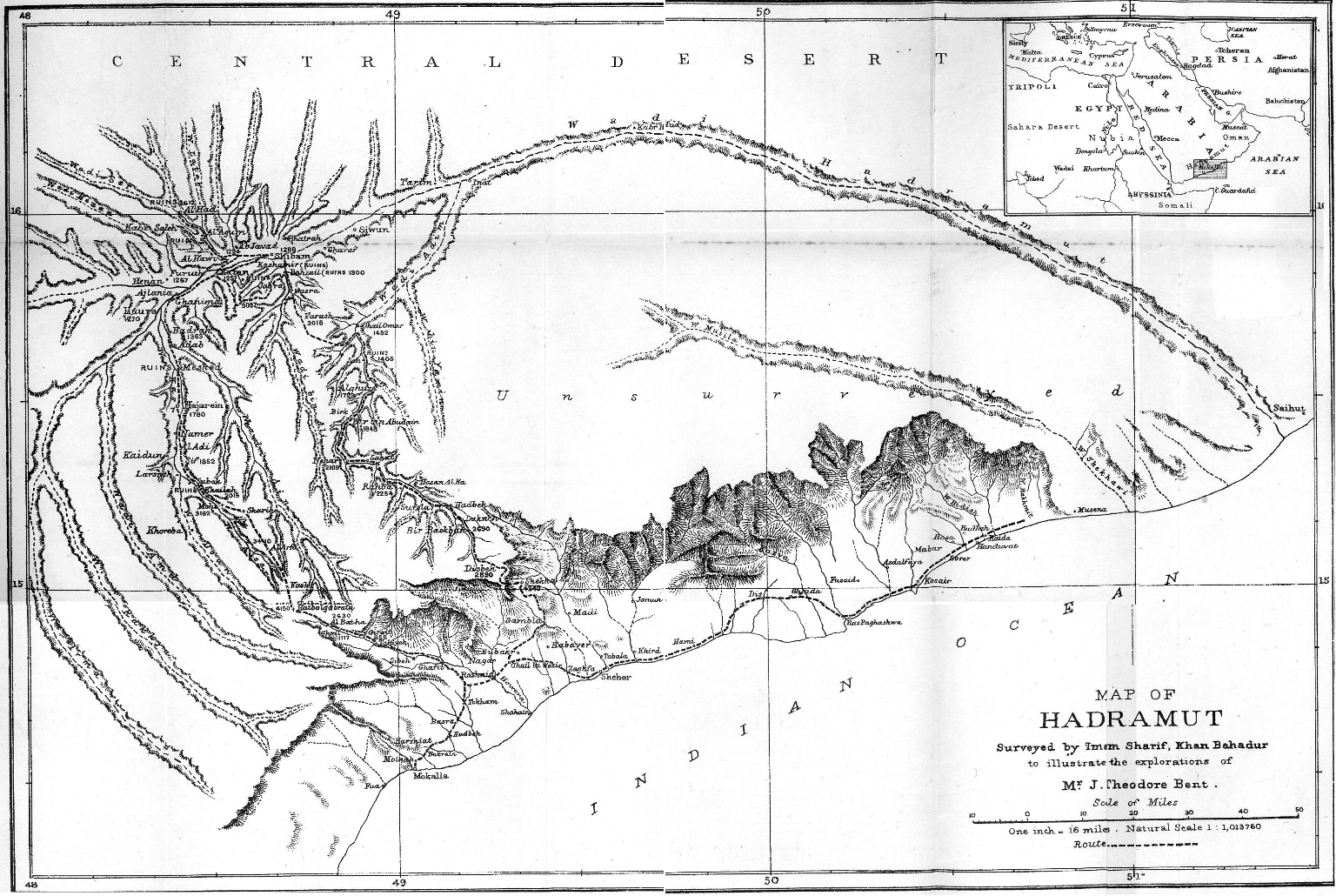
As Theodore and Mabel were wont to say, ‘A traveller without a map is like, er,….lost’. From Aksum to Zimbabwe, wherever they set out to explore, they always insisted on taking the latest maps with them; or commissioning special ones for their routes; or going so far as to take their own cartographers along with them (e.g. Imam Sharif’s map of the Bents’ expedition to the Wadi Hadramaut in 1894). Mabel later, in a short autobiographical article recalled: ‘In one of my investigations of the library at home I came upon a book that I made up my mind to examine. It had a delightful title “The Atlas of Undiscovered Countries”. It was firmly fixed, and to get at it I had to exert all my strength and become very hot, tugging out the great folios that were on each side, and then to my disgust I found my prize was only a false wooden book to support the upper shelf. Years after I exclaimed, ‘Now I have really an atlas of undiscovered countries of my own’, when I eagerly unpacked a map in eight sheets (that my husband had had made at Stanford’s, of Southern Arabia, when we were first thinking of exploring that part of the world) and found two or three of the sheets blank save for latitude and longitude marks. I am glad to say that the blank is not so large now…’

We are glad, too, to say that our website now has a series of interactive Google maps detailing the 20 years of the Bents’ expeditions. The most recent one added is labelled ‘The Bents’ Greatest Hits’ and shows the sites where the Bents made their most significant researches or discoveries in the 1880s and ’90s – from Aksum to Zimbabwe; the map also features a separate layer picking out significant locations for the Bents in England and Ireland. The pins are augmented with texts, photos, etc., and are very well worth a few minutes of your busy day – to transport you back to the late 19th century and days of solar topees, slow steamers, gin and quinine, leather portmanteaux, assorted adventures, and nights under unrecognisable stars…

Imam Sharif’s map of the Bents’ expedition to the Wadi Hadramaut, 1894. From Theodore Bent’s 1894 paper for the Royal Geographical Society. Image © The Bent Archive

Many happy returns Mabel on your birthday today (28 January)!

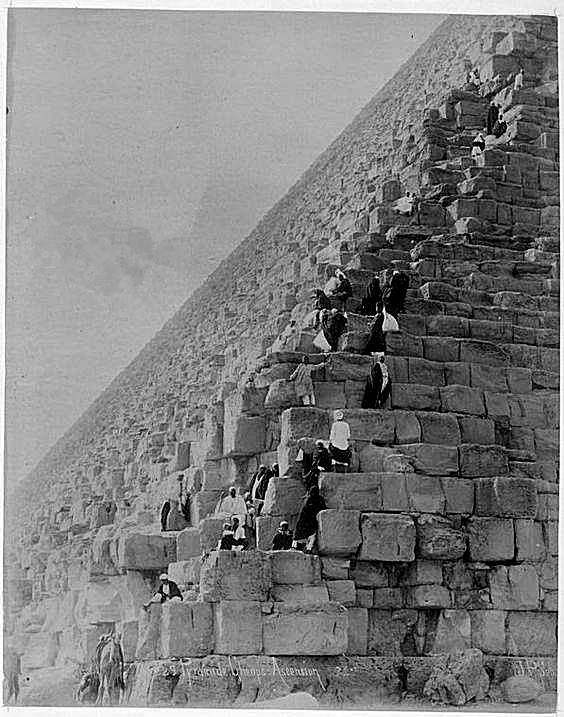
‘It was splendid being up there’ – Mabel climbing the Great Pyramid of Giza on her birthday – Wednesday 28 January 1885.

Some Pyramid scalers in 1885 (the year of Mabel’s ascent), by J. Pascal Sébah. Obviously clambering all over them was the thing to do back then; it is not recommended today.

In January 1885, before leaving for a tour of the Dodecanese, Theodore and Mable made a tourist trip to Egypt, taking in, of course, the Pyramids: the Great Pyramid (also known as the ‘Pyramid of Cheops’ and constructed around 2500 BCE), and the smaller Khafre and Menkaure Pyramids. The Sphinx squats in the complex’s eastern quarter.

The visit to the Pyramids coincided with Mabel’s 38th birthday (she was born at Beauparc, Co. Meath, on 28 January 1847) and she went to tea as guests of Frederick and Jessie Head (the wealthy daughter of Australian magnate John D. Mclean) at their stylish home, Mena House, below the Pyramids. (Their house still forms part of the Mena Hotel, the Heads buying their home in 1883, a year after their wedding in Wells, Somerset). Mabel does not record whether Frederick was much out of breath after their visit, or feeling unwell, but in any event within a few months he is dead, and poor Jessie (far from actually poor) sold up to another wealthy couple, the Locke-Kings, who turned the house into a fancy hotel – and it remains one to this day.

Mabel, of course, logs the event in her ‘Chronicle’ for the day. We may assume from her reference to ‘steps’ ‘3 or 4 feet high’ that it was the Great Pyramid she felt moved to attempt. Possibly just because it was there:

[Thursday] Jan. 29th [1885]. I had such a great many birthday treats yesterday, one in particular that I shall never forget unless extreme old age robs me of my memory… A little after 5 we set off for the Pyramids with the gun lent by the porter and enough cartridges for a whole battle. We saw the Pyramids against the sunset sky, a very plain one – all the colours of the rainbow fading and blending one into the other and very few tiny specks of cloud. The simplicity of it suited the Pyramids so well.

… After dinner we went out in the bright moonlight and Theodore… went to visit the Sphinx but I preferred to go up the Pyramid, as I had not done it on Monday… I scrambled up all alone. At first it was very hard and I had to crawl, putting one knee up first, as the steps are 3 or 4 feet high, regardless of bruised knees or shins and I felt quite convinced I must have very little stockings left but I am in a position to send a testimonial to the stocking maker. I did not feel a bit frightened or giddy or obliged to keep my face to the Pyramid but looked up and down. My companions were quite out of sight and it felt odd to be alone with the Pyramid and the moon. I shouted up several times ‘Are you near the top?’ ‘Oh! Not nearly’ came down. Then ‘Am I half way up?’ ‘No Mem’ came up. So I gave up asking. It seemed so long and I wondered how it could be possible to get down… I did not get at all breathless.

I wondered if ‘Fair Rhodope who as the story tells’ sat on the top of the Pyramid,  delighting all beholders, was a poor creature whose clothes had got torn off in the ascent and who could not get down. I thought of the dangers and difficulties in ‘Murray’ and ‘Baedeker’ and determined to read about them and tremble tomorrow, and I banished scornfully a very passing thought of the silk elbows of the only smart frock I have with me, and joyfully and proudly reached the summit, a strangely dressed figure – Hat, silk and velvet brocade body, white lace fichu over it and a blue cloth petticoat with a wide scarlet band, which I quite vainly tried to conceal by tying a black lace scarf round it; the skirt had been discarded before starting.

It was splendid being up there and I think it very very unlikely that any other person has been up by moonlight on his birthday before. I wished for a fire escape! Mr. Head and I came down together, sitting and slipping, sometimes having to put two hands together and jump and were glad indeed to reach the bottom safely … We had some tea and got home after a most delightful evening at 1 o’clock.

The Head’s residence below the Pyramids, where the Bents had tea, Mina House. Today a boutique hotel on a larger scale; the original house constituting the modern hotel’s dining areas.

For those needing a reference to Mabel’s ‘Fair Rhodope’, we must turn to the lines of Thomas Moore:

‘Fair Rhodope, as story tells,/ The bright unearthly nymph, who dwells/ ‘Mid sunless gold and jewels hid,/ The Lady of the Pyramid!’ (1827, ‘The Epicurean’).

Mabel’s lines are from the Egyptian entries in her ‘Travel Chronicles’, Vol. 2, pages 11-13 (Archaeopress, Oxford, 2012).

The photographs include one of some Pyramid scalers in 1885 (the year of Mabel’s ascent), by J. Pascal Sébah. Obviously clambering all over them was the thing to do back then; it is not recommended today.

The other photo is of the Head’s residence below the Pyramids, where the Bents had tea, Mina House. Today a boutique hotel on a larger scale; the original house constituting the modern hotel’s dining areas.

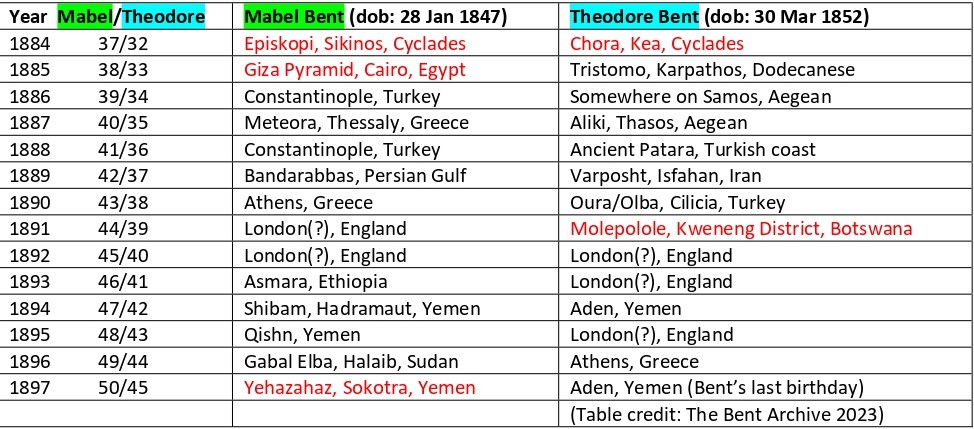
A review of Bent birthdays based on Mabel Bent’s Chronicles, 1884-1897

The accompanying interactive map below plots these birthdays: Mabel in green, Theodore in blue. (NB: London [13 Great Cumberland Place] stands in for unknown locations in Great Britain; the couple could have been away visiting family and friends in Ireland or England, including at their property ‘Sutton Hall’, outside of Macclesfield.)


There were 28 Bent birthday events (2 x 14) between 1884–1897 (the years covered by Mabel Bent’s diaries). Of these 28, only 5 (18%) were not spent in the field, and only 7 times (25%) does Mabel refer to a birthday in her notebooks directly. In the above Table, column 1 gives the year and ages of the Bents on their birthdays; columns 2 and 3 give their birthday locations. Events in red are when Mabel refers directly to their birthdays. ‘London’ is standing in for unknown locations in Great Britain. If not at their main residence (13 Great Cumberland Place), the couple could have been visiting family and friends in Ireland and England, including at their property Sutton Hall, outside of Macclesfield.

Papers say: Lost Oil Portrait Of Theodore Bent Discovered! Now Read On….

We are delighted to update this post with a wonderful addition to the Bent Archive gallery – at last, the lost oil! And by way of tribute to a real artist –  ‘Miss J. D. S. Aldworth’ !


For those interested in the background to this painting, read on!

(Or, more accurately really, the knowledge that there is a portrait of Theodore that has been lost, has been discovered.)

Here at the Bent Archive, snippets of biographical information about Theodore and Mabel turn up all the time. On one of our regular trawls through the Irish newspapers, the following few lines from the Dublin Daily Express (1 August 1898) came to light after lying on the sea floor for some 120 years:

‘Miss J. D. S. Aldworth, an Irish artist who is rising to distinction in London, has had the honour of submitting to her Highness the Duchess of York the pastel painting which she presented to be sold for the benefit of the Princess Mary Village Houses. Miss Aldworth studied first in London, and subsequently in Paris, under M. R. L. Fleury… and has exhibited in the Royal Academy, the Institute of Painters, the Royal Hibernian Academy, and other shows. Miss Aldworth. who belongs to a well-known Cork family, is a successful portrait painter in oils and pastels, and adds another name to the long roll of talented Irish artists. Amongst the best portraits in oils we may mention that of the late Theodore Bent, F.R.G.S., F.S.A.’

Now, to us, this is of more interest than the Antikythera Mechanism (retrieved from the deep but a few sea miles from where Theodore dug on Antiparos in 1883/4)! For we now know there is a missing portrait of Theodore to be tracked down. Did Theodore own it? Was it left to Mabel’s sisters and nieces on her death in 1929? All this is to be found out and published.

Two sidetracks can be pointed to.

What of the artist? Jane Dorothea Sophia Aldworth was born on 15 April 1861, the daughter of Colonel Robert Aldworth and Olivia Catherine Morton – a distinguished family from Co. Cork. After training in France, Jane returned to London and Dublin (inter alia) to paint and sculpt. A society artist, Jane, of course, found time for Cheltenham, and the Cheltenham Chronicle for Tuesday 21 September 1880 notes the Aldworths arriving at 38 Lansdown Crescent: ‘Col. and Mrs. Aldworth, Miss J. D. S Aldworth, Mr. St. Letter B. Aldworth. Mr. J. J O. Aldworth…’ By 1894/5 Jane had a London base at 37 Seymour Street, and featured her work in a catalogue of the 12th exhibition of the Institute of Painters in Oil Colours (it seems her picture of Theodore was not exhibited). In 1898 we have the article reference in the Dublin Daily Express quoted above. In 1905/6 she exhibited a piece (and offered it for sale at £5.5.0) called ‘The Spirit of the Rose’ at the Royal Hibernian Academy Annual Exhibition.

The Cheltenham Looker-On of Saturday 23 February 1907 has a dismissive view of one of Jane’s pictures on show at the Cheltenham and County Fine Art Society:

‘Amongst other painters who have contributed works of more or less merit, which want of space prevents us from criticising at length, are the following :- A. M. Bryant, A. K. Meadows, Sydney Scott, Rose Willis, W. W. Stephens, Col. Penrose Thaekwell, T. Mesham [and] J. D. S. Aldworth.’

Perhaps, in the end, Jane is better remembered for her charity work than her art. The next we hear of her is a letter in the Dorking and Leatherhead Advertiser (Saturday 28 October 1911): [To the Editor.] Sir, In response to my letter last winter asking for gifts of books, toys, dolls, etc., to send to the Church of England Waifs and Strays and Dr. Barnardo’s Homes, many of your readers kindly interested their young friends, and were able to send several hundred toys, thus bringing joy to many young hearts. I hope this winter we may enlist further sympathy and make a still larger collection. Toy cupboards might now be turned out in anticipation of Christmas, last year’s Christmas cards made into scrap books, dolls re-dressed, etc., and so many less fortunate little brothers and sisters would be enabled to have share in our Christmas cheer. I shall be grateful for all contributions of toys, new and old. They should sent in not later than Saturday, December 3rd. — Yours, etc., J. D. S. Aldworth. Claremont, Dorking.

Jane Aldworth died on 8 June 1913 at age 52, unmarried.

But what of this missing oil painting of Theodore Bent? Suffice it to say, it would be wonderful to locate and exhibit it – pride of place in the RGS Gallery, London. There are few likenesses of Theodore, Mabel’s efforts as expedition photographer were, frankly, undistinguished, and very few have survived because of technical difficulties. Sadly, a large number of her glass slides used for Theodore’s lectures were thrown away in the early 1950s, as being too damaged or faded to make further use of – today they could perhaps have been restored.

Jane’s missing portrait has a date referenced above of 1898, with Theodore having died in May the year before. So when did Theodore pose for Jane? Mabel used a fine studio photograph of her husband for the frontispiece of her account of the couple’s Arabian explorations, Southern Arabia, published in 1900. In all likelihood, this photograph of Theodore, and Jane’s portrait, were executed in the mid 1890s, when Theodore was in his early 40s.

As for how he may have looked in Jane Aldworth’s portrait, let’s stretch our imaginations and look at details from the photograph referred to above and a detail of a fine painting of Theodore’s uncle, Sir John Bent (1793–1857), erstwhile brewer and Mayor of Liverpool. The oil painting of Sir John was done in 1855 by Philip Westcott (1815–1878) and hangs today in the Walker Art Gallery, Liverpool. Looking for a resemblance (and bearing in mind an age difference of some 20 years), can we see family similarities in the eyes and brows? If Jane had painted Theodore at 65, not 45, might he have looked like the portrait of Sir John? But the missing picture, when we find it, will look like the studio photograph published by Mabel in her book of 1900.

So, if you see an unattributed oil painting at auction that has the eyes (though younger) of this sitter – buy it! It is this lost painting of Theodore Bent! Or, of course, if you own it now, or have any further information on Jane Aldworth – do let us know. Jane’s likeness of Theodore may be no oil painting, but we would love to see it!

‘My dear People’ – A Hall-Dare Pedigree and Photograph Album

‘Mrs Bent and her Camera. Photo by Russell & Sons, London’ (pre 1895).

THERE is a letter of Mabel’s (from a collection now in the RGS, London) dated Friday, 24 February 1893, from Aksum in ‘Abyssinia’, which begins ‘My dear People’ and signs off ‘Best love to you all, Your very loving Mabel’. It starts, alarmingly, ‘Don’t be anxious about us…’

Mabel’s letter to her family, 24 Feb 1893, written during the couple’s risky tour to Aksum and Ethiopia that year. Theodore published his adventures as ‘The Sacred City of the Ethiopians’ (1893).

What follows here on our site, a new leaf being added now and then, represents a virtual photo album of the many correspondents of Mabel’s, her closest Anglo-Irish family connections, to whom she wrote many, many hundreds of letters during her nearly twenty years of travelling with Theodore. You might like to meet them!

The prominent mid-19th century Hall-Dare family developed their wealth principally from the second half of the 18th century, primarily in Essex, as a result of the alliances of several influential families – Dare, Hall, Westley, Eaton, King, Grafton, Mildmay, Hopkins (including the notorious John ‘Vulture’ Hopkins) and others (a useful family tree can be found in The Visitation of Essex of 1879). Between them they owned a portfolio of land and grand houses that gradually found its way into the merged family of the Hall-Dares by the early 19th century: Theydon Manor, Fitzwalters, Wyfields, Cranbrook, East Hall, Wennington Hall, Ilford Lodge, and several others. None of these residences remain in any significant manner. Two churches dedicated to St Mary contain memorials to the family: St Mary’s, Theydon Bois, Essex and St Mary’s, Bunclody, Co. Wexford, Ireland. (Theodore and his family are also remembered in St John’s, Baildon and St James’, Sutton, near Macclesfied.)

The memorial to Mabel Bent’s grandfather, Robert Westley Hall-Dare (d. 1834), in St Margaret’s Church, Barking, London ((c) Bob Speel).

The early families’ combined wealth and influence (several members were MPs, Justices, Sheriffs, etc.) derived from agriculture, trade, property, and, it has to be said, plantation ownership, particularly in what is now British Guiana. A key family member was Robert Westley Hall (d. 1836), who, returning from British Guiana, married the heiress Elizabeth Grafton Dare in 1815, and, in 1823, changed his name to Hall-Dare. The couple had eleven children, who went on to be the beneficiaries of the many Essex estates, most of which now (2018) have been dispersed. The main residence was left not to Robert’s eldest boy (Mabel Bent’s father, also Robert (1817-1866), and the eldest was after this always christened Robert Westley) but to his second son, Henry (1825-1908). The eldest boy promptly sold most of his share of the estates and took himself off to Ireland, where he married into an aristocratic family and can be said to have settled. There are many, many descendants from the eleven children of Robert and Elizabeth mentioned previously; perhaps the main seat of the family today might be thought of as being Newtownbarry House, Bunclody, Co. Wexford, although there does no longer seem to be a current Robert Westley Hall-Dare.

For the background to the extended Hall-Dare family (in 1912), see Sir Bernard Burke, A Genealogical and Heraldic History of the Landed Gentry of Ireland (1912, London, pp. 165-6. Mabel is listed as the second daughter of Robert Westley Hall-Dare, marrying Theodore Bent in August 1877.

For Mabel’s maternal family, the Lambarts of Beauparc, Co. Meath, see Burke’s Genealogical and Heraldic History of Peerage, Baronetage and Knightage (1914, London, pp.1151-2).

Via her mother, Frances Anna Catherine Lambart, Mabel descends from “Oliver Lambart, 1st Lord Lambart, Baron of Cavan (died June 1618) was a military commander and an MP in the Irish House of Commons. He was Governor of Connaught in 1601. He was invested as a Privy Counsellor (Ireland) in 1603. He was also an English MP, for Southampton 1597. He is buried in Westminster Abbey.” (Wikipedia, accessed 24/4/2025)

See also an account of the Lambarts by the Navan & District Historical Society.

Most of the photographs to follow (from the Bent Archive Collection) are examples of the new carte de visite format developed by André-Adolphe-Eugène Disdéri (1819–1889). Two of the photographs to come are actually from the Disdéri Studio itself.

The rare albumen print below of Mabel’s mother, Frances Anna Catherine Hall-Dare (née Lambart), is from the studio of the eminent court photographer Camille Silvy (1834-1910). Coming from a French aristocratic background, Silvy established himself as one of the leading portrait photographers in London. He moved to London in 1859 and bought Caldesi and Montecchi’s studio on Porchester Terrace. He kept daybooks with the details of each sitter, the date, and a file print, and these, with five members of the Hall-Dare family, are now in the National Portrait Gallery’s archives, London.

Do visit regularly (sign up to our blog posts if you like!) to see new additions to our album of Mabel’s relatives, and please let us know if you have any faces to add (info@tambent.com).

Several excellent websites exist for those interested in Mabel’s side of the family, follow the links: the Hall-Dares; Lord Belmont’s site; Paul Frecker’s collections; and the National Portrait Gallery’s Hall-Dare portraits by Camille Silvythe Blackett family; the Bagenal family….

We do hope you will find the album that follows both interesting and diverting.

Best wishes

The Bent Archive

PS. Many of the photographs on our website are from the Bent Archive Collection; please contact us for reproduction requests (info@tambent.com).

A rare ‘cdv’ of Mabel V(irginia) A(nna) Hall Dare (1847-1929), with her signature in maiden form.

A studio portrait of Mabel taken when she was around 25 or so in Florence (in the 1860s or ’70s). Mabel and her siblings travelled frequently on the continent most long, unhurried summers, until their various marriages obliged them otherwise. The portrait (a ‘carte de visite’) of Mabel was shot in the celebrated society studios of Montabone in Florence, perhaps taken at the same time as the likenesses of her sisters Olivia and Frances below (nos. 9 & 10). Mabel has added her name – Mabel V(irginia) A(nna) Hall Dare, her only traced signature in maiden form. It is a strikingly lovely and reflective portrait: the black Irish lace trim to her dress might, from respect, be for her mother (d. 1862 ) or father (d. 1866); the starry jet (?) earring she wants us to notice, the locket we cannot read; and her trademark long, red hair plaited and coiled – with a flourish surely meant for the Ufizzi.

Mabel Virginia Anna Hall-Dare (1847-1929), later Mrs. J. Theodore Bent, aged 19.

SITTER: Mabel Virginia Anna Hall-Dare (1847-1929), later Mrs. J. Theodore Bent. The date is October 1866 and Mabel is just 19, the setting most likely the garden of Newtownbarry House, Co. Wexford, the family home, then as now. From this genteel, Anglo-Irish estate, Mabel was to travel just over a decade later, as Mrs. J. Theodore Bent, to remote and unrecorded corners of the Eastern Mediterranean, Africa, and Arabia, marking her out as one of the most well-known woman travellers of her era. Although Mabel is in mourning black for her father, Robert Westley Hall-Dare, who died in April of that year, the expression on her powerful face, her famous red hair tucked away, is enigmatic. She holds up to the camera what looks like the ace of spades or clubs, as if making some sort of statement to her father. The recently deceased Hall-Dare was anything but an ideal father, dying in the up-scale asylum for distressed gentry that was Ticehurst House Hospital at Ticehurst, East Sussex.
DATE: October 1866.
STUDIO: Detail from a private family photograph.

Mabel Bent in her wedding gown (1877?).

SITTER: Mabel Virginia Anna Bent (née Hall-Dare) (1847-1929), in her wedding dress. Mabel Virginia Anna Hall-Dare was the daughter of Robert Westley Hall-Dare and Frances Anne Catharine Lambart. She married James Theodore Bent on 2nd August 1877 in Staplestown church, Co. Carlow, Ireland.
DATE: Presumably around the time of her marriage, 2 August 1877.
STUDIO: T. Fall, 9 Baker Street, Portman Square, London. Fall set up as a portrait photographer in the 1850s in Bedale, Yorkshire. In the late 1860s he moved to London to work for the established studio of Elliott and Fry in Baker Street, and from there founded his own business in 1875, also in Baker Street. He began to specialise in photographing dogs and was commissioned by the Princess of Wales, later Queen Alexandra, to photograph her with her dogs earning the company a Royal Warrant. Fall died In 1900.

Mabel Hall-Dare (later Bent) holding her niece Hilda (1870s?).

SITTER: Mabel Virginia Anna Bent (née Hall-Dare) (1847-1929), later Mrs J T Bent, holding her niece Hilda. Hilda Mary Hall-Dare was the daughter of Mabel’s brother, Robert Westley Hall-Dare and Caroline Susan Henrietta Newton. Hilda married James Erskine Wise Booth, son of George Booth and Georgiana Susanna Arabel Barton, on 30 December 1890. She died on 3 August 1953. Hilda and James had three children: Lt.-Col. Arthur Ronald Booth (1891–1954); Evelyn Mary Booth (b. 1897); Brigadier John Roberts Booth (1901–1971).
DATE: Late 1860s (?)
STUDIO: M. Allen and Co., 12 Westland Row, Dublin.

Mabel Hall-Dare (later Bent) as a young woman (1860s).

SITTER: Mabel Virginia Anna Hall-Dare (1847-1929), later Mrs. J. Theodore Bent, as a young woman.  Very aware of her fine red hair, a lock falls casually over her left shoulder, escaping from an otherwise carefully managed coiffure. The photograph is from the collection of Turtle Bunbury and reproduced with permission (Turtle’s great-aunt, Veronica Hall-Dare, is a distant relative of Mabel’s brother Robert, via his heir, also Robert (see below)).
DATE: Late 1860s (?)
STUDIO: Unknown.

‘Mrs Bent and her Camera’. Photo by Russell & Sons, London, pre 1895

SITTER: Mabel Virginia Anna Bent (née Hall-Dare, 1847-1929). An illustration first printed in ‘The Album, A Journal of Photographs of Men, Women and Events of the Day’ (Vol. 2, no.2, 8 July 1895, pp. 44-45). This is an extremely rare studio photo of Mabel standing beside her camera and tripod and attired for the wilds; very few people will have seen this since it was published in July 1895. Assuming the portrait was taken in the first half of that year, Mabel – her trademark long red hair coiled elegantly as ever – would have just reappeared from Muscat, Oman and Dhofar, and be preparing for the coming winter’s journey with her husband along the west coast of the Red Sea. That Mabel would feature in ‘The Album’ is no surprise – ever since the couple’s journey in 1891 to the ruins of Great Zimbabwe for Cecil Rhodes the Bents were celebrities. Mabel was expedition photographer, but it’s not immediately obvious which of her cameras she is displaying here; her small apparatus of choice was a’Luzo’ box camera, however the protruding lens indicates another, larger model. If anyone can identify it, please write in.
DATE: Presumably April-June 1895.
STUDIO: James Russell and Sons were a firm of portrait photographers with their principal studio at Littlehampton and others at Chichester, Worthing, Bognor and Petworth. They also advertised themselves as landscape photographers and exhibited views at the International Exhibition, London, in 1862. It is almost certain that the portrait was taken in the Baker Street studio (17 Baker Street, Portman Square, London W.), the premises they operated from between 1889-1908. The manager then was John Lemmon Russell.

Robert Westley Hall-Dare (Mabel’s brother).

SITTER: Robert Westley Hall-Dare (1840–1876); Mabel’s brother. Robert was born on 9 June 1840. He was the son of Robert Westley Hall-Dare and Frances Anne Catharine Lambart/Lambert. He was educated at Brighton College, Eton, and Christ Church, Oxford. He married Caroline Susan Henrietta Newton, daughter of Henry Newton and Elizabeth Jane Doyne, on 27 October 1863. He died on 18 March 1876 at age 35 of typhoid in Rome, while on extended holiday and is buried there (tomb no. 2084, ‘Cimitero Acattolico’). The couple had 6 children: Hilda Mary Hall-Dare (1870-1953); Elizabeth Frances Hall-Dare (1865-1956); Evelyn Una Hall-Dare (1872-1961); John Marmaduke Hall-Dare (1865-1866); Robert Westley Hall-Dare (b. 14 Oct 1866 – 20 Feb 1939); Arthur Mildmay Hall-Dare (1867-1941). Robert held the office of Deputy Lieutenant for County Wexford. He held the office of Justice of the Peace for County Carlow; the office of Justice of the Peace for County Wexford; the office of High Sheriff of County Carlow in 1868; the office of High Sheriff of County Wexford in 1872. He lived at Theydon Bois, Essex, England and Newtownbarry House, Bunclody, County Wexford, Ireland. He stood for Parliament twice (1868 and 1874) but was unsuccessful both times.
DATE: 1874; two years before his death.
STUDIO: Disdéri, 8 Boulevard des Italiens, Paris. Disdéri perfected the photographic visiting card. Robert and his wife Caroline had a base in Paris in the 1870s.

Robert Westley Hall-Dare as a boy (Mabel’s brother).

SITTER: Robert Westley Hall-Dare (1840–1876); Mabel’s brother. Robert was born on 9 June 1840. He was the son of Robert Westley Hall-Dare and Frances Anne Catharine Lambart/Lambert. He was educated at Brighton College, Eton, and Christ Church, Oxford. He married Caroline Susan Henrietta Newton, daughter of Henry Newton and Elizabeth Jane Doyne, on 27 October 1863. He died on 18 March 1876 at age 35 of typhoid in Rome, while on extended holiday. The couple had 6 children: Hilda Mary Hall-Dare (d. 3 Aug 1953); Elizabeth Frances Hall-Dare (d. 6 Feb 1956); Evelyn Una Hall-Dare (1872-1961); John Marmaduke Hall-Dare (b. 23 Sep 1865 – 1866); Robert Westley Hall-Dare (b. 14 Oct 1866 – 20 Feb 1939); Arthur Mildmay Hall-Dare (b. 11 Oct 1867 – 31 May 1941). Robert held the office of Deputy Lieutenant for County Wexford. He held the office of Justice of the Peace for County Carlow; the office of Justice of the Peace for County Wexford; the office of High Sheriff of County Carlow in 1868; the office of High Sheriff of County Wexford in 1872. He lived at Theydon Bois, Essex, England and Newtownbarry House, Bunclody, County Wexford, Ireland.
DATE: mid 1850s?
STUDIO: Unknown, as is the location, but possibly the Hall-Dare estates in Essex. The image is from a group photograph including sister Ethel and aunt Elizabeth Catherine Hall-Dare. The children are dressed as if ready for a game of battledore.

Caroline Susan Henrietta Hall-Dare, née Newton (Mabel’s sister-in-law).

SITTER: Caroline Susan Henrietta Newton (b. 11 May 1842 – 1918) was the daughter of Henry Newton and Elizabeth Jane Doyne. She was Mabel’s sister-in-law. She married Mabel’s brother, Robert Westley Hall-Dare, son of Robert Westley Hall-Dare and Frances Anne Catharine Lambart, on 27 October 1863. (For their children see No. 4 above.)
DATE: 1870s ?
STUDIO: Disdéri, 8 Boulevard des Italiens, Paris. Disdéri perfected the photographic visiting card. Robert and his wife Caroline had a base in Paris in the 1870s.

Caroline Susan Henrietta Hall-Dare, née Newton (Mabel’s sister-in-law).

SITTER: Caroline Susan Henrietta Newton (b. 11 May 1842 – 1918) was the daughter of Henry Newton and Elizabeth Jane Doyne. She was Mabel’s sister-in-law. She married Mabel’s brother, Robert Westley Hall-Dare, son of Robert Westley Hall-Dare and Frances Anne Catharine Lambart, on 27 October 1863. (For their children see No. 4 above.)
DATE:  1870s (?)
STUDIO: Scott & Son, Devonshire Street, Carlisle, UK.

Olivia Frances Grafton Hall-Dare (later Johnston) (Mabel’s sister).

SITTER: Olivia Frances Grafton Hall-Dare (1843-1926) was the daughter of Robert Westley Hall-Dare and Frances Anne Catharine Lambart. She married the Reverend Richard Johnston (died 27 November 1906) in July 1883. They had no children (?). Olivia died in 1926. She was Richard’s second wife. He married, firstly, Augusta Sophia Hamilton in 1844. She was known to the family as Iva.
DATE: 1860s or 70s (?).
STUDIO: Montabone, via dei Banchi 3, Florence.

Frances Maria Hall-Dare (later Hobson) (Mabel’s sister).

SITTER: Frances Maria Hall-Dare (1852-1924) was the daughter of Robert Westley Hall-Dare and Frances Anne Catharine Lambart. She married Reverend Edward Waller Hobson on 11 June 1891. They had no children. She was known to the family as Faneen.  Hobson (1851-1924) is buried at Saint Patrick’s Church of Ireland Cathedral, Armagh and his wife is assumed to rest with him, although The Portadown News for Saturday, 10 January, 1925, writes: “Mrs. Frances Mary Hobson, of 13 Great Cumberland Place, London, W., formerly of the Library, Armagh, who died on November 3rd last [1924], widow of the Venerable Edward Waller Hobson, Archdeacon of Armagh, of Bennekerry House, Carlow, left personal property in England valued at £5,483.”
DATE: 1860s or 70s (?)
STUDIO: Montabone, via dei Banchi 3, Florence

Frances Maria Hall-Dare (later Hobson) (Mabel’s sister).

SITTER: Frances Maria Hall-Dare (1852-1924) was the daughter of Robert Westley Hall-Dare and Frances Anne Catharine Lambart. She married Reverend Edward Waller Hobson on 11 June 1891. They had no children. She was known to the family as Faneen. Hobson (1851-1924) is buried at Saint Patrick’s Church of Ireland Cathedral, Armagh and his wife is assumed to rest with him, although The Portadown News for Saturday, 10 January, 1925, writes: “Mrs. Frances Mary Hobson, of 13 Great Cumberland Place, London, W., formerly of the Library, Armagh, who died on November 3rd last [1924], widow of the Venerable Edward Waller Hobson, Archdeacon of Armagh, of Bennekerry House, Carlow, left personal property in England valued at £5,483.”
DATE: 1860s or 70s (?)
STUDIO: C. Hawkins, Brighton School of Photography.

Ethel Constance Mary Hall-Dare (Mabel’s sister).

SITTER: Ethel Constance Mary Hall-Dare (Mabel’s sister) (10 Oct. 1848-1930). Ethel Constance Mary Hall-Dare was the daughter of Robert Westley Hall-Dare and Frances Anne Catharine Lambart. She married Lieutenant Beauchamp Frederick Bagenal, son of Philip Bagenal and Georgiana Thomasina Boyd, on 5 July 1870. She lived at Benekerry, Carlow, County Carlow, Ireland. The couple had 5 children (Mabel’s nephews and nieces): Mary Verena Bagenal (1871-1889); Beauchamp Walter Bagenal (1873-1952); Major Charles James Bagenal (1877-1955); Violet Ethel Bagenal (1882-1962); Kathleen Prudence Eirene Bagenal (1886-1974). The sitter is in mourning for her father Robert Westley Hall-Dare who died earlier that year in 1866.
DATE: October 1866.
STUDIO: Detail from a family photograph.

Ethel Constance Mary Hall-Dare (Mabel’s sister).

SITTER: Ethel Constance Mary Hall-Dare (Mabel’s sister) (10 Oct. 1848-1930). Ethel Constance Mary Hall-Dare was the daughter of Robert Westley Hall-Dare and Frances Anne Catharine Lambart. She married Lieutenant Beauchamp Frederick Bagenal, son of Philip Bagenal and Georgiana Thomasina Boyd, on 5 July 1870. She lived at Benekerry, Carlow, County Carlow, Ireland. The couple had 5 children (Mabel’s nephews and nieces): Mary Verena Bagenal (1871-1889); Beauchamp Walter Bagenal (1873-1952); Major Charles James Bagenal (1877-1955); Violet Ethel Bagenal (1882-1962); Kathleen Prudence Eirene Bagenal (1886-1974). Mabel bequeathed Ethel the entire contents of her London home in 1929.
DATE: 1880s?
STUDIO: Detail from a family photograph in the collection of Turtle Bunbury.

Ethel Constance Mary Hall-Dare as a girl (Mabel’s sister).

SITTER: Ethel Constance Mary Hall-Dare (Mabel’s sister) (1848-1930). Ethel Constance Mary Hall-Dare (1848-1930) was the daughter of Robert Westley Hall-Dare and Frances Anne Catharine Lambart. She married Lieutenant Beauchamp Frederick Bagenal, son of Philip Bagenal and Georgiana Thomasina Boyd, on 5 July 1870. She lived at Benekerry, Carlow, County Carlow, Ireland. The couple had 5 children (Mabel’s nephews and nieces): Mary Verena Bagenal (1871-1889); Beauchamp Walter Bagenal (1873-1952); Major Charles James Bagenal (1877-1955); Violet Ethel Bagenal (1882-1962); Kathleen Prudence Eirene Bagenal (1886-1974).
DATE: mid 1850s.
STUDIO: Unknown, as is the location, but possibly the Hall-Dare estates in Essex. The image is from a group photograph including brother Robert and aunt Elizabeth Catherine Hall-Dare. The children are dressed as if ready for a game of battledore.

Lieutenant Beauchamp Frederick Bagenal. The husband of Mabel’s sister Ethel, thus her brother-in-law.

SITTER: Lieutenant Beauchamp Frederick Bagenal (1846–1930). The husband of Mabel’s sister Ethel, thus her brother-in-law. Lieutenant Beauchamp Frederick Bagenal (1846–1930) was born on 10 September 1846. He was the son of Philip Bagenal and Georgiana Thomasina Boyd. He married Mabel’s sister Ethel Constance Mary Hall-Dare (1848-1930) on 5 July 1870. He died on 7 January 1930 at age 83. He was educated at Cheltenham College, Cheltenham, Gloucestershire, England. He was educated at Royal Military College, Sandhurst, Berkshire, England. He gained the rank of Lieutenant in the 45th Regiment. He fought in the Abyssinian Campaign in 1868. He held the office of High Sheriff in 1872; the office of Deputy Lieutenant; the office of Justice of the Peace. He was a volunteer under Garibaldi. He lived at Benekerry, Carlow, County Carlow, Ireland. The couple had 5 children (Mabel’s nephews and nieces): Mary Verena Bagenal (1871-1889); Beauchamp Walter Bagenal (1873-1952); Major Charles James Bagenal (1877-1955); Violet Ethel Bagenal (1882-1962); Kathleen Prudence Eirene Bagenal (1886-1974). In Paris on 26 August 1871, Mabel was under orders to buy him a present (wedding anniversary?), the deed recorded in her brother Robert’s diary: “The omnibus changing its wheels when leaving the rails at the Place de la Concorde, took us right down to the Palais Royal, where we had a very good dinner at the ‘Cinq Arcades’, after which we walked up to the Passage Jouffroy for Mabel to execute a commission from Ethel to buy something for Beechy. We thought a stick rack made of boars’ tusks most suitable and accordingly bought them…”

DATE: 1870s or 80s (?).
STUDIO: TL. Werner, 15 Leinster Street, Dublin.

Kathleen Prudence Eirene Bagenal (later Blackett, later Swiny) (Mabel’s niece)

SITTER: Kathleen Prudence Eirene Bagenal (1886-1974) (Mabel’s niece) was the third daughter of Ethel Constance Mary Hall-Dare (Mabel’s sister) and Lieutenant Beauchamp Frederick Bagenal, son of Philip Bagenal and Georgiana Thomasina Boyd. She was raised at Benekerry, Carlow, County Carlow, Ireland. She married first William Stewart Burdett Blackett (1873-1914) on 6 April 1907 in Staplestown Church, Carlow, where in 1877 her sister Mabel had wed Theodore Bent; the couple had one son (Christopher William Stewart Burdett Blackett, 1908–1985). They lived in Dumfriesshire, Scotland. In 1918 she married William Frederick Swiny (d. 1950). Her name was legally changed to Kathleen Prudence Eirene Blackett-Swiny after her second marriage, she assumed the combined surnames of her husbands.
DATE: c. 1900?
STUDIO: Detail from a family photograph in the collection of Turtle Bunbury.

Hilda Mary Hall-Dare (later Booth) (Mabel’s niece).

SITTER: Hilda Mary Hall-Dare (later Booth), born in 1870, she died on 3 August 1953 (Mabel’s niece). Hilda Mary Hall-Dare was the daughter of Robert Westley Hall-Dare and Caroline Susan Henrietta Newton. She married James Erskine Wise Booth, son of George Booth and Georgiana Susanna Arabel Barton, on 30 December 1890. She died on 3 August 1953. Hilda and James had three children: Lt.-Col. Arthur Ronald Booth (b. 6 Oct 1891 – d. 25 Aug 1954); Evelyn Mary Booth (b. 30 Oct 1897); Brigadier John Roberts Booth (b. 5 Jan 1901 – d. 2 Jun 1971). A much-loved niece, Hilda was at Mabel’s bedside when she died at her London home on 3 July 1929, having come over from Ballinapark House, near the Hall-Dare estates in Newtownbarry, Co. Wexford.
DATE: Late 1860s(?)
STUDIO: Lambert, Artist in Photography, Dublin Street, Carlow, Ireland.

Hilda Mary Hall-Dare (later Booth) (Mabel’s niece).

SITTER: Hilda Mary Hall-Dare (later Booth), born in 1870, she died on 3 August 1953 (Mabel’s niece). Hilda Mary Hall-Dare was the daughter of Robert Westley Hall-Dare and Caroline Susan Henrietta Newton. She married James Erskine Wise Booth, son of George Booth and Georgiana Susanna Arabel Barton, on 30 December 1890. She died on 3 August 1953. Hilda and James had three children: Lt.-Col. Arthur Ronald Booth (b. 6 Oct 1891 – d. 25 Aug 1954); Evelyn Mary Booth (b. 30 Oct 1897); Brigadier John Roberts Booth (b. 5 Jan 1901 – d. 2 Jun 1971). A much-loved niece, Hilda was at Mabel’s bedside when she died at her London home on 3 July 1929, having come over from Ballinapark House, near the Hall-Dare estates in Newtownbarry, Co. Wexford.
DATE: Late 1870s(?)
STUDIO: W. Clayton Browne, Sandbrook, Co. Carlow, Ireland.

Hilda Mary Hall-Dare (later Booth) (Mabel’s niece).

SITTER: Hilda Mary Hall-Dare (later Booth), born in 1870, she died on 3 August 1953 (Mabel’s niece). Hilda Mary Hall-Dare was the daughter of Robert Westley Hall-Dare and Caroline Susan Henrietta Newton. She married James Erskine Wise Booth, son of George Booth and Georgiana Susanna Arabel Barton, on 30 December 1890. She died on 3 August 1953. Hilda and James had three children: Lt.-Col. Arthur Ronald Booth (b. 6 Oct 1891 – d. 25 Aug 1954); Evelyn Mary Booth (b. 30 Oct 1897); Brigadier John Roberts Booth (b. 5 Jan 1901 – d. 2 Jun 1971). A much-loved niece, Hilda was at Mabel’s bedside when she died at her London home on 3 July 1929, having come over from Ballinapark House, near the Hall-Dare estates in Newtownbarry, Co. Wexford.
DATE: 1880s(?)
STUDIO: Julius Schaar, Dusseldorf and Trier, Germany.

Olivia Francis Lambart (1818 – 29 July 1893) and Miss Anson. Olivia was Mabel’s much-loved ‘Aunt Loodleloo’. The Ansons were Hall-Dare family friends.

SITTER: Olivia Francis Lambart was the daughter of Gustavus Lambart (Mabel’s maternal grandfather) and Anna Butler Stevenson (Mabel’s maternal grandmother). She died on 29 July 1893, unmarried. Her sister Frances Anne Catharine Lambart married Robert Westley Hall-Dare. In this photograph she is in mourning for her brother-in-law, who died earlier in 1866.
DATE: October 1866.
STUDIO: Detail from a private family photograph.

Alice Mary Hall-Dare, née Tupper (wife of Mabel’s Uncle Henry, and known as ‘Aunt Alice’).

SITTER: Alice Mary Tupper (3 May 1834 – May 1915) was known as ‘Aunt Alice’ to Mabel Bent and her family. She was the daughter of Daniel Tupper and Anna Maria Le Marchant [pers. comm. Kelly McDonald]. She married Mabel Bent’s uncle Henry Hall-Dare (8 Feb 1825 – Sep 1908) on 24 May 1882. Alice was Henry’s second wife. Henry gained the rank of captain in the 23rd Regiment (Royal Welsh Fusiliers). He was also Under-Treasurer of the Inner Temple. He died in September 1908 at age 83.
DATE: Around 1882?
STUDIO: Durrant & Son, Torquay.

Alice Mary Hall-Dare, née Tupper (wife of Mabel’s Uncle Henry, and known as ‘Aunt Alice’).

SITTER: Alice Mary Tupper (3 May 1834 – May 1915) was known as ‘Aunt Alice’ to Mabel Bent and her family. She was the daughter of Daniel Tupper and Anna Maria Le Marchant [pers. comm. Kelly McDonald]. She married Mabel Bent’s uncle Henry Hall-Dare (8 Feb 1825 – Sep 1908) on 24 May 1882. Alice was Henry’s second wife. Henry gained the rank of captain in the 23rd Regiment (Royal Welsh Fusiliers). He was also Under-Treasurer of the Inner Temple. He died in September 1908 at age 83.
DATE: Later in life.
STUDIO: Fratelli Vianelli, Venice.

Arthur Mildmay Hall-Dare (1867–1941). Mabel’s nephew, the son of Mabel’s brother Robert.

SITTER: Arthur Mildmay Hall-Dare was born on 11 October 1867. Mabel’s nephew, he was the son of Mabel’s brother Robert Westley Hall-Dare and Caroline Susan Henrietta Newton. He was educated at Eton College, Windsor, Berkshire, England. He married Edith Clare Fitzherbert, daughter of Henry Gorry Fitzherbert and Mary Emily Vansittart, on 8 July 1897. He lived at Cliff, Rathfarnham, County Dublin, Ireland and Dangan, Thomastown, County Kilkenny, Ireland. The couple had three children: Irene Clare Hall-Dare (b. 4 Aug 1898); Lt.-Col. Derrick Arthur Hall-Dare (b. 4 Dec 1900 – d. Jan 1985); Ena Mildred Hall-Dare (b. 29 Aug 1905). He died on 31 May 1941 at age 73.
DATE: mid 1870s (?)
STUDIO: M. Allen and Co., 12 Westland Row, Dublin.

Robert Westley Hall-Dare (1866–1939). Mabel’s nephew, the son and heir of Mabel’s brother Robert.

SITTER: Robert Westley Hall-Dare was born on 14 October 1866. He was the son of Robert Westley Hall-Dare and Caroline Susan Henrietta Newton. He married Helen Gordon, daughter of John Taylor Gordon and Margaret Watson, on 6 April 1896. He died on 20 February 1939 at age 72. He was educated at Malvern and Eton College, Windsor, Berkshire, England. He gained the rank of Captain in the 9th Brigade North Irish Division, Royal Artillery. He gained the rank of Captain in the Derry Artillery (Militia). He held the office of High Sheriff of County Wexford in 1891; the office of High Sheriff of County Carlow in 1896; the office of Justice of the Peace for County Wexford; the office of Justice of the Peace for County Carlow; the office of Deputy Lieutenant for County Wexford. He lived at Newtownbarry, County Wexford, Ireland and East Hall, Wennington, Essex, England.
DATE: Early 1870s.
STUDIO: Francis C. Earl, Malvern and Worcester.

Elizabeth Catherine Hall-Dare (Mabel’s Aunt).

SITTER: Elizabeth Catherine Hall-Dare, Mabel’s aunt, was the daughter of Robert Westley Hall-Dare and Elizabeth Grafton. She married Reverend John Thomas Richardson Fussell, son of Thomas Fussell and Sarah (?), on 29 May 1855 at St. George’s, Hanover Square, London. Their children were Henry Davies Fussell (b. 1857, d. 11 Jun 1889) and Dorothy Evelyn Chetwoode Fussell (b. 17 Apr 1878, d. 13 Sep 1965). Elizabeth died on 11 April 1882.
DATE: mid 1850s?
STUDIO: Unknown, as is the location, but possibly the Hall-Dare estates in Essex; the image is from a group photograph.

Frances Anna Catherine Hall-Dare (Mabel’s mother)

SITTER: Frances Anna Catherine Hall-Dare (née Lambart) was born c. 1819, the daughter of Gustavus Lambart and Anna Butler Stevenson. She married Robert Westley Hall-Dare, son of Robert Westley Hall-Dare and Elizabeth Grafton, on 18 April 1839, withwhom she had six children. She was born on the Lambart estates of Beauparc, Co. Meath, residing at the Temple House, Sligo, then Newtownbarry House, Co. Wexford, and 49 Eaton Place, London, where she died after a long and painful illness on 2nd September 1862. She is buried in the Hall-Dare plot/vault at St Mary’s Theydon Bois, Essex, on 6 September 1862, aged just 43 (Burial record 422).
DATE: 20 November 1861 (ten months before her death).
STUDIO: Camille Silvy Collection, Album 5 (Daybook Volume 5), 1861-62, number 6506, albumen print. Sitting at the photographer’s studio, 38 Porchester Terrace, Bayswater, London.

[Four other Silvy portraits (shown below) can be seen at the National Portrait Gallery’s Silvy pages. From left to right: Emma Hall-Dare (Mabel’s aunt, who married Thomas Hilton Bothamley (1805-1874 in c. 1842); Agnes Hall-Dare (Mabel’s aunt); Agatha Hall-Dare (Mabel’s aunt by marriage, Agatha being the first wife of Mabel’s uncle Henry. She was the daughter of Samuel Trehawke Kekewich and died 12 February 1878); Robert Westley Hall-Dare (Mabel’s brother – there are more photos of him above. In his unpublished diaries he refers to the photographer: 24/1/1862: “Went with Uncle Charles to Silvy and was photographed.”; 7/2/1862: “Silvy sent 18 of my photos today, which I distributed judiciously.”)].